REVIEW · ROYAL ANDALUSIAN SCHOOL OF EQUESTRIAN ART
Jerez de la Frontera: How the Andalusian Horses Dance
Book on GetYourGuide →Operated by Fundación Real Escuela Andaluza del Arte Ecuestre · Bookable on GetYourGuide
Andalusians don’t just perform. They dance. I love how the show blends Doma Vaquera with classical dressage, so it feels both elegant and very Andalusian.
What hits me first is the horses’ control. You’ll see moves like pirouettes and the fast burst known as arreones, plus set pieces in traditional riding styles. I also like that the venue lets you soak up the atmosphere beyond the arena, with chances to see riders and trainers in action around the grounds before and after.
One practical heads-up: you need a printed voucher for ticket collection, and the rules are strict about gear. Flash photography is banned, and you can’t bring in things the management flags as unsuitable.
In This Review
- Key points you’ll care about
- Jerez horse ballet: what you’re really watching
- Finding the Royal Andalusian School in Jerez (and getting your bearings)
- The main acts: Doma Vaquera and classical dressage
- Doma Vaquera: country riding with athletic flair
- Classical dressage: advanced movements to music
- Work in Hand: the moment the rider steps back
- Carriage driving and the carrousel finale
- Carriage Driving: from riding skill to elegant pulling
- Carrousel: group precision at the end
- Costumes, music, and the 18th-century vibe that actually works
- Price and value: is $31 a fair deal?
- Best way to fit this into your day from Cádiz
- Special dates: the Four Equestrian European Schools galas
- Should you book How the Andalusian Horses Dance?
- FAQ
- Where is the show held?
- How long is How the Andalusian Horses Dance?
- Where do I go to collect my tickets?
- What do I need to bring with me?
- Can I take photos with flash?
- Is audio recording permitted?
- Are pets allowed?
- Is the venue wheelchair accessible?
- Can I choose my row or seat number?
- What’s the cancellation and payment flexibility?
- What kinds of riding and choreographies will I see?
Key points you’ll care about
- 6 to 8 choreographies in a single show, drawn from classic dressage, country riding, and more
- Spanish music + 18th-century style costumes that make everything feel period-perfect
- Doma Vaquera highlights, including pirouettes and arreones (hard accelerations into gallop)
- Work in Hand, where the horse performs advanced moves even with the rider not mounted
- Carriage Driving and the carrousel finale, shifting from solo skill to coordinated teamwork
Jerez horse ballet: what you’re really watching
This isn’t a basic horse show with tricks sprinkled in. It’s a designed performance—an equestrian ballet—built around different styles of horsemanship that evolved in Spain. At the heart of it is the Royal Andalusian School’s approach to training: precise communication, clean lines, and movements that look almost choreographed with the music.
You’ll have about 90 minutes to 2 hours of staged programming, typically broken into 6 to 8 different choreographies. The exact lineup is scheduled by the school, but the core disciplines stay consistent.
The name of the show says it all: How the Andalusian Horses Dance. Your “what am I looking at?” moment usually comes when you see how the horse moves not just with speed, but with balance and rhythm. That’s where the Andalusian breed earns its reputation, and it’s where the riders earn theirs too.
Finding the Royal Andalusian School in Jerez (and getting your bearings)
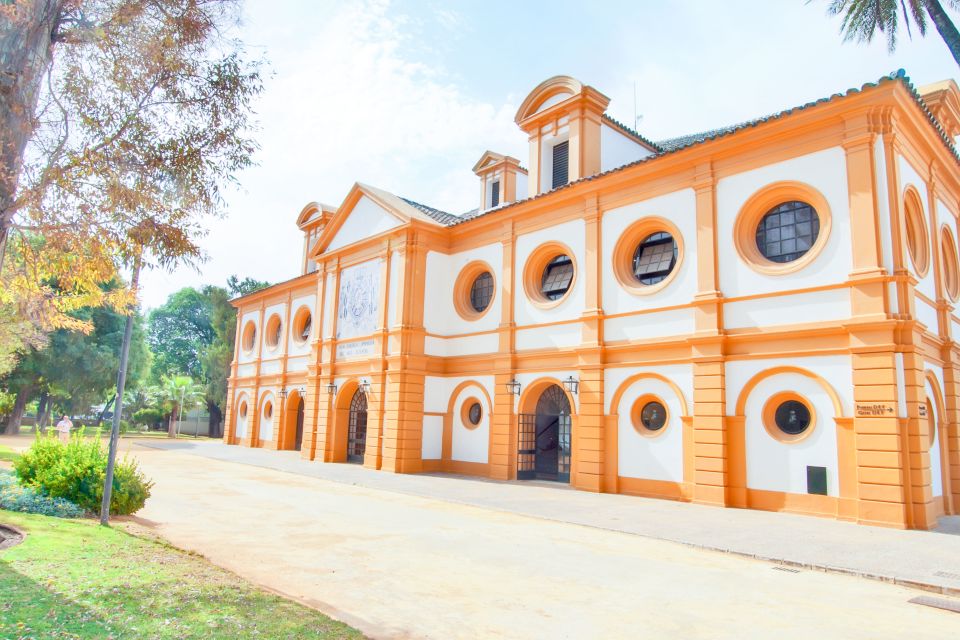
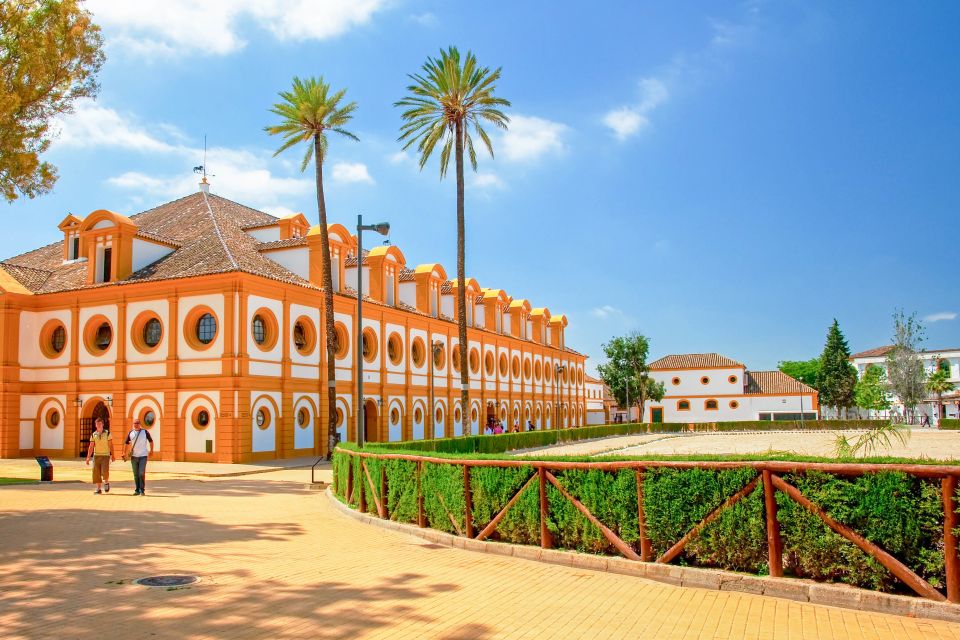
The performance takes place at the Fundación Real Escuela Andaluza del Arte Ecuestre in Jerez de la Frontera. For arrival, you’ll head to the Reservation Box Office at the Royal Andalusian School of Equestrian Art Foundation to pick up your entry.
Here’s the thing: Jerez is busy, but this venue is built for focusing. Once you’re inside, you can spend time around the grounds. In practice, that makes the experience feel more like visiting a working equestrian school than sitting down to watch from a distance.
Before you go in, take a quick moment to plan your entrance route and where you’ll sit. Tickets are sold by category, not by picking a specific row or seat number. So arriving with some time in hand helps you get comfortable with the layout.
The main acts: Doma Vaquera and classical dressage
If you want the “wow” factor early, this is where it happens. Two major segments drive the tone of the show: Doma Vaquera and Classical Dressage.
Doma Vaquera: country riding with athletic flair
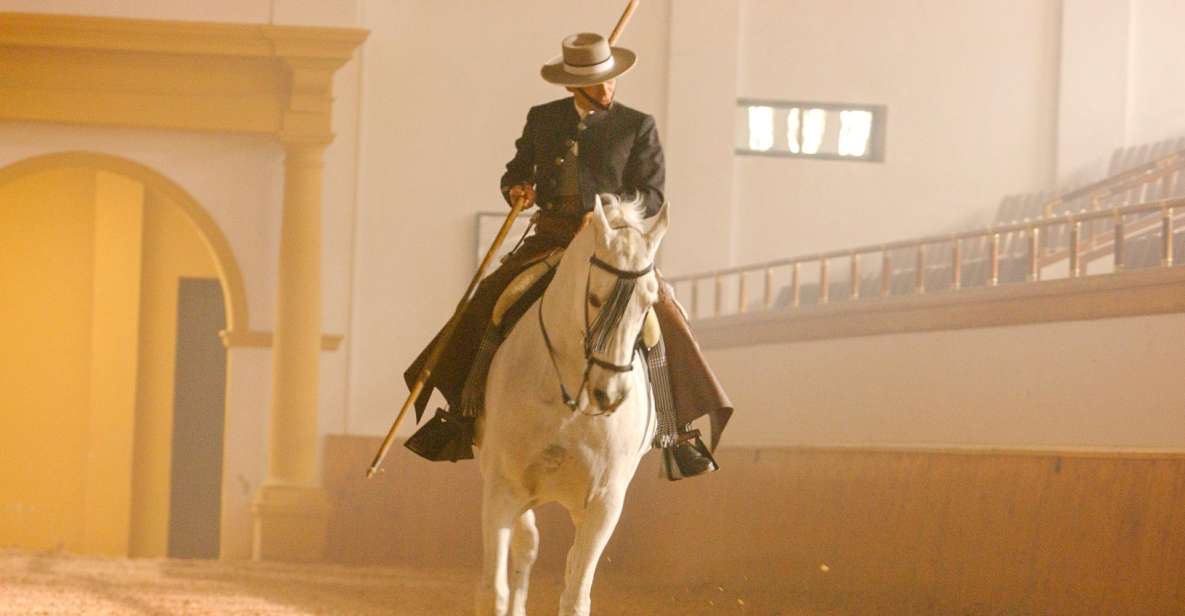
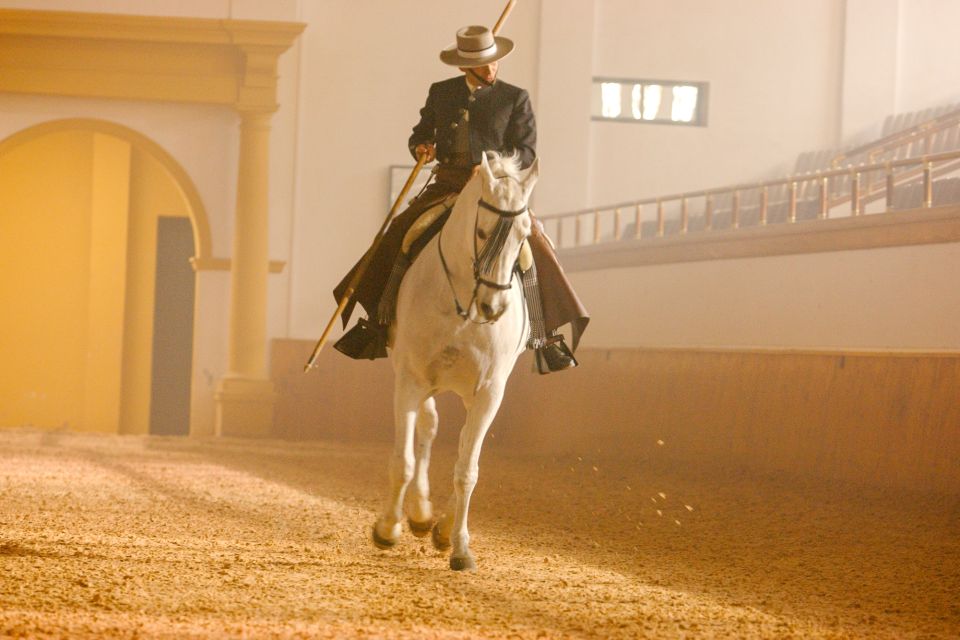
Doma Vaquera is rooted in traditional cattle-herding riding. In the show, it turns into a sequence of controlled movement in the arena: the rider works the horse around using one hand, starting with trotting and later moving into galloping.
What you’ll notice is the rhythm changes. The rider cues transitions, and the horse responds with accuracy rather than just speed. The choreography can include pirouettes—turns executed with tight balance—and arreones, where the horse breaks into gallop in a sharp, dramatic way. For many first-timers, that contrast is the moment the show stops feeling like a demo and starts feeling like dance.
Classical dressage: advanced movements to music
Then you move into classical dressage set pieces, often introduced with names like:
- The Colts
- Airs on Horseback
- Pas de Deux
- Passage and Piaffer
- Domino on Horseback
- Airs Above the Ground
- Fantasy
These sections are built around advanced exercises carried out to classical music. Expect movements that look engineered: the horse and rider coordinate timing so cleanly that the audience reads it as grace, not effort. Pas de Deux is especially fun to watch because it adds that “two-part harmony” feeling—partners moving as if they share one body.
If you enjoy detail, this is the section where you’ll likely lean forward mentally. Dressage is about precision, and the show leans into the kind of control you usually only see in competition settings.
Work in Hand: the moment the rider steps back
One of the most intriguing parts of the repertoire is Work in Hand. This is the segment that challenges your assumptions about what “riding” even means.
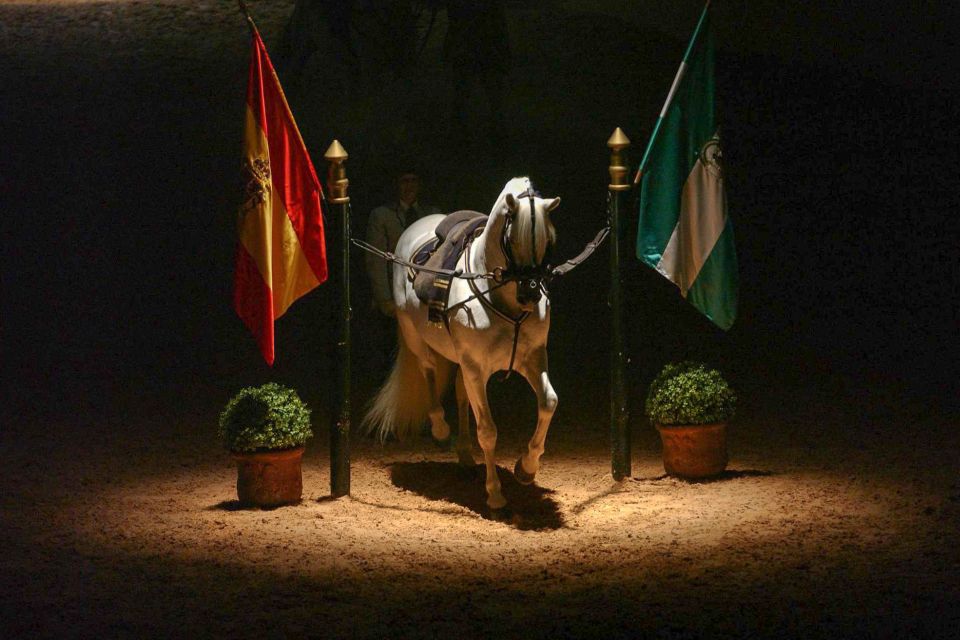
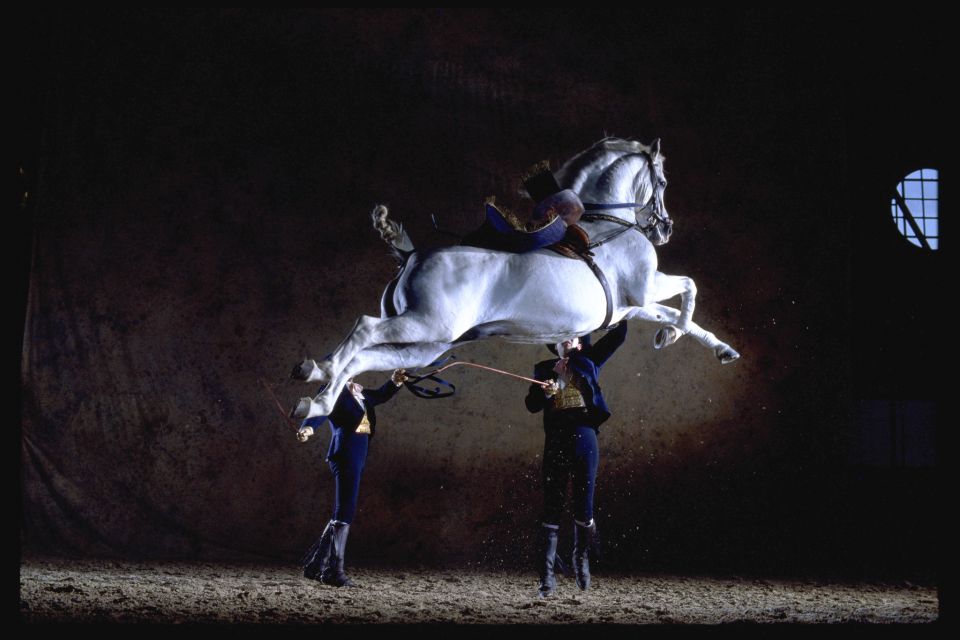
The idea is simple to describe and hard to believe: the horse obeys even when the handler is not in the saddle. The show includes Haute École dressage exercises such as:
- levades
- caprioles
- courbettes
- piaffe (including between pillars)
- the Spanish walk
What this does for you as a viewer is huge. It reframes the whole show: you stop thinking about spectacle only, and start appreciating communication and training. When a horse performs piaffe or a Spanish walk with the same calm focus you’d expect under saddle, it makes the entire performance feel earned.
Also, this is a great time to watch the horse’s body language. The accuracy shows up in subtle cues—head position, pacing, and how the horse holds itself between moves.
Carriage driving and the carrousel finale
Just when you think you’ve seen everything, the show pivots.
Carriage Driving: from riding skill to elegant pulling
In Carriage Driving, you’ll see horses draw carriages using classical harnesses. Historically, horse-drawn carriages were for transport, but in this format they’re turned into sport and exhibition.
This segment matters because it puts the same training into a different job. Instead of the rider’s balance, the driver’s cues and the harness system come into play. The carriage and its harnesses don’t feel like props; they feel like part of the choreography.
Carrousel: group precision at the end
The finale is Carrousel, where a group of horses and riders perform advanced equestrian exercises in unison. If you came for individual highlights, this is your payoff: it turns training into teamwork.
This ending format gives you a clear emotional arc. You go from solo discipline and dramatic transitions, to coordinated movement where timing and spacing matter as much as the individual talent.
Costumes, music, and the 18th-century vibe that actually works
The show pairs quintessential Spanish music with traditional 18th-century style costumes. That combination isn’t just for decoration. It shapes your understanding of what these moves are supposed to evoke.
When the costumes match the tone of the music, the dressage and Doma Vaquera choreography reads like cultural performance, not a modern stunt show. You’re watching an interpretation of tradition, delivered with serious execution.
It also helps that the program is designed as a sequence. The shift from classical sections into driving and then the carrousel finale keeps the energy moving, so you don’t get bored halfway through.
One practical note: the school can alter or change the program. If you’re visiting with tight timing, don’t plan your entire day around seeing one single choreography. The bigger win is experiencing the overall range of disciplines.
Price and value: is $31 a fair deal?
At about $31 per person, this is priced like a mainstream cultural performance, not a niche ticket. The best part is what you’re getting for the time: multiple equestrian disciplines, not just one highlight.
You’re also paying for a real training institution feel. The show isn’t a one-trick act; it’s a structured repertoire that cycles through riding styles like Doma Vaquera, classical dressage, work in hand, and carriage driving. That breadth is what makes the value feel solid.
And based on how the venue is set up, viewing tends to work well from different ticket categories. If you’re debating between “cheaper tickets” and “wait for something else,” this is one of the easier calls—because most of what matters (the horses and arena work) stays visible.
Best way to fit this into your day from Cádiz
If you’re staying in Cádiz, this can work as a low-stress side trip. A practical pattern that often makes sense is taking the train to Jerez, then a quick cab ride to the Royal school.
Why that’s a good plan: it avoids turning your day into an all-day navigation puzzle. Once you’re in Jerez, you still get the atmosphere of a different city without losing half your time to transport.
Try to protect your schedule by building in a little buffer. You’ll likely want a slow walk around the grounds and time to settle before the show starts.
Special dates: the Four Equestrian European Schools galas
There’s also a big-ticket variation that can be worth catching if your timing lines up. On June 30 and July 1 at 9 p.m., the Four Equestrian European Schools—Austria, France, Spain, and Portugal—perform together for the first time, with the Abu Dhabi International Riding School joining under supervision and training of the Royal Andalusian School of Equestrian Art.
This event is described as historical, and it’s scaled up: the outdoor arena of the Royal School is set to host 4000 seats. The venue is next to the Álvaro Domecq riding arena, with leisure and catering space too.
If you book for these dates, treat it like a larger program night. You might still get the same training culture, but the energy can feel more like a major gala than a standard show.
Should you book How the Andalusian Horses Dance?
Book it if you want a real taste of Andalusian horsemanship in one sitting. This show gives you multiple disciplines—Doma Vaquera, classical dressage, work in hand, carriage driving, and a carrousel finale—so you’re not stuck watching only one style.
You should also book if you care about atmosphere. The 18th-century costumes and Spanish music make the choreography read differently. It’s not just “horses doing things.” It’s horses moving like they’re telling a story.
Skip or reconsider if you’re the type who needs lots of freedom around phones and filming gear. The rules are firm: no flash photography, and audio recording isn’t allowed. You also need to present a printed voucher at the ticket office to collect your entry.
If your schedule allows it, this is one of those Jerez experiences that’s easy to justify. Even at $31, you’re paying for training, discipline, and a performance that keeps changing shape.
FAQ
Where is the show held?
It’s held at the Fundación Real Escuela Andaluza del Arte Ecuestre (Royal Andalusian School of Equestrian Art) in Jerez de la Frontera, Spain.
How long is How the Andalusian Horses Dance?
The show runs about 90 minutes to 2 hours, depending on the scheduled time.
Where do I go to collect my tickets?
Go to the Reservation Box Office at the Royal Andalusian School of Equestrian Art Foundation.
What do I need to bring with me?
Bring a passport or ID card. You also need to present your printed voucher at the ticket office.
Can I take photos with flash?
No. Flash photography is not allowed.
Is audio recording permitted?
No. Audio recording is not allowed.
Are pets allowed?
No. Pets are not allowed.
Is the venue wheelchair accessible?
Yes. The activity is listed as wheelchair accessible.
Can I choose my row or seat number?
Tickets are sold by category only. You don’t get to pick a specific row or seat number; seats are allocated by order of purchase or booking.
What’s the cancellation and payment flexibility?
You can cancel up to 24 hours in advance for a full refund. There’s also a reserve now & pay later option.
What kinds of riding and choreographies will I see?
You can see Doma Vaquera, classical dressage choreographies (including items like Pas de Deux and Passage and Piaffer), carriage driving, work in hand exercises, and a carrousel finale.