REVIEW · SEVILLE
Private Tour with Local Guide to know the Seville Essential
Book on Viator →Operated by LorenaTourGuide · Bookable on Viator
Seville makes more sense with the right guide. This private tour strings together Seville’s core sights with smart context, and you get skip-the-lines priority access so the morning doesn’t get eaten up. I also love how Lorena (LorenaTourGuide) explains what you’re looking at, not just where to stand for photos.
You’ll also appreciate the pacing: a mix of major monuments, quick garden breaks, and neighborhoods where the streets do the talking. With hotel pickup if you’re nearby, it’s easier to start on time and focus on the walk instead of logistics.
One thing to keep in mind: entrance fees are not included, and the tour can move across the city quickly—so you’ll want to plan for monument entry times and confirm any pickup details carefully, especially if you’re coming from a cruise port.
In This Review
- Key points at a glance
- Why this Seville essentials tour feels worth the money
- Archivo General de Indias: the trade engine behind Seville
- Royal Alcázar: a palace that’s still used and still changing
- Seville Cathedral: largest Gothic scale, plus a mosque remnant
- Barrio Santa Cruz: narrow streets, spring orange blossoms, and memory
- Jardines de Murillo: a palace orchard with a real named walk
- Prado de San Sebastián: where the Inquisition once stood
- Plaza de España and the ceramics that make it click
- Parque de María Luisa: where the city slows down
- Real Fábrica de Tabacos: power, women, and Carmen’s origin story
- Palacio de San Telmo and the baroque government jewel
- Torre del Oro and the Guadalquivir walk
- Price and priority access: where the value actually is
- Pickup and timing: the one caution I’d take seriously
- Who should book this Seville essential tour
- Should you book this Seville essentials private tour?
- FAQ
- What’s the meeting point for the tour?
- How long is the Seville essential tour?
- Is this a private tour?
- Is skip-the-line access included?
- Are monument entrance fees included?
- Do I need to pay for a mobile ticket?
- Is the tour offered in English?
- Is hotel pickup included?
- What’s the cancellation window?
Key points at a glance
- Priority access with a local guide helps you spend more time seeing and less time waiting
- LorenaTourGuide brings the kind of context that makes later self-guided exploring click
- A tight 3 to 4 hour route that mixes top monuments with lower-pressure garden and neighborhood stops
- Plenty of free stops (gardens, plazas, viewpoints along the river) keeps the total cost from spiraling
- Architecture you can read: Alcázar styles, Gothic cathedral details, and Plaza de España ceramics
- Watch your pickup fit if you’re not staying right in the immediate area
Why this Seville essentials tour feels worth the money
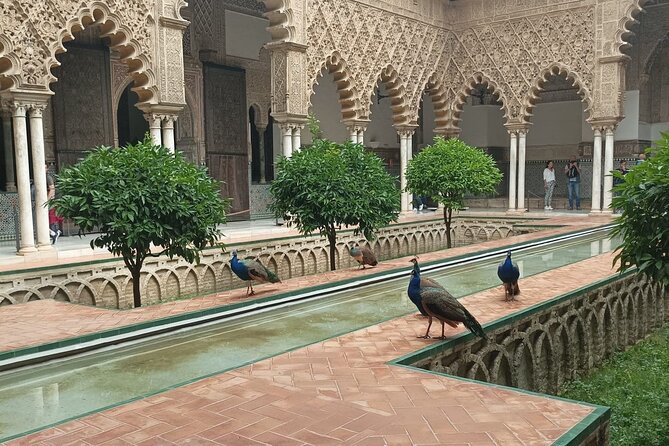
This is a private tour for up to 6 people, built for people who want the big stuff without spending the day guessing. The price is $312.41 per group, and because it’s private, that can actually work out well when you split it with friends or family. I like that you’re buying time, guidance, and priority access—not just sightseeing stamps.
The big value move here is the “priority access with local guide” part. In Seville, that matters. Even when sites look close on a map, crowds and entry flow can turn a good plan into a slow one.
You’ll also get a straightforward “starter pack” for the city: how Seville built its wealth through trade, how power showed up in palaces and religion, and how culture and labor stories lived side by side. When you do your own wandering afterward, you’ll notice more because you’ve already been shown what to look for.
You can also read our reviews of more guided tours in Seville


Archivo General de Indias: the trade engine behind Seville
You start at the Archivo de Indias (General Archive of the Indies) on Av. de la Constitución. It’s the meeting point unless you agree on something else ahead of time, and the guide is waiting by the fountain at the main entrance.
This stop is short, but it sets the tone. The building began as a former Merchant’s Market House and today it holds documentation tied to trade with the Indies. That means you’re not only walking Seville’s monuments—you’re learning how the city profited, recorded, and projected power.
Practical tip: since this first stop has free admission and a time slot built in, use it to ask your guide what you should prioritize next based on your interests—palaces, religion, neighborhoods, or the river story.
Royal Alcázar: a palace that’s still used and still changing
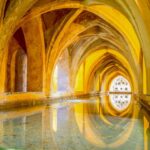
Next up is the Real Alcázar de Sevilla. It’s described as the oldest royal palace in use in Europe, with roots going back to the 10th century. Over time, Seville’s rulers kept residence here, and the complex became a mix of buildings from different styles and eras.
Even when you only spend about 10 minutes in the tour flow, the guide’s job is to help you “see” the layers. That’s what turns a quick visit into a smarter one. Instead of random-looking details, you start connecting the palace design to shifting eras and the way royal power expressed itself.
Just know the Alcázar entrance fee isn’t included, so you’ll want to be ready for that extra cost. If you hate delays, arriving with a plan for ticket timing (and keeping your phone charged for a mobile ticket) will keep things smooth.
Seville Cathedral: largest Gothic scale, plus a mosque remnant
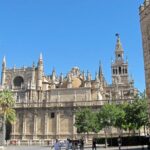
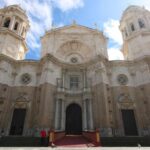
The tour then heads to the Catedral de Sevilla (Santa Maria de la Sede), flagged as the largest Gothic cathedral in the world. The key idea you’ll hear is the location story: it was built where an Aljama Mosque stood, and the cathedral still preserves the mosque’s minaret.
That detail is a big deal because it shows how Seville’s religious and political shifts left physical marks. I like that the tour doesn’t treat the cathedral as just a postcard stop. You’re given a reason to look for continuity and change at the same time.
Again, entry fees aren’t included here. Also, cathedral interiors can require a bit of patience with entry flow. The “skip the lines” support helps, but it’s still wise to dress for comfort and be ready for stairs and standing time.
Barrio Santa Cruz: narrow streets, spring orange blossoms, and memory
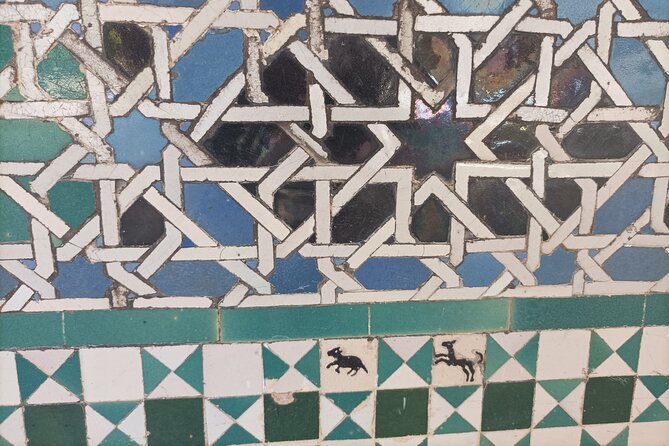
Then comes one of the most atmospheric parts of Seville: Barrio Santa Cruz. Expect narrow streets, small squares, and orange blossoms in spring—plus a guided look at the past of the area, including its ties to the ancient Jewish quarter.
This stop is about 20 minutes, so it’s not a deep museum-style walk-through. Instead, it’s a chance to get your bearings in the old-city maze and learn how the neighborhood’s identity formed. When you come back later on your own, you’ll likely remember where the squares are and why the lanes feel the way they do.
If you’re photographing, do it early or late. In the thick middle of the day, you can end up staring at shoulders more than stone. The guide’s timing helps you avoid some of that pressure.
You can also read our reviews of more private tours in Seville






Jardines de Murillo: a palace orchard with a real named walk
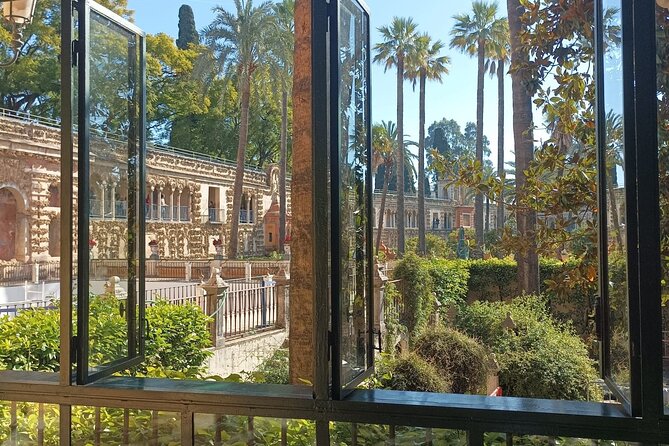
After the old streets, you get a breather at Jardines de Murillo. These gardens are in the old orchards of the palace complex, and they’re named for the painter Murillo. Within the gardens, you’ll also hear about the Paseo de Catalina de Ribera, tied to a noblewoman important to the city.
This kind of stop is small but smart. You’re not stuck in a long line, and you’re getting a “Seville texture” moment: shade, paths, and a sense of how palace life extended into gardens rather than ending at the walls.
Admission is free, which helps keep your budget in check. If you like architecture and people-history but don’t want every stop to feel like a ticketed sprint, this garden break is a good balance.
Prado de San Sebastián: where the Inquisition once stood
Next is the Jardines del Prado de San Sebastián. It’s now described as a nerve point of local transport and has had renovations over the last century. The tour also points out a startling historical contrast: you probably can’t imagine where the fires of the Inquisition stood.
That’s the kind of detail that makes Seville feel layered. You watch modern movement happen at ground level while learning that earlier uses of the same space were brutal. It’s uncomfortable, but it’s also honest—and it explains why Seville’s old areas can feel both beautiful and heavy.
Admission is free. Use this stop to stretch your legs and reset before you move toward the big open plazas and viewpoints.
Plaza de España and the ceramics that make it click
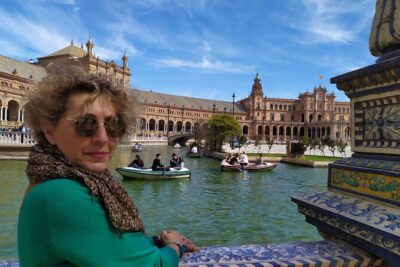
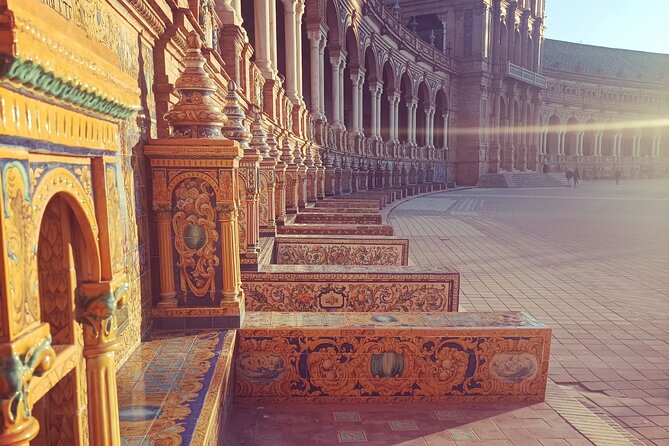
The route then lands at Plaza de España, one of Seville’s beloved monuments. It’s noted as a regionalist architecture highlight, and the tour calls out the ceramics—especially the trianera styles—as a sensory delight for the senses.
This is one of those places where, with the wrong timing, it can feel like you’re just standing in the middle of a crowd. But guided interpretation changes it. You understand what you’re seeing instead of treating it like a single big background.
The tour also keeps you moving through the space efficiently (about 20 minutes). If you want perfect photos, you can always circle back after your guided portion. But for getting the structure in your mind quickly, this stop works.
Admission is free, and that’s a plus. It’s one of the few “major monument energy” moments in Seville that doesn’t require another ticket.
Parque de María Luisa: where the city slows down
Right after the plaza comes Parque de María Luisa. The tour notes it connects with the Spanish Steps area, forming one space. This park was part of the gardens of Infanta María Luisa de Borbón and was donated to the city at the end of the 19th century.
You’re getting a calm counterweight after large architecture. Instead of trying to memorize facts, you can look around and take in the park as a designed public space—one that came from aristocratic grounds and became communal.
It’s about 15 minutes in the tour rhythm, but it’s enough to help your brain switch from “big monument mode” into “local pace mode.” That’s the sweet spot for enjoying Seville without fatigue.
Real Fábrica de Tabacos: power, women, and Carmen’s origin story
Now for a stop that adds real depth: Real Fábrica de Tabacos (the Royal Tobacco Factory). It’s described as one of the most prolific and profitable in the continent, and that Seville’s tobacco products were sold beyond the borders.
The tour also highlights the people story: cigarette makers were brave and independent women, and their lives inspired one of the most famous operas, Carmen. It adds another specific detail—that these women were creators of Europe’s first women’s union.
Even if your time here is brief, this is a stop that changes your mental map of Seville. You stop thinking of the city only as palaces and cathedrals. You start recognizing how labor and social organization helped shape its cultural legacy.
Admission is free on this tour stop, which is a nice cost-control win. It’s also a great place for your guide to tailor the next steps—ask what other stops relate to labor, crafts, or women’s history.
Palacio de San Telmo and the baroque government jewel
Between the tobacco factory and the river views, you’ll see the Palace of Saint Telmo (Palacio de San Telmo). The tour explains it was the residence of Infanta Maria Louise de Bourbon and her husband Antoine de Orléans, Duke of Montpensier.
You’ll also hear the architectural label: it’s called one of the jewels of Sevillian Baroque, designed by Leonardo de Figueroa. Today it houses the seat of the Government of Andalusia.
This is another stop that rewards context. Baroque details can blur together if you’re rushing, but a quick guide framing gives you “hooks” you can spot instantly—curves, emphasis, and how the building projects authority.
Admission isn’t specified as included, so plan to keep entry expectations realistic. In practice, the time on this stop is short, so even if the interior isn’t your focus, the exterior and setting still pay off.
Torre del Oro and the Guadalquivir walk
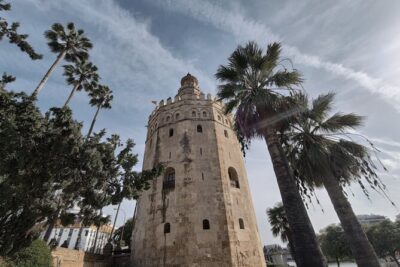
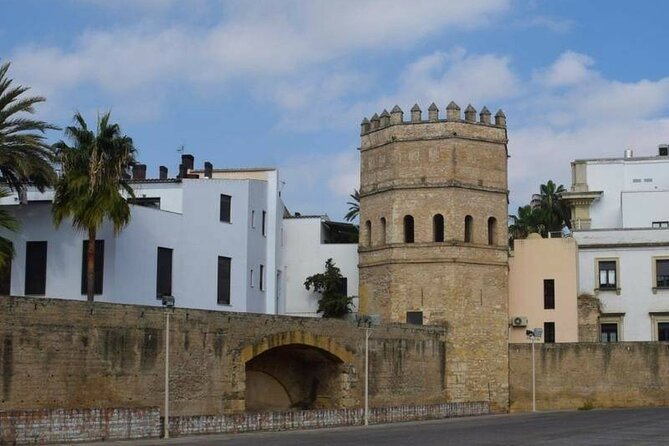
Next you hit Torre del Oro (Golden Tower), one of Seville’s symbols. Built in the 12th century as a defense tower, it was part of the Seville wall system. The tower’s uses changed over time, including jail for nobles and a warehouse.
Even with a short visit, the tower gives you a concrete “why the city looks like this” moment. Defense shaped layout. Trade kept it alive. And over centuries, the same structures got repurposed.
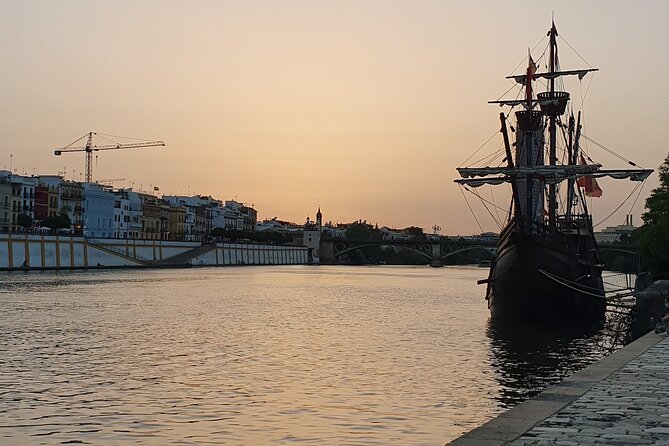
Then you walk along the riverbank at Paseo Alcalde Marques del Contadero. The tour notes the Arab name for the Guadalquivir: wadi al-kabir, meaning big river. You’ll also hear about the arrival of Elcano after more than two years at sea and how Seville’s river connected to bigger maritime stories.
If you’re sensitive to heat or sun, this is a good place to check your water situation. It’s also a great moment to ask your guide what the river meant to Seville’s wealth and daily life, since the earlier trade story started at the archive.
Price and priority access: where the value actually is
Let’s talk money in a sane way. At $312.41 per group (up to 6), this isn’t a budget bus tour. It’s priced for private guiding, priority access, and a plan that strings together several major areas in about 3 to 4 hours.
Entrance fees to monuments are not included, so your total trip cost will depend on how many of the ticketed sites you enter (the tour explicitly flags Real Alcázar and the Catedral as not included, and Torre del Oro as not included as well). That’s normal for tours like this.
Where you’ll feel the value is:
- Priority access at the big-entry spots
- A guide who turns stops into story connections
- A route that covers both “wow factor” landmarks and quieter context stops, like the gardens and old quarters
If you’re visiting for a short stay and you want to stop guessing, paying for a private guide like this often ends up cheaper than wasting hours trying to self-coordinate around entry lines.
Pickup and timing: the one caution I’d take seriously
This tour offers hotel pickup if you’re in the immediate vicinity of the area to be visited, and the guide meets you at the Archivo de Indias fountain area if you start there.
So here’s my practical advice: confirm pickup details in writing if you’re not staying near the historic core. One bad situation described a mismatch with a cruise port pickup far from Seville, and the tour couldn’t be used as planned. In other words, don’t assume a “port pickup” will mean your exact terminal, your exact timing, and your exact guide location.
If you’re coming by cruise or arriving from farther away, consider meeting at the main location instead of gambling on a long-distance pickup window.
Who should book this Seville essential tour
Book it if you:
- Want a quick, guided orientation to Seville’s big storylines (trade, power, religion, neighborhood identity)
- Like architecture and want quick explanations that help you “read” buildings and plazas
- Plan to explore on your own afterward and want context so you don’t miss obvious details
- Prefer a private group experience with flexibility and a guide who can steer your attention
I’d skip it if you:
- Want a super long, slow museum-style day with deep interior time
- Don’t want to pay separate entrance fees for multiple major sites
Should you book this Seville essentials private tour?
I think it’s a good booking when you want Seville’s core sights connected by story, not just lined up like a checklist. The priority access and the guidance tone—especially with LorenaTourGuide and her focus on giving you context—make it easier to enjoy Seville faster and with less friction.
Just go in with two clear expectations: tickets for major monuments are extra, and your visit depends on smooth timing and correct pickup alignment. If you handle those two things, this tour is a solid way to get oriented and then wander with confidence.
FAQ
What’s the meeting point for the tour?
The tour starts at the Archivo de Indias at Av. de la Constitución, s/n, Casco Antiguo, 41004 Sevilla. The guide waits next to the fountain at the main entrance.
How long is the Seville essential tour?
It lasts about 3 to 4 hours.
Is this a private tour?
Yes. It’s private, and only your group participates (up to 6 people).
Is skip-the-line access included?
Yes. You get priority access with a local guide.
Are monument entrance fees included?
No. Entrance fees to monuments are not included.
Do I need to pay for a mobile ticket?
You’ll receive a mobile ticket.
Is the tour offered in English?
Yes, the tour is offered in English.
Is hotel pickup included?
Hotel pickup is offered if you are in the immediate vicinity of the area to be visited.
What’s the cancellation window?
You can cancel for free up to 24 hours in advance for a full refund. If you cancel less than 24 hours before the start time, the amount paid is not refunded.