REVIEW · SEVILLE
Excursion to Italica from Seville
Book on Viator →Operated by Sevilla Moving · Bookable on Viator
Roman ruins, just outside Seville. That’s the hook here: a tight, small-group excursion that takes you from Seville to Itálica in Santiponce, then on to a medieval fortress monastery that mixes major art styles. I love that you don’t just rush past stones; you get a structured walk through Roman streets, mosaics, baths, and houses. I also love the second stop, because San Isidoro del Campo gives you a totally different feel from ancient Rome.
My one caution is time. With about 5 hours total, you’ll have plenty to see, but you might still wish you could linger longer in the amphitheater and house areas—especially if you like asking questions and going slow through the details.
In This Review
- Key points worth knowing
- Leaving Seville for Santiponce: Timing, Small Group, and Comfort
- Stop 1: Itálica’s Amphitheater, Roman Theatre, and Emperor Connections
- Stop 1 Details: Mosaics, Thermal Baths, and the Houses You’ll Walk Through
- Stop 2: San Isidoro del Campo, a Medieval Fortress of Multiple Art Styles
- Guide Power and Q&A: What Makes the Day Feel Personal
- Price and What You Actually Pay For at $83.08
- Final Call: Book It or Choose Something Else?
- FAQ
- Where is the meeting point for this excursion?
- What time does the tour start?
- How long is the excursion?
- Is the tour offered in English?
- Will I receive a mobile ticket?
- What is the maximum group size?
- Are admission tickets included for Itálica?
- Are admission tickets included for San Isidoro del Campo?
- What is not included in the price?
- Is free cancellation available?
Key points worth knowing
- Small group (max 8) means your guide-driver can keep the pace sane and your questions easier to land.
- Admissions are included at Itálica and at San Isidoro del Campo, so you’re not juggling tickets mid-day.
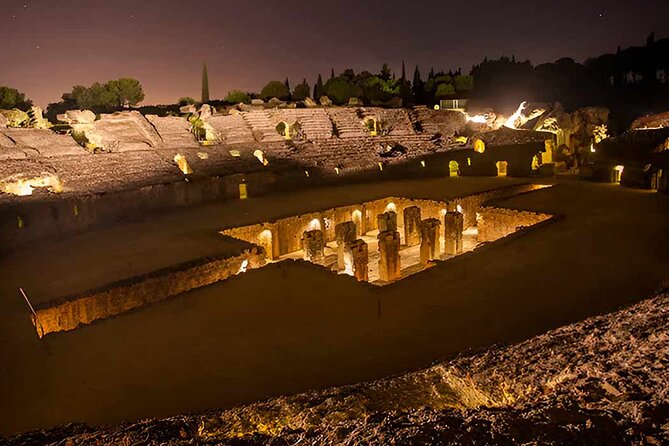
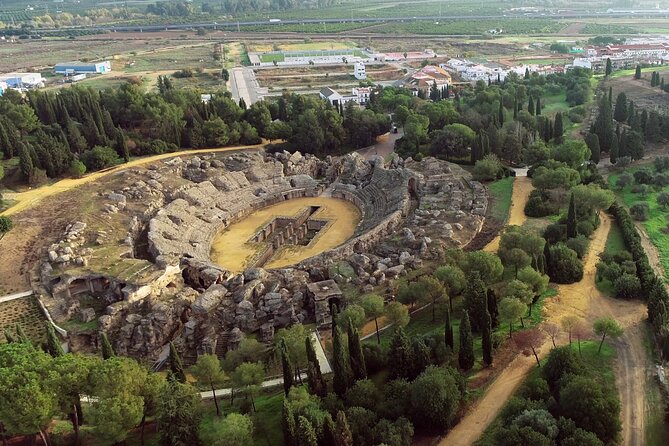
- Itálica Amphitheater scale: capacity for 25,000 and noted as the third largest in the world.
- House-and-mosaic focus: expect highlights like Neptune’s area and the House of the Birds.
- Two time periods, one loop: Roman Santiponce archaeology plus medieval church-and-fortress art.
Leaving Seville for Santiponce: Timing, Small Group, and Comfort
This tour runs as a morning day trip. You meet at Sevilla Moving at 9:00 am at C. Luis Montoto, and the schedule is built around a straightforward hop to Santiponce, where Itálica sits. The drive is short—just over 15 minutes once you depart—so the day doesn’t feel swallowed by transit.
One practical win: you’re in an air-conditioned vehicle with private transportation and a guide-driver. For a hot-weather city like Seville, that matters, because your “energy budget” stays higher for the walking portions.
You’ll also get an official guide who speaks English. And with a maximum of 8 people, the experience tends to feel interactive rather than like a lecture you can’t pause.
You can also read our reviews of more tours and experiences in Seville.


Stop 1: Itálica’s Amphitheater, Roman Theatre, and Emperor Connections
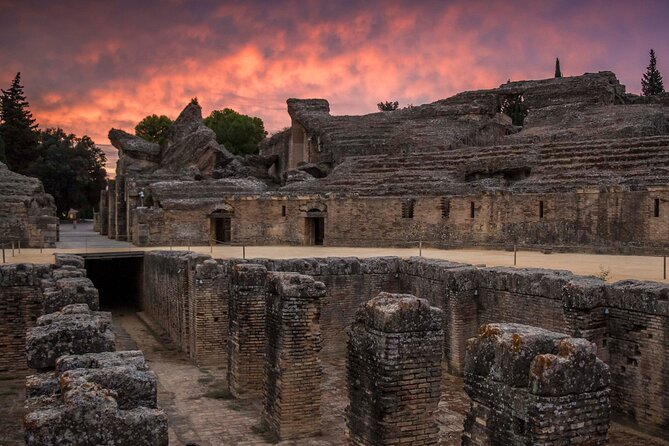
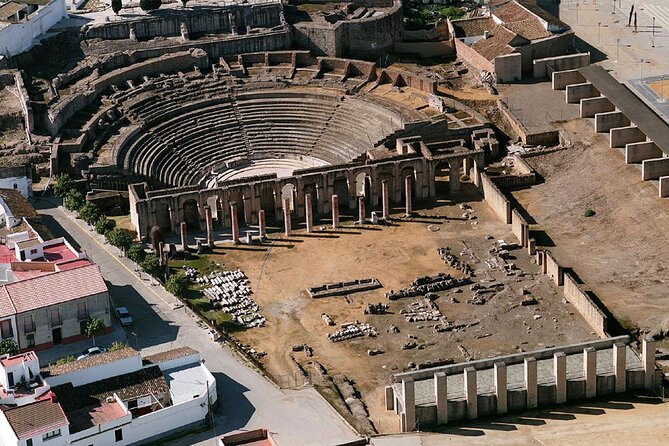
At Itálica, you’re stepping into one of the great Roman foundations on the Iberian Peninsula. The Romans founded their first city there more than 2,000 years ago, and this is the place tied to emperors Hadrian and Trajan—two names you’ll keep hearing throughout the site.
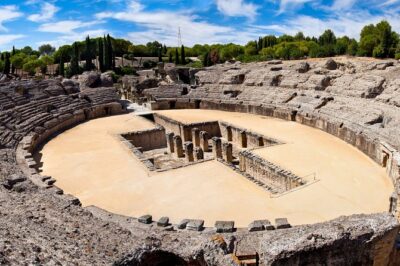
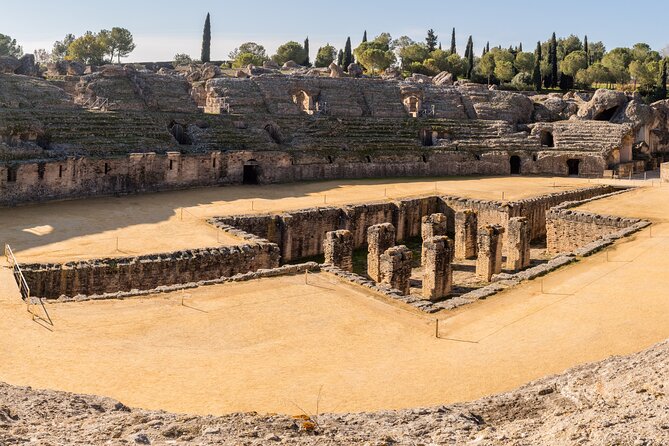
The centerpiece is the amphitheater. It’s famous for scale (25,000 spectators) and it’s described as the third largest amphitheater in the world. If you’ve ever wondered what “Roman entertainment” really looked like, this is the answer—built for crowd energy and gladiator-style spectacle. The walk through the amphitheater area gives you a visual sense of how Roman civic life worked, not just a few scattered columns.
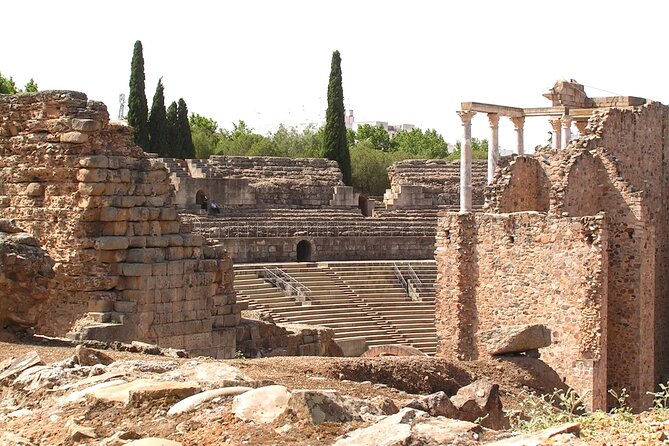
You’ll also see the Roman theatre. The theatre’s significance is that it was discovered in the middle of the 20th century, which adds a layer of “archaeology in progress” to what you’re seeing. It’s not just ruins; it’s a site that has continued to reveal itself as researchers uncovered more.
If you enjoy history, this stop doesn’t treat Rome as a distant label. It connects people (Hadrian and Trajan) to the physical spaces where their world played out.
Stop 1 Details: Mosaics, Thermal Baths, and the Houses You’ll Walk Through
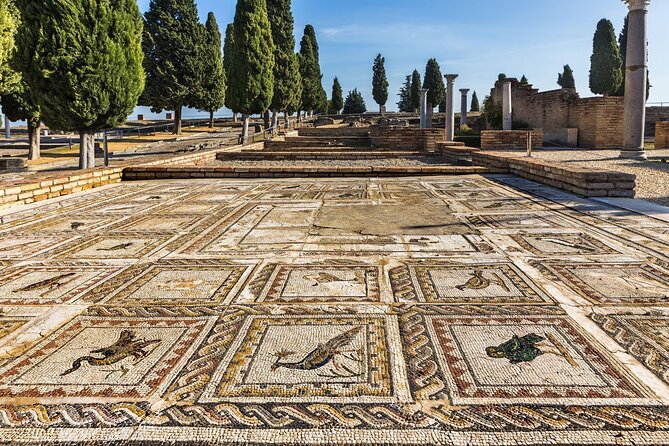
After the amphitheater, the tour keeps moving through the parts that make Itálica feel lived-in. You walk along ancient Roman streets and you’re guided through preserved wonders like mosaics, thermal baths, and residential houses.
Two house highlights often stand out: Neptune’s and the House of the Birds. Even if you don’t go home as an expert, you’ll leave with a clearer sense of Roman domestic design—where decoration met daily life. Mosaics are especially useful for this, because they’re visual and usually easier to process than long historical explanations.
The thermal baths add another layer. Rome’s bath culture wasn’t just hygiene; it was social routine and status. Seeing the bath areas helps you picture how people spent time, not only how they fought in the arena.
The value here is pacing and interpretation. You get a guided walk that turns scattered ruins into a readable plan: streets lead to spaces, and each space hints at the role it played.
Stop 2: San Isidoro del Campo, a Medieval Fortress of Multiple Art Styles
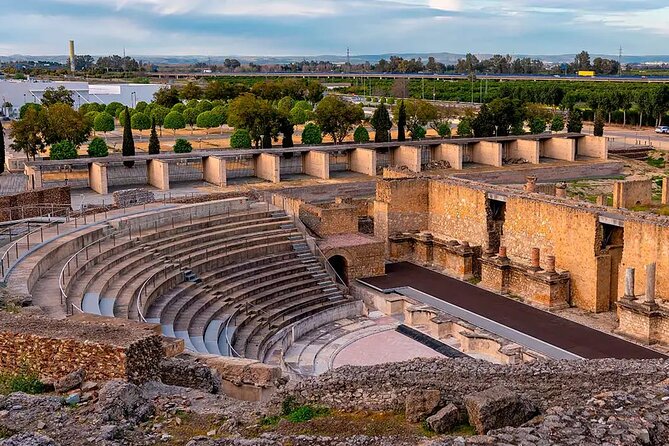
Once you finish the archaeology part, the day shifts gears. You head to the Monastery of San Isidoro del Campo, described as a medieval fortress that shelters art and architectural layers from different periods.
This is the stop where the day becomes more than Roman. The monastery includes features tied to Mudejar, Gothic, and Baroque traditions—so you’re not just seeing one “style moment.” Instead, you get the sense of centuries of changes, repairs, and additions that kept shaping the place.
Inside, you’ll encounter paintings, murals, and significant sculptures. That mix matters because it changes the experience from “mostly outdoor ruins” to “inside art you can study.” It’s also a good mental reset after amphitheater scale, since the monastery encourages slower, more observational looking.
At the end, you return to Seville, and your guide wraps things up at the meeting point. The whole loop stays efficient, so you’re not stuck commuting late or losing daylight to transportation.
Guide Power and Q&A: What Makes the Day Feel Personal
The biggest repeated theme in the feedback is guide quality. On this kind of tour, the difference between a good and great outing is whether you get answers, not just sights. Here, the guide-driver format helps, because you’re not split between logistics and interpretation.
Names like Miguel and Francisco show up in the kind of feedback that matters: people call out extensive site knowledge, the ability to ask questions, and a friendly, engaging manner. That combination is what turns Itálica from an impressive place into a memorable one.
Another small but real factor: group size. With up to 8 people, you’re more likely to keep a steady pace that matches the group rather than getting rushed by a big crowd.
One more honest note: some people wish the tour were longer. That’s not a flaw in organization so much as a natural response to how many “detail zones” exist at Itálica. If you tend to read every sign and linger over floors, you’ll feel that time pressure.






Price and What You Actually Pay For at $83.08
At $83.08 per person, this isn’t a budget gimmick. You’re paying for three things that usually cost money separately: a guide, private air-conditioned transport, and included admission tickets for both the Roman site and the monastery.
That “admissions included” part is where the value can really land. Itálica’s amphitheater area and the monastery’s collections are the core experiences here, and you’re not expected to buy entry on the fly or scramble at the last minute.
You also get air-conditioned vehicle service plus private transportation. For Seville, that’s not just comfort—it’s time management. It helps keep the schedule tight so you actually see both stops instead of losing half the day in transit.
What’s not included is straightforward: tips, and food or drinks. So you’ll want to plan a simple plan for lunch/snacks on your own before or after, depending on how hungry you get after several hours of walking and indoor viewing.
Final Call: Book It or Choose Something Else?
If you want a day trip that mixes Roman archaeology with serious medieval art, I think this is a strong booking choice. You get two major sites in one morning-to-midday loop, admissions are included, and the small group size helps keep the guide’s explanations useful instead of generic.
I’d skip or reconsider if you’re mainly chasing one thing. If you only care about amphitheaters, you may feel that Itálica is just the start and the monastery is the extra. Or if you dislike structured guided walking, the “you’ll see a lot, in order” format might feel rushed.
But if you like coherent storytelling—Rome’s civic life at Itálica, then the monastery’s layered styles at San Isidoro del Campo—this outing fits the bill. It’s also a good match if you appreciate asking questions and getting clear answers, not just looking at stones from a distance.
FAQ
Where is the meeting point for this excursion?
You meet at Sevilla Moving – Alojamientos y experiencias, C. Luis Montoto, 19, Local Bajo, 41003 Sevilla, Spain.
What time does the tour start?
The start time listed is 9:00 am.
How long is the excursion?
The duration is about 5 hours.
Is the tour offered in English?
Yes, the tour is offered in English.
Will I receive a mobile ticket?
Yes. The tour includes a mobile ticket.
What is the maximum group size?
The tour has a maximum of 8 travelers.
Are admission tickets included for Itálica?
Yes. Admission to Itálica is included.
Are admission tickets included for San Isidoro del Campo?
Yes. Admission to Monasterio De San Isidoro Del Campo is included.
What is not included in the price?
Tips are not included, and food or drinks are also not included.
Is free cancellation available?
Yes. You can cancel for a full refund up to 24 hours in advance of the experience start time.