REVIEW · SEVILLE
“Seville: Love At First Sight” Private Tour
Book on Viator →Operated by Seville private guide - Sofía Ventura · Bookable on Viator
Seville makes sense with a good guide. This private tour, run by Sofia Ventura in English, is built to help you get your bearings fast and understand how the main sights connect, starting right at the Giralda. In about two hours, you’ll move through the core of the city and come away with a clearer sense of where things are and why they matter.
What I like most is the straightforward route that hits the city’s big landmarks without turning it into a sprint. You’ll also get a guide who’s friendly and responsive, and who mixes in practical local tips along the way, so the walk feels like a conversation rather than a lecture. One thing to consider: it’s an outdoor-style walking tour, and the experience notes that it requires good weather, so plan for a backup if conditions aren’t great.
In This Review
- Key things that make this Seville tour worth your time
- Getting oriented fast: Giralda to the historic core
- Sevilla Cathedral and the Jewish Quarter: how Seville’s story overlaps
- The Archive of the Indies and other power centers you can actually feel
- Old tobacco factory to University of Seville: where history changes jobs
- Maria Luisa Park and Plaza de España: classic postcards, better context
- Torre del Oro, bullring, and Triana bridge: the river-to-neighborhood transition
- Triana market stop (free), with one clear limitation
- Price and value: what you’re paying for
- Practical notes: meeting point, route rhythm, and what to bring
- Who this tour suits best (and who might want to go solo)
- Should you book the Seville: Love At First Sight private tour?
- FAQ
- What time does the Seville tour start?
- How long is the tour?
- Is this a private tour?
- How many people are in a group?
- Is pickup available?
- Where do we meet?
- Where does the tour end?
- What language is the tour offered in?
- Are any stops free to enter?
- What is the cancellation policy?
- What if the weather is bad?
Key things that make this Seville tour worth your time
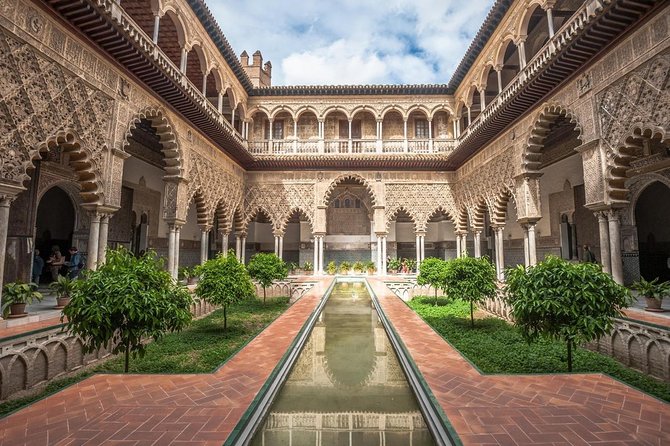
- Starts at the Giralda so you begin with Seville’s symbol, then build context as you walk
- Major monuments in a tight loop including Sevilla Cathedral and the Archivo de Indias
- Triana included with the river area and a market stop that is free (with limits on Sundays and holidays)
- Maria Luisa Park and Plaza de España for classic sights without wasting your first day
- University of Seville in a former tobacco factory adds an unexpected layer beyond postcard Seville
Getting oriented fast: Giralda to the historic core
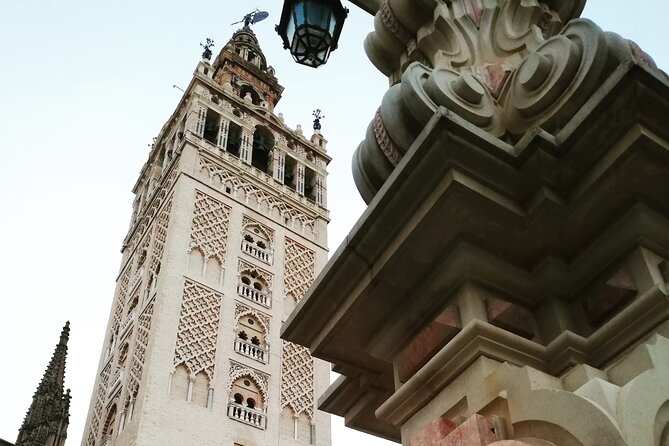
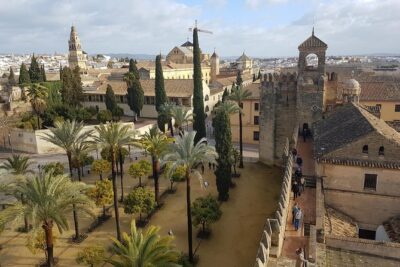
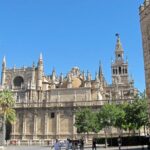
The smartest thing about this tour is where it starts. The Giralda is Seville’s visual anchor, and using it as your first stop gives you instant orientation. Even if you don’t go up into the tower, just knowing you’re beginning at the city’s emblem helps you map the rest of the route in your head as you go.
From there, the guide’s job is basically to turn streets and buildings into a mental model. You’ll see how Seville’s center is arranged around major institutions and neighborhoods, then you’ll connect that to what you’re seeing on the ground. This matters because Seville can feel like a maze if you’re only following random landmarks. With this format, you learn the “why” and “where” together, which makes later exploring easier.
It’s also a good way to set your expectations for the rest of your trip. Once you’ve seen how the city’s power centers sit next to everyday life, you’ll find it simpler to choose where to spend extra time later—cathedral area vs. river vs. Triana.
You can also read our reviews of more private tours in Seville



Sevilla Cathedral and the Jewish Quarter: how Seville’s story overlaps
After Giralda, the tour moves you toward the biggest draw in the center: the Sevilla Cathedral, described here as the largest Gothic cathedral in the world. Even if you’ve seen cathedral photos before, standing in the orbit of the cathedral changes your sense of scale. Gothic buildings like this aren’t just pretty; they’re political statements in stone. The guide’s explanations help you read what you’re seeing instead of only admiring it.
Passing by the Jewish Quarter adds another layer. Seville’s neighborhoods aren’t separate worlds; they overlap in time. When your guide flags what you’re looking at and ties it to history, you start noticing patterns—street layout, the closeness of buildings, and how the city’s “center of gravity” shifted over centuries.
One practical perk: this part of the walk helps you understand what’s nearby. If you decide later to return on your own for a closer look, you’ll already know the direction you came from and what area you’re in. That kind of orientation is hard to get from a single standalone museum ticket or a quick stop photo session.
The Archive of the Indies and other power centers you can actually feel
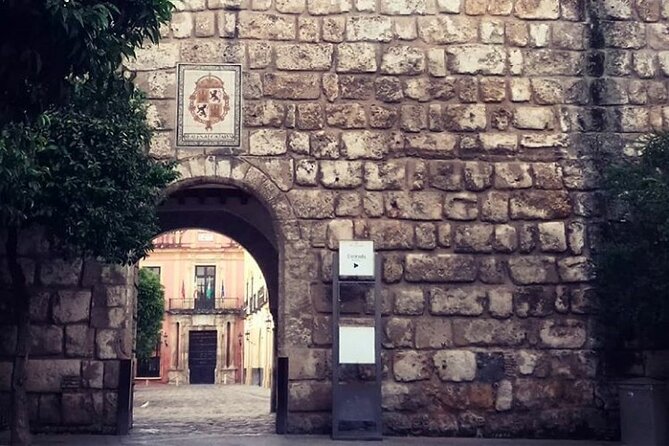
A big reason this tour stays focused (and doesn’t sprawl endlessly) is that it includes “power places” that shaped Seville’s role beyond Spain. One of your stops is the Archive of the Indies. Even if you don’t go inside, the point is to show you how Seville ties into the wider story of trade, navigation, and empire.
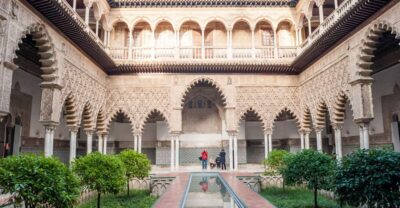
The guide also takes you to the oldest palace in Europe still in use. That phrase matters because it hints at continuity. You’re not just seeing ruins or reconstructions; you’re looking at a living site. When a city keeps a building in use for centuries, details around it tend to make more sense—because people keep returning to the same spaces for work, ceremony, and everyday movement.
If you like your sightseeing with a bit of structure, this is one of the best parts of the route. You’re seeing not only what’s famous, but what held influence—then you can compare that to later stops like the market and river areas, which show the day-to-day side of Seville.
Old tobacco factory to University of Seville: where history changes jobs
Here’s a stop that often surprises people in Seville. The tour includes the old tobacco factory, now home to the University of Seville. That shift—from an industrial site to an academic one—gives you a useful contrast. Cities aren’t just museums. They repurpose spaces when the economy and needs change.
Even if you’re not a student, this is a strong stop for understanding how Seville evolves. It’s one of those moments where the city’s past isn’t far away; it’s repurposed right in front of you. When you understand that, it becomes easier to appreciate Seville’s mix of grand monuments and ordinary streets.
A practical plus: the tour’s “history in motion” approach helps you avoid that common tourist trap where you only chase the tallest, flashiest buildings. You’ll still see the big symbols, but you’ll also learn how Seville functioned as a working city over time.
Maria Luisa Park and Plaza de España: classic postcards, better context
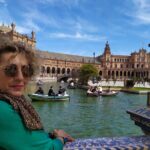
Then you move into some of Seville’s best-known open-air spaces: María Luisa Park and the Plaza de España. These stops are listed as admission free, which is nice because it lets you enjoy them without worrying about ticket logistics.
What makes these spaces worth your time isn’t only the architecture. It’s the pace. After tighter historic streets and institutional buildings, the park and plaza let you breathe. And because this tour is private, you can take the moments that matter to you—pause for photos, watch how locals move through space, or simply enjoy the shade and open layout.
You’ll also have a sense of how these landmarks fit into the city’s geography. They aren’t random “pretty stops.” They sit in a wider Seville story about planning, display, and public life. Once you’ve been guided through the earlier monuments, the park and plaza feel less like set dressing and more like part of the same system.



Torre del Oro, bullring, and Triana bridge: the river-to-neighborhood transition
One of the best ways to understand Seville is to connect the river with the neighborhoods. This tour includes Torre del Oro along the river, plus stops that set you up for crossing into Triana with the Triana bridge.
The Torre del Oro is a great “transition landmark.” It’s a visible marker that helps you reorient after you’ve been walking through the dense historic core. You can look out toward the river area and start thinking about how Seville grew through waterways and trade routes.
The tour also includes the bullring, which you might not expect on a first-day orientation walk. But it works because it shows another side of public life. Even if bullfighting isn’t your thing, the building signals how Seville gathers people in a shared cultural rhythm.
Then comes the Triana bridge. This is the moment when the city’s feel changes. Triana has its own identity, and crossing into it helps you understand why locals talk about the two sides of the city as if they’re different worlds.
Triana market stop (free), with one clear limitation
The route ends with a look at the Mercado de Triana. The tour info notes that admission is free, but it also states it’s not on Sundays or bank holidays. That’s a key detail to keep in mind when you pick your date.
Even when you’re not shopping, markets give you real texture fast. You’ll see everyday Seville rather than just ceremonial Seville. And because this is a private tour, you can spend a little more time looking at stalls that catch your eye without feeling like you’re holding up a big group.
If you want a morning tour that makes your later meals easier, this is a smart inclusion. A market stop usually helps you understand what’s seasonal, what people are actually buying, and what kinds of snacks and ingredients are common in the area.
Price and value: what you’re paying for
At $178.71 per group (up to 7 people), this tour is priced for people who want a personal route rather than a mass-group stroll. In plain terms: you’re not paying for a museum ticket; you’re paying for time with Sofia Ventura and for a guided route that reduces guesswork.
Where the value really shows is in the private format. If you’re traveling as a family, a small group of friends, or with someone who wants more explanation and fewer generic photo stops, a private guide can save you time and frustration. Two hours also tends to be the right length for Seville orientation—enough time to cover the core sights, not so much that you burn out before lunch.
Also, pickup is offered, which can reduce one of the biggest hidden costs of walking tours: the energy you spend figuring out meeting logistics in a tight old city.
Practical notes: meeting point, route rhythm, and what to bring
This tour starts at Plaza Virgen de los Reyes (Casco Antiguo, 41004 Sevilla) at 10:00 am, and it ends at Plaza del Altozano (41010 Sevilla). Because the end point is different from the start, plan your next activity near that area rather than assuming you’ll be back where you began.
Pickup is offered if your hotel is on the pick-up list. If it isn’t, you’re told to contact the guide to ask what’s possible—so don’t assume pickup is impossible just because the hotel name isn’t shown.
You’ll also want to think about walking comfort. The stops include multiple major sights across the center and into Triana, plus a market area. Wear good shoes. Bring water. And if you’re visiting in hotter months, plan to take shade breaks when you can.
Finally, the tour requires good weather. If the sky isn’t cooperating, be ready for a different date or a refund offer, depending on how the experience is handled.
Who this tour suits best (and who might want to go solo)
This is a great fit if you:
- Want a first-day orientation of Seville’s biggest highlights
- Prefer a guided structure over wandering on your own
- Like history tied to what you see in the streets, not just museum walls
- Travel with a small group (up to 7) and want everyone to hear the explanations
It’s also a solid choice if you’re short on time. Two hours covers a lot of key geography: Giralda, cathedral area, river viewpoints, Triana, and iconic public spaces.
If you already know Seville well and you’re hunting only for niche detours, you might feel the tour is more “main sights plus context.” But if your goal is to build a map in your head and understand how the city connects, this route is built for that.
Should you book the Seville: Love At First Sight private tour?
Book it if you want a tight, high-impact overview of Seville with a real guide and a private pace. The combination of starting at Giralda, hitting major landmarks like Sevilla Cathedral and the Archivo de Indias, and finishing with Triana gives you a loop that helps your later exploring feel effortless.
Skip it only if you’re looking for a long, ticket-heavy day packed with extra museum entrances. This tour is about orientation and seeing the big structure of the city in a focused walk. That focus is exactly why it’s useful.
If you do book, send your guide a quick note about what you care about most—landmarks, neighborhoods, food stops, or history themes. A private tour works best when the guide knows what you want to notice.
FAQ
What time does the Seville tour start?
It starts at 10:00 am.
How long is the tour?
The duration is about 2 hours.
Is this a private tour?
Yes. It’s private, and only your group participates.
How many people are in a group?
The group size is up to 7 people.
Is pickup available?
Pickup is offered. If your hotel isn’t on the pick-up list, you’re asked to contact the guide to ask if pickup is possible.
Where do we meet?
Meet at Plaza Virgen de los Reyes, Casco Antiguo, 41004 Sevilla, Spain.
Where does the tour end?
It ends at Plaza del Altozano, 41010 Sevilla, Spain.
What language is the tour offered in?
The tour is offered in English.
Are any stops free to enter?
Yes. María Luisa Park, Plaza de España, and Mercado de Triana are listed as free admission stops. The Mercado de Triana stop is not on Sundays or bank holidays.
What is the cancellation policy?
You can cancel for free up to 24 hours in advance for a full refund.
What if the weather is bad?
This experience requires good weather. If it’s canceled due to poor weather, you’ll be offered a different date or a full refund.