REVIEW · SEVILLE
Seville: Casa de Pilatos Ground Floor Entry Ticket
Book on GetYourGuide →Operated by Casa de Pilatos · Bookable on GetYourGuide
This palace tells Seville’s story in tiles. With ground-floor entry and an audio guide, you get a focused look at 15th-century rooms, sculptures, and the courtyard that made this estate famous.
I love how the place mixes styles on purpose: Mudejar-Gothic details sit right next to Renaissance touches, so the architecture feels like a conversation across centuries. I also really like the centerpiece of the visit—the collection of classical sculptures, including the Roman emperors you’ll see around the courtyards and halls.
One consideration: this ticket covers the ground floor only, so if you’re hoping for everything in one go, you may want to plan the upstairs separately (and the audio guide can feel very detailed at times).
In This Review
- Key points to know before you go
- Ground-floor access at Casa de Pilatos: what the ticket really means
- Entering through the Renaissance-style marble gate
- The courtyard route: Roman emperors, fountains, and tiled harmony
- Fine sculptures of classical antiquity: what to look for
- The Chapel of Flagellation: Mudejar-Gothic meets Renaissance
- Salón del Pretorio and the coffered ceiling ceiling bows
- Gardens and flowers: how the palace slows your pace
- Price, timing, and deciding if it’s worth $14
- Who this ground-floor ticket is best for
- Should you book Casa de Pilatos ground-floor entry?
- FAQ
- Is this ticket for the ground floor only?
- What’s included with the Casa de Pilatos ground-floor ticket?
- Is there an audio guide, and what languages is it in?
- What language is the host or greeter?
- What’s the latest time I can enter during the week?
- Is entry free on Mondays?
- How long is the ticket valid?
- Can I cancel for free?
- Can I reserve now and pay later?
Key points to know before you go
- Roman emperor busts (24 of them) appear in the courtyard route, including Hadrian, Aphrodite, and Apollo
- Architecture mash-up that works: Mudejar-Gothic meets Renaissance marble and coffered ceilings
- Stone and symbolism details show up, including war ornaments associated with Pallas Pacifera
- The Chapel of Flagellation is the oldest part, with a distinctive basket-handle arch
- Gardens give you breathing room, with flowers and a Renaissance-style layout
- Audio guide with QR codes helps you move room to room at your own pace
Ground-floor access at Casa de Pilatos: what the ticket really means
Casa de Pilatos is one of those Seville stops that feels like a private home more than a big monument. You enter through a detailed marble gate and spend your time inside the 15th-century spaces that were tied to the Enríquez de Ribera family. The payoff is that you can see how the palace was shaped by changing times in Seville—its “highs and lows”—and how that history shows up in art and design choices, not just dates on a sign.
For you, the big practical thing is that this is a ground-floor entry ticket. You’ll be touring drawing rooms, courtyards, and gardens, but you won’t have access to the upper floor with this ticket. Many people love the route because it’s self-paced, and several visitors also recommend adding the upstairs later if you want the full sweep.
You get an audio guide with the ticket. Reviews note it’s easy enough to follow with QR codes and clear signage pointing you to the right track. That said, the audio can run long and get super specific. If you prefer short explanations, you’ll likely pick and choose which stops you listen to closely.
You can also read our reviews of more tours and experiences in Seville



Entering through the Renaissance-style marble gate
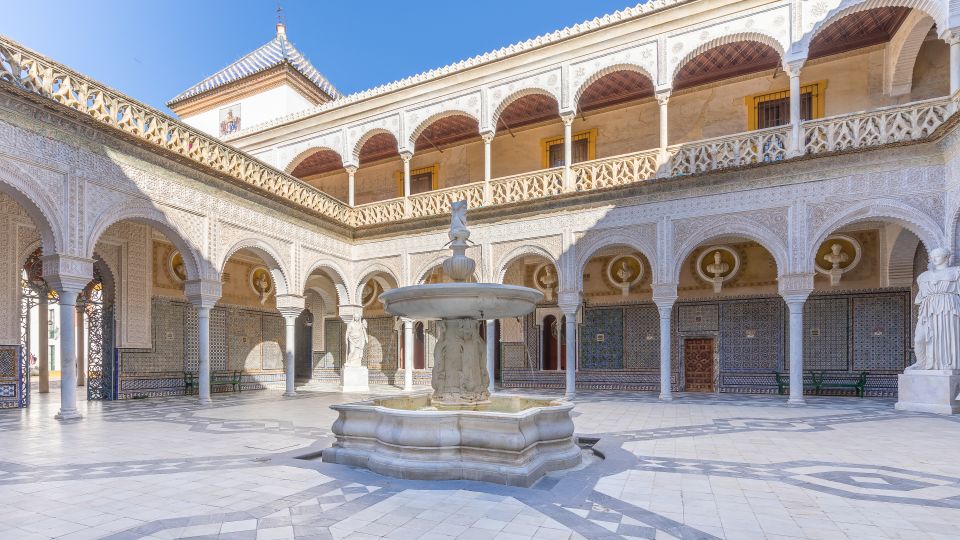
Your visit starts at the Renaissance-style marble gate—it’s not just an entrance, it’s a statement. You’re stepping into a palace that was designed to show off taste, status, and connections, and the gate sets that expectation fast.
Right after entry, I’d treat the first few minutes as orientation time. Use the signs and the QR cues so you know where you are in the route. Several visitors mentioned the navigation is clear, which matters here because the palace is arranged around courtyards and interior rooms. Once you get your bearings, you’ll find it easier to hop between the big “wow” areas—sculptures, tilework, and ceiling details—without feeling lost.
This is also where the styling contrast becomes visible. You’ll start spotting the blend of Mudejar-Gothic and Renaissance influences that makes Casa de Pilatos different from places that feel purely one style. If you like architecture that shows cultural mixing, pay attention early—once you train your eye, the rest of the visit makes more sense.
The courtyard route: Roman emperors, fountains, and tiled harmony
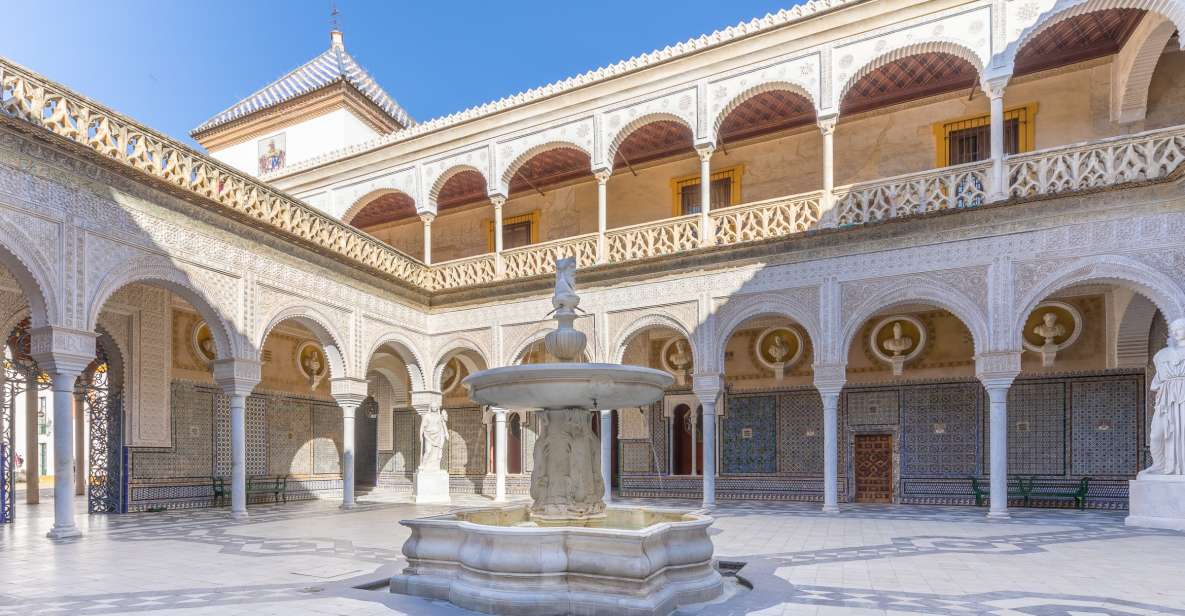
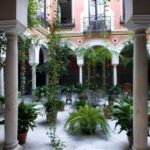
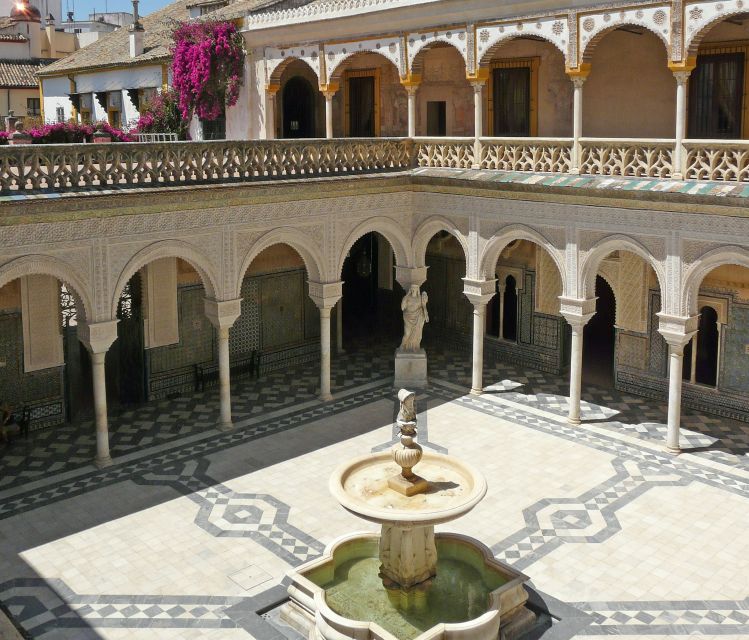
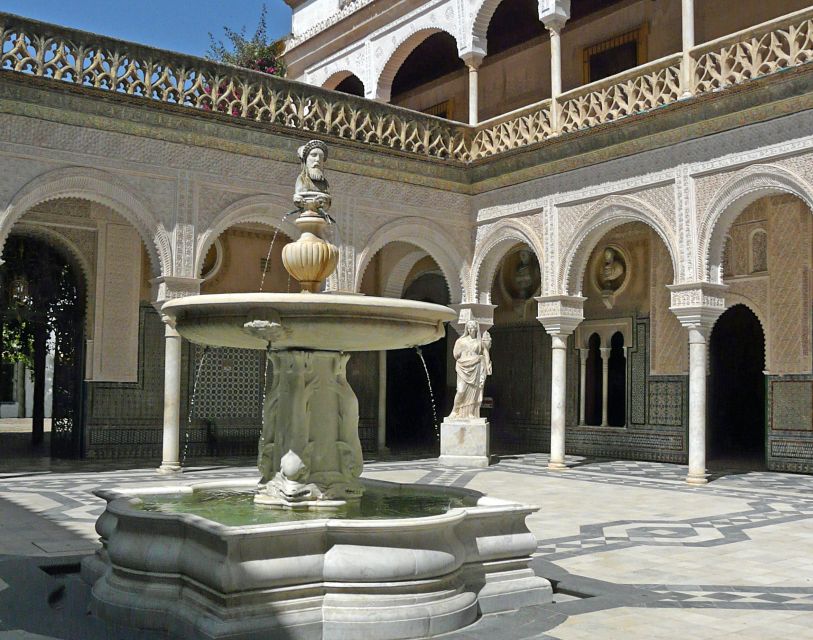
The courtyard is where Casa de Pilatos really locks in your attention. You’ll move through spaces where the 24 busts of Roman emperors are part of the experience, not just background decoration. It helps that the courtyards also feature fountains and a typical Andalusian feel—bright daylight, cool stone, and the kind of layout where you see details from multiple angles.
This is the perfect part of the visit to slow down. The emperors and myth figures aren’t “one and done.” You’ll notice different busts across the route, including Hadrian, Aphrodite, and Apollo (Apollo as the god tied to music, poetry, and art). If you like classical references, Casa de Pilatos gives you a lot without feeling like a textbook.
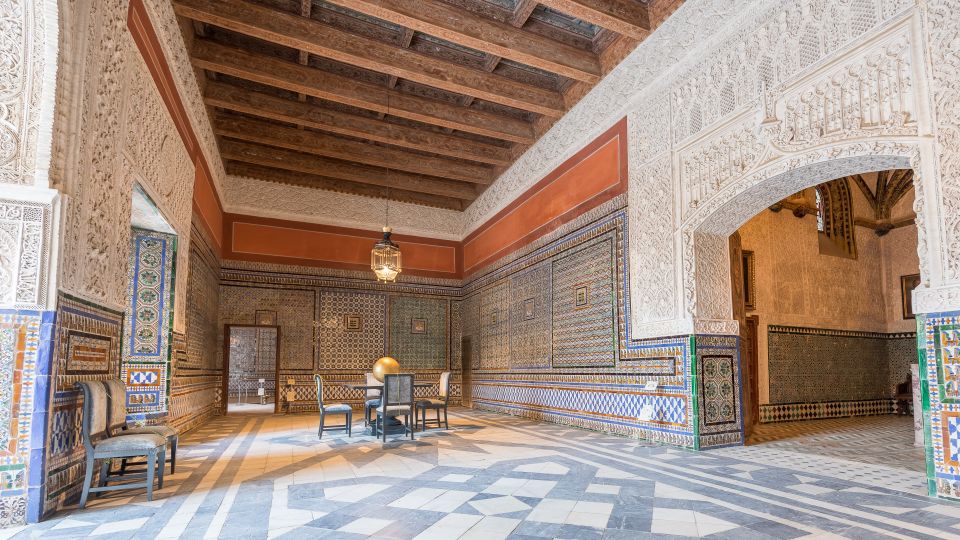
Then there’s the tilework. The glazed tiling shows up throughout the palace, and in the courtyard area you’ll see how it changes the mood. Ceramic patterns reflect light, making spaces feel brighter even when the architecture stays cool and shaded. If your camera roll is mostly ruined by sunsets and churches, this is a refreshing switch: you’re photographing decorative surfaces, not just scenery.
Fine sculptures of classical antiquity: what to look for
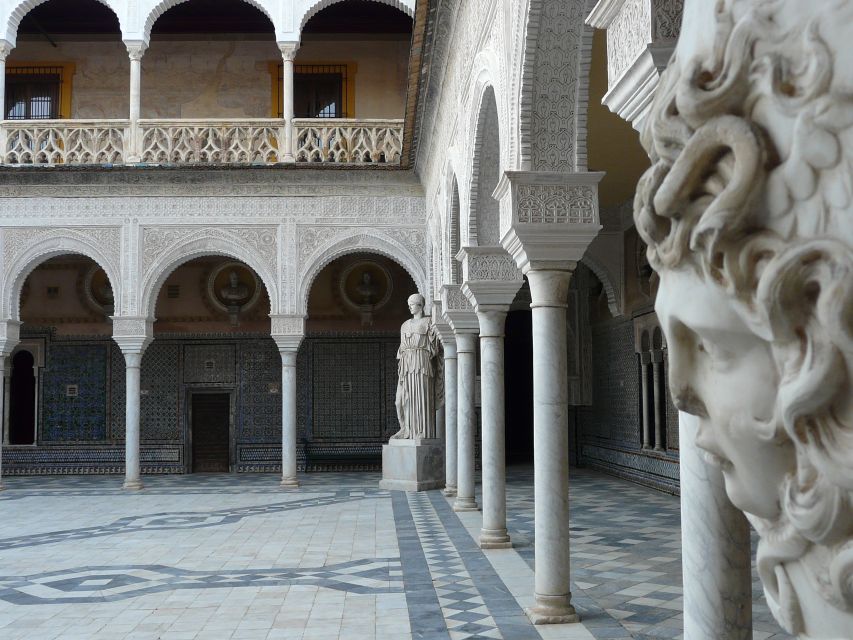
Casa de Pilatos is famous for its collection of art and sculpture, especially pieces tied to Classical antiquity. The ground-floor route gives you time to focus on the themes—emperors, myth-related figures, and the way Renaissance collectors displayed antiquity to show learning and status.
One of the most specific (and interesting) things you can spot in the palace theme is the war imagery connected to Pallas Pacifera. You’ll see ornaments like a shield and helmet carved from stone. Even if you don’t catch every label, the visual impact is clear: the palace isn’t only about soft gardens and pretty tiles. It also shows power—history as something you can touch.
A practical tip: don’t treat each statue as a single photo opportunity. Instead, treat the route like a “gallery of ideas.” As you move from one room or courtyard segment to the next, ask yourself what kind of message the palace is sending—learning, authority, religion, or taste. That simple mindset helps you appreciate the place even if you only have a limited time window.
The Chapel of Flagellation: Mudejar-Gothic meets Renaissance
If you want one stop that feels like a crossroads between worlds, make time for the Chapel of Flagellation. This is described as the oldest part of the palace, and it shows why. The architecture includes an ornate basket-handle arch and a crossover between Christian and Islamic styles, with Mudejar-Gothic and Renaissance elements working together.
You don’t need to be a medieval architecture expert to get something out of this space. The key is to let the shapes do the teaching. Look at the arch form and how it frames the interior space. Then notice how Renaissance-style features appear alongside that older Mudejar-Gothic character. It’s a good reminder that Seville’s past isn’t just one era—it’s layers stacked next to each other.
Because this ticket is self-guided, you’ll control how long you linger. If you’ve listened to a lot of audio already, this is a great place to either pause and watch quietly—or rewind just the chapel track if you want more context. Either way, the chapel is a strong “memory anchor” for the visit.




Salón del Pretorio and the coffered ceiling ceiling bows
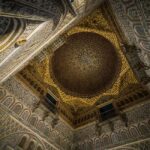
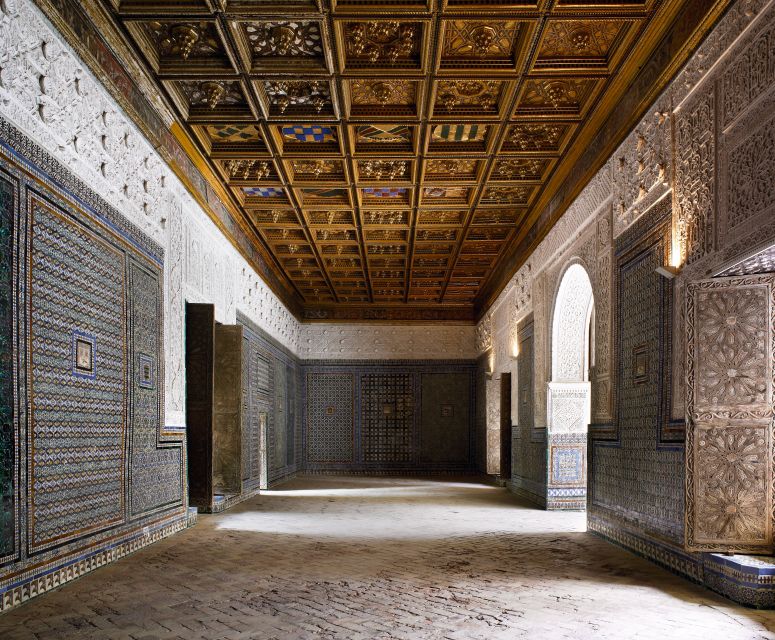
Next up is the Salón del Pretorio, where the ceiling becomes the main event. One of the standout features here is the intricate coffered ceiling decorated with ornamental bows. It’s the kind of decorative work that you can miss if you rush, because the ceilings invite you to look up at the small, repeated details rather than one single center point.
I like this room because it explains, in a visual way, how Renaissance style “arrives” in Seville. The palace was designed to introduce that Renaissance approach, and the ceiling work supports that idea. You can see a different kind of symmetry and planning compared to purely Gothic forms. Even if you’re not a design nerd, your eye will feel the shift.
If you’re traveling with people who get tired of listening to long audio tracks, this is where you can win them over without debate. Ceiling + bows = instant interest. I’ve found that when a space is visually loud like this, you can take breaks from the audio guide and still feel like you got the point.
Gardens and flowers: how the palace slows your pace
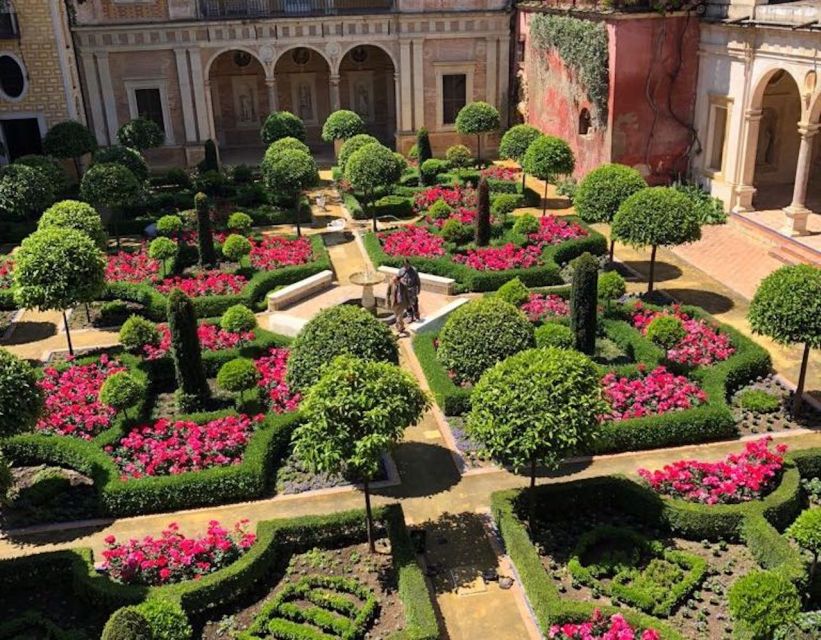
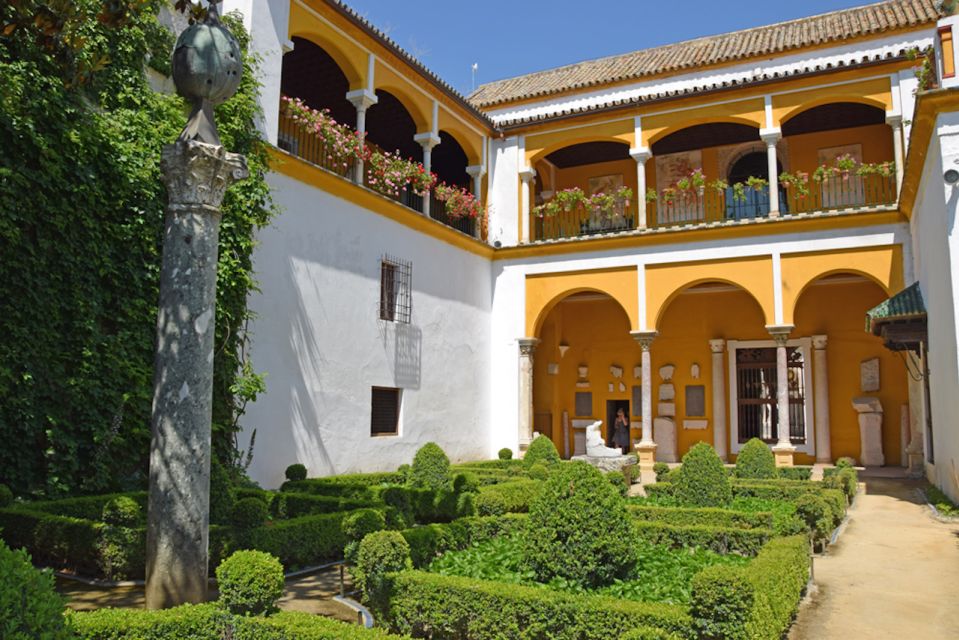
After interiors, the palace gardens do a big job for your mood. The experience isn’t only about architecture; it’s also about the way the grounds let you breathe. The gardens are described as featuring Renaissance style, and on the ground-floor route you’ll get that outdoor-to-indoor rhythm that makes the visit feel calmer than many of Seville’s bigger sites.
Reviews mention flowers and a peaceful atmosphere, and one person specifically pointed out the rose garden. If you time your entry when the palace isn’t packed, you’ll likely enjoy the gardens as a real decompression zone—some visitors even said the palace felt serene, which is a big deal in a city that can feel hot and loud.
A smart move: plan to spend a little longer than you think you need in the outdoor segments. The palace layout makes you want to “just check” one more corner, then suddenly you’re standing in front of tilework or a sculpture for ages because the light is good. That’s not a waste. It’s part of why this palace works as a ground-floor experience.
Price, timing, and deciding if it’s worth $14
At $14 per person, the price is low enough that you can feel comfortable taking your time—but high enough that you should be honest about what you expect.
Here’s the value argument that makes sense for most people: you’re paying for a self-guided walk through major design elements—Roman sculpture themes, glazed tilework, the Chapel of Flagellation, and a Renaissance-style ceiling—plus the audio guide. In other words, you’re not paying only for entry; you’re paying for guided context so you can understand what you’re seeing.
The downside is baked into the ticket itself: this is ground floor only. Some visitors felt the price was a bit steep if you’re not planning to add an upstairs visit later. So my advice is simple:
- If you love sculptures, tilework, and architecture details, $14 is a strong deal for a focused route.
- If you mostly want a quick look and don’t like audioguides, you might feel the cost more sharply.
Timing matters too. The last entry from Tuesday to Sunday is 5:30 PM, so don’t plan a late-day sprint. One big trick from reviews: if you go earlier or around midday when it’s quieter, the palace feels more relaxed. If you like photos, that calm pacing helps you avoid rushing and gives you better light.
Who this ground-floor ticket is best for
This ticket is especially good for you if:
- You like art and sculpture themes (especially classical antiquity and Roman emperors)
- You enjoy seeing how different styles overlap—Mudejar-Gothic and Renaissance together
- You want a place where you can set your own pace and stop to look at ceilings, tiles, and gardens
- You’re okay with an audio guide (it’s included in multiple languages)
It may be less ideal if you:
- Want a live guide style of explanation for every room
- Get frustrated by audio guides that are very detailed
- Are looking for full access to the upper floor in one ticket
Also, if you’re pairing Seville sites on the same day, this palace is a nice counter-programming stop. It’s often described as calmer than bigger blockbuster sites, and that matters when your feet are tired.
Should you book Casa de Pilatos ground-floor entry?
Book it if you want a high-detail palace experience without committing to a huge full-day museum plan. At $14 with an audio guide, you get a lot of visual variety: Roman emperor busts, Renaissance introductions in the architecture, the Chapel of Flagellation, and gardens that make the whole place feel softer and less rigid.
Skip or rethink it if you’re only after quick exterior photos, or if you strongly dislike audioguides. In that case, the ground-floor focus might feel limiting, and the audio could start to feel like work instead of help.
If you’re on the fence, here’s my practical call: go if you like ceilings, tiles, and sculpture themes. If you’re more into sweeping city views, this isn’t that kind of stop. Casa de Pilatos is about craftsmanship and controlled calm—and when that’s your thing, it lands very well.
FAQ
Is this ticket for the ground floor only?
Yes. This entry ticket gives access to the ground floor. Access to the upper floor is not included.
What’s included with the Casa de Pilatos ground-floor ticket?
Your ticket includes entry to access the ground floor and an audio guide.
Is there an audio guide, and what languages is it in?
Yes, an audio guide is included. It’s available in Spanish, French, English, Portuguese, German, Japanese, and Italian.
What language is the host or greeter?
The host or greeter is Spanish.
What’s the latest time I can enter during the week?
From Tuesday to Sunday, the last entry is at 5:30 PM.
Is entry free on Mondays?
Yes. Entry is free on Mondays between 3 PM and 5:30 PM.
How long is the ticket valid?
The ticket is valid for 1 day. You’ll want to check availability to see starting times.
Can I cancel for free?
Yes. Free cancellation is available up to 24 hours in advance for a full refund.
Can I reserve now and pay later?
Yes. The option is Reserve now & pay later, so you can book your spot and pay nothing today.