REVIEW · SEVILLE
Complete Triana Tour “Corrales included”.
Book on GetYourGuide →Operated by Sevilla&ME · Bookable on GetYourGuide
Triana is one of Seville’s most photogenic neighborhoods, but this tour aims higher than pretty streets. You get corrales de vecinos and old-sky courtyards, plus a guided route through the religious landmarks, artisan spaces, and river-history parts of Triana that most people rush past.
What I like most is the balance: you see the big icons (like the Triana side of the river and the market), and you also get the quieter pieces that explain why Triana feels like Triana. Another strong point is the guide focus on local context, with accredited officials and clear communication so the stories land instead of floating by.
One thing to consider: it’s a walking route, even though the operator says all stops are accessible and comfortable without hills, so you’ll still want comfortable shoes and a bit of patience for a tight schedule across multiple stops.
In This Review
- Key highlights at a glance
- Corrales de vecinos: the reason this tour feels local
- Torre del Oro and the bridges: setting the stage before Triana
- Santa Ana, Los Marineros, and Esperanza de Triana devotion
- Chapel of Sailors and Capillita del Carmen: small spaces, big meaning
- San Jorge: the castle feeling and the inquisition echo
- Royal Almohad Almonas tunnels and the soap origin story
- Kilns and craft: San Ana ceramics and the Patio de la Espartería
- Betis and San Jacinto streets: bars, stories, and the local pace
- Triana Market and where to eat after
- Price and time: why $14 can still feel like a lot of stops
- Who this tour fits best
- Should you book this Complete Triana Tour with corrales included?
- FAQ
- FAQ
- Where does the tour start?
- How long is the tour?
- What language is the guide?
- Is the tour wheelchair accessible?
- Do I need WhatsApp on my phone?
- Is there shade during the tour?
- What is included regarding courtyards and neighbor spaces?
- Which major landmarks are part of the walk?
- Where does the tour end?
- Are there any restrictions on what I bring?
- Can I cancel?
Key highlights at a glance

- Corrales de vecinos: shared courtyards that show how neighbors lived, not just what buildings look like
- River-to-neighborhood orientation: Torre del Oro area, then bridges into Triana
- Churches and confraternities: Santa Ana, Los Marineros, and the devotion tied to Esperanza de Triana
- Castle and tunnels: San Jorge and the Royal Almohad Almonas passages
- Market payoff: Triana Market plus real guidance on what and where to eat
Corrales de vecinos: the reason this tour feels local
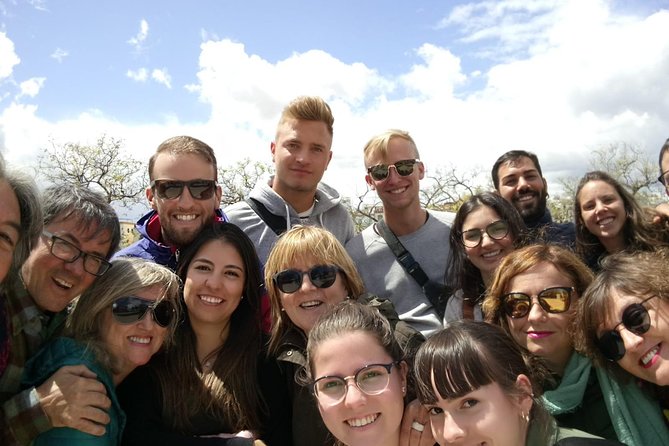
If you only know Triana from photos, you’ll probably expect streets, balconies, and flamenco vibes. This experience adds something harder to fake: the corrales de vecinos and traditional patios open to the sky.
These courtyards are where Triana’s neighborhood life becomes visible. You see the architecture up close and you get the logic of how people gathered, worked, and kept community across generations. It’s also the perfect antidote to typical “look at the view” tourism. Here, the focus is everyday spaces with a long memory.
And because the route includes shaded stops in summer and sun-friendly pacing in winter, the corrales section actually feels comfortable rather than rushed. The operator also notes that all stops are accessible and comfortable without hills, which matters when you’re trying to enjoy small details instead of managing your legs.
You can also read our reviews of more tours and experiences in Seville.



Torre del Oro and the bridges: setting the stage before Triana
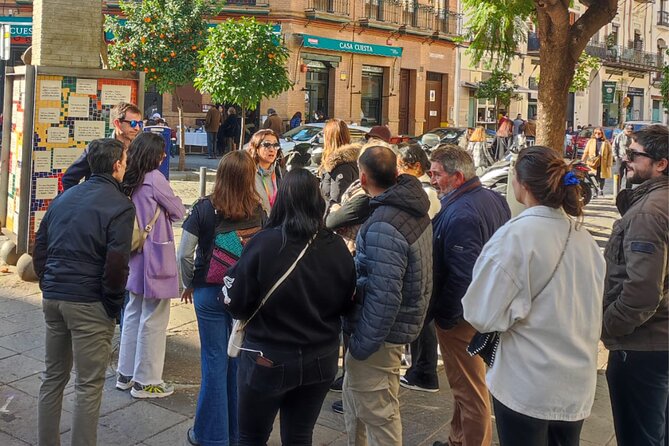
The tour starts at Museo Naval de Torre del Oro, with the guide at the Torre del Oro gate next to the canyons, not down the river. From there, you tour the Torre del Oro itself, which gives you a strong sense of the river edge that shaped this area.
Then you walk through the bridge sequence that frames Triana’s relationship with the rest of Seville: Puente de San Telmo and Puente de Isabel II. Even if you’ve seen these bridges from postcards, guided commentary changes the experience. You notice how the crossings connect neighborhoods, work routes, and daily movement.
This early “orientation phase” is practical value. It helps you understand where you are before you start learning the religious, artisan, and market layers that make Triana feel like its own world across the water.
Santa Ana, Los Marineros, and Esperanza de Triana devotion
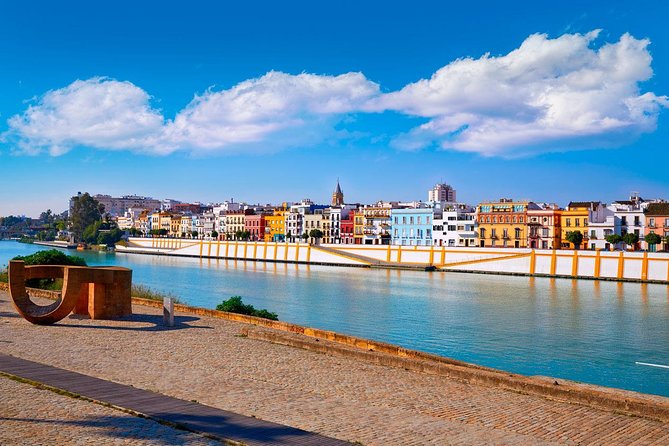
Triana’s identity is strongly tied to faith and neighborhood traditions, and the tour keeps coming back to that in a grounded way.
You visit Plazuela de Santa Ana and the Real Parroquia de Señora Santa Ana, then you move toward the church landmarks associated with the sailor and fishing traditions, including Santa Ana and Los Marineros. The tour specifically highlights the sacred art and devotion of Esperanza de Triana, so you’re not just viewing church facades. You’re being guided through what the devotion means locally.
There’s also a stop connected with community religious life: Hermandad de la Estrella in Triana. In Seville, those brotherhoods shape calendars, processions, and how people talk about their neighborhood. Here, you get the “why” behind the symbolism.
What I appreciate is that the religious stops aren’t treated like museum checkboxes. You learn what to watch for and what to remember after you leave the church doors.
Chapel of Sailors and Capillita del Carmen: small spaces, big meaning

Two chapel stops add texture: the Chapel of Sailors, Sevilla and the Capillita del Carmen. These are the kinds of places that can feel quiet and easy to miss on your own, which is exactly why they work inside a guided route.
Capillitas in Seville can be intimate and intensely specific to local devotion. When someone explains what’s special, you start seeing the details you’d otherwise walk past. The same goes for the sailor chapel theme: it connects the neighborhood’s working identity to its faith.
If you like places where the scale is human and the story is personal, these stops are a highlight of the tour’s tone. They make the neighborhood feel lived-in, not staged.
San Jorge: the castle feeling and the inquisition echo
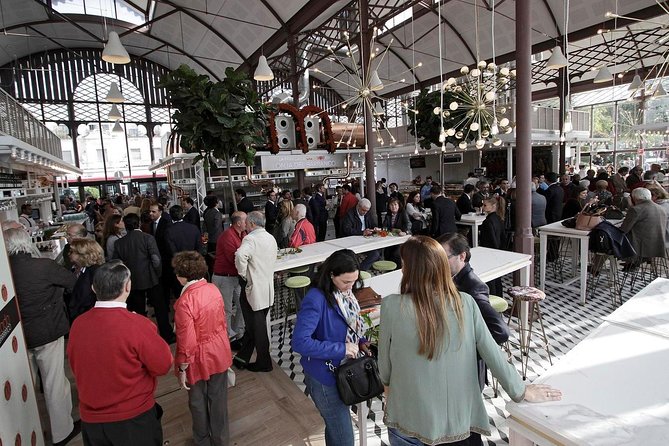
Next comes Castillo San Jorge, Sevilla, tied to a heavy historical note. The tour frames it as a place to feel the passage of the sad inquisition, then walks you through Calle San Jorge afterward.
Even if you’re not a “history details” person, the setting helps. A castle and a street with a long shadow of past events gives you a physical sense of how power and fear moved through neighborhoods. You’ll understand the neighborhood wasn’t only shaped by art and festivals, but also by political and religious control.
This is one of those stops that can shift your mood. It’s not cheerful, but it helps explain why Triana’s stories carry emotion as well as pride.





Royal Almohad Almonas tunnels and the soap origin story

The route includes the tunnels of the Royal Almohad Almonas. This is one of the most intriguing parts because the tour connects the underground space to a major piece of daily life: the claim that the most popular soap in Europe and America was born here.
Even if you’re skeptical by nature (good habit), a guided tour is where you can ask questions and connect the story to what you’re standing near. Tunnels are also a reminder that Triana’s past wasn’t only surface-level architecture. There were systems beneath the streets that supported industry and everyday routines.
If you enjoy technical-feeling history, or you like the odd “how did this become a global product” angle, this section delivers more curiosity than you’d expect from a short tour.
Kilns and craft: San Ana ceramics and the Patio de la Espartería
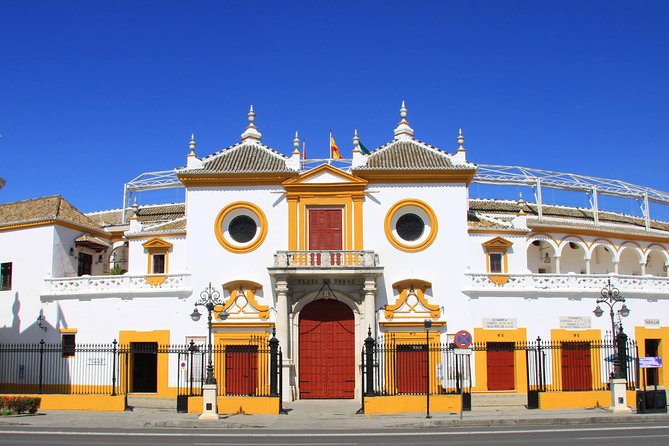
Triana’s artisan side is a big part of the tour’s appeal, and the best example is the visit to the San Ana Ceramics Factory, including the great kilns where tradition continues.
Ceramics in Seville isn’t just decoration. It’s labor, craft, and local materials. Having a guided stop at a working or historically tied factory helps you understand how design shows up in objects people actually use and display.
You also visit the Patio de la Espartería, an architectural stop described as elegant with unique design. Patios like this are where Triana’s layout makes sense: light, air, and community space. They’re also a change of pace from churches and castles, so the tour doesn’t become one long history lecture.
Betis and San Jacinto streets: bars, stories, and the local pace
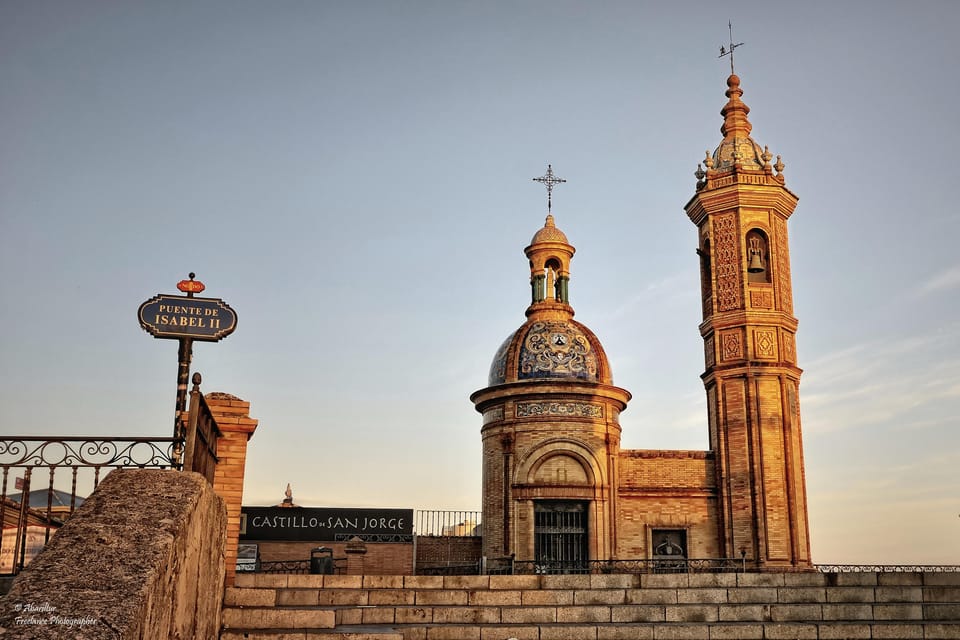
In between landmarks, the tour walks through the Betis and San Jacinto streets, described as full of bars, stories, and legends. This is where Triana starts to feel like a place you could actually spend time.
You’re not just passing storefronts. You’re being guided through what the streets represent and how they connect to Triana’s identity as a neighborhood where art and social life walk side by side. It’s also where you’ll pick up the kind of “what matters here” knowledge that helps you navigate later on your own.
Triana Market and where to eat after
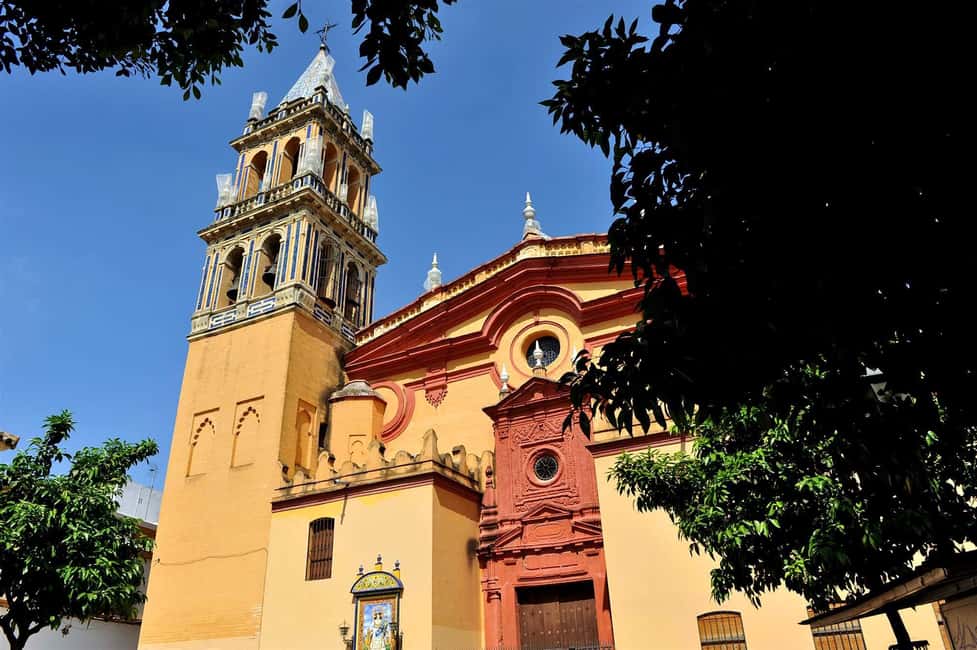
The tour ends at the Triana Market area, with the finish listed at Pl. del Altozano, 16A. If you’ve got energy left, this timing is smart. You finish near the place where you can keep exploring without backtracking.
The tour includes a stroll through Triana Market, and it also offers practical advice on how to recommend what and where to eat, including Triana and Sevillian food and even gypsy tapas. That last part is important: a good neighborhood market guide doesn’t just point you at food. They help you choose based on taste and what’s most “Triana” for the day.
If you’re visiting for the first time, you’ll leave with a plan. If you’ve visited before, you’ll still benefit because you’re getting guidance on what to pick inside the market’s maze.
Price and time: why $14 can still feel like a lot of stops
The price is listed at $14 per person for a 2-hour tour. For that time window, you’re getting a lot of guided stops that mix architecture, faith landmarks, craft history, and market time.
The operator also emphasizes that stops are accessible and comfortable without hills, and the tour is wheelchair accessible. That combination matters for real-world comfort. It means you can focus on learning instead of negotiating steep steps at every corner.
Two practical notes from the experience description:
- In summer, stops are in the shade; in winter, you’re in the sun more. Dress accordingly.
- Bring a phone with WhatsApp so the guide can contact you to send arrival instructions and help with delays.
Also, the tour is Spanish only, and speakers are not allowed. If you rely on audio devices, swap to normal listening and let the guide do the explaining.
Who this tour fits best
This is a great match for you if:
- You want Triana’s story in one guided, efficient loop rather than a self-guided scavenger hunt
- You care about local spaces like corrales de vecinos and patios, not only big monuments
- You like religion and artisan history when it’s explained in a human way
- You want help turning sightseeing into a good meal plan afterward
It also works well with families and younger travelers since the operator notes children and teenagers occupy a seat.
Should you book this Complete Triana Tour with corrales included?
Yes, if you want a short trip that covers the neighborhood’s layers with a guide who keeps it understandable and specific. The corrales de vecinos and patio visits are the kind of detail that make you remember Triana beyond the usual sightseeing checklist. Add in the craft stops (ceramics), the faith landmarks (Santa Ana, Los Marineros, Esperanza de Triana), and the market finish, and the $14 price starts to make sense as value.
If you hate walking routes or you need long stretches of rest time, this might feel too packed for your style—even with the note about no hills. In that case, consider a slower, more spaced-out plan.
FAQ
FAQ
Where does the tour start?
The guide meets at the Torre del Oro gate next to the canyons, not down the river.
How long is the tour?
It’s listed as 2 hours, with starting times depending on availability.
What language is the guide?
The live guide is Spanish.
Is the tour wheelchair accessible?
Yes. The tour is marked as wheelchair accessible, and the description says stops are accessible and comfortable without hills.
Do I need WhatsApp on my phone?
It’s strongly recommended. The operator asks you to include a mobile with WhatsApp so they can send you instructions and you can reach them if needed.
Is there shade during the tour?
In summer, stops are in the shade. In winter, the tour is described as being in the sun.
What is included regarding courtyards and neighbor spaces?
You’ll visit corrales de vecinos and traditional courtyards of old houses open to the sky.
Which major landmarks are part of the walk?
The tour includes stops such as Torre del Oro, Puente de San Telmo, Puente de Isabel II, Santa Ana, Los Marineros area sites, Castillo San Jorge, and Triana Market, plus other listed cultural stops.
Where does the tour end?
It ends in the Triana Market area, with the finish listed at Pl. del Altozano, 16A, 41010 Sevilla.
Are there any restrictions on what I bring?
Speakers are not allowed.
Can I cancel?
The experience lists free cancellation up to 24 hours in advance for a full refund.