REVIEW · SEVILLE
Rock art and Ronda
Book on Viator →Operated by Sevilla Moving · Bookable on Viator
Some days feel built for your camera and your curiosity. This one pairs prehistoric rock art at Cueva de la Pileta with the dramatic drop into Ronda’s gorge. You’ll get a guided visit focused on the paintings and engravings, then a real taste of Ronda’s old-and-new contrasts.
I especially love how the cave visit is explained in plain human terms, not just dates on a placard. Seeing Franco-Cantabrian style imagery with animals like cervids, horses, and bulls helps it click fast, and having a guide makes a huge difference inside the cave. The big drawback to plan for is that the day is long, and lunch isn’t included, so you’ll need to budget time and money for your meal.
By the time you reach Ronda, you’re already in “west-of-Seville scenery mode.” The city’s setting on a deep gorge gives you constant viewpoints, and you’ll spend dedicated time walking the old town area with a guide. If you’re looking for a single organized day that hits rock art plus a standout Andalusian town, this is a strong fit.
In This Review
- Quick Takeaways Before You Go
- A Small-Group Day Trip From Seville That Doesn’t Feel Like a Hurry-Up
- Comfort and Timing: What the 9 Hours Really Means for You
- Cueva de la Pileta: Prehistoric Art You Can Understand (With Help)
- Spotting the Big Ideas in the Art’s Dates (7,000 to 4,500)
- Ronda’s Gorge City Time: New Bridge Views and an Old Town Walk
- Los Pueblos Blancos: The White-Village Feel on the Way There
- Guides Make It: How Francisco and Miguel Improve Your Day
- Lunch, Tips, and the Pace Reality Check
- Price and Value: What You Get for $270.93
- What to Pack and How to Prepare for a Cave-to-City Day
- Should You Book This Tour?
- FAQ
- How long is the Rock art and Ronda tour?
- What’s included in the price?
- Is admission to Cueva de la Pileta included?
- Is lunch included?
- What language is the tour offered in?
- What is the group size?
- Is this experience refundable?
Quick Takeaways Before You Go
- Cueva de la Pileta admission is included, so you can spend your mental energy on the art, not logistics.
- Small group size (max 8) keeps the pace easier to handle on a 9-hour day.
- Ronda is more than a photo stop with guided time focused on the old town and major monuments.
- Los Pueblos Blancos scenery adds that classic Andalusian “white villages” backdrop on the drive.
- English-guided experience with help inside the cave makes the visit easier to follow.
A Small-Group Day Trip From Seville That Doesn’t Feel Like a Hurry-Up
This tour is designed for one clear goal: see something rare, then make sure you actually have time to enjoy it. You start in Seville at 9:00 am and return to the same meeting point, with roundtrip transport in an air-conditioned vehicle.
The group stays small, up to 8 people. That matters because you’re doing two very different environments in one day: a dark cave setting and an outdoor city walk where you want the time to actually look around. The pace won’t be “sit, stand, sprint,” and you can ask questions without shouting over a crowd.
One thing I’d keep in mind: it’s a full 9-hour block. Even with a smooth schedule, you’ll want a steady breakfast and water, because lunch is on your own.
You can also read our reviews of more tours and experiences in Seville.



Comfort and Timing: What the 9 Hours Really Means for You
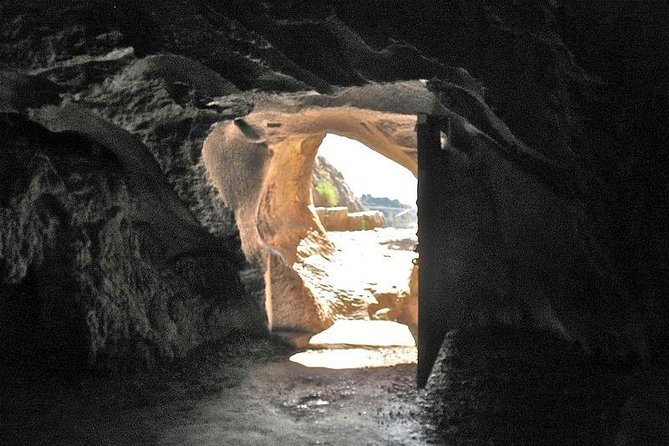
The itinerary is built around two main time blocks: a cave visit and time in Ronda, plus the scenic travel between them. The cave portion is listed at 2 hours with admission included, and Ronda also gets about 2 hours.
That balance is the whole point. If you’ve ever tried to visit Ronda on your own and stitched it together with a separate cave visit, you know how fast time disappears. Here, you’re paying for the “connected day” setup: transport, guiding, and the cave ticket.
For comfort, plan for a moderate fitness level. That doesn’t mean you need to be an athlete, but you should expect some walking and moving around both outdoors and indoors.
Cueva de la Pileta: Prehistoric Art You Can Understand (With Help)
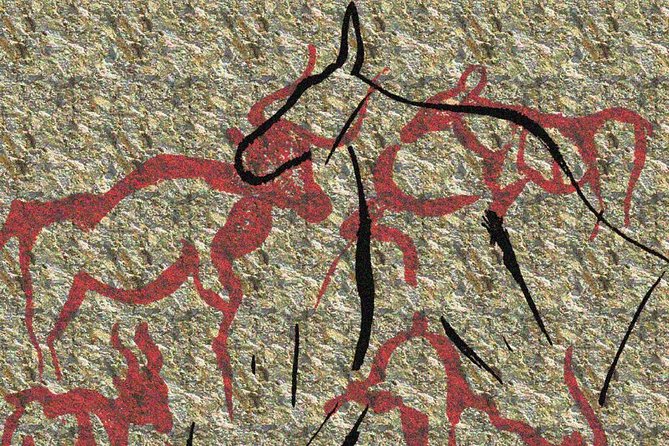
The cave of Cueva de la Pileta sits in Benaoján, in the province of Málaga. It’s a prehistoric site with Paleolithic parietal art plus Neolithic remains, and it was discovered in 1905 by José Bullón Lobato. Later studies and exploration by scholars like Willoughby Verner, Henri Breuil, and Hugo Obermaier helped place it in the larger story of European rock art.
What you’re really going to notice inside is the variety. The cave gathers paintings and engravings in Franco-Cantabrian style, and the subject matter is concrete enough that your brain can hold it. You’ll see representations of cervids, horses, fish, goats, bulls, plus a seal, a bison, and abstract signs. There are also indeterminate figures, which can be the most fascinating part once someone explains what to look for.
Here’s why the guided approach is valuable: rock art can feel vague if you’re left to guess. When you hear how the imagery and the style fit into a wider timeframe, it stops being “cool cave drawings” and becomes “I understand why this is important.” The tour’s guide support inside the cave is a real plus, and it shows up in the way the experience is described by guests.
Also, expect the cave visit to be time-boxed. It’s listed at about 2 hours, which is enough to see the art and get explanations, but not enough to linger for your own personal slow-browse. If you love museums and could spend hours in one room, you’ll still enjoy this, but you might wish it ran longer.
Spotting the Big Ideas in the Art’s Dates (7,000 to 4,500)
The artwork in this cave covers years between about 7,000 and 4,500 (spanning later Paleolithic through the broad prehistoric range mentioned for the site). Those dates matter because this kind of art isn’t only tied to “the usual” rock art zones.
This is one of the reasons the cave is considered important in the broader spread of Paleolithic art beyond its classical development areas. You’re seeing evidence that artistic expression traveled and changed across regions, not just stayed fixed in one part of Europe.
Inside, your guide helps you make sense of the mix: animal figures, repeated visual motifs, and abstract signs. Once you can name what you’re looking at, your photos stop being random and start being meaningful.
If you want an easy win, do this: look for the animals first. Your eyes will naturally follow the figures, and then the abstract signs start to feel less like guessing and more like part of the same language.
Ronda’s Gorge City Time: New Bridge Views and an Old Town Walk
Then you shift gears to Ronda, a city perched on a deep gorge. The gorge separates the new city from the old town, with the old town dating back to Arab rule, while the newer area dates to around the 15th century.
This “two cities in one” layout is what makes Ronda so memorable. You don’t just see a landmark; you see how the town evolved on opposite sides of the landscape. It’s also why the views matter so much—every turn gives you another angle into the drop.
One of the key features is the New Bridge. The bridge has a viewpoint where you get views straight over the gorge. It’s the kind of spot that makes your phone battery sweat, but you’ll also enjoy it with your eyes. Don’t rush it. Take a minute and let the scale sink in.
You also get time to see Ronda’s bullring in the new city. It’s described as a prominent monument of the eighteenth century, and it adds a different flavor than the gorge and the old town lanes. If you like architecture that tells a story, Ronda has plenty of it in a compact footprint.
Inside the city time, having a guide for a walking tour helps you get your bearings fast. In the feedback you can sense what works: guests talk about guided old-city walking and a leader who is willing to show more, even if time runs out.




Los Pueblos Blancos: The White-Village Feel on the Way There
This day is framed around Los Pueblos Blancos, the white villages region. Even if your main “time on your feet” is in the cave and Ronda, you still get the atmosphere through the travel itself—Spanish countryside plus the visual identity of white-walled towns.
For me, that’s part of the value. You’re not just doing two separate stops; you’re getting the road trip feeling that makes Andalusia feel like Andalusia. You’ll likely find opportunities to pause for photos when the scenery is worth it, especially when the landscape opens up beyond Seville’s city rhythm.
If you’re the type who loves driving routes because the views are half the trip, you’ll probably like how this tour builds that in.
Guides Make It: How Francisco and Miguel Improve Your Day
A cave can be impressive on its own. A cave with a good guide becomes memorable.
One guest specifically called out Francisco for helping them through the caves and praised him as both a careful driver and a strong host during the day. Another guest highlighted Miguel as energetic and full of interesting information throughout the tour, with extra help for understanding a bilingual guide inside the cave.
That matters for your experience because the cave is not naturally intuitive. When a guide helps you interpret what you’re seeing—animals, engravings, abstract signs—you come away feeling like you actually learned something.
So yes, you’re buying transport and tickets. But the real service is interpretation: turning what could be a quick look into a visit with context.
Lunch, Tips, and the Pace Reality Check
Lunch isn’t included. That’s the main planning snag to know upfront. The good news is that you’re not left totally stranded—you’ll have time for a meal in the Ronda area, and some guests describe lunch as delicious in the new city.
Still, plan like lunch is your responsibility. Bring a small snack for later in the morning if you run hungry, and be ready to pay on the spot. Also remember tips aren’t included, so if you appreciate the guide and driver, you’ll want to factor that into your budget.
If you prefer a fully packaged meal, you might find this frustrating. If you’re fine choosing your own lunch option (and you like the flexibility), it’s not a dealbreaker.
Price and Value: What You Get for $270.93
At $270.93 per person, this isn’t the cheapest way to get out of Seville. But it does include several items that usually add up quickly:
- Roundtrip transportation from Seville in an air-conditioned vehicle
- Tickets for Cueva de la Pileta
- A guide for the day
Ronda’s main admission is listed as free for the stop itself, and the value shift comes from the cave ticket being included. In practice, you’re paying for the “hard-to-coordinate” part: getting you to the cave and back with a guide who can explain what’s important once you’re there.
Also, the small group cap at 8 people often changes the vibe. A bigger tour can turn the cave into a line you shuffle through. Here, the structure is built for a smoother guided experience, which is part of why the rating is high.
If you only have one day and you want both rock art and Ronda without building a complex plan, the price starts to feel fair.
What to Pack and How to Prepare for a Cave-to-City Day
Because the tour includes a prehistoric cave plus city walking, I’d plan for “two weather types”: cooler indoor time and outdoor light later.
Bring comfortable walking shoes. Even if the walking doesn’t sound extreme, you’ll be moving enough that stiff soles feel like a mistake. A light layer can help since caves often feel cooler than the daylight outside.
Also, since lunch is not included, keep your day fueled. A small snack in your bag can save you from feeling off-balance by mid-afternoon. If you’re prone to motion sickness, consider that the route includes winding roads and a careful driver is part of the tour experience you’ll hear about—still, it’s wise to be prepared.
Lastly, you’ll get a mobile ticket. Bring your phone with enough battery, and make sure you can access it easily at the start.
Should You Book This Tour?
Book it if you want a guided day that combines two big hits: Cueva de la Pileta rock art and Ronda’s gorge city. This is especially worth it when you prefer not to coordinate tickets and transport on your own, and you like the idea of a small group keeping things comfortable.
Skip it if you only care about one of the two priorities. If your main focus is Ronda and you already know you’ll do rock art independently, you might feel the price is too high for what you’ll value. And if you want lunch taken care of, remember you’ll be choosing and paying for it yourself.
If you’re on a Seville trip with limited time and you want a day that feels more than sightseeing, this one earns its good reputation through the combination of included cave access, a guided explanation that helps the art click, and real time in Ronda rather than a rushed stop.
FAQ
How long is the Rock art and Ronda tour?
The tour runs for about 9 hours.
What’s included in the price?
You get roundtrip transportation from Sevilla, a guide, air-conditioned vehicle transport, and tickets for Cueva de la Pileta.
Is admission to Cueva de la Pileta included?
Yes. The Cueva de la Pileta admission ticket is included.
Is lunch included?
No. Lunch is not included, and tips are also not included.
What language is the tour offered in?
The tour is offered in English.
What is the group size?
The group has a maximum of 8 travelers.
Is this experience refundable?
No. It is non-refundable and cannot be changed for any reason.