REVIEW · SEVILLE
The must see in Seville
Book on Viator →Operated by guidedtourseville · Bookable on Viator
A great highlights sweep of Seville. This private tour strings together the city’s most important sights in a logical route, with hotel pickup plus insider tips on where to eat, drink, and wander. You’ll get explanations that connect the dots: why buildings are where they are, how neighborhoods evolved, and what to look for beyond the postcard view.
Two things I especially like are the pace control of a private tour and the mix of stops that spans old Seville and modern landmarks. One review highlighted how the guide, Juan (spelling as reported), stayed calm and patient with a child in the group and didn’t rush people who needed a moment.
One consideration: not every stop has entrance included. The Church of Salvador and the Setas de Sevilla list admission as not included, so you may want to budget a little extra if you plan to go inside those specific spots.
In This Review
- Key highlights at a glance
- Why This Seville Highlights Tour Works for First-Timers
- Starting at Plaza Nueva and Ending at Plaza de España
- Ayuntamiento Square: Seville’s Origins in One Stop
- Iglesia Colegial del Salvador: Connecting the Church to the Cathedral
- Setas de Sevilla and Calle Marmoles: Old Remains and Modern Angles
- Barrio Santa Cruz: The Jewish Quarter Streets You’ll Actually Remember
- Hospital de los Venerables: A Useful Break in the Best Place
- Plaza del Triunfo: See the City’s Big Monuments from the Outside
- Real Fábrica de Tabacos: Architecture With an Opera Connection
- Plaza de España: How to Visit the Provinces Without Getting Lost
- Price and Value: What You’re Paying For
- Who Should Book This Tour (and Who Might Skip It)
- Should You Book This Must-See Seville Tour?
- FAQ
- Where does the tour start and end?
- How long is the tour?
- What is the price per person?
- Is hotel pickup offered?
- Is this tour private?
- What language is the tour in?
- Is a mobile ticket provided?
- Are entrance tickets included for all sights?
- Is coffee or snacks included?
- What’s the cancellation and weather approach?
Key highlights at a glance
- City-center hotel pickup so you start the day without hassle
- Private group experience with a more personalized pace
- Old Seville to modern icons: Santa Cruz, the Setas, and Plaza de España
- Smart breaks built into the route, including time at Hospital de los Venerables
- Mix of included and free-to-see stops with optional paid entries
Why This Seville Highlights Tour Works for First-Timers
Seville can feel like a “too much, too fast” city if you try to DIY your first day. This format helps because it bundles the major areas into a tight itinerary, with your guide explaining what you’re seeing as you move. You’re not just collecting photos; you’re learning how the city grew and why certain places matter.
The time window is also a big deal. At around 2 hours to 2 hours 40 minutes, it’s long enough to cover real highlights, but not so long that you end up exhausted before dinner. That balance is especially useful if you’re arriving from a train or cruise day, or you want something you can build your afternoon around.
And because it’s private, you’re not stuck following a rigid script at the speed of the group. If you want to linger at a square or ask a question about architecture, you’ll have that flexibility more than you would on a large tour.
You can also read our reviews of more tours and experiences in Seville.



Starting at Plaza Nueva and Ending at Plaza de España
The tour begins at Plaza Nueva, and your guide meets you at the main entrance of Ayuntamiento (city hall), identifiable by flags. I like this meeting point because it’s easy to orient yourself around central landmarks before you start moving through the historic core.
The tour ends near Plaza de España, specifically at the avenue area by Av. Isabel la Católica. That matters because it turns the day into a natural flow: you start in the older civic heart of Seville, move through neighborhoods, and finish at the grand 1929 exhibition showcase.
If you’re trying to plan meals, this ending spot is handy. You’ll finish right where it’s easy to branch out for coffee, a snack, or a longer wander afterward—without needing to cross town again.
Ayuntamiento Square: Seville’s Origins in One Stop
Your first stop is Ayuntamiento (City Hall), with an introduction to Seville’s origins and an explanation of the square and its main buildings. This is a smart warm-up. Before you wander into smaller streets, you get context for what you’re about to see.
For many first-timers, Seville’s layout feels confusing at first. A quick briefing like this helps you understand how civic power, religious buildings, and later development fit together. You also start learning the local language of architecture—what features tend to show up where, and why certain areas became important.
This first segment is about 20 minutes, with admission listed as free. The free entry matters because it keeps your morning simple: you can focus on orientation and commentary instead of tickets right away.
Iglesia Colegial del Salvador: Connecting the Church to the Cathedral
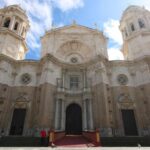
Next up is Iglesia Colegial del Salvador, where the guide explains the church, why it’s located there, and how it relates to the current cathedral. Even if you don’t plan to pay for interior entry, this stop sets you up to notice relationships between religious sites—how the city’s sacred geography evolved.
Timing here is tight: about 10 minutes, and admission is listed as not included. That’s not a deal-breaker, but it’s a point you’ll want to remember. If church interiors are your thing, you might choose to budget for that entrance separately.
If church history isn’t your priority, you can still use this stop as a visual checkpoint. The explanation can help you see how Seville’s religious buildings aren’t random; they’re connected by location and story.
Setas de Sevilla and Calle Marmoles: Old Remains and Modern Angles
One of the most interesting combinations on the route is Setas de Sevilla, the modern landmark, paired with Calle Marmoles, which highlights one of the oldest remains in Seville.
At the Setas stop, the guide explains why you’re standing in front of the city’s most modern monument and what the area was like in the past—and what you can do in the Metropol area nearby. This is the kind of context that makes a modern structure feel less like an alien object dropped into old streets.
Then you move to Calle Marmoles for about 5 minutes, where you’ll see an older remnant. It’s brief, but it’s a good reminder that Seville’s layers show up everywhere if you know what to look for.
Setas admission is listed as not included, so treat it like an optional add-on if you want to go in or do activities associated with the monument. Calle Marmoles is listed as free, which is convenient.






Barrio Santa Cruz: The Jewish Quarter Streets You’ll Actually Remember
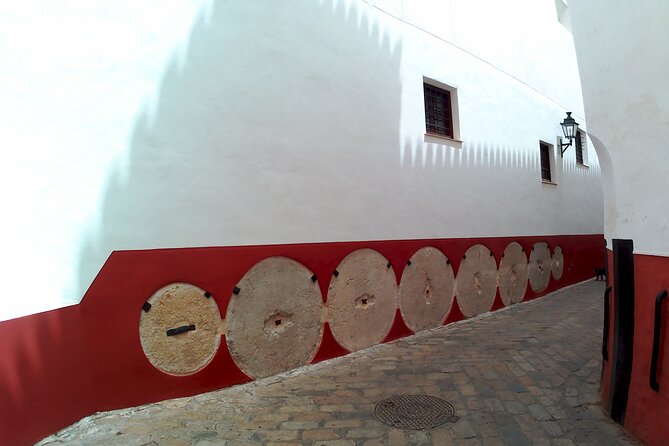
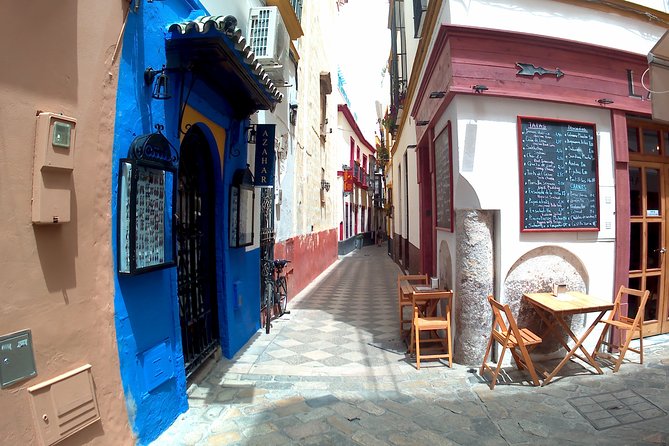
The longest block is Barrio Santa Cruz, around 50 minutes. This is where the tour becomes more than a history lesson—it becomes a walk through the streets and squares that shaped old Seville.
The guide focuses on the most important streets and squares, including the area’s past as part of the old Sevillian Jewish quarter. That kind of explanation changes how you experience narrow lanes and small plazas. Suddenly you’re not just passing through alleys; you’re moving through a real neighborhood history.
Everything here is listed as free, which is nice when you want to keep costs predictable. It’s also a stop that benefits from a private format. Santa Cruz is the kind of place where you may want extra time to photograph a particular corner, look up at balconies, or stop briefly when the streets open into a small square.
Hospital de los Venerables: A Useful Break in the Best Place
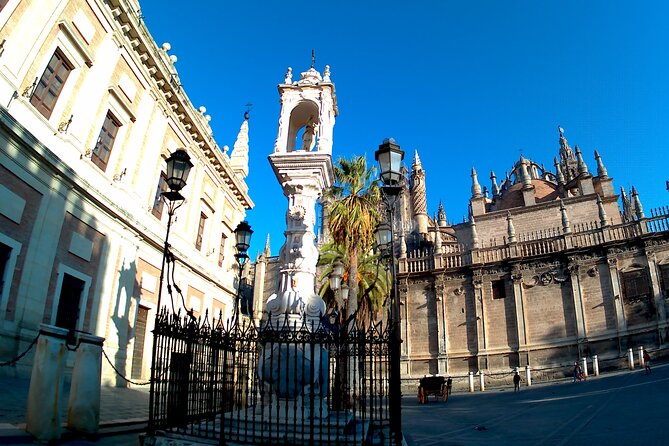
At Hospital de los Venerables, the tour builds in a short break of about 10 minutes. The guide stops in the square so you can use the restroom if needed or grab a coffee or ice cream.
This is practical tour design. When people skip breaks, they spend the rest of the day rushing. Here, the pause happens mid-route—so you can reset before the final stretch of viewpoints and showpiece buildings.
Admission isn’t listed here as part of the stop, so it functions mainly as a comfort and pacing tool. For families or anyone who wants to keep energy for the afternoon, this is the kind of detail that makes the difference.
Plaza del Triunfo: See the City’s Big Monuments from the Outside
Next is Plaza del Triunfo, about 20 minutes. This stop is all about seeing the city’s most important monuments from the outside, with guidance on what they are and instructions on how to visit if you want to go deeper.
I like this approach because it prevents decision fatigue. Instead of guessing what you should enter later, you get a clear map in your head. It also helps you time the rest of your day based on what you truly care about.
If you only have one day and you’re trying to pick your “must enter” spots, this kind of framing is incredibly helpful. You learn what’s nearby and what your priorities should be.
No entrance is listed as required here, which keeps the stop focused on views and understanding.
Real Fábrica de Tabacos: Architecture With an Opera Connection
Then comes Real Fábrica de Tabacos. The guide explains the building and how it inspired a famous opera. Even if you don’t connect the dots immediately, this is still a solid stop because it links architecture to culture.
This portion is short—about 10 minutes—and listed as free. That makes it a good use of time: you get a clear explanation without turning the tour into a long museum-style visit.
If opera is part of your travel interests, this stop gives you a story to carry into the rest of the day. And if opera isn’t your thing, you can still enjoy understanding why the building’s design and role made it culturally significant.
Plaza de España: How to Visit the Provinces Without Getting Lost
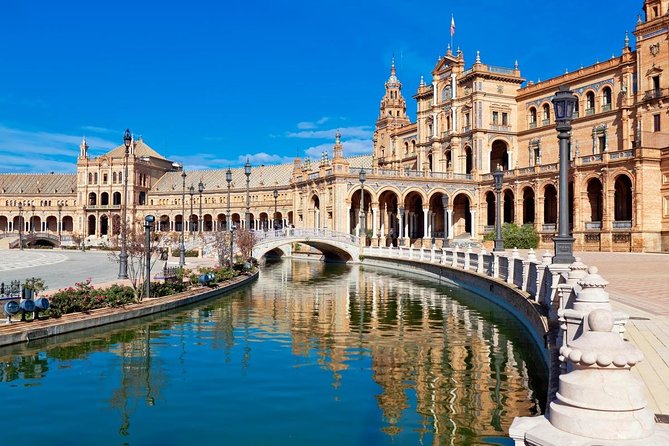
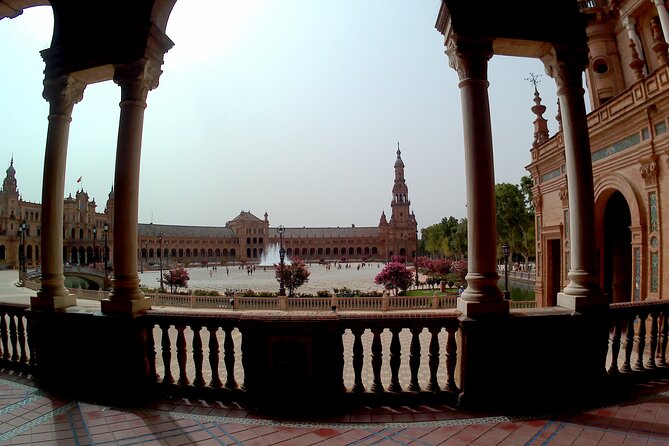
Finally, you reach Plaza de España, one of the most photographed places in Seville—and for good reason. The guide explains the building and some of the provinces represented in the square, giving you something to look for besides the big vistas.
Your time here is about 15 minutes, with admission listed as free. That’s enough time to appreciate the layout and understand what the decorations mean, but not so much that you lose the afternoon. It’s also a great finishing point because the square naturally pulls you outward into more exploration after your guided portion ends.
There’s also mention of a pavilion you’ll see on the way to Plaza de España. That’s a nice bonus because it keeps the last stretch visually interesting, rather than feeling like you’re just “getting there.”
Price and Value: What You’re Paying For
The tour price is $103.34 per person, and it typically runs 2 to 2 hours 40 minutes. For this kind of route—central meeting point, pickup option, and a guide who explains multiple stops—this is fairly good value if it matches your travel style.
Here’s how I think about the cost-to-benefit balance:
- You’re paying for context. The guide’s explanations are what make short stops meaningful.
- You’re saving effort with pickup offered and an efficient sequence of sights.
- You get free-to-see segments most of the time, with a few paid admissions listed as not included.
What’s not included is also clear: private transportation and coffee and/or tea. So if you plan to stop for snacks, you’ll pay for those separately.
And remember the two key optional expenses: Iglesia Colegial del Salvador and Setas de Sevilla list admissions as not included. If you want those interiors or top-level access, check on the day and decide based on your interests and time.
Who Should Book This Tour (and Who Might Skip It)
This works best if you want a first-day or orientation tour and you like learning how a city works—not just where to take pictures. If you’re planning to spend most of your time on your own later, this guide-led overview gives you a strong foundation.
It’s also a good fit for families. One review stood out for how patient the guide was with a child, without pushing people to rush. If your group includes kids or anyone who needs a slower pace, a private format is a practical advantage.
If you already know Seville really well and you want very specific deep dives—like long cathedral interior time or lengthy museum hours—you might find the schedule a bit compact. In that case, you might prefer a tour focused on fewer sites with longer stays.
Should You Book This Must-See Seville Tour?
Yes, if you want a smart “Seville highlights” route that gets you oriented fast, with pickup offered, clear explanations, and time to breathe. It’s especially worth booking when you have limited time and you still want to understand what you’re seeing at Ayuntamiento, Santa Cruz, Plaza del Triunfo, and Plaza de España.
Skip it only if your priority is long interior visits at every stop, because two major admissions are listed as not included. Otherwise, this is a solid, efficient way to get bearings and set yourself up for a great afternoon in Seville.
FAQ
Where does the tour start and end?
It starts at Plaza Nueva (meeting at the main entrance of Ayuntamiento). It ends at Plaza de España (Av. Isabel la Católica area).
How long is the tour?
The duration is approximately 2 hours to 2 hours 40 minutes.
What is the price per person?
The price is $103.34 per person.
Is hotel pickup offered?
Yes. Pickup offered is included, described as starting from your city-center hotel area, with a meeting point at the city hall.
Is this tour private?
Yes. It’s listed as a private tour/activity, meaning only your group participates.
What language is the tour in?
The tour is offered in English.
Is a mobile ticket provided?
Yes. The tour features a mobile ticket.
Are entrance tickets included for all sights?
Not all of them. Tickets are listed as not included for Iglesia Colegial del Salvador and Setas de Sevilla. Other stops in the route are listed as free.
Is coffee or snacks included?
No. Coffee and/or Tea is not included.
What’s the cancellation and weather approach?
You can cancel for a full refund up to 24 hours before the experience starts. The experience requires good weather; if it’s canceled due to poor weather, you’ll be offered a different date or a full refund.