REVIEW · SEVILLE
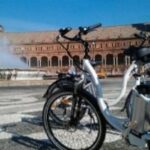
Bike tour through the monumental area of Seville
Book on Viator →Operated by Sevilla Moving · Bookable on Viator
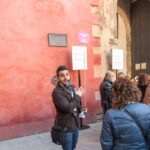
Seville is best when you move at human speed, and this bike tour does it for you. In about 2 hours 30 minutes, I love how it stitches together Seville’s landmark sights with quieter alleys and the legends that make the city feel personal. You’ll get a smooth route through the historic center while a guide fills in what you’re actually looking at.
Two things I really like: first, the way the tour connects famous places to specific local meaning (not just dates on a plaque). Second, you’re stopping for real sight time at key icons, including Plaza de España and the Torre del Oro, without wasting the whole day on logistics. Each stop is paced so you can look, listen, and roll on.
One possible drawback to keep in mind: it runs in good-weather conditions, and the sightseeing time is tight. If you want long, slow, inside visits everywhere, you may prefer a longer day tour instead of this brisk, monument-focused ride.
In This Review
- Key highlights before you ride
- Why a 2.5-hour bike ride makes sense in Seville
- Jardines de Murillo: the Alcázar gardens turned city park
- Plaza de España: what the 1929 exposition changed
- The Palace of the Dukes of Montepensier: royal footprint in motion
- Torre del Oro: a port defense tower with real stories
- Puente de Isabel II to Triana: history and legends across the river
- Real Maestranza de Caballería: plaza views and cultural context
- Catedral de Sevilla: exterior focus on doors, sculptures, and scale
- Real Alcázar of Seville: Patio de Banderas and Santa Cruz access
- Archivo General de Indias: why trade records matter
- Real Fábrica de Tabacos: stepping into the former tobacco factory
- Price and value: where the money goes in this tour
- Practical timing and the meeting point that keeps things easy
- Who should book this Seville bike tour (and who might not)
- Should you book this Seville bike tour?
- FAQ
- How long is the bike tour through Seville’s monumental area?
- What does the tour cost?
- Is the tour private?
- Where does the tour start?
- What time does the tour start?
- Is the ticket digital?
- Are there admission tickets involved at the stops?
- What if the weather is bad?
- When should I book?
- Is free cancellation available?
Key highlights before you ride
- A monument-to-monument route in 2.5 hours so you don’t burn your day fighting walking distance
- Plaza de España with context about the 1929 Ibero-American Exposition and why it mattered
- Maritime history at Torre del Oro, tying the tower to Seville’s port past
- Triana by way of Puente de Isabel II, with stories about the neighborhood’s history and legends
- Catedral de Sevilla and Real Alcázar focus on what you can see fast, including key doors, sculptures, and patio areas
- Free-admission stops are built in, which helps the value add up
Why a 2.5-hour bike ride makes sense in Seville
Seville can feel huge on foot, especially if you’re trying to hit the major monuments and still have time for streets that surprise you. This tour keeps you rolling, which means you spend your energy on sight time instead of constant detours and “where are we now?” moments.
The pace is built around short pauses—typically 10 to 30 minutes—so you get a steady rhythm of story + view + onward travel. That also means you’ll cover a lot of ground without feeling like you’re sprinting from one entrance line to another.
You can also read our reviews of more cycling tours in Seville


Jardines de Murillo: the Alcázar gardens turned city park
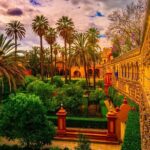
You start at the Jardines de Murillo, where you’ll hear how the old Alcázar gardens became the park you see today. Even if you’ve seen photos of Seville’s grand palaces, there’s something satisfying about beginning in a green space that still carries the palace’s echo.
This opening stop works as a gentle warm-up. You get a sense of the setting and the historical thread before you jump into the heavier hitters of the historic center. It’s also a nice moment to reset your eyes before the architecture gets big.
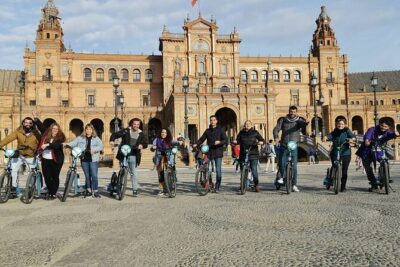
Plaza de España: what the 1929 exposition changed
Next comes Plaza de España, the kind of place you can’t really “just pass by.” You’ll spend about 30 minutes here, and what makes the stop worth your time is the explanation of what the Ibero-American Exposition of 1929 meant for Seville and how it shaped the city’s image.
Plaza de España is famous for a reason, but the guide’s framing helps you read it instead of just admire it. You’ll also have enough time to absorb the scale and details without feeling rushed through the photo spots.
A practical note: since this is one of Seville’s top sights, it’s a location where people move around a lot. Your best strategy is to focus on the parts you can actually linger with—doors, edges, and the layout—rather than trying to photograph the entire plaza at once.
The Palace of the Dukes of Montepensier: royal footprint in motion
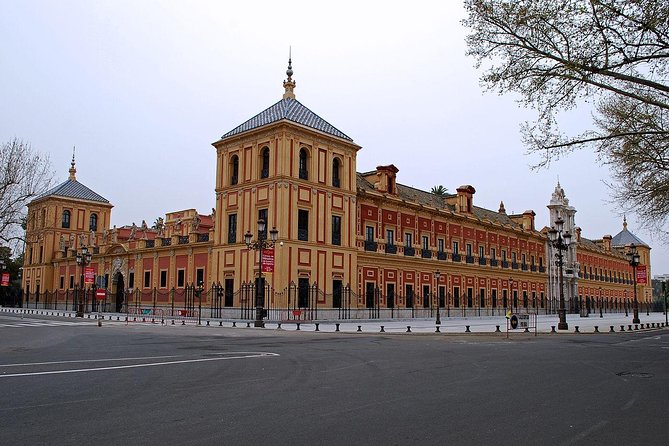
You’ll also pause at the Palace of the ancient Dukes of Montepensier. The tour treats this as more than a named building; it’s part of the city’s story of noble power and what those estates meant for how Seville developed.
Because the itinerary doesn’t linger long at every architecture stop, you’re not going to get a deep, hour-long architectural lesson. Still, it’s a good way to catch the royal connections that sit in the background of Seville’s big public monuments.
Torre del Oro: a port defense tower with real stories
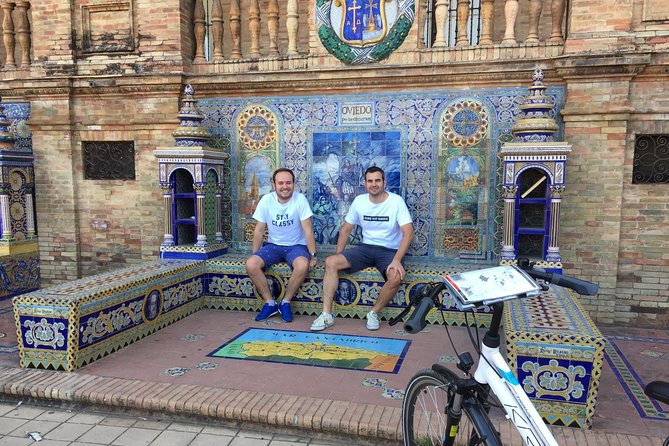
After the plaza grandeur, the tour shifts to Torre del Oro, Seville’s famous former defense tower of the port. You’ll get about 10 minutes here, which is short, but it’s enough time to understand the tower as a piece of maritime strategy, not only a pretty silhouette.
What I like about this stop is that it changes your mental map of Seville. You start seeing the city less as a postcard of buildings and more as a trading hub with a protective shoreline. That makes later stops feel connected instead of random.






Puente de Isabel II to Triana: history and legends across the river
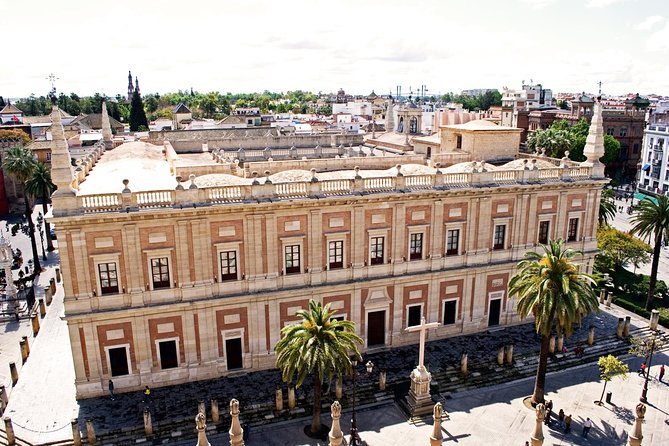
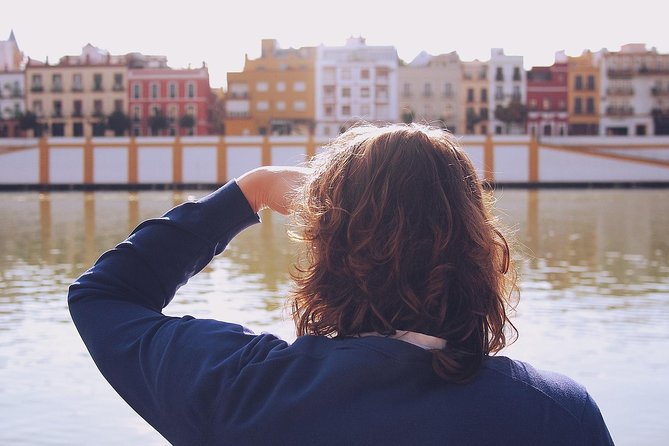
From Puente de Isabel II (Puente de Triana), you’ll head into the story of Triana, the neighborhood on the other side. The bridge itself gets its own note: it was built by the disciples of Gustave Eiffel.
You’ll spend about 15 minutes at this point, and the guide uses it to explain Triana’s history and legends. It’s a smart transition stop because the river crossing naturally sets you up for thinking about trade, neighborhoods, and identity—things Seville runs on.
If you like neighborhoods with personality, you’ll appreciate that the tour doesn’t treat Triana as a photo background. You’ll get a sense of why the area became what it is, even if you’re only sampling it during the ride.
Real Maestranza de Caballería: plaza views and cultural context
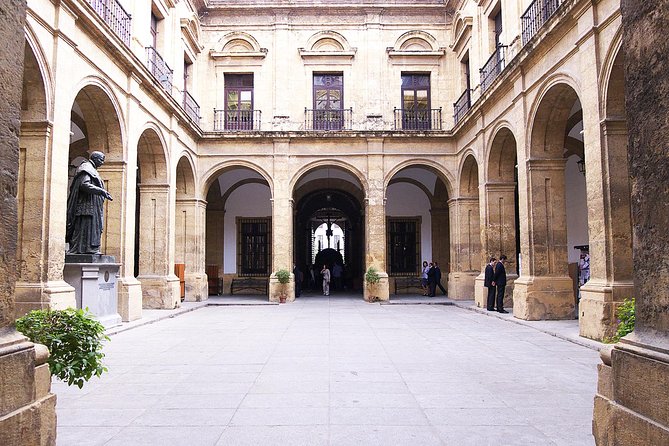
The tour brings you to the Real Maestranza de Caballería de Sevilla, with a view of the Plaza de la Maestranza. You’ll have about 10 minutes to take in the setting and hear the architectural and cultural explanation of the place.
This is one of those stops where understanding the function changes how you look at the architecture. Even if you’re not there for an event, the explanation helps you place it in Seville’s social and cultural life.
Catedral de Sevilla: exterior focus on doors, sculptures, and scale
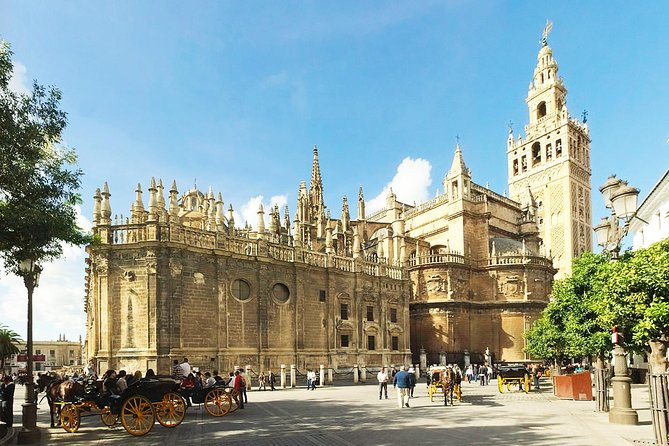
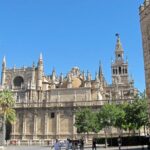
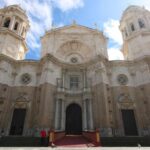
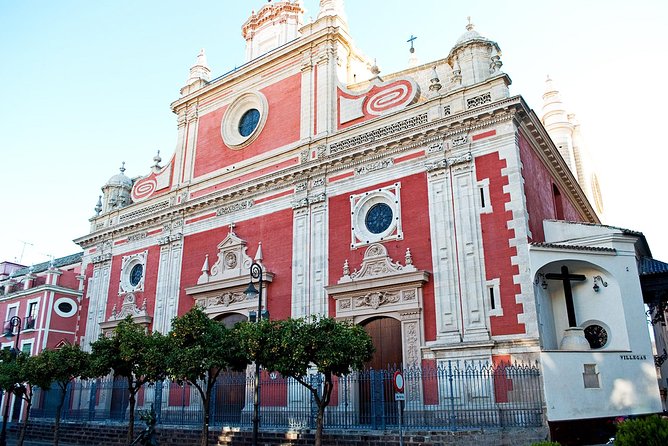
Next is Catedral de Sevilla, and here the tour is clear about what you’ll do: you’ll see the cathedral’s exterior, including main doors and main sculptures, plus the surrounding area. Expect about 30 minutes.
The outside route works well because it lets you grasp the sheer size quickly. You’re not stuck inside for hours, and you still get those striking details—especially the doors and sculptural work that anchor the cathedral’s presence.
One consideration: if you’re planning to do a separate interior visit later, this tour’s outside approach won’t replace that. But it’s a strong way to get your bearings so the cathedral becomes easier to understand when you return for a deeper look.
Real Alcázar of Seville: Patio de Banderas and Santa Cruz access
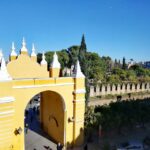
You’ll then shift into Real Alcázar de Sevilla territory. This stop is about outside areas, including the Patio de Banderas and access toward the Jewish quarter of Santa Cruz. The time here is about 15 minutes.
The best part is that the tour uses this area to connect palace life to Seville’s layered communities. Even with limited time, learning how Santa Cruz fits into the story makes the streets feel less like a maze and more like a map with meaning.
Think of this as “orientation + context” rather than a complete Alcázar day. If you love patios and palace transitions, you’ll probably want to come back for more time in the gardens and interiors later.
Archivo General de Indias: why trade records matter
At the Archivo General de Indias, you get an external explanation of the building that houses historical documentation of commercial transactions between Spain and America in the years following the Conquest. This is about 15 minutes.
This stop can feel more “thinking” than “looking,” but that’s the point. Seville’s monuments aren’t just art—they’re tied to how wealth, power, and information moved. Knowing what the archive holds turns the city’s grand scale into something more grounded.
If you enjoy history that links daily life to big events, you’ll like this. You’re not just hearing myths; you’re also hearing what documents the city preserved.
Real Fábrica de Tabacos: stepping into the former tobacco factory
The final big interior stop is Real Fábrica de Tabacos, now part of the University of Letters of Seville. You’ll enter the interior for about 20 minutes, with historical explanation of the place.
This is a great way to end because the building type changes the story. You’re moving from palaces and civic landmarks into a site tied to labor, industry, and the economic world behind the monument era. It helps the tour feel balanced instead of all “pretty facades.”
If you like places where architecture shows you how people actually lived and worked, this stop often lands well. It gives your brain a new kind of picture of Seville.
Price and value: where the money goes in this tour
At $47.71 per person for roughly 2 hours 30 minutes, the value comes from three things. First, you’re covering a lot of key Seville monuments in one go. Second, multiple stops are listed with free admission for this experience, which matters if you’re trying to control costs while still seeing major sights. Third, the format is built around guide explanations as you move, so you get more than just a route.
The tour is also private—just your group—which can make a difference if you prefer questions, flexibility, or a calmer pace than you might get with larger groups.
Timing-wise, it’s typically booked about 20 days in advance on average. That tells me it’s popular, and it’s smart to reserve early if your calendar is tight.
Practical timing and the meeting point that keeps things easy
The tour starts at 10:00 am at Sevilla Moving, located at C. Luis Montoto, 19, Local Bajo, 41003 Sevilla. It ends back at the same meeting point, so you’re not left figuring out transportation at the finish line.
It’s also described as near public transportation, which helps if you’re coming in from another part of the city. Since everything is scheduled tightly across the stops, starting on time is the easiest way to get the full benefit of the pacing.
Who should book this Seville bike tour (and who might not)
I think this tour is ideal if you want a high-signal overview: major landmarks plus local stories, all wrapped in a ride that keeps you moving. It’s especially good for first-timers who want to understand Seville’s layout quickly—where the big monuments are and how neighborhoods like Triana fit into the bigger picture.
It’s also a good match if you’re history-inclined but don’t want a slow museum marathon. The guide’s explanations at stops like Plaza de España, Torre del Oro, and the Archivo General de Indias give you direction for what to notice.
If you’re the type who wants to linger for long interior visits at every major site, you might find the time at each location brief. This tour is built for orientation and story, not for spending hours inside buildings.
Should you book this Seville bike tour?
Yes, if you want an efficient way to see Seville’s monumental core and come away with a clearer story of what you saw. The biggest reason to book is the way the ride links the sights—Plaza de España, maritime Seville through Torre del Oro, the Triana crossing via Puente de Isabel II, and the Alcázar/Santa Cruz connection—so everything feels connected rather than like a checklist.
Skip it if weather is unreliable for your dates or if you need long, uninterrupted time inside buildings. In those cases, you’ll likely be happier with a slower, more flexible sightseeing plan.
FAQ
How long is the bike tour through Seville’s monumental area?
It lasts about 2 hours 30 minutes.
What does the tour cost?
The price is $47.71 per person.
Is the tour private?
Yes. It’s a private tour/activity, and only your group participates.
Where does the tour start?
The meeting point is Sevilla Moving at C. Luis Montoto, 19, Local Bajo, 41003 Sevilla, Spain.
What time does the tour start?
The start time is 10:00 am.
Is the ticket digital?
Yes. It’s listed as a mobile ticket.
Are there admission tickets involved at the stops?
The tour info lists admission ticket free at the sights included in the route.
What if the weather is bad?
The experience requires good weather. If it’s canceled due to poor weather, you’ll be offered a different date or a full refund.
When should I book?
On average, it’s booked about 20 days in advance.
Is free cancellation available?
Yes, there is free cancellation up to 24 hours in advance for a full refund.