REVIEW · SEVILLE
Seville: Relaxing City Bike Tour with a Tour Guide
Book on GetYourGuide →Operated by Rent a Bike Sevilla · Bookable on GetYourGuide
Seville on two wheels beats walking heat. This relaxed guided ride threads through Santa Cruz and the leafy lanes near the gardens, so you get a real sense of the city without the usual stop-and-start pain. I especially liked how the route mixes famous sights with calmer, less obvious streets, and how the guide keeps things moving at a pace that works for your group.
Two things I like a lot: first, the bike time lets you actually cover big Seville highlights in one go. Second, guides like Carmen and Juan (I heard multiple names in recent tours) bring the city to life with specific stories and practical tips, not just a quick rundown of monuments.
One possible drawback: you are cycling in and around busier areas at times, and cobblestones and street traffic can feel a little intense if you are not fully comfortable on a bike. The good news is the tour is designed for easy riding overall (about 10 km, flat), and guides adjust and regroup often.
In This Review
- Key things to know before you pedal
- Entering Seville’s heart on bike lanes and cobblestones
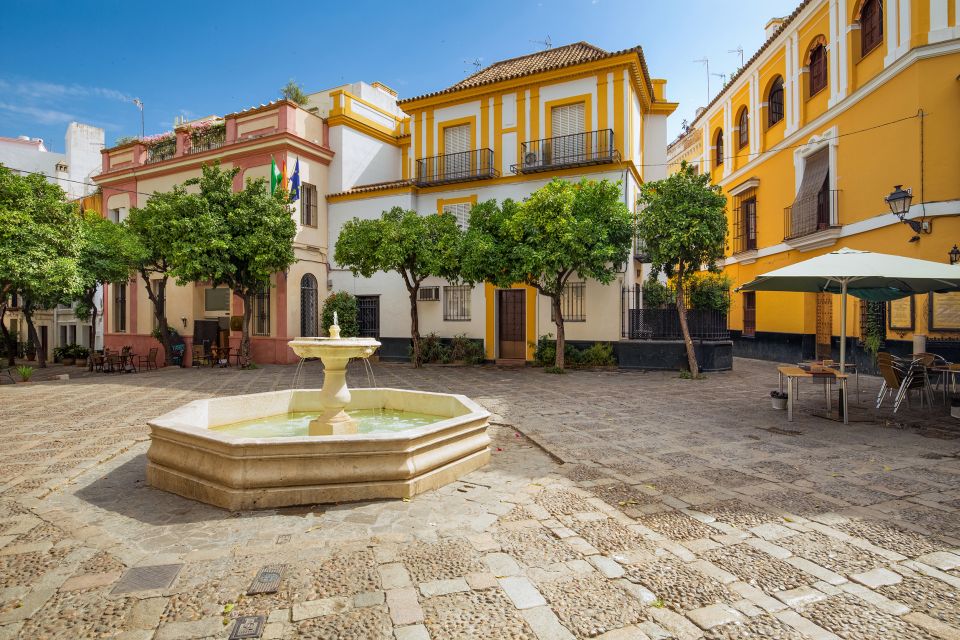
- Plaza Santa Cruz: the old quarter that sets the tone
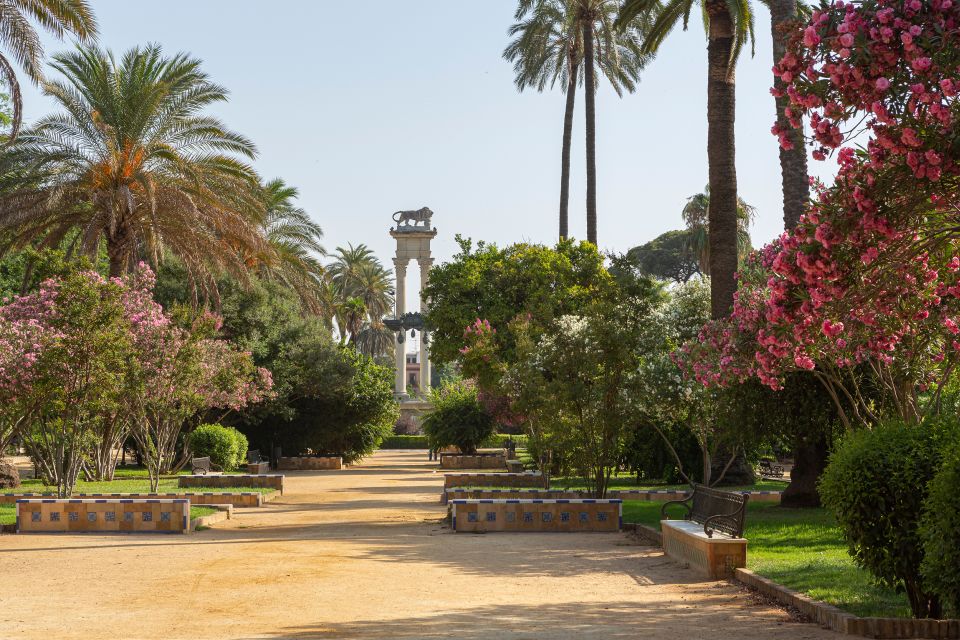
- Jardines de Murillo: where the ride turns shady
- Parque de María Luisa and Plaza de España: the green pause and the showpiece
- Torre del Oro and the Guadalquivir: river views with context
- Triana: flamenco roots and ceramic traditions
- Antigua Fábrica de Tabacos and the 1929 mosaic tiles
- Seville Cathedral, Giralda, and Las Setas: icons you can read from street level
- The guides: pacing, stories, and real local tips
- Value check: is $35 worth a 2.5-3 hour small-group ride?
- Who should book this Seville bike tour (and who should skip it)
- Should you book this relaxing Seville bike tour?
- FAQ
- What’s the duration of the Seville bike tour?
- Where do we meet for the tour?
- How far do we ride and is it flat?
- What’s included in the price?
- Do I need a helmet?
- What language options are available?
- Is the tour suitable for non-bike riders?
- What should I bring?
Key things to know before you pedal
- Small groups (max 15): You’ll ride with enough people to make it fun, not so many that you feel like luggage on a conveyor belt.
- Flat distance, about 10 km: The route is described as suitable for all levels as long as you can ride a bike.
- Stops that balance shade and icons: You’ll get park time plus major landmarks like the cathedral area and the Torre del Oro viewpoint corridor.
- Guides who steer with real personality: Carmen, Juan, and others are praised for checking comfort and matching the group’s rhythm.
- A mix of famous and overlooked sights: Expect iconic parks, plus details like the Antigua Fábrica de Tabacos and mosaic tiles tied to the 1929 exposition site.
- Bike at your pace: Even with a guided plan, you’re not locked into sprinting between photos.
Entering Seville’s heart on bike lanes and cobblestones
Biking in Seville makes the city feel smaller fast. You get speed without losing the street-level texture—windows, doorways, church facades, and neighborhood corners that you would miss if you only did public squares.
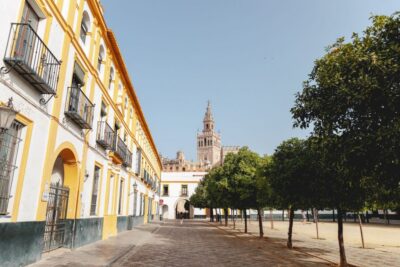
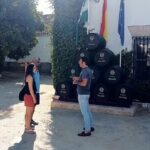
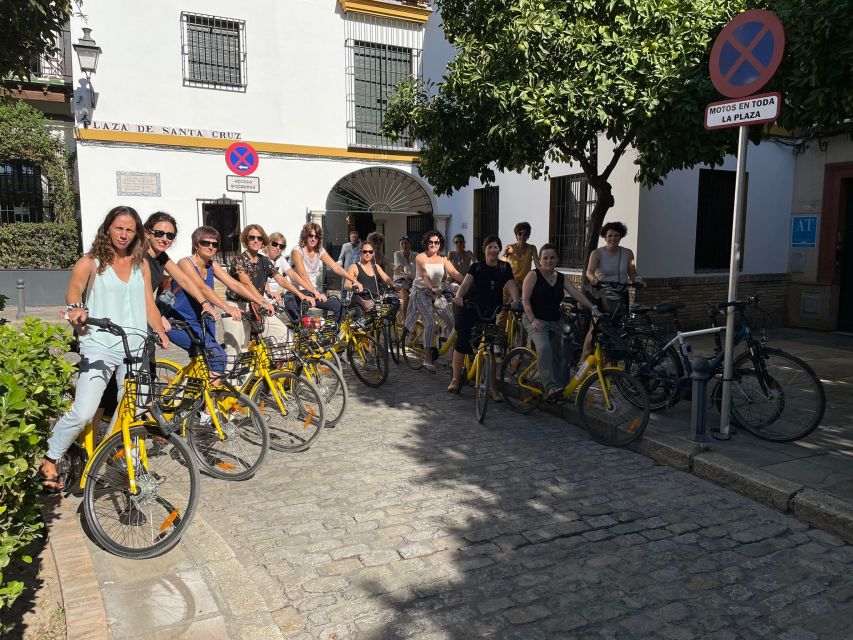
The tour’s meet-up is right where you want to start: Plaza Santa Cruz 4 in the historic quarter, behind the Jardines de Murillo area. That location matters because it puts you close to the old-city walk-up vibe, while still letting you slide into scenic park riding quickly.
If you’re bringing a cautious riding style, you’ll still be fine. The route is described as flat and about 10 km, and the guide adapts pace based on ability. Just remember: the “easy ride” idea doesn’t mean zero street friction. Some sections run through active zones.
You can also read our reviews of more cycling tours in Seville
Plaza Santa Cruz: the old quarter that sets the tone
Your early ride is anchored in Plaza Santa Cruz and its surrounding streets. This is where Seville shows off its medieval layers—tight turns, quiet corners, and lanes that look like they were built for wandering, not for buses.
Biking here is a smart way to beat the usual walking bottleneck. On foot, you end up constantly backtracking to see the next thing. On a bike, the guide can keep you moving while still making time for the kind of details you’d otherwise skip.
Practical note: cobblestones can make the ride feel a bit springy. It’s not described as steep or hard, but if you have a sensitive back, go slower and keep your hands relaxed. A helmet is included, and while it’s listed as optional in some notes, it’s one of those “cheap insurance” choices.
Jardines de Murillo: where the ride turns shady
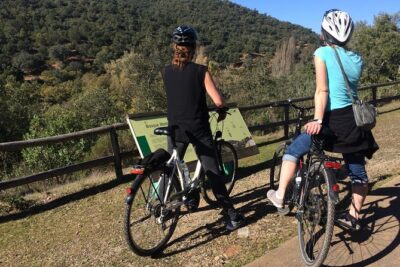
Then you hit the Jardines de Murillo, which is a big part of why this tour feels genuinely relaxing. You’re not just sightseeing—you’re getting a cooler, greener rhythm where the city noise softens.
This stretch is described as cycling under orange trees and palm groves, which is exactly the kind of sensory break Seville does well. It’s one thing to read about the city. It’s another to pedal through shade and smell the citrusy air while the guide explains what you’re seeing around you.
What I like about park riding on this tour: it’s visually rewarding without requiring you to hunt for tickets or line up for viewpoints. It also gives you a mental pause, so when you return to the big monuments later, they feel more satisfying instead of exhausting.
Parque de María Luisa and Plaza de España: the green pause and the showpiece
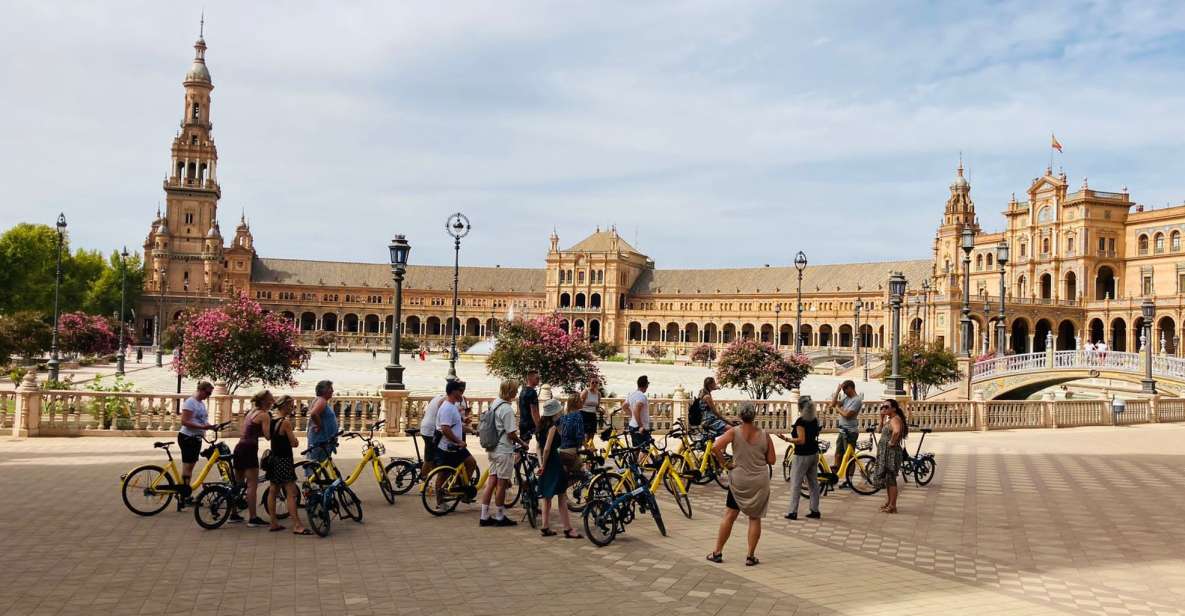
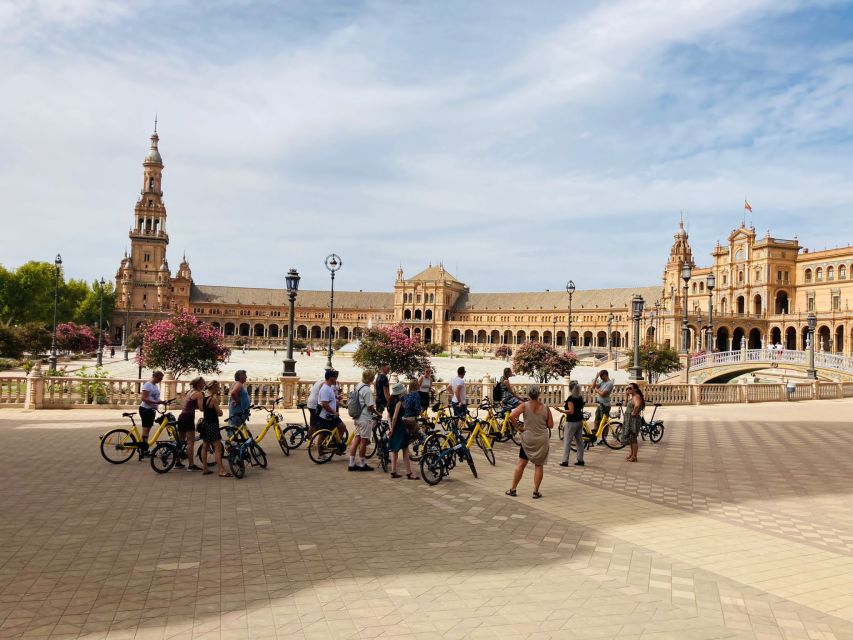
Next comes Parque de María Luisa and Plaza de España. These two are so connected in people’s minds that doing them back-to-back by bike makes perfect sense. You go from lush garden paths to the iconic plaza—fast.
In the park, you’re basically trading crowded sidewalks for wide-feeling space. Then you arrive at Plaza de España, one of Seville’s most photographed landmarks, and you get a front-row pass to its scale and tilework.
This is also where your guide can help you read the architecture instead of just staring. Even without special ticket details provided here, the value is in what you learn to notice—how the plaza is laid out, what the setting is doing visually, and why it became such a poster image for the city.
Torre del Oro and the Guadalquivir: river views with context
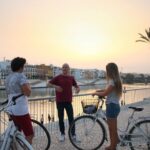
After the parks, you shift to the Guadalquivir riverside. The tour is set up to give you panoramic views along this corridor, and it specifically includes the Torre del Oro as a must-see stop.
This is one of those moments when biking earns its keep. On foot, the river views are nice but slow, especially if you’re weaving around traffic. By bike, you get the view plus the movement of a city stroll—without turning it into an all-day walk.
If you like photos, the river stretch tends to deliver. If you don’t, it still works because it changes your perspective: you stop thinking only in terms of buildings and start seeing Seville as a river city. That’s a key piece of context for understanding why neighborhoods like Triana matter later.
You can also read our reviews of more guided tours in Seville




Triana: flamenco roots and ceramic traditions
Then you head into Triana, described as the birthplace of flamenco and home to traditional ceramics. Triana is the kind of area where you feel the rhythm even before you learn the names.
Biking through Triana is a smart approach because it lets you cover more streets than a typical walking loop. You also get a guided version of the neighborhood—what to look for, and which cultural threads connect flamenco, crafts, and everyday life. How does Osaka compare? osakaadventures.com.
The tour format matters here: since the group is small (max 15 people) and the guide keeps everyone together, you’re not stuck far from the leader when streets get narrow or lively.
One thing to watch: some stretches can be busier. That does not mean unsafe in general, but it does mean you should stay alert, hold your line, and follow the guide’s instructions around turns and crossings.
Antigua Fábrica de Tabacos and the 1929 mosaic tiles
Two of the most specific “you’ll remember this” elements mentioned include the royal tobacco factory of the Antigua Fábrica de Tabacos, plus the mosaic tiles associated with the 1929 Iberian-American Exposition site.
These aren’t just decorative add-ons. They connect Seville to bigger Spanish and world stories—industry and empire-era culture, later repackaged into the city’s public imagination through architecture and design.
I like these kinds of stops because they keep the tour from feeling like a greatest-hits playlist. You get the icons, yes. But you also get a couple of details that help the city make more sense once you’re back exploring on your own.
Seville Cathedral, Giralda, and Las Setas: icons you can read from street level
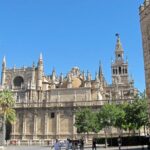
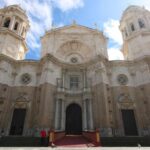
You’ll also see Seville Cathedral, the Giralda, and Metropol Parasol (Las Setas). Even when you’re not going inside or climbing, these are the landmarks that shape the skyline and the way Seville feels.
Why this is good on a bike tour: you arrive with context from earlier stops. When the cathedral area appears on the route, it doesn’t feel random. When Las Setas shows up—an architectural contrast to older stone—you’re ready to notice the change in style and purpose.
This is also where timing can matter. The review notes praise guides for keeping the group together during busier sections, which is exactly what you want near major attractions. You’ll likely have moments where the flow slows for safety and regrouping. That’s not wasted time—it’s part of how a smooth bike tour stays smooth.
The guides: pacing, stories, and real local tips
The biggest theme in the feedback is not the bike. It’s the person on the front of the group.
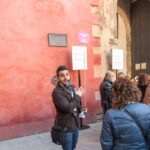
I saw repeated praise for guides like Carmen and Juan for being friendly, checking the pace, and sharing lots of details about Seville’s history and culture. Others named include Danny, Leo, Paolo, Ale, Ally, Paulo, Daniel, and Alvarito Garsia—often described as fun, passionate, and tuned into what the group needs.
What you should take from that for your own planning: you’re not just paying for transportation. You’re paying for translation—turning streets, buildings, parks, and neighborhoods into something you can remember.
Also, several comments highlight that the ride stays comfortable for different ages and experience levels. One reviewer noted older riders were included comfortably, and another mentioned the guide made sure everyone was happy with pace and direction. That’s the difference between a bike tour that feels like a task and one that feels like a guided conversation with wheels.
Value check: is $35 worth a 2.5-3 hour small-group ride?
At $35 per person for a 2.5 hour (and sometimes described as around 3 hours) tour, the value is mostly in what’s included and how much you can see without planning.
You get:
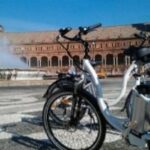
- a high-quality city bike (and helmet, rental included)
- a local expert guide
- bottled water
- liability insurance
- and a skip-the-ticket-line perk (as listed)
Put simply, you’re paying for reduced effort and less confusion. Instead of arranging bikes, navigating crossings, and choosing which sights are worth your time, you follow a route designed to hit the major hits plus a few smart extras like the tobacco factory and exposition-era mosaic details.
Could you do some of these sights by yourself on a rental bike? Sure, if you already know the city well. But for a first day or a half-day window, this is the kind of structure that buys you confidence and saves decision fatigue.
Who should book this Seville bike tour (and who should skip it)
This tour fits best if you:
- can ride a bike comfortably
- want a fast orientation to Seville in one ride
- prefer a small group experience (max 15 people)
- like mixing big monuments with neighborhood texture
It’s likely less ideal if you:
- can’t ride a bike (the tour is explicitly not suitable for that)
- get nervous riding near busy areas and cars (the route can include active zones, even if cycling overall is described as easy and mostly flat)
Heat tip: even if the route is flat, Seville sun is real. The tour recommends comfortable clothing and sunscreen, which is exactly right. If you’re sensitive to heat, choose a start time that matches your energy and don’t plan anything demanding right after.
Should you book this relaxing Seville bike tour?
If you want an easy way to connect the dots between Seville’s old quarter, parks, river views, Triana culture, and landmark architecture, I’d book this. The route is built for first-time visitors who want movement without exhaustion, and the guide quality seems to be the standout feature—people keep naming guides like Carmen and Juan and praising pacing, friendliness, and real local context.
My only hesitation would be for riders who feel uncomfortable in busier street stretches. If that sounds like you, you can still go, but pick an experienced level of comfort and be ready to slow down when the group does.
If you want a half-day plan that makes your later self-guided wandering better, this is a solid choice.
FAQ
What’s the duration of the Seville bike tour?
The duration is listed as 2.5 hours, and the tour description also refers to exploring over 3 hours. Either way, plan for a half-day activity.
Where do we meet for the tour?
You meet at Plaza Santa Cruz 4 in Barrio Santa Cruz, behind the Jardines de Murillo.
How far do we ride and is it flat?
The distance is about 10 km on flat terrain, described as suitable for all levels, as long as you can ride a bike.
What’s included in the price?
The tour includes the bike rental (and helmet), a local expert guide, and bottled water. Liability insurance is also included, and there’s a listed skip-the-ticket-line perk.
Do I need a helmet?
A helmet is included. The notes mention helmet (optional), so you’ll want to decide based on comfort and how you ride, but it’s provided.
What language options are available?
Languages listed include Spanish, English, French, Italian, and Dutch. Other notes also mention additional languages like German, Russian, and Portuguese, depending on the offering, so specify your preferred language when booking.
Is the tour suitable for non-bike riders?
No. It’s listed as not suitable for people who can’t ride a bike.
What should I bring?
Bring a passport or ID card, and wear comfortable clothing and sunscreen as recommended.