REVIEW · SEVILLE
Sunset Guided Bike Tour in Seville
Book on Viator →Operated by Seebybike · Bookable on Viator
Seville feels different when the light softens. This guided sunset ride is a smooth way to see major sights without spending your day in lines, and the guide makes the stops fly by with stories and jokes (I’ve heard plenty of praise for guides like Daniel and Ivan).
What I like most is the way you cover real neighborhoods on a bike—especially Santa Cruz and Triana—and the fact you get a local’s take plus practical recommendations at the end (tips for tapas and flamenco shows come up a lot). The one thing to keep in mind: a bike tour is easier when you’re comfortable riding, and while the ride is described as safe and at a gentle pace, you’ll still be pedaling for about 3 hours.
In This Review
- Key highlights you’ll actually care about
- Why this sunset bike tour works so well in Seville
- Getting started at SeeByBike near Mercado del Arenal
- Stop 1: Seville Cathedral exteriors and the bigger-than-you-think Gothic scale
- Barrio Santa Cruz: old streets, former Jewish quarter, and easy getting-lost energy
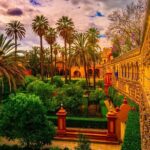
- Real Alcázar exteriors: Moorish, Gothic, Mudéjar, Renaissance—one palace, many languages
- Torre del Oro and the Giralda: two skyline icons with different stories
- Triana: pottery and tiles, plus flamenco culture that you can feel
- Plaza de España and Parque de María Luisa: space, shade, and tile-spotting
- Santa Ana church and San Telmo palace: Gothic-Mudéjar meets baroque grandeur
- Real Fábrica de Tabacos (now University) and the Plaza de América context
- Pacing, bikes, and safety: what to expect when you’re actually on the road
- Value and the real reason you’ll remember the tour
- Who this sunset bike tour suits best
- Should you book this Seville sunset bike tour?
- FAQ
- How long is the Sunset Guided Bike Tour in Seville?
- How much does the tour cost?
- Where do we meet, and where does the tour end?
- What’s included in the price?
- Is the tour offered in English?
- What if the weather is bad?
Key highlights you’ll actually care about
- Neighborhood focus: Santa Cruz’s old alleys and Triana’s pottery/tile culture are part of the route, not just photo stops.
- Frequent, short viewing stops: you get time to look, then you’re back moving so the tour stays lively.
- Great for first-timers: it’s built to help you understand Seville’s layout fast.
- English-guided with entertainment value: guides like Daniel, Ivan, Marta, Laura, and Natalia are frequently mentioned.
- Helmets and insurance included so you can relax and ride.
- Sunset timing: you’re in the city when the heat eases and the monuments look better.
Why this sunset bike tour works so well in Seville
Seville is a “walk-and-tap” kind of city, but it can also be a lot. Strong sun, long distances, and waiting around can drain your energy before you even reach the good stuff. This tour solves that with cycling at a calm pace and making stops short enough that you don’t lose the thread of the day.
I also like that it’s not only monuments. You spend meaningful time in residential-feeling areas, which helps you understand where things actually are. The route pairs big landmarks with the smaller streets that give Seville its personality. If it’s your first visit, that matters: you’ll leave with a mental map that makes the rest of your days easier.
Finally, the guide component is the difference between seeing buildings and understanding what you’re seeing. People consistently talk about humor, storytelling, and smart recommendations after the ride. That means you get value you can use again, not just photos.
You can also read our reviews of more cycling tours in Seville
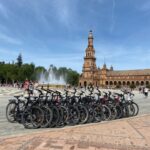
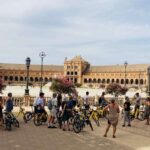
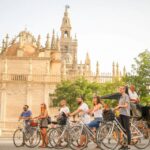
Getting started at SeeByBike near Mercado del Arenal
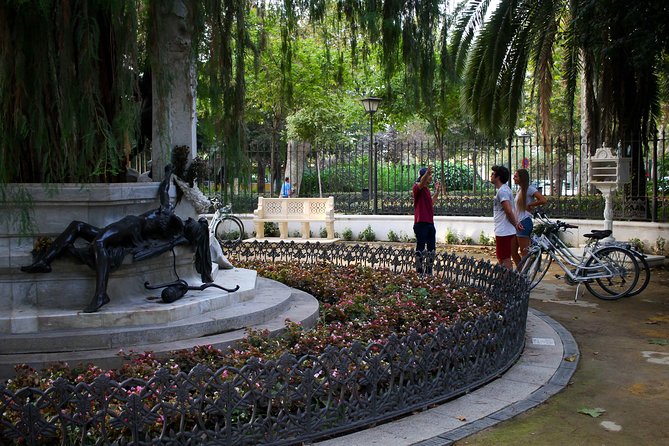
You meet back at SeeByBike—bike tours Seville—at Mercado del Arenal, C. Pastor y Landero, 4, in the Casco Antiguo. It’s a handy area because it’s central, and the tour notes that it’s near public transportation.
Check in, get your bike, and put on your helmet (it’s included). Then you’re off. The vibe here is straightforward: this is meant to feel easygoing, not like a fitness class. Reviews also point out that the ride generally stays on bike-friendly streets and squares, which helps a lot if you don’t ride often.
One practical note: the tour is capped at 15 travelers, so you’re unlikely to be stuck shoulder-to-shoulder with strangers. That smaller group size also helps the guide manage pacing and questions without turning every stop into a traffic jam.
Stop 1: Seville Cathedral exteriors and the bigger-than-you-think Gothic scale
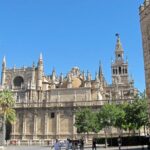
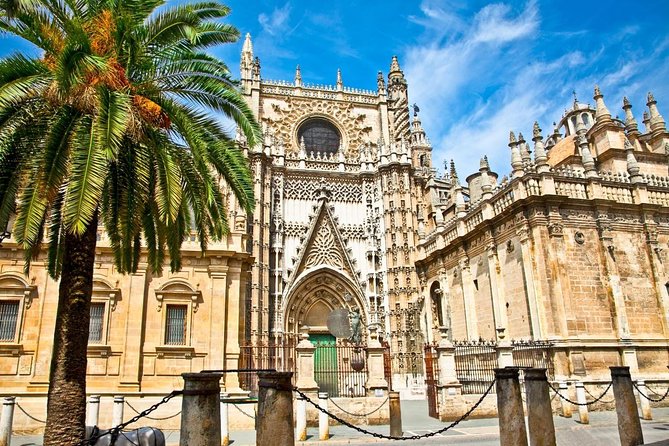
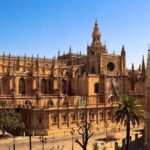
You kick off near Catedral de Sevilla for an exterior look. The cathedral is described as the biggest Gothic cathedral in the world, and even from the outside you can grasp why people treat it like a landmark on the level of a city symbol.
What I’d watch for here is how the city “centers” around it. It’s not just a building; it’s a reference point for orientation. If you’re trying to learn Seville quickly, starting with the cathedral exterior is a smart move. You also get an early taste of the architecture before the tour turns into neighborhood wandering.
A drawback? If you came only for interior cathedrals and museum-heavy time, this opening stop is mostly about exteriors and context. The good news is you still get a lot of variety later.
Barrio Santa Cruz: old streets, former Jewish quarter, and easy getting-lost energy
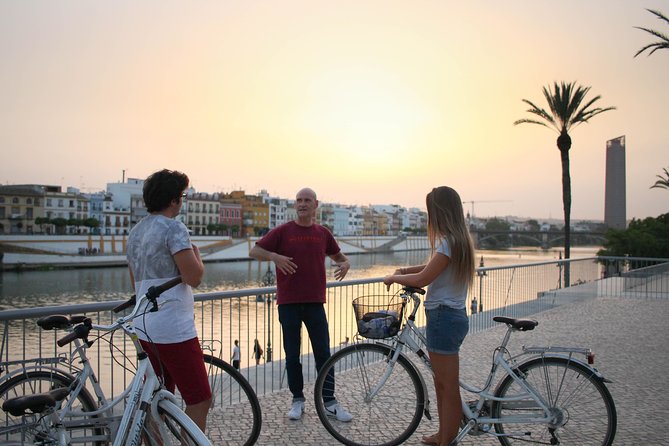
Next comes Barrio Santa Cruz, Seville’s oldest neighborhood and the medieval Jewish quarter. This is where the tour shifts from “monument spotting” to “Seville texture.”
You’re guided through winding streets, romantic squares, and alleys where you can feel how the city evolved. Even with frequent movement, you get time to pause and look around. This stop is ideal if you like small details—doorways, courtyards, and the overall mood of narrow streets.
One reason this stop is so praised is simple: it’s the kind of area people want on their itinerary but can struggle to navigate alone at the right pace. On a bike, you can cover more territory without walking yourself into exhaustion.
Real Alcázar exteriors: Moorish, Gothic, Mudéjar, Renaissance—one palace, many languages
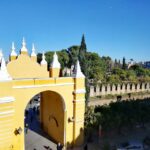
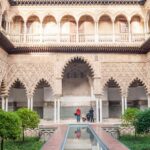
You then reach Real Alcázar de Sevilla for an exterior overview. The Alcázar is described as a royal palace that blends Moorish, Gothic, Mudéjar, and Renaissance elements. That mix can sound like a checklist, but on the ground it helps explain why the palace has such an unmistakable look.
Even without deep interior time, the guide’s narration can connect the architectural dots. You’ll likely leave with a better sense of why Seville sits at the intersection of cultures, and why so many styles exist side by side.
Tip for you: if your goal is to prioritize interiors, this tour is still a great primer. It gives you the context so that any later Alcázar visit feels less like a blur.
You can also read our reviews of more guided tours in Seville


Torre del Oro and the Giralda: two skyline icons with different stories
The route continues to Torre del Oro, a 13th-century tower built to control access to the port. It’s one of Seville’s most photographed landmarks, and even if you only catch it for a short stop, the reason it mattered to the city’s history is clear.
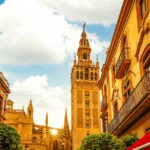
From there you reach Torre Giralda, the bell tower of Seville Cathedral. The guide frames it as originally built as the minaret for the Great Mosque of Seville in al-Andalus. That single detail changes how you see the structure: you’re looking at layers of time stacked vertically.
These two stops are quick, but they work because they connect geography (port control) and cultural history (minaret origins). This is a good example of what the tour does well: it pairs a visual landmark with a short, meaningful explanation.
Triana: pottery and tiles, plus flamenco culture that you can feel
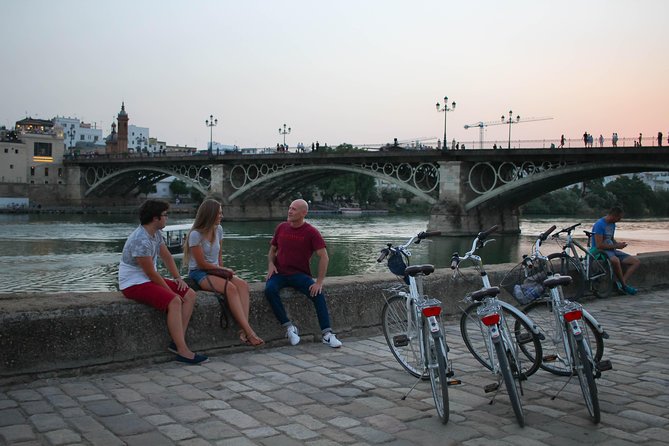
Then you move into Triana. The tour highlights Triana’s traditional pottery and tile industry, along with a strong flamenco culture and its own festivals.
This is one of the most valuable parts for me, because it isn’t just about monuments. Triana is a working-feeling neighborhood in many ways, and even at sunset you’ll sense the community vibe. The guide often ties the arts here to daily life and local identity—exactly the kind of context that makes Seville feel real, not staged.
If you’re the kind of visitor who likes to understand where the best atmosphere comes from, Triana is your stop. It also pairs nicely with later time at Plaza de España and Parque de María Luisa, because you’ll see both the city’s “public face” and its neighborhood spirit.
Plaza de España and Parque de María Luisa: space, shade, and tile-spotting
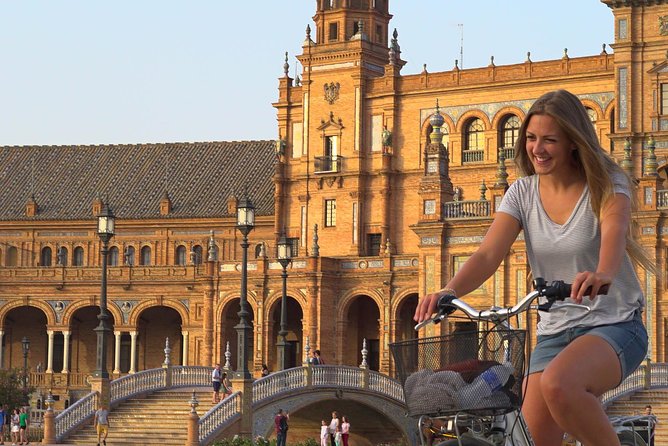
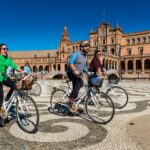
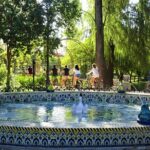
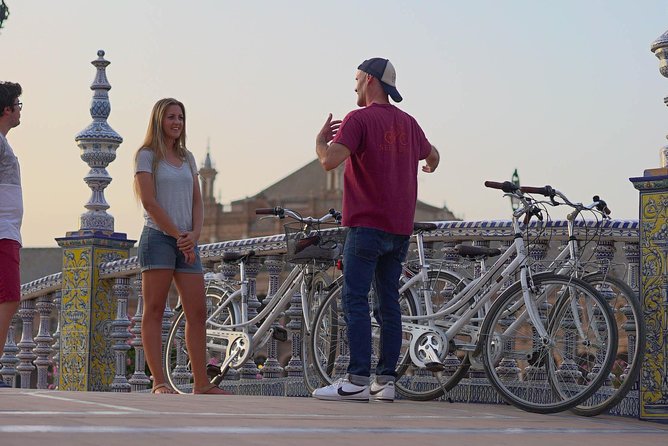
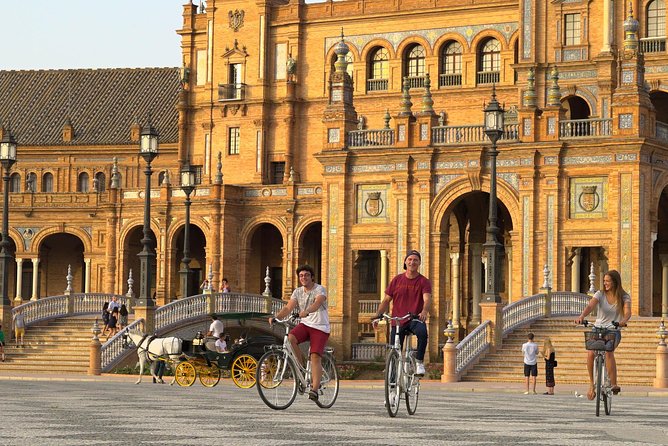
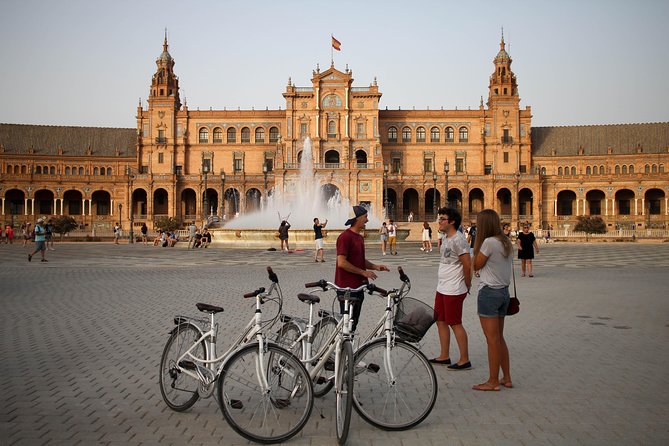
The tour includes Plaza de España (with time to experience the area) and then heads to Parque de María Luisa, a large green space next to it. This park is described as having hundreds of exotic trees along shady avenues, plus historic buildings with colorful tiled benches.
There’s also special mention of Moorish fountains and pools. In practice, this is where sunset really helps. You get cooler air, open sight lines, and a setting that feels almost theatrical without being fake. It’s one of the best places to slow down your pace and let the city breathe.
For a small caution: because Plaza de España and Parque de María Luisa are popular, you may share space with other people moving around. That’s normal here. The bike portion usually keeps things flowing, but you still want to watch for pedestrians when you’re taking brief turns.
Santa Ana church and San Telmo palace: Gothic-Mudéjar meets baroque grandeur
The next stretch includes Iglesia de Santa Ana, dating to 1276 and described as Gothic-Mudéjar, with a high, vaulted interior and religious imagery. Even if you’re mainly outside or at the threshold, the style description hints at why it’s worth stopping: it shows how Seville’s architecture mixes influences instead of choosing just one.
Then comes Palau de San Telmo, described as Seville’s finest example of the baroque style. It was originally constructed as the seat of the University of Navigators. That “navigators” detail is a fun one because it connects the palace to Seville’s maritime past.
This part of the tour feels like a nice course correction after big open spaces. You get back into built detail: towers, facades, and the feel of different eras layered across a single city.
Real Fábrica de Tabacos (now University) and the Plaza de América context
You finish with Real Fabrica de Tabacos, formerly Europe’s most important tobacco factory and today the University of Seville. Even a quick look helps you understand Seville wasn’t only about churches and palaces. Industrial-era buildings matter too—and the change from factory to university gives the city an ongoing life.
Finally, you reach Plaza de América in Parque de María Luisa. This area is framed by buildings in different styles: the Museum of Popular Arts to the north (Neomudéjar style), the Archaeological Museum to the south (Neo-Renaissance style), and the Royal Pavilion to the east (Gothic style). It was built for the Ibero-American exhibition in 1929.
This last segment is great if you want the tour to make sense as more than a random series of stops. By the end, you’re not just visiting highlights—you’re seeing how Seville organizes culture through different time periods and design movements.
Pacing, bikes, and safety: what to expect when you’re actually on the road
The big theme across the ride experiences is a relaxed pace. Stops tend to be short so you keep moving, and the guide narration is timed to fit that rhythm. One review-style detail that stands out: guides often use quick, frequent pauses for a few minutes at a time, then keep going, so you’re not stuck in lines or standing around wondering what’s next.
On safety, the tone is reassuring. People describe cycling as safe on bike paths and in central squares. Helmets and insurance being included also adds peace of mind. The bike itself gets mixed comments: some people say bikes are good and easy, while others mention older bikes but still adequate. Either way, it’s best to arrive with a basic willingness to ride and to follow the guide’s instructions closely.
If you’re deciding whether this is for you, ask yourself:
- Are you comfortable pedaling for about three hours?
- Do you like learning through walking-and-looking breaks, even when it’s fast?
- Do you want the city map in your head by the end of day one?
If yes, this tour usually lands well.
Value and the real reason you’ll remember the tour
At $36.28 per person for about 3 hours, the value is in how much ground you cover with context. You’re not paying for long museum entries or meals. You’re paying for time-efficient movement, a guide who explains what you’re seeing, and a map with practical recommendations for food, flamenco, and more.
That last part is underrated. If you’re only spending your vacation chasing landmarks, you can end up eating wherever is closest. With a good guide, you get a shortcut to better choices—tapas spots and performances that fit your tastes.
The guides’ personalities are also a big part of the value. People repeatedly praise guides like Daniel and Ivan for humor and entertaining storytelling, and Marta and Laura for friendly, engaging delivery. Even when the tour moves fast, the commentary keeps it interesting.
Who this sunset bike tour suits best
This is a strong fit if you:
- are visiting for the first time and want orientation fast
- want to see multiple neighborhoods, not just a single district
- prefer cycling over buses because you stay in the action
- want a guide to point out the meaning behind architecture
- like the idea of sunset timing for a calmer feel
It can also work well for families, since the tour notes it’s family-friendly and most people can participate. The main condition is that children must be accompanied by an adult.
If you’re someone who only wants slow sightseeing with lots of interior time, you might find the “move often” style less to your liking. It’s still relaxing, just not a standstill tour.
Should you book this Seville sunset bike tour?
I’d book it if you want the smartest first-day activity in Seville: a gentle ride that builds your mental map, introduces key neighborhoods, and gives you practical next steps (tapas and flamenco ideas) so your later plans are better.
Skip it or at least reconsider if you:
- feel nervous about riding a bike for multiple hours
- want strictly interior-only museum time
- dislike tours with frequent short stops
If you’re on the fence, one safe bet is to treat this as your orientation tour, then pick your one or two must-do interiors afterward (cathedral and Alcázar are the obvious anchors). This bike route sets you up so those later visits feel guided, not random.
FAQ
How long is the Sunset Guided Bike Tour in Seville?
It lasts about 3 hours.
How much does the tour cost?
The price is $36.28 per person.
Where do we meet, and where does the tour end?
You meet at SeeByBike – bike tours Seville at Mercado del Arenal, C. Pastor y Landero, 4, Casco Antiguo, 41001 Sevilla. The tour ends back at the meeting point.
What’s included in the price?
You get the bike, a guide, insurance, helmets, and a map with recommendations (including tips for restaurants and flamenco).
Is the tour offered in English?
Yes, it’s offered in English.
What if the weather is bad?
The tour requires good weather. If it’s canceled due to poor weather, you’ll be offered a different date or a full refund.