REVIEW · SEVILLE
Seville Guided Small-Group Walking Tour
Book on Viator →Operated by Amsterdam Guías & Tours · Bookable on Viator
Two hours, and Seville finally clicks. This is a small-group walk where you stay close enough to actually follow the guide’s storytelling while you pass major landmarks—without burning half your day in transit.
I also really like the way the route connects styles and eras you’d otherwise miss: Plateresque detail at the Ayuntamiento, the empire link at the Archivo General de Indias, and the cigar-and-opera chapter of Real Fábrica de Tabacos. One drawback to plan for: you’ll visit the Cathedral and Real Alcázar exteriors only, so if you want the inside views, you’ll need separate tickets.
In This Review
- Key things I’d bet you’ll notice
- A 2-hour Seville walk that sets your bearings fast
- Price and value: $21.78 for context plus a smart sightseeing pace
- Where you meet and how to avoid a last-minute scramble
- Plaza de San Francisco and Ayuntamiento: the old core before the big monuments
- Giralda and the Seville Cathedral exterior: power, changed over time
- Real Alcázar exterior and Archivo General de Indias: palaces and paperwork
- Puerta de Jerez and Real Fábrica de Tabacos: a different side of Seville
- Plaza de España: the 1929 exhibition finale you’ll remember
- Optional breakfast add-on: mosque passage and the Setas (Metropol Parasol) wooden ruins
- How to plan the rest of your Seville day after this walk
- Who this tour is best for
- Should you book the Seville guided small-group walking tour?
- FAQ
- How long is the Seville guided small-group walking tour?
- How big is the group?
- Is the tour guided and in English?
- What’s included in the ticket price?
- Are entrance tickets to monuments included?
- Does the tour include breakfast?
- Where does the tour start and end?
- Is the tour ticket mobile?
- Is cancellation free, and how far in advance can I cancel?
- Is the tour weather-dependent?
Key things I’d bet you’ll notice
- Max 15 people keeps the walk easy to follow and questions welcome
- Exterior-first strategy means faster sightseeing and fewer ticket delays
- Giralda + Cathedral framing helps you understand Seville’s power before you buy any entry
- Real Fábrica de Tabacos adds an unusual, industrial side to the city
- Plaza de España closes with a picture-perfect finale from the 1929 exhibition
- Breakfast option (9:30 AM) can add two extra sights, including the mosque passage and the Setas route
A 2-hour Seville walk that sets your bearings fast
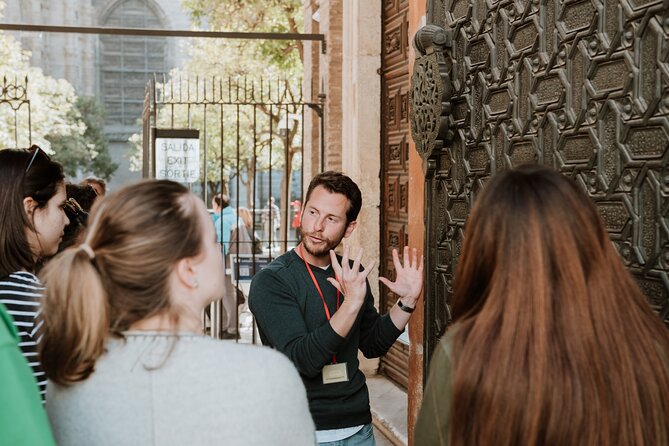
Seville is big on big landmarks, but it can feel like you’re just hopping from one postcard to the next. This tour’s strength is that it acts like a timeline you can walk through. In about 2 hours, you get a tight circuit around the historic center, with the guide pointing out what to look for and why it matters.
The small group size (up to 15 people) is not just a comfort perk. It changes how the tour feels. You’re not shouting across a crowd. You’re hearing the details, watching where the guide gestures, and getting answers without the session turning into a lecture you can’t track.
You can also read our reviews of more walking tours in Seville


Price and value: $21.78 for context plus a smart sightseeing pace
At about $21.78 per person, this tour is built for value in two ways. First, you’re paying for an expert local guide and history-based explanations that help you interpret what you’re seeing. Second, you’re mostly doing exterior visits, which means you’re not locked into buying multiple monument tickets during the walk.
That doesn’t mean it’s a “cheap and basic” experience. The itinerary hits major anchors: Giralda, Seville Cathedral, the Royal Alcázar area, Archivo General de Indias, Puerta de Jerez, and Plaza de España. Because these stops are outside, the guide can keep moving, and you can decide later which interiors you actually want to pay to enter.
Where you meet and how to avoid a last-minute scramble
The tour uses a mobile ticket, so you’ll want that accessible on your phone. Meeting locations can be easy to mix up in Seville, since the old town has lots of similar plazas and corners.
For at least one route option, your guide meets people near Banco de España under a blue umbrella (or near the Seville Guias&Tour logo). My practical advice: double-check your exact pickup instructions in your confirmation message before you leave the hotel. Arriving early is smart, but arriving at the right corner matters more.
Plaza de San Francisco and Ayuntamiento: the old core before the big monuments
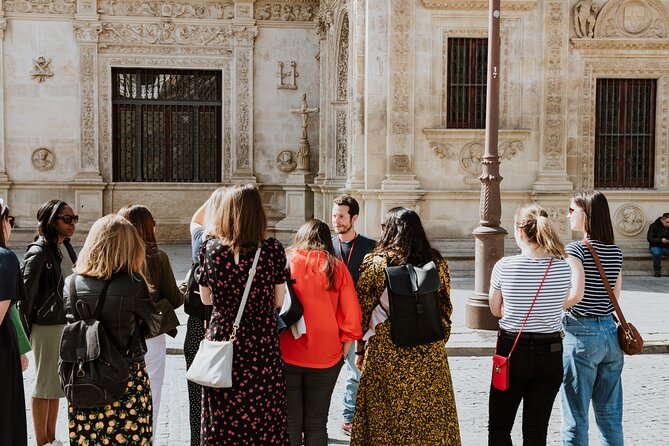
The walk typically begins with Plaza de San Francisco, a square with deep roots in Seville’s older layout. Even if you’ve never been here, this stop helps you understand that Seville’s “showpieces” sit inside a living city fabric—not isolated museum pieces.
From there, you’ll head toward the Ayuntamiento (City Hall) area. This building is known for Plateresque architecture, a style that feels busy in the best way: stonework that looks layered, decorated, and almost jewelry-like from up close. The guide’s job here is to slow you down. You’ll be shown what to notice in the details so you don’t just see a façade—you see a style.
Practical note: this part of the tour is great for photos, but it’s also where you’ll start to feel the pace. Bring water if you’re here in warm months.
Giralda and the Seville Cathedral exterior: power, changed over time
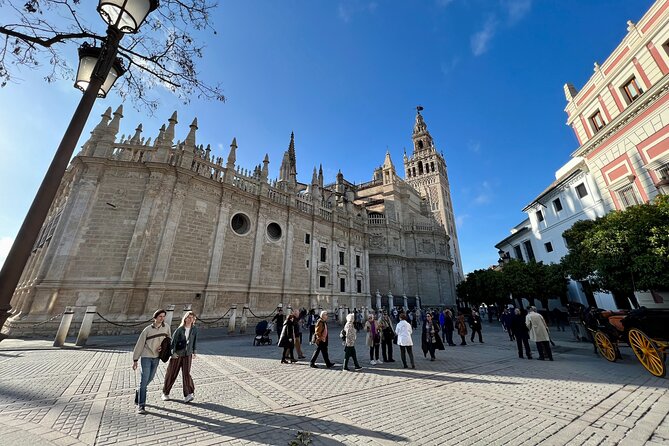
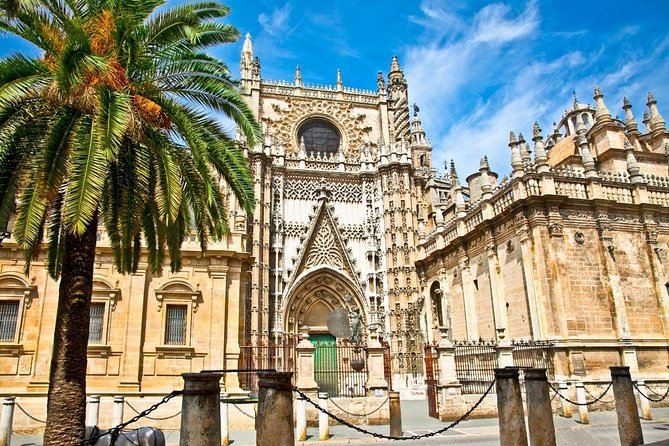
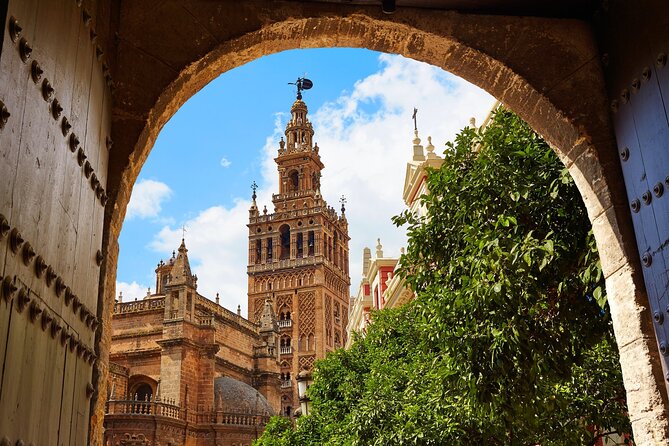
Next comes Torre Giralda, Seville’s iconic landmark. The big idea is that Giralda wasn’t always a bell tower. It started as a minaret, and later it became part of the Christian cathedral complex. Even if you’re only looking from the outside, the guide helps you read that transformation in the structure.
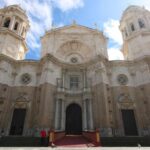
Then you move to the Seville Cathedral exterior, described as the largest Gothic cathedral in the world. Here, the key value is orientation. You learn how the cathedral “dominates the skyline” and how Giralda functions like the visual anchor for the whole area.
You’ll also hear that the Cathedral is tied to important city figures through burial spaces. That matters because it gives the building a human center, not just architectural weight. It’s the kind of context that makes later interior visits (if you choose to do them) feel purposeful rather than random.
You can also read our reviews of more guided tours in Seville



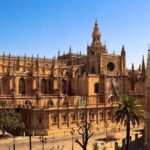
Real Alcázar exterior and Archivo General de Indias: palaces and paperwork
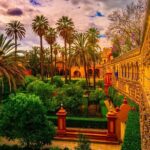
Seville isn’t only about churches and towers. The Royal Alcázar stop shifts you into the world of court culture and layered design. Even as an exterior-only visit, it gives you a sense of scale and style, including the famous blend of Mudéjar, Gothic, Renaissance, and Baroque influences.
What I like about having this stop in the middle of the route is the contrast. You go from religious architecture (Cathedral and Giralda) to a palace complex where decorative detail and political history overlap.
Then you hit the Archivo General de Indias. This is a stop for people who like history that leaves receipts behind. The archive houses documents tied to Spain’s and America’s intertwined past. The guide’s storytelling here can help you understand why Seville mattered so much to that global story—and why a city can be a hub for centuries, not just a stop on a map.
If you love museum interiors, this is a great moment to decide whether you want to come back later for a deeper look. From the outside, you’ll still get the “why,” but the archive’s real depth is inside.
Puerta de Jerez and Real Fábrica de Tabacos: a different side of Seville
After the big monuments, the tour adds variety with older city structure and industrial heritage.
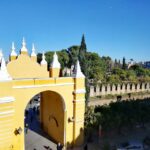
Puerta de Jerez is an old entrance to the city, and that simple description matters. It’s not just a decorative gate. It’s a reminder that Seville used to be something you defended and controlled. The guide can help you see how city walls and gates shaped movement, commerce, and daily life.
Then comes Real Fábrica de Tabacos, a major XVIII-century industrial building. This is where the tour gets interesting in a different way. The guide connects it to cigar production and also to the idea of performance—this building was used as the setting for a famous opera tied to Seville. In other words, it’s not only “industry as background.” It’s industry as part of culture.
This stop also helps you avoid the common first-time mistake: thinking Seville is only churches, palaces, and patios. It has a strong working-city side too, and this is one of the better ways on a short walk to see it.
Plaza de España: the 1929 exhibition finale you’ll remember
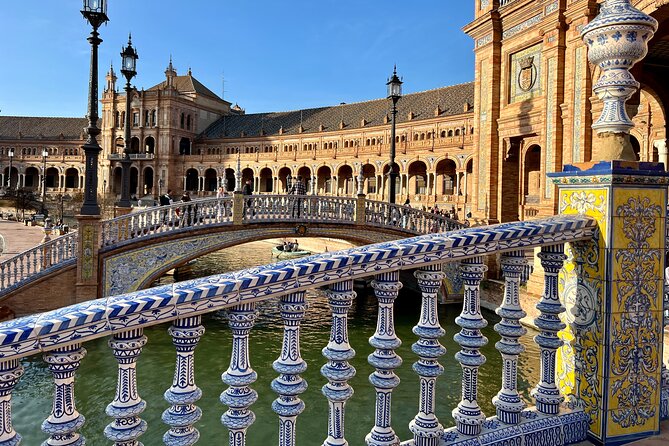
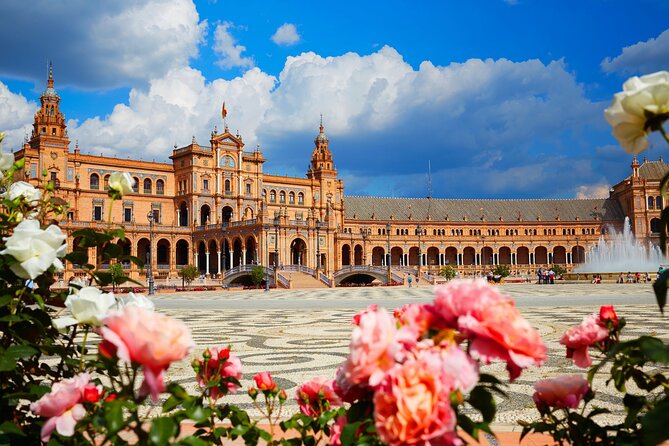
The last major stop is Plaza de España, one of Seville’s most recognizable spaces. The big context: it was created for the 1929 Ibero-American exhibition, which gives the plaza a designed “celebration” mood.
The details are easy to appreciate on foot. The architecture uses brick, iron, and tiles, and the building rhythm makes it feel grand without being confusing. This area also shows up in movies, and you’ll see why once you stand here: it’s visually dramatic, but it still works as a walkable public space.
As the wrap-up, this is smart. The tour ends with something you can enjoy immediately, even if you haven’t bought any monument entry yet.
Optional breakfast add-on: mosque passage and the Setas (Metropol Parasol) wooden ruins
If you choose the traditional Andalusian breakfast, scheduled at 9:30 AM, the tour can include extra sights that aren’t part of the standard no-breakfast route.
One is a passage by Seville’s most important mosque, including baroque architecture elements you can see from outside, plus the hint that there are important details behind its walls. Since you’re not going inside on this walk, the guide’s job is to point out what to look for at street level so you don’t miss the story.
The other is the Metropol Parasol, also known as the Setas de Sevilla. This is the huge wooden structure that looks like a sci-fi canopy but fits into the city. You’ll also get a key detail: the wood isn’t just decoration—there are ruins beneath that were uncovered during excavation for a completely different project. That kind of contrast makes the Setas feel less like a photo prop and more like a city layer-on-layer situation.
If you like early starts, the breakfast option is a good way to add these two “major wow” moments without turning the rest of your day into a ticket-management puzzle.
How to plan the rest of your Seville day after this walk
Use this tour as your compass, not your final word. By the time you leave, you’ll understand what’s where and how each area connects to Seville’s bigger story—so your later choices make more sense.
If you’re deciding what to ticket next, prioritize based on what grabbed you during the walk:
- If you fixated on Gothic details and the Giralda transformation, you’ll likely want a Cathedral interior visit later.
- If you liked the palace-design mix, the Royal Alcázar interior is the natural next step.
- If documents and empire connections felt compelling, plan for a deeper look where history is stored rather than displayed as objects.
And if you just want a good day of walking after, this route naturally sets you up for exploring side streets nearby with clearer context—especially around the areas that feel oldest.
Who this tour is best for
This works especially well if:
- It’s your first time in Seville and you want an efficient orientation.
- You like history explained in plain language, with a real guide leading the route.
- You want major landmarks, but you don’t want to spend the whole morning waiting for entries.
It might be less ideal if:
- You came specifically to do monument interiors and want tickets handled during the tour.
- You hate walking in hot weather, since it’s an outdoor walking circuit.
- You want a long, slow neighborhood meander rather than a structured landmark sweep.
Should you book the Seville guided small-group walking tour?
Yes, if you want a high-value overview that helps Seville make sense quickly. The price is low enough that you’re not taking a big risk, and the itinerary hits the city’s signature icons: Giralda, the Cathedral area, the Royal Alcázar zone, and Plaza de España, plus the more unusual stop at Real Fábrica de Tabacos.
Book it with the right expectations: you’re seeing exteriors, getting orientation, and leaving with a mental map. If you want to go inside the big monuments, plan to do that as a follow-up.
If you can manage breakfast, the add-on option is worth a close look because it’s the only part that explicitly layers in extra sights like the mosque passage and the Setas’ wooden-structure story.
FAQ
How long is the Seville guided small-group walking tour?
It’s about 2 hours (approx.).
How big is the group?
The maximum group size is 15 travelers.
Is the tour guided and in English?
Yes. It includes an expert local guide, and the tour is offered in English.
What’s included in the ticket price?
The tour includes the guided walking experience and exterior stops at major landmarks. It also offers an optional traditional Andalusian breakfast if you choose that option.
Are entrance tickets to monuments included?
No. Visits are exterior only, so entrance tickets are not included.
Does the tour include breakfast?
Breakfast is optional. It’s available at 9:30 AM as a selectable add-on option.
Where does the tour start and end?
The meeting point and endpoint are listed at Plaza de España, Av. Isabel la Católica, 41004 Sevilla, Spain.
Is the tour ticket mobile?
Yes, it uses a mobile ticket.
Is cancellation free, and how far in advance can I cancel?
Cancellation is free. You can cancel up to 24 hours in advance for a full refund.
Is the tour weather-dependent?
Yes. The tour requires good weather. If it’s canceled due to poor weather, you’ll be offered a different date or a full refund.