REVIEW · SEVILLE
Seville Jewish Quarter Small-Group Walking Tour: History & Gems
Book on Viator →Operated by Seville Unique Experiences · Bookable on Viator
Seville hides its Jewish past in plain sight. This small-group walk takes you from the edge of the Alcázar into Santa Cruz, using guide stories to explain how Jewish life shaped medieval Seville and what was left behind. With a max of 10 travelers, you’re not stuck in a crowd, and you get time to ask questions in English.
I especially like the story-driven pacing and the fact that the route is built around places people usually rush past. The walk moves through small squares and recognizable landmarks—like Plaza de Doña Elvira and Plaza de Santa Cruz—so the history feels grounded instead of abstract. I also like that guides in this program are consistently praised by name for being engaging and quick to answer questions, from Miguel and Marta to José, Guillermo, and Clara.
One thing to consider: there isn’t much physical Jewish-quarter architecture left to point at. Even when the guide does a great job (and they do), you’ll often have to use imagination to picture what once stood here, and some of the story includes difficult parts, like the expulsion years.
In This Review
- Key things that make this Seville tour worth your time
- Small-group pacing in the Jewish Quarter, without the crowd noise
- Route flow: starting at the Alcázar edge, then into Santa Cruz
- Plaza Patio de Banderas: the medieval setup you’ll be glad you got
- Plaza de Doña Elvira: understanding how communities lived together
- Plaza de Santa Cruz: synagogues, Jewish presence, and why it’s complicated
- Jardines de Murillo: a quieter passage with neighborhood meaning
- Calle Cano y Cueto: the only physical remains, inside an underground archaeological site
- Iglesia de Santa Maria la Blanca: the walk’s final beat
- What you’ll learn (and what guides do well)
- Value for the price: why $32.65 can make sense
- Who this tour suits best
- Practical tips so the walk feels easy
- Should you book Seville’s Jewish Quarter Small-Group Walking Tour?
Key things that make this Seville tour worth your time
- Small-group feel (10 max): easier questions and a calmer pace through the older streets.
- Multiple story anchor points: you’re guided from neighborhood squares to the few surviving traces.
- No extra site-ticket burden: the stops listed are marked Free for admission.
- Guides bring it to life: names you’ll hear in feedback include Miguel, Marta, José, Guillermo, Valentín, Clara, and others.
- A “see what’s left” perspective: the walk explains why so little remains, without losing context.
Small-group pacing in the Jewish Quarter, without the crowd noise
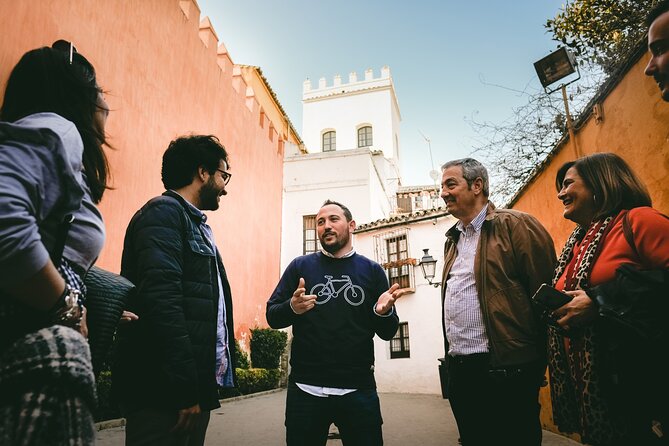
This is a walking tour designed for focus. With only up to 10 people, the guide can actually respond to questions while you’re moving. That matters in Seville, where the historic center can feel like a moving river of people and scooters.
You’ll also notice the tour doesn’t try to cram in landmark after landmark. Instead, it focuses on a chain of nearby stops, each one giving you a different angle on medieval Seville. One square helps you understand the communities of the area, another sets up the story of synagogues, and another introduces you to the archaeological remains that are easy to miss if you’re self-guiding.
The result is a better way to orient yourself in the neighborhood. Several guides get praised for making the route feel like a guided path through a real place—not a slideshow.
You can also read our reviews of more walking tours in Seville


Route flow: starting at the Alcázar edge, then into Santa Cruz
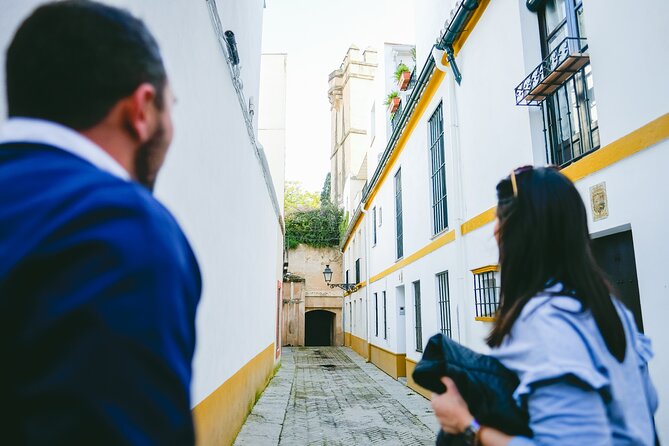
You begin near the Alcázar area, at the Monumento a la Inmaculada Concepción (you’ll find this in the Casco Antiguo area). It’s a smart choice because the Alcázar connects to Seville’s Moorish-era layers, which helps you understand the city’s medieval background before you reach Santa Cruz.
From there, the tour steps you gradually into the Jewish Quarter through a set of plazas and streets that feel intimate. You’re not simply walking through “pretty old Seville.” You’re walking through the geographic logic of neighborhoods—how communities formed, where buildings likely clustered, and which spots became meaningful over time.
Also, the pace is set with short stops (about 15 minutes each) so you don’t get history fatigue. If you’ve ever watched a group tour turn into a blur, this format tends to feel more controlled.
Plaza Patio de Banderas: the medieval setup you’ll be glad you got
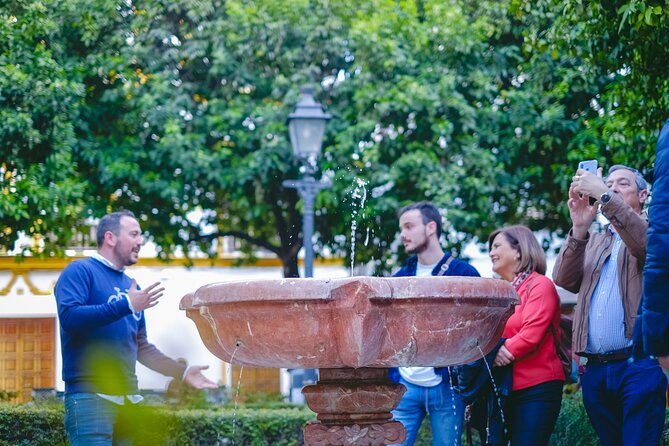
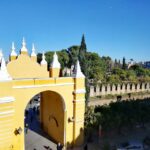
The first stop is Plaza Patio de Banderas, around the Alcázar. This is your context stop. The guide uses it to explain the Alcázar’s layered medieval importance, including the fact it was used since Moorish times.
Why I think this works: it prevents the Jewish Quarter story from feeling like it appears out of nowhere. Seville’s medieval identity didn’t flip on a switch—it evolved. By starting here, the tour helps you hold the city’s timeline in your head while you step into Santa Cruz.
If you’re the type who likes cause-and-effect history, this opening gives you a framework. And it’s short—about 15 minutes—so you’re not trapped in a long lecture before you get to the main area.
Plaza de Doña Elvira: understanding how communities lived together
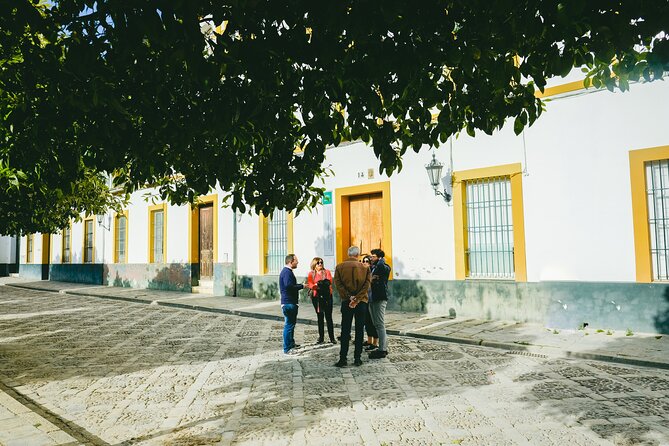
Next up is Plaza de Doña Elvira. This is where you start learning about the past communities that inhabited the surrounding area.
Squares sound simple, but in old cities they’re often where daily life shows up: foot traffic, local gathering points, and the crossroads of neighborhoods. The guide’s job here is to connect what you can see (a small square) to what you can’t (the social structure and community presence that once defined it).
This stop also tends to set the emotional tone for what comes next. Several guides are praised for keeping the information clear and for giving context that helps you understand what happened—why it happened, and what it changed.
Plaza de Santa Cruz: synagogues, Jewish presence, and why it’s complicated
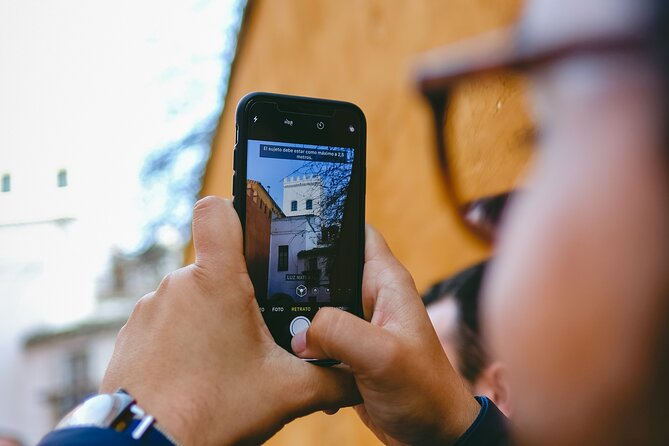
At Plaza de Santa Cruz, the tour turns specifically toward the history of the past synagogues in the city.
This is a key moment because Santa Cruz isn’t just a pretty district name. It’s a place that carries layered religious history, and the story of Jewish Seville is tightly tied to the rise and fallout of that community. Even if the physical remnants are limited, the guide can still help you picture the places that mattered.
One important reality to know before you go: the Jewish Quarter in Seville is a story you follow more than a place you tour like a museum. Feedback in this program often points out that the architecture doesn’t survive in obvious form. So at Plaza de Santa Cruz, you’ll benefit most if you’re open to imagination and context—how the guide helps you reconstruct the past.
You can also read our reviews of more historical tours in Seville




Jardines de Murillo: a quieter passage with neighborhood meaning
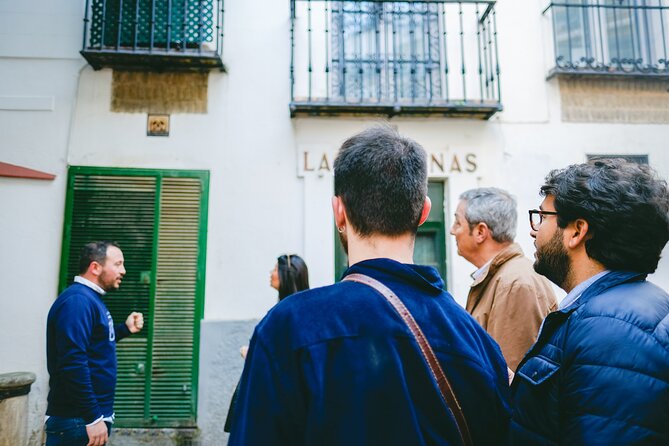
Then you pass through Jardines de Murillo. This is a “moving” stop, but it’s not filler. The point is to walk through the gardens while learning the history of the neighborhood around them.
Gardens can feel like a break from history walking, but that’s exactly why they work here. The guide can slow the group down and let you register place details—street relationships, the shape of the surrounding area, and how the neighborhood’s character changed over time.
I also like that this stop is practical: you get a little shade and a moment of calm while still staying in story mode.
Calle Cano y Cueto: the only physical remains, inside an underground archaeological site

Calle Cano y Cueto is where the tour gets concrete—literally. This stop is about the only physical remains of the medieval Jewish Quarter, housed at an archaeological site inside an underground car park.
That’s a striking detail, and it explains a lot about why you’re often asked to picture the past elsewhere. When you see what’s left, it also makes the gaps in the rest of the story feel more real. You’ll understand that survival of heritage here is limited, and that historical memory survives through documentation, interpretation, and the way these neighborhoods were shaped.
Practical note: since the archaeological part is underground, expect it to feel different from the open plazas above. If you’re sensitive to enclosed spaces, keep that in mind.
Iglesia de Santa Maria la Blanca: the walk’s final beat
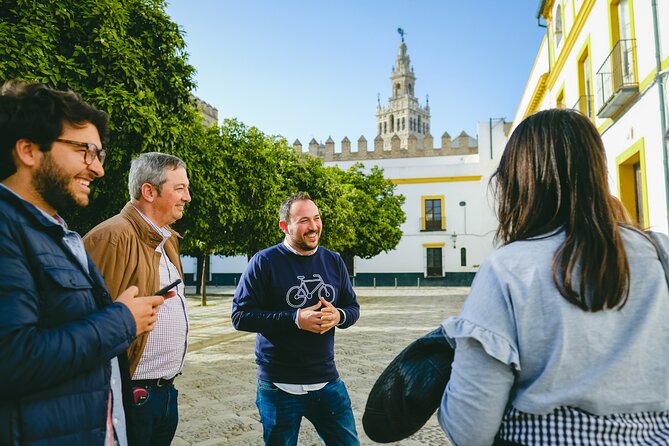
The tour finishes in front of the Church of Santa Maria la Blanca. This ending point ties the story back into something you can still see clearly in the present day, which helps the whole experience land with a stronger sense of place.
A finishing stop like this is useful for two reasons. First, you have a visible, stable landmark to anchor your memory. Second, it helps you compare “what still stands” versus “what was erased,” which is a theme the guides tend to address with care.
Some reviews mention how guides handle the emotional side of the history—especially when describing expulsion and loss. If that kind of history affects you, you’ll likely feel it here, since it’s built into the narrative arc.
What you’ll learn (and what guides do well)
The strongest praise across this tour centers on guide quality—especially the combination of storytelling, pacing, and answering questions.
You’ll see names repeatedly in the feedback: Miguel and Marta get credited for deep knowledge and an engaging pace. José and Guillermo show up as examples of guides with strong historical context and friendly delivery. Valentín is praised for not only teaching history but adding humor and even Ladino expressions—small details that can make the topic feel more human.
That last part matters. Jewish history in Spain can sound like dates and decrees. A good guide turns it into lived experience: roles people played in the 13th and 14th centuries, how coexistence worked in practice, and what changed when persecution reshaped life.
At the same time, one caution shows up too: some people feel the tour’s focus leans more toward tragedies than daily vibrancy. That’s not a flaw in the guides so much as a reality of what remains. The physical record is thin, and the surviving evidence can emphasize the hard turns in history.
Value for the price: why $32.65 can make sense
At about $32.65 per person for roughly 1 hour 30 minutes, this sits in the “small-group history” category. The value isn’t just that you’re paying for a walking tour.
You’re paying for:
- a tightly managed route through key squares and an archaeological stop
- a group size that stays small enough for questions
- English-language guiding
- stops marked Free for admission on the parts listed
So you’re not really paying for entry tickets at multiple locations. You’re paying for someone to connect the dots between spots that otherwise look like normal old streets.
And because this tour is typically booked around 17 days in advance on average, it’s a good sign you’re not gambling on quality. Still, if you’re visiting in a high season window, booking early is a smart move.
Who this tour suits best
This tour fits you best if you:
- love history but get bored by long lectures
- want a route that helps you understand Santa Cruz fast
- prefer a small group to keep the experience personal
- feel comfortable with the idea that some history here survives mostly through storytelling
It’s also a good first-day activity in Seville. Several comments in the data point to the tour helping people get their bearings. If you want to explore further afterward, you’ll know which streets and plazas matter—and why.
If you’re looking for a tour that shows lots of intact Jewish-quarter buildings, adjust your expectations. The tour’s strength is context, not a full set of surviving monuments.
Practical tips so the walk feels easy
Here are a few things to plan for, based on how the tour is structured.
- Wear comfortable walking shoes. It’s a walking route through the historic center with several short stops.
- Bring a little patience for the story of loss. Even when the guide keeps the pace steady, the subject matter can be heavy.
- If you care about specific details—synagogue history, expulsion timeline, roles Jews played in medieval Seville—come with questions. The small group format helps you actually ask them.
- Use your imagination. The tour repeatedly emphasizes how limited the physical remains are, so your mind does some of the work in a good way.
Should you book Seville’s Jewish Quarter Small-Group Walking Tour?
Book it if you want a focused, small-group introduction to Jewish Seville that explains not just what happened, but what it changed in the city’s layout and memory. The route’s strength is the way it strings together context: starting near the Alcázar edge, moving through Santa Cruz squares, and ending at Santa Maria la Blanca.
Skip it (or reconsider) if you’re only looking for surviving architectural highlights. This tour leans into interpretation because the site record is limited. Also, if you prefer history that stays upbeat, be aware that the narrative includes difficult chapters, and you’ll feel that.
If you’re even slightly curious about how Seville became what it is today—and how much history can live in small plazas and one underground archaeological remnant—this is an excellent use of 90 minutes.