REVIEW · SEVILLE
From Seville: Italica Roman City & Medieval Monastery Tour
Book on GetYourGuide →Operated by Naturanda Turismo Ambiental · Bookable on GetYourGuide
Roman history gets loud here. In just 4 hours, you’ll walk through Roman Italica where emperors Trajan and Hadrian began their story, then shift gears to a medieval monastery with layered architecture at San Isidoro del Campo. I especially love the way the guide connects the big, jaw-dropping sights—like the amphitheater—with the human details behind them.
My second favorite part is the balance: you get a real guided look at the ruins without feeling like a sprint, plus enough structure to make the site make sense fast. One drawback to plan for: on-site facilities are limited, so if you’re hoping for lots of breaks or long wandering time, you’ll want to manage expectations.
In This Review
- Key Things That Make This Tour Worth Your Time
- Roman Italica and a Medieval Monastery in One Smooth Half-Day
- Getting From Seville: Pick-Up Options and Timing That Matter
- Entering Roman Italica: The Emperors, the Amphitheater, and the Hidden World
- The guided walk through the ruins
- Mosaics and details that reward slow looking
- The Dragonpit Moment: Amphitheater Scale Meets Pop Culture
- Off the Roman Stage: The Medieval Monastery at San Isidoro del Campo
- Guides, Group Size, and the Pace You’ll Actually Feel
- Price and Value: Why $46 Feels Fair (When You Use It Right)
- What to Bring and How to Make the Most of Your Time
- Should You Book This Italica + Monastery Tour?
- FAQ
- FAQ
- How long is the Seville to Italica and monastery tour?
- Is transport from Seville included?
- What stops are included in the itinerary?
- Are entry tickets included?
- Is food included?
- What languages are available for the live guide?
- Will I be guaranteed a specific language?
- What are the pick-up options?
- Can I cancel for a refund?
- Is there a private tour option?
Key Things That Make This Tour Worth Your Time
- Trajan and Hadrian territory: Italica is tied directly to the emperors, not just to generic Roman ruins.
- Amphitheater scale you can feel: once built for about 25,000 spectators, with underground features tied to gladiator life.
- Game of Thrones crossover: the amphitheater is recognized as the Dragonpit filming location.
- A second site that changes the mood: San Isidoro del Campo adds Mudejar, Gothic, and Baroque details.
- Guides tend to be the secret weapon: many departures highlight guides like Petra, Miguel, Carlos Leone, Jesus, Alberto, and Nacho by name.
Roman Italica and a Medieval Monastery in One Smooth Half-Day
This is the kind of tour that fits a busy Seville schedule. You start with transportation from Seville, spend guided time at Italica, then move on to San Isidoro del Campo—a handy one-two punch when you want both ancient and medieval Spain without committing to a full day.
What makes it work well is the pacing and the contrast. Italica is about stone, size, and survival—ruins that still show how Romans lived, staged events, and moved through spaces underground. The monastery then shifts you into something quieter and more decorative, where architecture tells its own story through styles like Mudejar, Gothic, and Baroque.
If you’re the type who loves seeing famous places with the context still attached, this format is a strong deal. You get the major sights with a guide to translate what you’re seeing into why it matters.
You can also read our reviews of more city tours in Seville



Getting From Seville: Pick-Up Options and Timing That Matter
The tour runs about 4 hours total. The schedule is built around a short coach ride—roughly 20 minutes out to Italica, plus additional driving between stops. That matters because your time on the ground is actually spent looking, not just traveling.
For the shared group option, you choose among three meeting points in Seville. The tour info lists stops including Calle Rastro, 12a, Hotel Don Paco, and Calle Trajano, 6. For the private tour, pick-up can be available depending on where you’re staying. After booking, you provide your accommodation details, and if you’re outside the pick-up area, you’ll be directed to a nearby accessible point.
Two practical tips:
- Build in a little flexibility. Some departures can run longer than the headline time, so plan your next activity with breathing room.
- If you’re prone to getting hungry during tours, consider carrying a small snack and water. Food and drinks aren’t included.
Entering Roman Italica: The Emperors, the Amphitheater, and the Hidden World
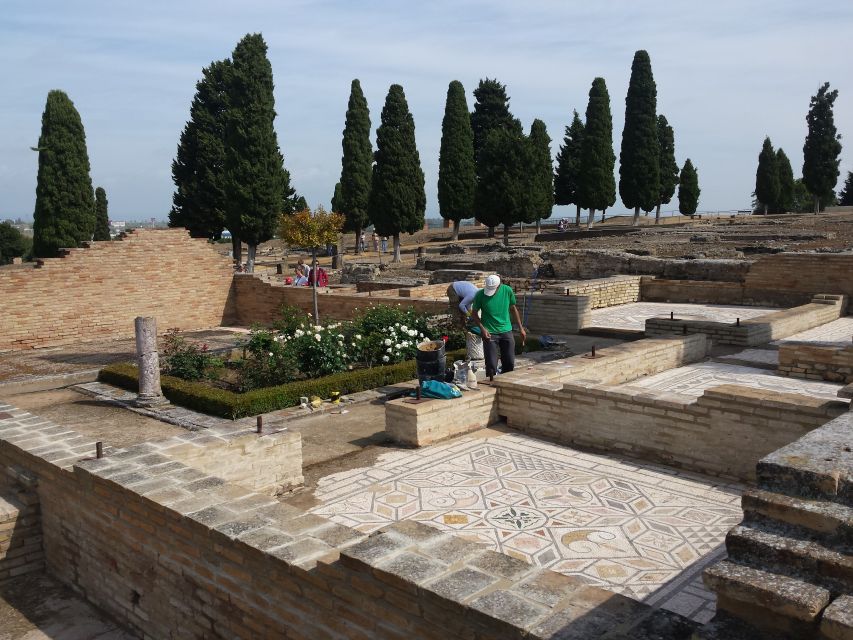
Italica is one of Spain’s most important Roman archaeological sites. It was founded in 206 BC by General Publius Cornelius Scipio, and it’s also the birthplace of emperors Trajan and Hadrian. That political weight changes how you read the stones—you’re not just looking at old walls, you’re seeing a place tied to the highest levels of Roman power.
The guided walk through the ruins
During the guided portion at Italica (about 105 minutes), you’ll move through highlights that make the site feel bigger than a museum stop. The amphitheater is the emotional center: once one of the largest in the Roman Empire, it had seating for around 25,000 people.
And then there’s the part that makes your imagination work overtime: the features beneath and around the spectacle. The tour includes the underground passages once used by gladiators, plus a reference point connected to the lion-holding area used before combat. Standing near these elements, you start to understand how Roman entertainment was engineered—controlled entrances, staging spaces, and a whole production system hidden from the crowd.
Mosaics and details that reward slow looking
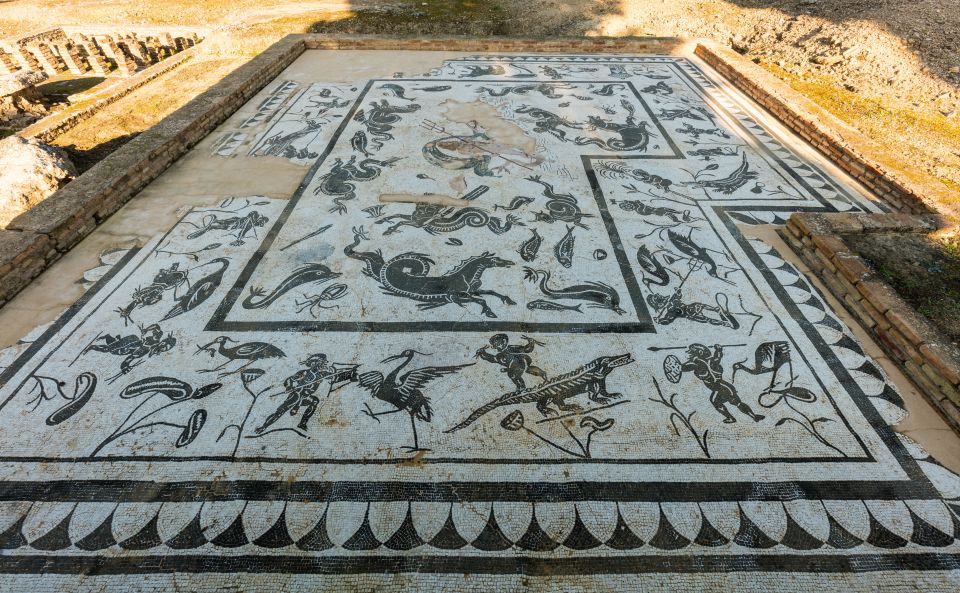
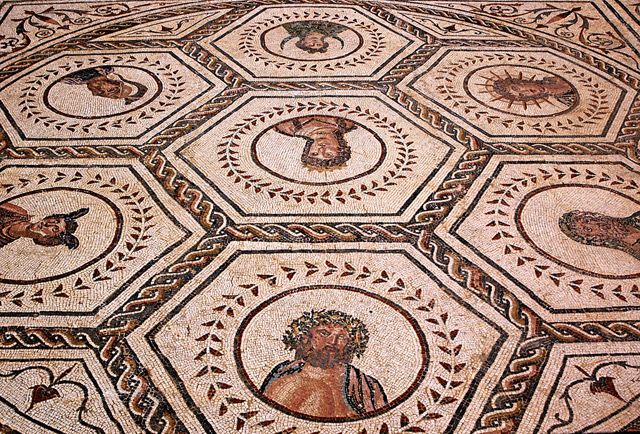
Even with time limits, you’ll get a taste of what makes Italica famous: preserved artwork and strong layout clues. Several guides and guests emphasize how striking the mosaics are, and once you’ve seen them, you realize why Romans invested so heavily in decoration. It wasn’t just for show; it was a statement about education, wealth, and identity.
One more practical note: facilities at the ruins are limited. There’s a small exhibition and some toilets, but the condition can be basic. So if you’re the type who plans around comfort, go in expecting a lean setup and keep your expectations realistic.



The Dragonpit Moment: Amphitheater Scale Meets Pop Culture
If you’re a Game of Thrones fan, this stop lands twice. The tour specifically points to Italica’s amphitheater as the recognized Dragonpit filming location, especially associated with a major summit scene in season seven.
Here’s the smart way to use that connection: don’t treat it like a theme park replay. Use it as a memory hook, then let the guide bring you back to the Roman reality—size, acoustics, sightlines, and how a crowd would have moved. The pop culture reference helps your brain place the location fast, but the Roman facts are what keep the experience grounded.
If you love photography, this is also where you’ll want to pace yourself. Some guests wish there were a few extra minutes to photograph from different angles and at different levels. So if photos matter to you, you’ll likely want to linger a bit during the tour’s best sight points rather than waiting until the very end.
Off the Roman Stage: The Medieval Monastery at San Isidoro del Campo
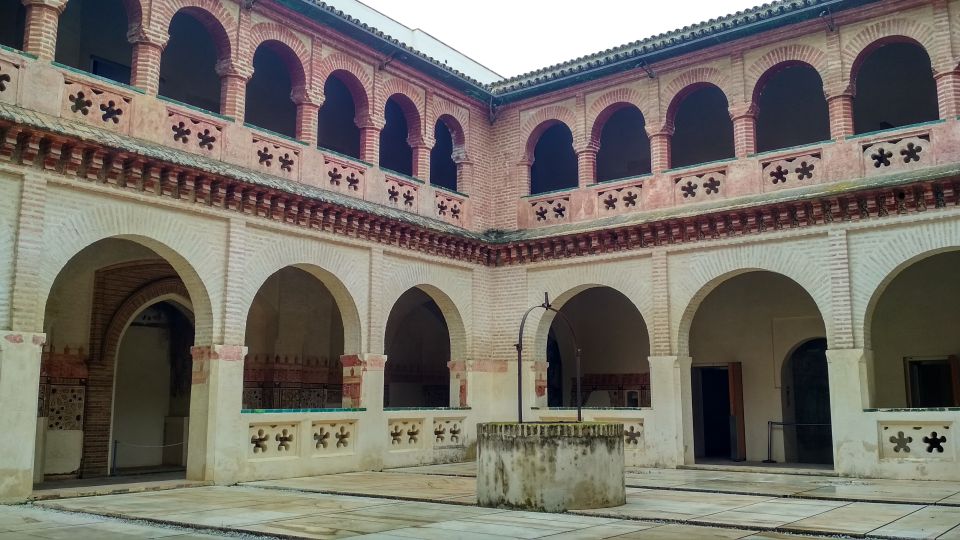
After Italica, the tour shifts about 10 minutes of coach time, then you settle into San Isidoro del Campo for a guided visit of about 40 minutes.
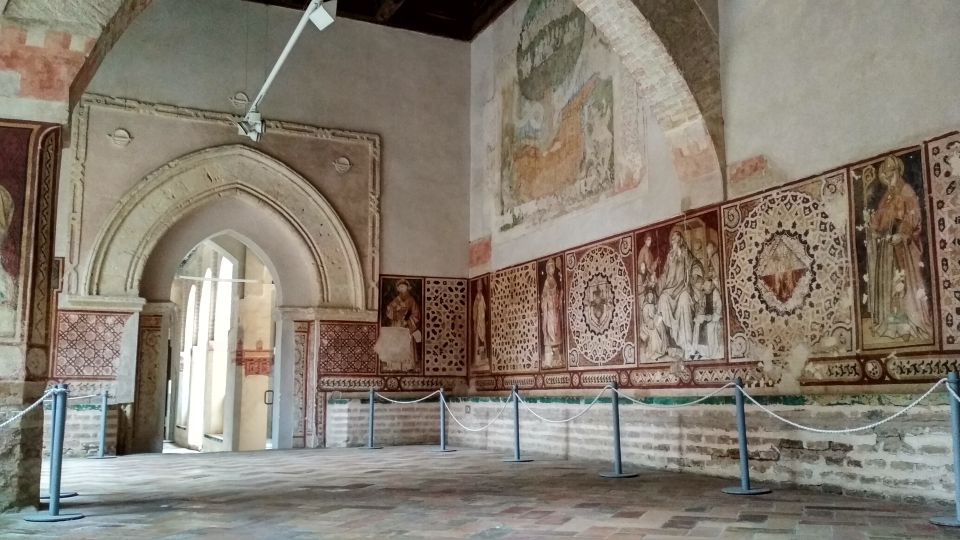
This is a different mood on purpose. The monastery is described as a medieval fortress-like site with layered Mudejar, Gothic, and Baroque architecture. In practical terms, you’re moving from Roman entertainment infrastructure to a religious complex where power shows up through design, craft, and the way spaces direct movement and attention.
What I like about this pairing is the contrast in “why people built things.” Romans built to host crowds, express status, and stage events at scale. The monastery is about devotion, permanence, and architectural identity across centuries.
It also helps you understand Andalucian history as something continuous. You’re seeing how Spain’s cultural layers stack on top of each other: Roman foundations, then medieval interpretations, then later artistic influences.
Guides, Group Size, and the Pace You’ll Actually Feel
The tour runs as either shared group or private/small group. In shared format, you’ll likely be in a coach with multiple groups that split by language once you arrive. For private tours, pick-up is available depending on location.
One important detail: language availability has a minimum requirement. A tour in a specific language needs at least 4 participants speaking the same language; otherwise, you’ll be offered an alternative language, different date, or a full refund. If your schedule is tight and your language choice is essential, it’s worth checking availability before you commit.
On the guide side, the reviews you’re given name many professionals across departures—Petra, Miguel, Carlos Leone, Jesus, Alberto, Nacho, Roberto, and others. The common theme is that guides explain while keeping things fun. If you usually prefer to self-walk museums, this kind of guided structure can still be worth it here because the site is large enough to get lost in, but focused enough that a good storyteller makes it click quickly.
Pacing is generally well managed, though a couple guests note the day may run longer than the advertised 4 hours, and some wish they had a touch more time to wander inside Italica on their own. That’s not unusual for half-day archaeology tours, where timing is affected by logistics on the ground.
Price and Value: Why $46 Feels Fair (When You Use It Right)
At about $46 per person for a 4-hour experience, this is priced like a solid value excursion—not a luxury day trip. Here’s why it’s not just “cheap transport to ruins.”
You’re getting:
- Guided entry to Italica and the monastery (tickets included)
- Transport from Seville (coach included)
- A local guide doing the translation work for you
That combination matters. Roman ruins can be gorgeous but frustrating without context—paths, building purposes, and underground features won’t automatically make sense. The guide turns scattered stone into a readable story.
Also, you’re not stuck choosing between two good stops. A lot of Rome-style history trips are either ancient-only or medieval-only. This one gives you both, and it does it in a way that keeps the day from dragging.
If you’re traveling in a group, a shared tour can be the best cost option. If you want flexibility, a private tour may be worth the extra cost because it can slow down for questions and let you focus on what you care about most—amphitheater details, mosaics, or the monastery architecture.
What to Bring and How to Make the Most of Your Time
Since food and drinks aren’t included, plan for the human basics:
- Bring water and a small snack if you get hungry easily.
- Wear comfortable shoes with good grip. You’ll be walking through uneven historic surfaces.
- If you’re planning photos, consider a bit of extra patience at the amphitheater. Some sight points may not give you endless time.
Also, check the weather. This is outdoors-heavy. Rain or heat can change your comfort fast, and you won’t want to cut the day short just because you dressed for the wrong kind of weather.
Should You Book This Italica + Monastery Tour?
If you want a half-day that hits real highlights—Roman Italica plus San Isidoro del Campo—this tour is a strong pick. I’d especially recommend it if:
- You like guided explanations more than wandering with an audio app.
- You’re into Roman sites but also want the medieval layer of Andalucian history.
- You’re a Game of Thrones fan and want a legit place behind the screen memory.
Skip it (or at least reconsider) if your top priority is long, self-paced roaming with lots of breaks. The experience is structured, and the ruins and monastery are visited in time-bound segments.
FAQ
FAQ
How long is the Seville to Italica and monastery tour?
The tour duration is listed as 4 hours.
Is transport from Seville included?
Yes. Transport from Seville is included as part of the tour price.
What stops are included in the itinerary?
The tour includes a guided visit to Italica and a guided visit to the Monastery of San Isidoro del Campo.
Are entry tickets included?
Yes. Entry tickets are included.
Is food included?
No. Food and drinks are not included.
What languages are available for the live guide?
Live guides are available in English, French, Italian, and Spanish.
Will I be guaranteed a specific language?
A minimum of 4 participants speaking the same language is required to guarantee the tour in that language. If the minimum isn’t met, you’ll be offered an alternative language, a different date, or a full refund.
What are the pick-up options?
For shared tours, meeting points in Seville vary by the option booked. For private tours, hotel pick-up is available depending on location in Seville, and if you’re outside the pick-up area you’ll be directed to a nearest accessible point.
Can I cancel for a refund?
Yes. You can cancel up to 24 hours in advance for a full refund.
Is there a private tour option?
Yes. You can choose between a shared group tour or a private tour (private or small groups are available).