REVIEW · SEVILLE
Donana National Park and El Rocío: Guided Tour from Seville
Book on Viator →Operated by Naturanda Turismo Ambiental · Bookable on Viator
Wildlife day trips from Seville can feel routine. This one is different: you spend the day in and around Doñana National Park with real bird-focused stops, then hit the El Rocío village atmosphere and the Atlantic dunes.
I especially like the mix of off-road searching in a 4×4 and guided time on foot, including a circular walk near the La Rocina area where you learn what you’re seeing. The main drawback to weigh is that animal sightings (even the famous ones) depend on season, water levels, and access to certain areas, so you should go with flexible expectations.
In This Review
- Key Highlights to Know Before You Go
- Entering Doñana: Why This Trip Feels Like Going Off-Map
- Seville Pickup and the First Stop: Settle In Before You Hit the Park
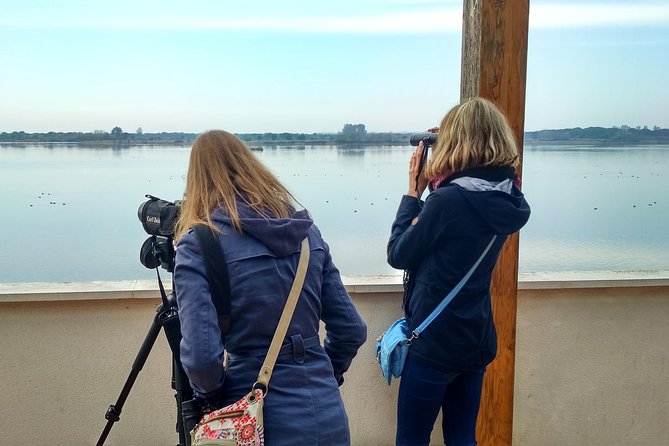
- Puebla del Río and the Water Advantage for Birds
- Dehesa de Abajo: Olive Trees, Oaks, and a Stork-Packed Setting
- El Rocío: Heritage, Horses, and the Chapel Moment
- Palacio del Acebrón and the Arroyo de la Rocina Walk
- UNESCO World Heritage Centre Stop: Learning the Why
- Playa de Matalascanas: Atlantic Dunes and the Changing Coast
- The Return 4×4 Search for Bigger Wildlife (and How to Think About It)
- Vehicle Comfort, Photography, and Staying in the Best Seat
- Price and Value: Is $107.68 a Smart Buy?
- Season Matters: When You’ll See More Birds and Better Wildlife Action
- Who Should Book This Tour, and Who Might Prefer Something Else
- Should You Book This Doñana and El Rocío Day Trip?
- FAQ
- How long is the Doñana and El Rocío guided tour from Seville?
- Where does the tour start and end?
- What is the group size?
- What’s included in the price?
- Is lunch included?
- Is the tour offered in English?
- What wildlife and nature can I expect to see?
- Is a 4×4 ride part of the experience?
- What happens if weather is bad?
- Is there a minimum number of travelers?
Key Highlights to Know Before You Go
- Early hotel pickup and a full 10-hour loop: it’s a long day, but the timing gives you more daylight for wildlife and bird activity.
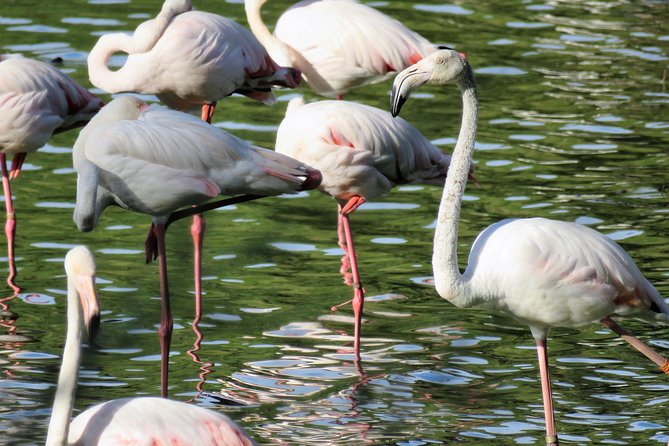
- Doñana birding focus: you’re walking and driving through marshes, forests, pastures, and rice-country edges where lots of species are possible.
- El Rocío village and chapel visit: a different pace from the park, with sandy lanes and a heritage feel.
- La Rocina walk with trail interpretation: a guided route that helps you read animal signs and local plants.
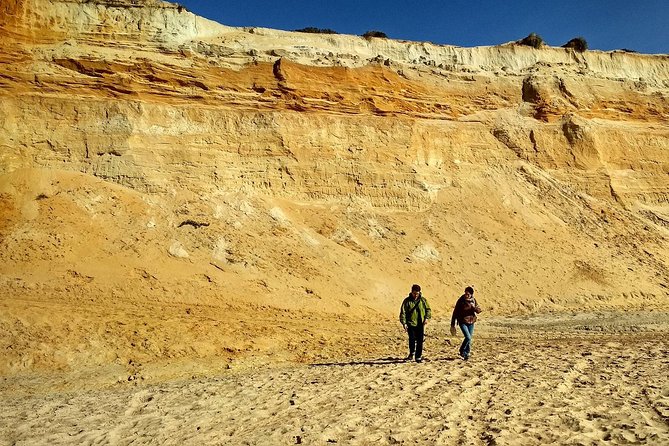
- Atlantic dunes at Playa de Matalascanas: you get the big, shifting-doesn’t-stand-still dune ecosystem experience.
- 4×4 return aimed at mammals: the plan includes a forested-area crossing to look for bigger wildlife, but conditions can affect access.
Entering Doñana: Why This Trip Feels Like Going Off-Map
Doñana is one of those places where “national park” sounds tidy, but the reality is a living system of marshes, forests, and coastal dunes. From Seville, you trade city streets for a day of scanning waterlines for birds, listening for movement in trees, and watching how habitats change as you move north to El Rocío and back toward the Atlantic.
What makes this tour feel practical is that it’s not just a drive-by checklist. You get guided time walking inside the park, plus stops along the way that matter because they’re tied to where animals actually feed and breed. And if you’ve ever wanted that moment of spotting something rare and then realizing you understand why it’s there, this kind of guide-led birding route is built for that.
The tradeoff is simple: wildlife is never guaranteed. One day you might be talking with your guide about white storks and other water birds; another day may be quieter, especially if the weather or water levels don’t line up with what species are doing.
You can also read our reviews of more guided tours in Seville


Seville Pickup and the First Stop: Settle In Before You Hit the Park
The day starts with an early pickup from a meeting point near downtown Seville, with multiple pickup locations listed (including C. Rastro 12a and Calle Trajano nº6 near Hotel Don Paco). You’ll also have a quick first stop for luggage storage at the Naturanda Tourism Information area.
Why that matters: a national park day eats up attention and energy. Storing bags early keeps you from dealing with them later when you’re walking trails, photographing birds, or climbing in and out of the vehicle. If you’re bringing a camera and want a steady rhythm, this start helps you get organized fast.
Also, double-check your exact pickup point the day before. Several reports mention people feeling late or rushed if they don’t arrive at the meeting spot on time, so treat pickup like a departure, not a casual meet-and-greet.
Puebla del Río and the Water Advantage for Birds
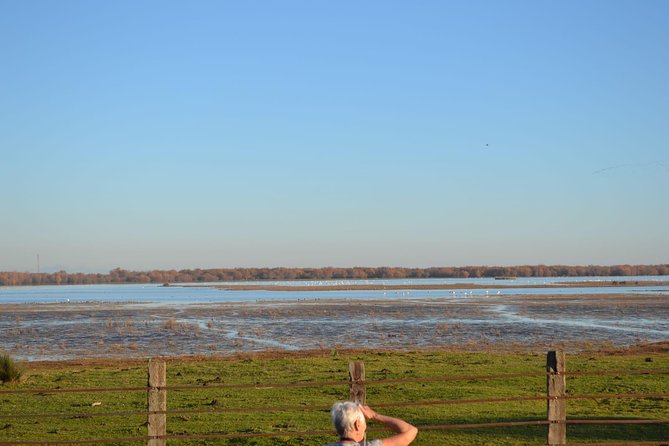
Your first major nature stop is the Sevillian town area of La Puebla del Río, which is important because it’s one of the key spots where birds can find water more easily year-round. The area benefits from extensive rice fields that grow in spring and summer, turning habitat into a food and foraging zone.
This is a smart early stop because marshy bird activity often depends on water distribution. In other words, even if you’re excited for the big Doñana moments, starting in a place that supports water birds makes the day feel like it has momentum from the beginning.
Time here is about 40 minutes, enough to see what’s happening without turning the day into endless waiting. If you love birds, this is the kind of place where your guide’s scanning skills really come into play.
Dehesa de Abajo: Olive Trees, Oaks, and a Stork-Packed Setting
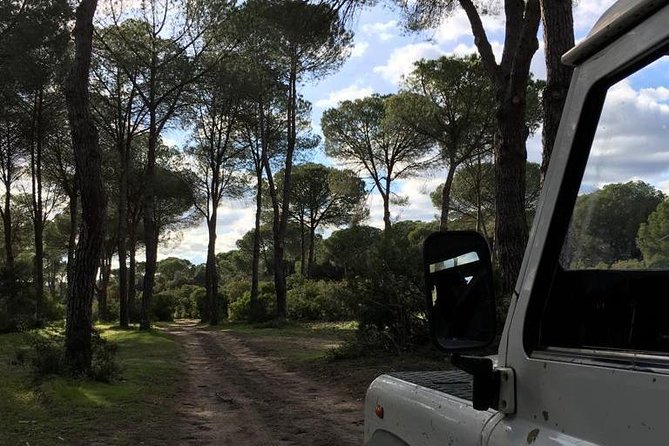
Next you head to Dehesa de Abajo, a wooded area with ancient olive trees and oaks. This stop is timed for wildlife viewing, including the chance to spot Europe’s largest white stork population and thousands of birds in a natural habitat context.
This is where Doñana starts to feel layered. You’re not only thinking about water; you’re also watching how trees, pasture, and scattered woodland create feeding and nesting zones. If you’ve only seen “flat marsh” versions of wetland wildlife online, this wooded step adds depth.
Practical tip: you’re on an interpretive route, not just wandering. If you’re interested in learning bird behavior (not only spotting shapes), you’ll get more out of this stop by staying focused on what the guide points out—perched locations, feeding cues, and flight patterns.
El Rocío: Heritage, Horses, and the Chapel Moment
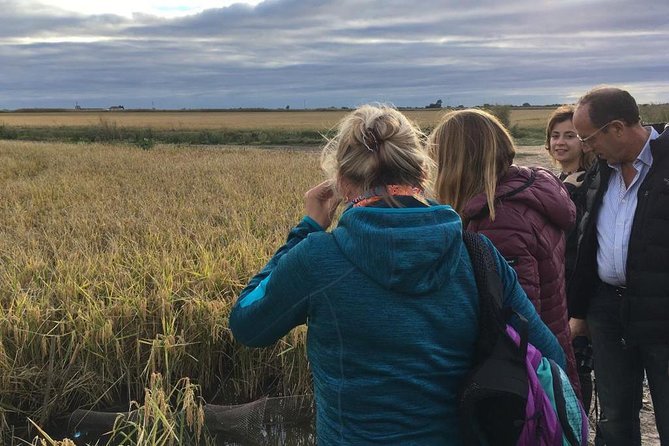
After the park-side habitat stops, the day shifts to El Rocío—the hermitage area and village atmosphere with sandy streets and a classic, older-world feeling. You’ll visit the Virgin of El Rocío area (the hermitage) and then continue to an ornithologist-oriented stop meant for bird spotting.
What I love about this part is the contrast. Doñana can be intense and wide; El Rocío slows you down. You get a sense of why people travel here, and why this area is more than just wildlife viewing—it’s also a cultural landscape tied to birds, water, and seasonal rhythms.
Time is limited (about an hour), so come in with realistic expectations: it’s a “see and absorb” stop, not a full day to explore cafes and shops.




Palacio del Acebrón and the Arroyo de la Rocina Walk
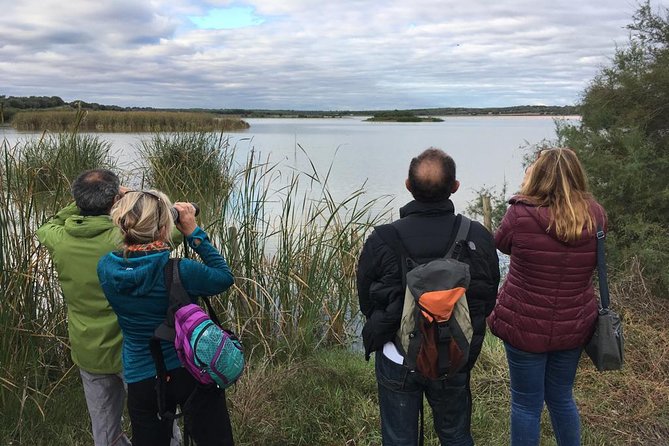
Next comes Palacio del Acebrón near Arroyo de la Rocina. This is a short stop (about 30 minutes), but it works as a bridge between the village moment and the park interior.
Then you do a circular hiking route in Doñana National Park near the La Rocina area. This part is about animal trail interpretation and indigenous plant species, and it’s guided. It’s not just walking; it’s learning how to read signs—where animals move, what plants indicate, and how the ecosystem functions at ground level.
This is also where I’d pay attention to comfort and footwear. The walk is about an hour, but you’re in park conditions, so wear shoes you’re happy to get dusty. If you’re bringing a large camera setup, keep it manageable; the goal is to listen and watch as much as you capture.
One more reason this section is valuable: in Doñana, the “wildlife viewing” isn’t only about the headline animals. Birdlife, insects, and plant patterns can be just as satisfying if you’re guided toward them.
UNESCO World Heritage Centre Stop: Learning the Why
The tour includes a visit to a UNESCO World Heritage centre during the day. Even if you’re not a museum person, this is useful because it gives context for what you’re seeing outdoors—how Doñana’s habitats are protected and why certain landscapes matter so much.
I like this kind of stop because it turns the day from a series of photo stops into an actual story. Once you understand what’s being protected, you notice more: how water supports birds, how vegetation stabilizes dunes, and how seasonal shifts change what’s visible.
Playa de Matalascanas: Atlantic Dunes and the Changing Coast
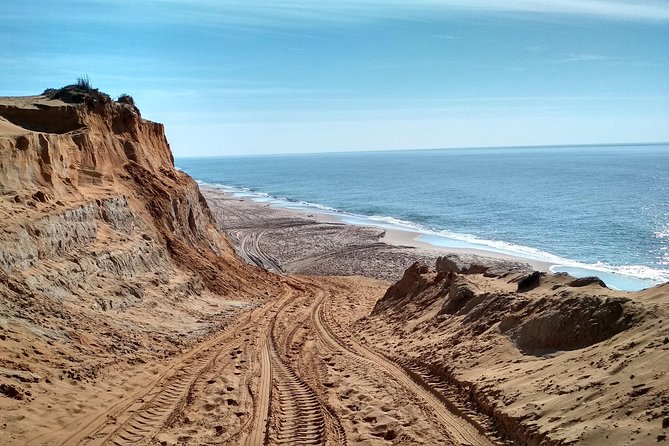
After lunch on your own expense (there’s a break built into the schedule), you head to the coast for Playa de Matalascanas. The focus here is the coastal Doñana ecosystem and the transforming dunes—the kind of landscape that keeps reshaping itself.
You get about an hour. That’s enough to walk the dunes edge, watch how wind and sand create patterns, and take in the Atlantic light. One review note to take seriously: bring swim gear if you want to use beach time well, because it’s exactly the kind of stop where you might be tempted to cool off.
This is also a good mental reset. You’ve been scanning for birds in habitat zones; now you’re looking at wide-open space and a different ecosystem entirely.
The Return 4×4 Search for Bigger Wildlife (and How to Think About It)
On the way back, the plan includes a crossing in a 4×4 vehicle through the forested area of Doñana, aimed at seeing great mammals and the famous Iberian Lynx. The day also includes a chance for a sunset moment in the Asperillo pine forest on the return drive.
Here’s the honest way to plan your expectations: Doñana is famous for big wildlife, but wildlife is not guaranteed on a timed tour. Several guide-led days go amazingly well—deer, wild horses, and a mix of birds are commonly possible, and in some cases lynx are spotted—but access can change with weather and park conditions. If certain areas are closed for security or due to conditions, the “big 4×4 crossing” could be shortened or rerouted.
So I’d go with a mindset of two wins:
1) the habitats and birdlife education are the stable core of the day, and
2) the mammals are the bonus when conditions let you access the right zones.
If you’re the kind of traveler who will be disappointed by quiet wildlife moments, this is where you should decide if you still want the experience even when spotting is slower.
Vehicle Comfort, Photography, and Staying in the Best Seat
The tour uses a shared transfer and a vehicle described as 4×4, with small-group size capped at 15 travelers. In practice, the vehicle can feel cramped if you end up in the back rows. Some people report tiny or non-opening windows in certain seating arrangements, and a difficult setup for cameras.
What I recommend:
- Arrive early and ask about seat preference when you board.
- If you’re traveling with a camera, be realistic about how often you can stop and shoot versus how much you’ll be photographing through glass.
- If the vehicle allows switching seats, request rotation early so you’re not stuck behind everyone else all day.
This doesn’t ruin the tour, but it does affect your comfort and photo quality.
Price and Value: Is $107.68 a Smart Buy?
At $107.68 per person for about 10 hours, this tour is priced like a full day with transport, guide leadership, and park-area access. What you’re really paying for is not just the drive out of Seville—it’s the guided time in multiple habitats plus the interpretive walk and the 4×4 portion.
Here’s how I’d judge value:
- If you love birds and want a guide who can point out species and behavior, the structured stops add up.
- If you mainly want guaranteed big mammals, you might feel frustrated on a quiet day because lynx spotting is never something a schedule can force.
- If you’re short on time in Seville, the hotel pickup and drop-off saves hours of planning and gets you into Doñana without renting a car.
Given the small group limit and the inclusion of transport, I think it’s a good value for many people—just don’t treat it like a guaranteed “I will see lynx” product.
Season Matters: When You’ll See More Birds and Better Wildlife Action
Doñana visibility changes a lot with water and season. One review note highlights how going in spring can mean more water and better odds for wildlife. Another mentions that October may limit the number of animals you see, which fits the broader reality that fewer water-heavy conditions can mean fewer visible concentrations of wildlife.
What to do with that info:
- If you’re flexible, aim for times when the park is greener and water-dependent species have active habitat use.
- If your dates are fixed, focus on bird diversity and habitat learning rather than a single target animal.
And remember: even when mammals are tougher to spot, birdlife and habitat variety are still a major payoff.
Who Should Book This Tour, and Who Might Prefer Something Else
This is a strong fit for you if:
- you want a guided nature day with bird-focused interpretation,
- you enjoy walking in natural areas and learning how to read animal trails,
- you like the mix of park + village culture in El Rocío.
I’d think twice if:
- you’re very sensitive to language and need constant English explanations (the experience is offered in English, but guide performance and balance across multiple language speakers can vary),
- you expect unlimited wildlife sightings on a strict schedule,
- you know you hate tight vehicle seating and window limitations.
Should You Book This Doñana and El Rocío Day Trip?
I’d book it if you want a full, well-paced day that teaches you how Doñana works: marsh and rice-water dynamics, wooded stork areas, the La Rocina walk, and coastal dunes at the Atlantic. The itinerary has enough variety that even a quieter wildlife day doesn’t feel like a total loss.
I wouldn’t book it if you’re only paying for Iberian Lynx and nothing else. The best version of this tour is fantastic when access and conditions line up, but wildlife viewing is always probabilistic in Doñana.
If you do book, come prepared to scan, listen, and enjoy the habitats as much as the animals—and request a good seat for photography early.
FAQ
How long is the Doñana and El Rocío guided tour from Seville?
It runs for about 10 hours.
Where does the tour start and end?
It starts at a meeting point in Seville, such as C. Rastro 12a, and ends back at the meeting point in Seville.
What is the group size?
It has a maximum of 15 travelers.
What’s included in the price?
You get a driver and professional guide, pickup and drop-off service in most downtown hotels (or closest meeting point), round-trip shared transfer, transport by 4×4 vehicle, and a small-group guided day trip. The tour includes guided experiences, but food and drinks are not included.
Is lunch included?
No. Food and drinks are not included, and there is a lunch break for you to handle at your own expense.
Is the tour offered in English?
Yes, it’s offered in English.
What wildlife and nature can I expect to see?
The tour focuses on Doñana’s habitats and birdlife, with opportunities for wildlife spotting in natural settings. Iberian lynx are part of the mammal-spotting plan, but sightings depend on conditions. White storks are specifically highlighted, along with many other birds.
Is a 4×4 ride part of the experience?
Yes. You travel in a 4×4 vehicle, including a planned return crossing through a forested area of Doñana.
What happens if weather is bad?
The experience requires good weather. If it’s canceled due to poor weather, you’ll be offered a different date or a full refund.
Is there a minimum number of travelers?
Yes. If the minimum isn’t met, the tour may be canceled and you’ll be offered a different experience or a full refund.