REVIEW · SEVILLE
From Seville: Italica Roman City Tour
Book on GetYourGuide →Operated by GRANAVISION Incoming & DMC · Bookable on GetYourGuide
Roman ruins, just outside Seville. This 4-hour guided outing to Italica feels like stepping into Hispania’s Roman life, not reading about it from a textbook. I love the big visual payoff: the third-largest Roman amphitheater and the nearby theater views. I also like the structure—round-trip transport plus an official guide and entrance fees so you can focus on the ruins instead of logistics. One drawback to consider: it’s a guided schedule, so you won’t have much time to wander independently.
The drive is short—Italica sits about 15 minutes from Seville—so this is a smart choice when you want a Roman hit without losing half a day. You’ll walk through the Archaeological Ensemble of Italica and see key sights like mosaics, baths, and the Traianeum. The guide language is Spanish or English, with other options available on request.
Because Italica is spread out and the group can be sizable, I’d plan to get close to your guide when you can. Some people noted it can be harder to hear in a larger group, so bring patience and be ready to angle yourself for better audio.
In This Review
- Key things I’d prioritize on this Italica tour
- First Roman City in Spain: why Italica grabs you fast
- Entering the Archaeological Ensemble: what your guided walk covers
- The amphitheater at Santiponce: scale you can actually picture
- Mosaics, Traianeum, statues, and baths: the details that make it feel lived-in
- Santiponce’s partially reconstructed Roman theater: why it’s worth seeing
- The 4-hour timetable from Seville: how to make it feel unrushed
- Spanish or English guides, plus when other languages show up
- Price and value at about $51: what you’re really paying for
- Optional extras some groups mention: monastery stops and small refreshment reports
- Who should book this Italica tour (and who should consider alternatives)
- FAQ
- Pickup locations and timing
- Where does the tour drop you off?
- How long is the Italica tour?
- How much does it cost?
- What’s included in the ticket price?
- Is the ticket line skipped?
- What languages are available?
- What major sites do you see?
- Is lunch included?
- Can I cancel for free?
- Should you book this Italica tour from Seville?
Key things I’d prioritize on this Italica tour
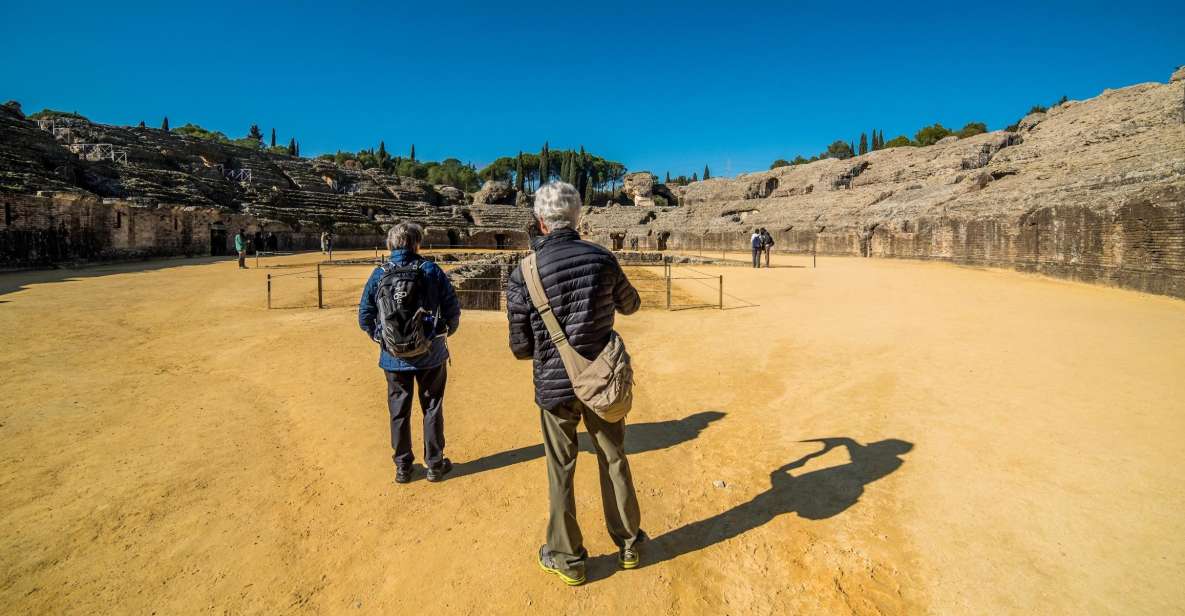
- The amphitheater scale: a 25,000-seat venue that’s the third largest in the Roman world.
- Roman theater in Santiponce: a partially reconstructed section that helps you picture what once stood here.
- Mosaics and named art: mosaics in the houses, plus statues of Diana, Venus, and Trajan.
- Traianeum and public baths: religious-ceremonial space and daily-life infrastructure in one stop.
- Short Seville round trip: bus/coach time adds up to about an hour, leaving most of the day on-site.
- Live guide with real storytelling: guides like Jose Luis, Jesus, and Alberto are repeatedly praised for making the city click.
First Roman City in Spain: why Italica grabs you fast
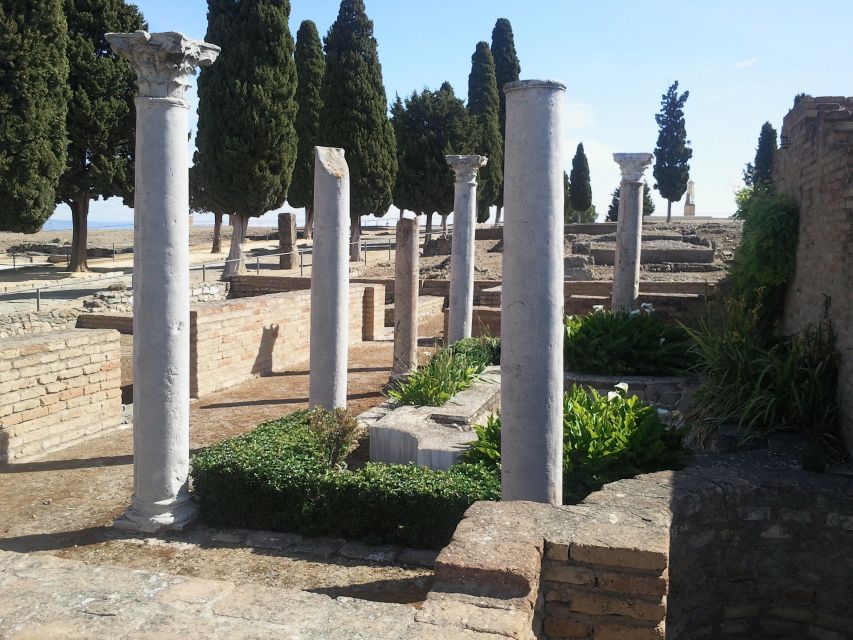
Italica is the sort of place you notice right away, even before you get deep into details. The setting is historic, but the real magic is that it wasn’t a Roman imitation—it was one of the early Roman cities in Spain, founded in 206 B.C. by Roman general Publius Cornelius Scipio Africanus. You’ll also hear the names that mattered in Roman power: Italica is tied to the birth of future emperors Trajan and Hadrian.
That context matters because it turns the ruins from random stones into a real story. You’re not just seeing architecture; you’re seeing the bones of a city where Roman politics, wealth, and daily life overlapped. If you’re already in Seville and want a credible Roman detour, this one is close enough to feel efficient and big enough to feel substantial.
You can also read our reviews of more city tours in Seville



Entering the Archaeological Ensemble: what your guided walk covers
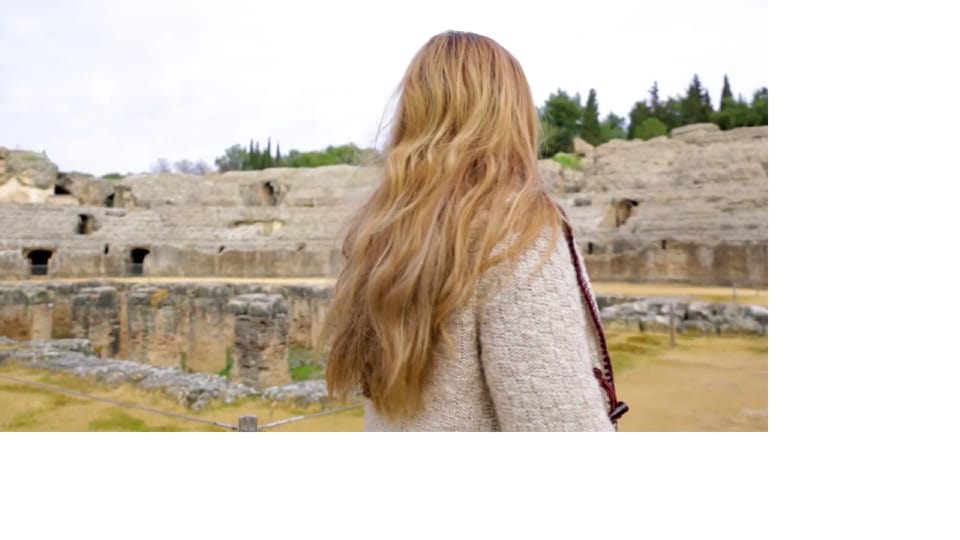
Your time on-site is focused. You’ll spend about 3 hours with a guide walking the Archaeological Ensemble of Italica—an area built from old streets, homes, and public buildings. This is where the tour shines for people who want meaning, not just location names.
Here’s what you’ll be looking at as you go:
- Old streets and house ruins: you can trace how neighborhoods were laid out and where people lived versus where they gathered.
- Public buildings: these spaces help explain how Roman civic life functioned.
- The feel of an inhabited city: the uncovered pieces make it easier to imagine everyday routines rather than only ceremonial events.
A small practical note: Italica is not one compact stop. You’ll be walking from feature to feature, which is why the guided route helps. You’ll keep moving, but at least the guide keeps the pacing understandable.
The amphitheater at Santiponce: scale you can actually picture
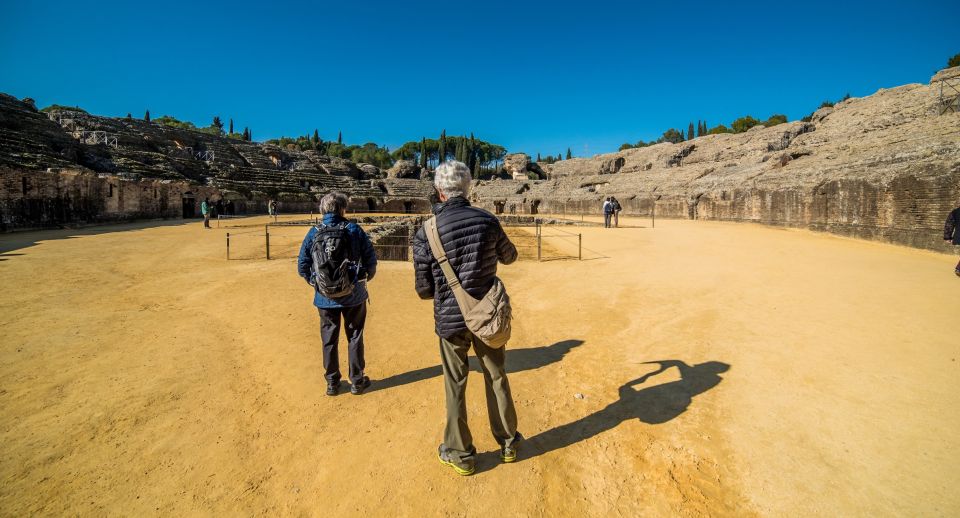
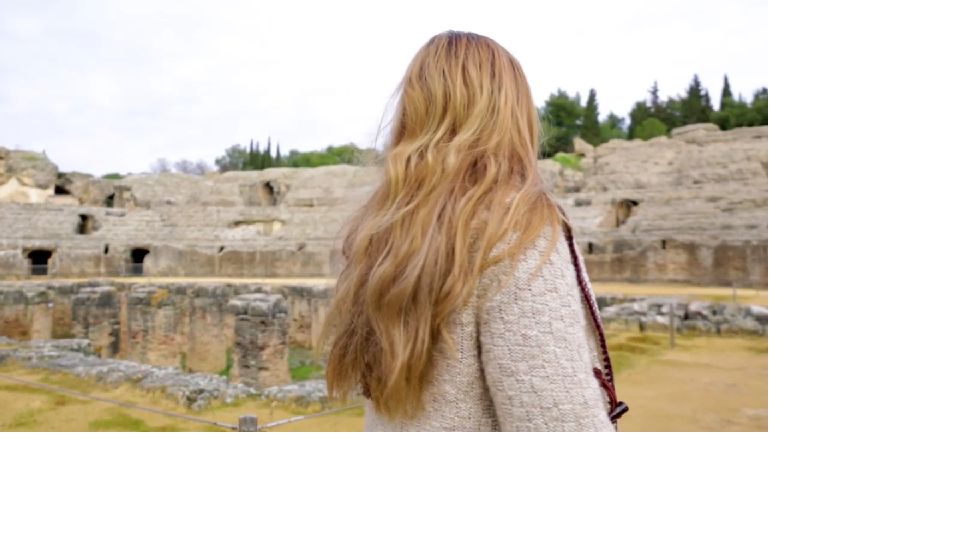
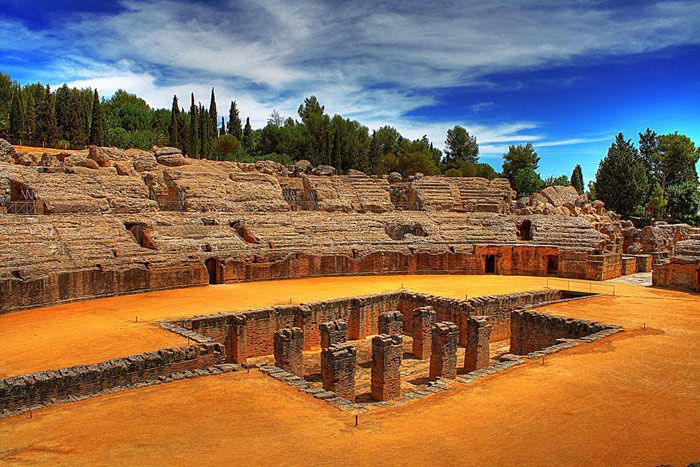
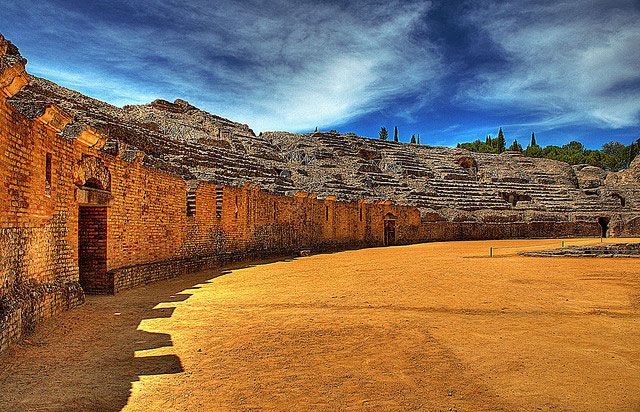
The amphitheater is the headline. You’ll see the Italica Amphitheater, built to seat around 25,000 spectators and often described as the third largest amphitheater in the Roman Empire. Even if you don’t memorize numbers, the structure does the convincing.
What I like about this stop is that it’s not just “look up at ruins.” It’s tied to how Romans experienced spectacle—where crowds gathered, how seating wrapped around, and how the arena would have functioned.
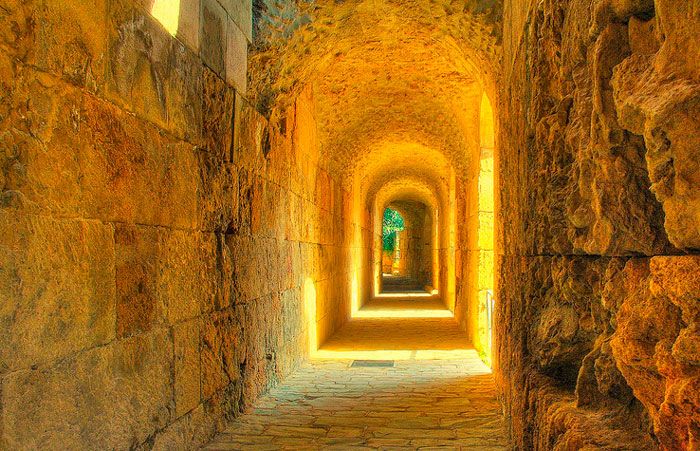
Some groups also specifically praised walking through the tunnels under the seating as a memorable part of the visit. If that access is available on your day, take it seriously—tunnels change the vibe from distant viewing to standing inside the system of the building.
Mosaics, Traianeum, statues, and baths: the details that make it feel lived-in
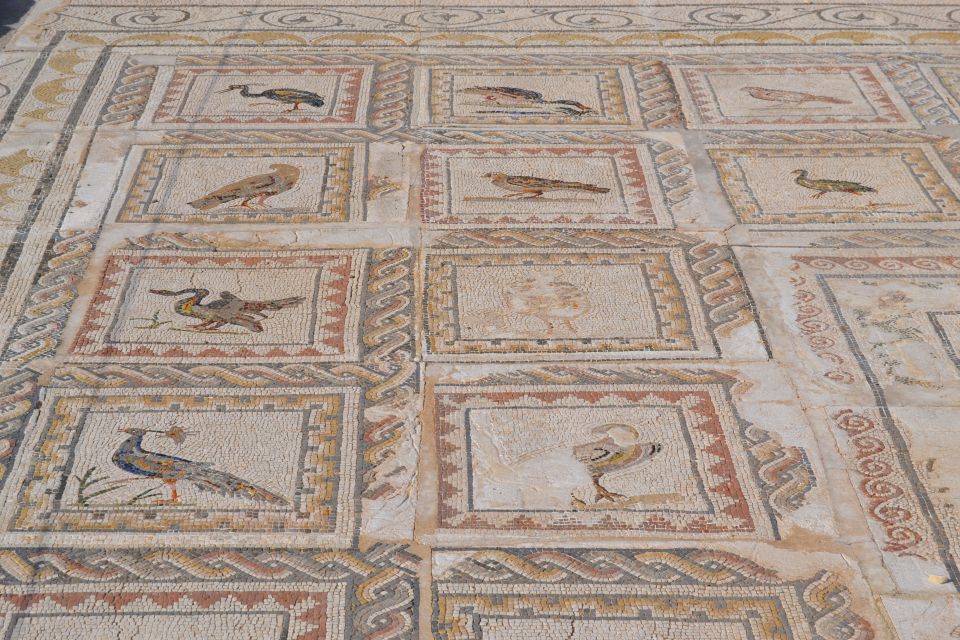
Italica is famous for the small stuff that somehow becomes the biggest stuff once someone points it out. You’ll get time to see:
- Mosaic floors from uncovered houses
- The Traianeum
- Statues of Diana, Venus, and Trajan
- Public baths
This is where the tour becomes more than sightseeing. Roman mosaics are often the clearest window into wealth and taste, because the floor is the part visitors and residents repeatedly experienced. Baths, meanwhile, are the architecture of routine—where people went to socialize, cleanse, and swap news.
The Traianeum adds another layer. When you connect these sites—ceremony, art, and daily life—you end up with a fuller picture of how Roman identity showed up across the city. If you’re the kind of person who loves “how did they live?” questions, this is the portion you’ll keep thinking about later.
Santiponce’s partially reconstructed Roman theater: why it’s worth seeing
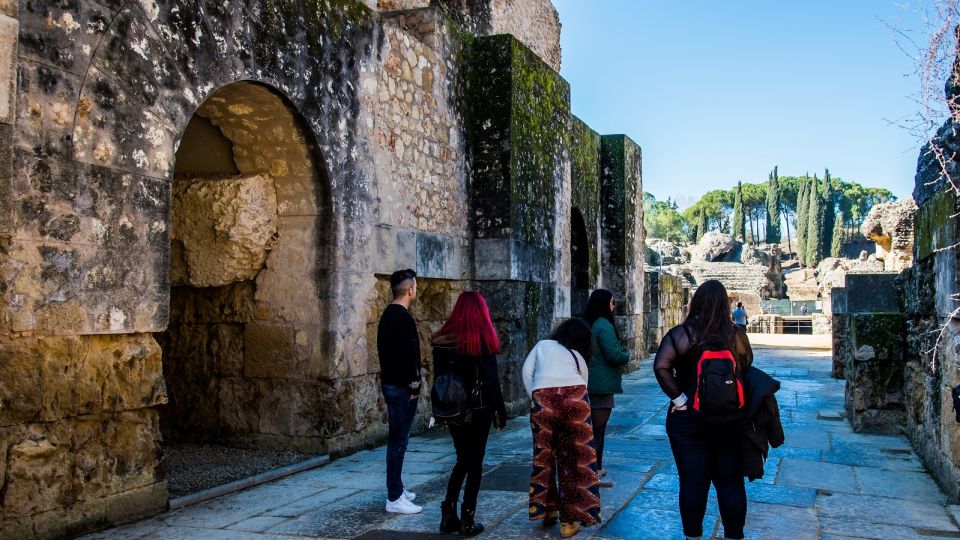
Next comes the Roman theater area in Santiponce, including the partially reconstructed Roman theater. Reconstruction can be a touchy word when you’re staring at ruins, but here it actually helps you.
A partially rebuilt space gives your brain a framework. Without that, you might only see fragments and guess. With it, you’re better able to picture audience placement, stage orientation, and how performances would have looked in practice.
This stop also helps balance the day. The amphitheater tells the story of spectacle at one scale; the theater gives you a different angle on Roman entertainment and public gathering.





The 4-hour timetable from Seville: how to make it feel unrushed
The tour is built for efficiency. Total duration is 4 hours, with:
- 30 minutes by bus/coach to reach Italica
- 3 hours guided time on-site
- 30 minutes back to Seville
It’s also set up with multiple pickup points in central Seville:
- 09:45 Calle Rastro 12A
- 09:50 Hotel Don Paco (Plaza Padre Jerónimo de Córdoba nº4)
- 10:00 Calle Trajano 6
And you’ll typically get drop-off at the same three locations.
One thing to plan around: the visit order can change due to unexpected circumstances. That’s not a dealbreaker, but it means you should stay flexible. Also, the tour can be run in two different languages to facilitate changes, so you may hear switching depending on how the group settles.
Practical tip: if you care about hearing the guide clearly, aim for a good spot early. A couple of reviews noted sound can be harder in bigger groups, which is normal for open-air sites.
Spanish or English guides, plus when other languages show up
The official guide languages are Spanish and English. On request, other languages like French, German, and Italian may be available, depending on what the operator can line up.
The best guides here do two things: they connect the stonework to daily life and they make the city’s timeline feel human. Reviews repeatedly highlight guides such as Jose Luis, Jesus, Alberto, Miguel, Nieves, Sergio, and Roman for explaining the sites clearly and adding entertaining anecdotes.
So if your goal is to walk away with more than photos, pick a departure that matches your language comfort. You’ll understand more, and you’ll spend less time trying to translate on the fly.
Price and value at about $51: what you’re really paying for
At $51 per person for a 4-hour trip, the value depends on how you like to travel.
You’re paying for:
- Round-trip transportation between Seville and Italica
- Entrance fees to Italica
- An official tourist guide
- Skip-the-ticket line
That bundle is the key. If you tried to piece it together on your own, you’d spend time figuring out transit and ticketing, and you’d still need someone to interpret what you’re seeing. Here, the guide is the product—not just the bus ride.
Not included extras are left open-ended (“any unspecified extras”), but there is an optional lunch for €18 if you want to extend the day without planning your own meal.
One more value point: Italica is close enough to Seville that this doesn’t eat your whole afternoon. It’s a good way to add depth to your trip without sacrificing your schedule.
Optional extras some groups mention: monastery stops and small refreshment reports
The core tour focuses on Italica itself: ruins, mosaics, amphitheater and theater views. Still, multiple reviews mention a monastery stop later in the day and even references to light refreshments like wine, bread, and cheese.
Because that isn’t spelled out in the activity summary you shared, I’d treat it as a potential bonus rather than a guarantee. If a monastery visit (or no monastery visit) matters to you, confirm directly with the operator before you book so your expectations match your day.
Who should book this Italica tour (and who should consider alternatives)
This tour fits best if you:
- Want a Roman site that’s easy to reach from Seville
- Like walking with a guide who explains what you’re seeing
- Prefer a structured route over figuring out the ruins solo
It may feel less ideal if you:
- Want lots of unstructured time to explore at your own pace
- Are highly sensitive to group noise and audio in a larger group
It also works for families in many cases. One review mentioned bringing young kids and noted that a stroller can help at moments, even if you might not use it the entire time. So if you’re traveling with little ones, plan for uneven, stop-and-go walking.
FAQ
Pickup locations and timing
Pickup times listed are 09:45 at Calle Rastro 12A, 09:50 at Hotel Don Paco (Plaza Padre Jerónimo de Córdoba nº4), and 10:00 at Calle Trajano 6.
Where does the tour drop you off?
Drop-off is listed at Calle Trajano 6, C. Rastro 12a, and Hotel Don Paco.
How long is the Italica tour?
The total duration is 4 hours, with about 3 hours guided time at Italica.
How much does it cost?
The price is listed as $51 per person.
What’s included in the ticket price?
Included are round-trip transportation between Seville and Italica, entrance fees to Italica, and an official tourist guide.
Is the ticket line skipped?
Yes, the tour includes skip-the-ticket line.
What languages are available?
The guide languages listed are Spanish and English. French, German, and Italian are available on request.
What major sites do you see?
You’ll see the Archaeological Ensemble of Italica, including Roman theater and amphitheater areas, plus mosaics, the Traianeum, statues of Diana, Venus, and Trajan, and public baths.
Is lunch included?
No. Lunch is optional and listed at €18.
Can I cancel for free?
Free cancellation is listed up to 24 hours in advance for a full refund. Reserve & pay later is also offered.
Should you book this Italica tour from Seville?
Yes, if you want a high-value Roman day trip with guided interpretation and minimal hassle. The big reason I’d recommend it is the mix of structure and payoff: you get a short Seville round trip, entrance fees handled, skip-the-line convenience, and enough guided time to make mosaics and civic spaces meaningful—not just pretty.
Book it especially if your priority is the amphitheater scale plus the smaller details (Traianeum, statues, baths, mosaics). If you’re the type who needs long free time alone to wander, plan to keep your expectations on the guided side.
If you care about potential bonus stops like a monastery, message the operator before booking so you can confirm what’s included on your exact departure.