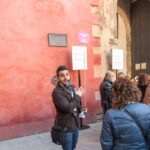
Seville looks different at 8 a.m. when you move on foot. This running tour is built for fast orientation: you cover major sights in about two hours while your guide keeps the route smooth, often choosing quieter paths to beat the biggest crowds. You also get a super practical guide style—Mike is punctual, friendly, and chatty in the right amounts (running tips, city pointers, and useful restaurant ideas without turning it into a lecture).
I like two things a lot: the itinerary hits the places you actually want to see—Seville Cathedral, Alcázar area, Plaza de España, and the Santa Cruz maze—and it does it in an efficient outdoor circuit that doesn’t waste your time. Second, the pacing is flexible; you’re not stuck at one speed, and your guide can match your level while still encouraging you when it makes sense. One drawback to consider: because the tour stays outside only, you won’t enter the big-ticket interiors, so you may still want separate tickets if you’re craving museum-level stops.
In This Review
- Key things that make this Seville running tour worth it
- Why start Seville with a run instead of another walk?
- Price and value: what $53.61 buys you in real life
- Best time to go: morning cool-down beats the heat rise
- Pacing and comfort: what moderate fitness really means
- The outdoor route: Seville stops you’ll hit without entering buildings
- Alameda de Hércules to Plaza Nueva: start in the city’s social heartbeat
- Cathedral complex area: orange trees, Plaza del Cabildo, and the archives
- La Maestranza, Torre del Oro, and San Telmo: riverfront heritage with real personality
- Parque de María Luisa and Plaza de España: the postcard that earns the attention
- Real Fábrica de Tabacos and Jardines de Murillo: useful breaks from the crowds
- Barrio Santa Cruz to Calle Marmoles: the lanes feel like a maze for a reason
- Alcázar and Catedral viewpoints: big exteriors, big scale
- Plaza del Salvador and Setas de Sevilla: old stone meets modern steel
- Palacio de las Dueñas and Arco de la Macarena: more texture, less crowding
- Torre Perdigones: a final viewpoint moment
- What you should bring for photos (and for finishing strong)
- Who this Seville running tour fits best
- Should you book this Seville running tour?
- FAQ
- How long is the running tour?
- How much does the tour cost?
- Is the tour in English?
- Does the tour enter any buildings?
- Does it include tickets or admission to the sights?
- Does the tour end back at the starting meeting point?
- What days and times does it run?
- Do I need a high fitness level?
- Is this a private tour?
- Can I cancel for a refund?
Key things that make this Seville running tour worth it
- Outdoor-only route that still covers the city’s most photographed corners
- Mike’s pace adapts to your group, with sensible guidance if you want to push a bit
- Morning timing advantage for cooler temps and fewer people around key spots
- Smart sightseeing order that connects neighborhoods without constant backtracking
- Easy logistics feel with a mobile ticket and a loop that ends where you started
Why start Seville with a run instead of another walk?
A good city walk can be great. A good running route is better for one simple reason: you move fast enough to cover real distance, but you can still stop for photos and explanations. This tour is designed for that sweet spot. In roughly two hours, you pass a lot of landmarks you’d normally spread across multiple half-days, and it helps you understand how the city pieces fit together.
I also like that the tour is not just about seeing shiny buildings. You’re learning street-level context: where the city’s power centers sit, how the historic core flows into newer architecture, and why Seville’s squares and riverfront views matter. If you’re the type who likes to understand a place rather than just check boxes, you’ll probably enjoy the way the stops connect.
You can also read our reviews of more tours and experiences in Seville.

Price and value: what $53.61 buys you in real life
$53.61 for about two hours may sound like a lot if you compare it to a self-guided stroll. But you’re paying for three things that are hard to DIY:
- A guide who can steer you through the city’s key zones efficiently
- A pace that keeps you moving (and doesn’t leave you wandering in the wrong direction)
- A route that aims to avoid the worst bottlenecks
The other value point is that it’s an English option with a private group setup. That usually means less waiting and fewer awkward “where is everyone” moments, because it’s just your group on the run.
Now, the honest trade-off: since you stay outside and don’t enter buildings, you’re not buying paid access to the Cathedral or Alcázar interiors. If you want the full inside experience, you’ll still need separate tickets. Think of this as a fast, guided orientation that makes later visits better.
Best time to go: morning cool-down beats the heat rise
This tour runs on Monday and Tuesday, with morning hours around 7:00–9:00 a.m. and an early evening slot around 6:30–7:30 p.m. For most people, the early morning works best. You’ll get cooler conditions, and the streets around major sights tend to feel more relaxed before the day’s tourist wave locks in.
There’s also a practical reason to like the morning start: Seville can heat up fast, and running adds extra heat. Starting early helps you enjoy the route instead of spending the tour thinking about how you’ll recover afterward. If you’re not a morning person, the early evening slot can work—but expect it to still be warm depending on the season.
Pacing and comfort: what moderate fitness really means
You’ll want moderate physical fitness. This is a running tour, so you should be comfortable running at least some portion of the route without needing to stop constantly. The good news is that the guide can adapt—multiple experiences with Mike mention him adjusting to different paces, even if someone is a slower runner or training for a big event.
Practical advice before you go:
- Wear supportive running shoes you’ve already broken in
- Bring water if you usually run hydrated (nothing in the provided info says water is included)
- If you want to slow down, ask early; it’s easier to set expectations at the start than after you’re already tired
Also note a small logistics detail: the tour includes time buffer for transport. That typically means you won’t get dragged into a rushed sprint at the very end just to “make the schedule.” It’s a nicer setup than tours that feel like a stopwatch.
The outdoor route: Seville stops you’ll hit without entering buildings
A key detail you should know up front: the tour stays outside. You’ll view, pause, and photograph from the street and exterior areas. That can be perfect if your goal is to learn the city and see the architecture from the right angles—but it also means you won’t get the inside experience of the Cathedral or Alcázar.
Here’s how the day flows in the areas you’ll cover.


Alameda de Hércules to Plaza Nueva: start in the city’s social heartbeat
You kick off at Alameda de Hércules, one of Seville’s oldest public spaces. Today it’s a gathering area where locals mix with visitors, and you’ll see it as a living plaza rather than a museum square. It’s a good warm-up start too, because you get to find your rhythm while the guide sets the tone.
From there, you head to Plaza Nueva, where the surrounding streets connect to Seville’s old marketplace history. You’ll also spot water fountains here, which sounds small, but fountains can be a nice mental reset point on a run—especially if you’re catching your breath.
Cathedral complex area: orange trees, Plaza del Cabildo, and the archives
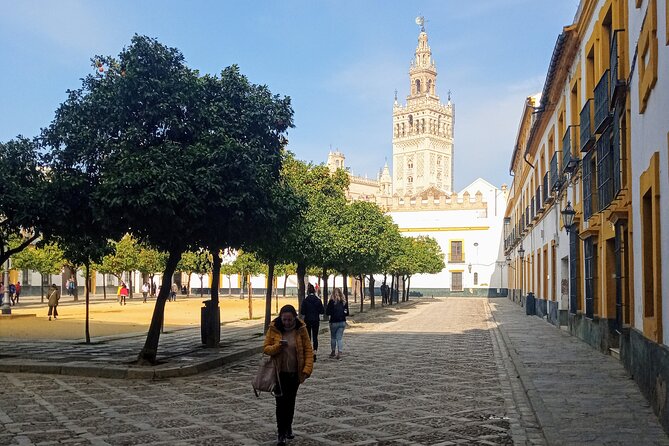
Next up is the Cathedral zone area, where Seville’s religious and historical weight really shows. You’ll pause at the Orange Tree Courtyard setting near the Cathedral complex—those fragrant rows of orange trees are one of the most iconic visual details people associate with this neighborhood. Even from outside, it’s the kind of spot that makes you slow down for a moment.
You then move to Plaza del Cabildo, a scenic square next to the Cathedral area that’s great for photos. It’s also a good place to understand the geography: where the big monuments pull your attention and where side streets let you escape into quieter lanes.
After that comes Archivo General de Indias, housed in a Renaissance-style building next to the Cathedral. This stop is memorable because it connects Seville’s power to documents tied to exploration and colonization of the Americas. You’re not reading archives on this run, but you are standing near the physical place that holds the story—one of those moments where you feel the scale of what Seville influenced.
La Maestranza, Torre del Oro, and San Telmo: riverfront heritage with real personality
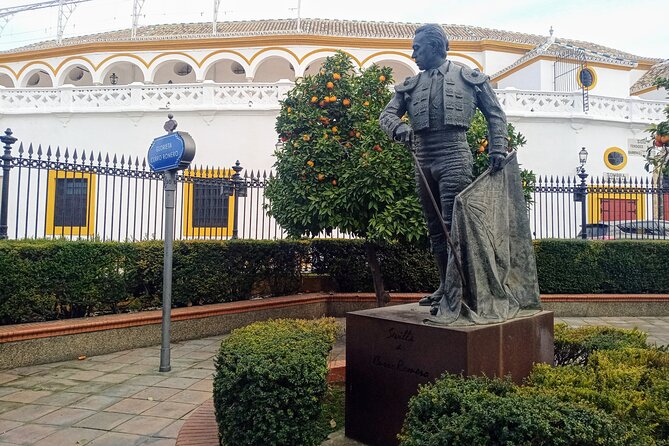
From the Cathedral-area gravity, the tour shifts toward the river world. You’ll pass by the Plaza de Toros de la Real Maestranza de Caballeria de Sevilla, one of Spain’s oldest bullrings, inaugurated in 1761. Even if bullfighting isn’t your thing, the building signals a tradition that shaped parts of Seville’s identity.
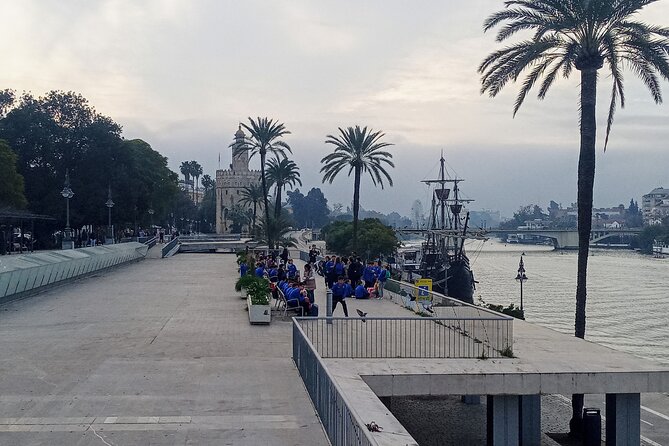
Next is Torre del Oro—the Tower of Gold—dating to the early 13th century during the Almohad dynasty. It’s a Moorish-era reminder that Seville’s story is layered. The architecture here is compact and powerful, and it works well as a mid-route photo stop.
Then you move along to Palacio de San Telmo, a baroque-looking riverside palace. You get the sense of grand Andalusian Baroque style without needing to enter. The riverfront context also helps you understand why this city looks the way it does: Seville grew and organized itself around water and movement.
Parque de María Luisa and Plaza de España: the postcard that earns the attention
Now the run heads into one of Seville’s most satisfying stretches: Parque de María Luisa. You’ll go for one loop around the park. This matters because it turns the green space into a route element, not just a random stop. You’ll feel the break from the older stone streets and get moving again with easier, calmer pacing.
From there you arrive at Plaza de España, next to the park. This is Seville’s most visited square for a reason: the architecture and craftsmanship are hard to ignore. Even if you’ve seen photos, it still feels like stepping into a carefully designed stage set. It’s also a fantastic spot for a quick breather, because the layout gives you space to reset.
Real Fábrica de Tabacos and Jardines de Murillo: useful breaks from the crowds
The tour passes by the Real Fábrica de Tabacos, once a royal tobacco factory and now the main building for the University of Seville. It’s a nice contrast stop: industrial-era scale with historic bones, a reminder that Seville isn’t only palaces and churches.
Then comes Jardines de Murillo, where the tone shifts toward quiet. These gardens give you a calm pocket that feels like a pause button—useful if you’re trying to avoid the “always on” feeling that comes with nonstop running and constant sights.
Barrio Santa Cruz to Calle Marmoles: the lanes feel like a maze for a reason
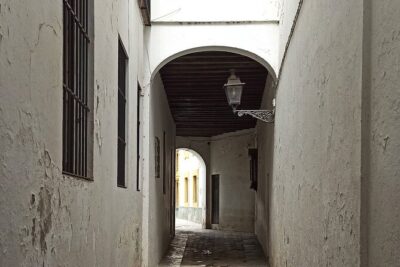
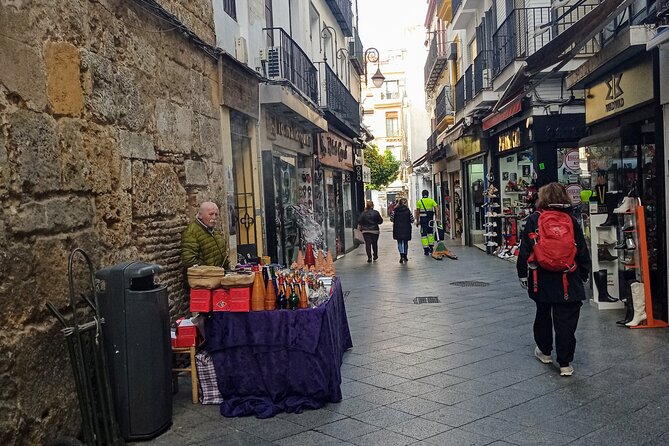
Now you’re in the Barrio Santa Cruz, once the Jewish quarter, and the streets start doing what they’re famous for: narrow cobblestones, little hidden plazas, and whitewashed walls that turn navigation into an adventure. This is where a guided run earns its keep. Without help, you might miss some of the connections that make the neighborhood make sense.
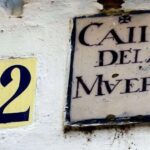
You also pass Calle Marmoles, where Roman columns are said to exist beneath the surface. That stop isn’t about stepping into an archaeological site; it’s about awareness—seeing how different eras stacked under the same streets.
Alcázar and Catedral viewpoints: big exteriors, big scale
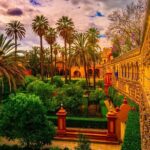
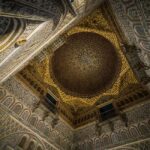
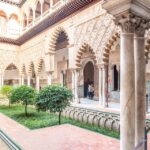
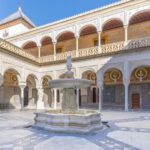
You’ll reach Real Alcázar de Sevilla, a UNESCO-listed royal palace complex with architecture that mixes Moorish, Gothic, Renaissance, and Baroque influences. This is one of the main reasons many people come to Seville. On this tour, you’ll view it from outside, so you won’t get the full inside storytelling—but you’ll still get the sense of scale and craftsmanship from the exterior approach, including a water fountain in front of the main gate area.
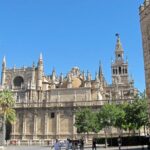
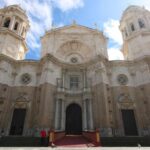
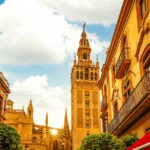
Then comes Catedral de Sevilla, another UNESCO site and the third-largest cathedral in the world. It’s also the largest Gothic cathedral worldwide. Again, because you stay outside, it’s not the full interior experience. Still, even outside the building, it’s hard not to feel how dominant it is in the skyline and street alignment.
Plaza del Salvador and Setas de Sevilla: old stone meets modern steel
As you loop through the old neighborhoods, you’ll stop at Plaza del Salvador, a social gathering point where the city’s energy shows up in everyday life. It’s a helpful reset after the cathedral-size stops, because plazas like this feel more lived-in.
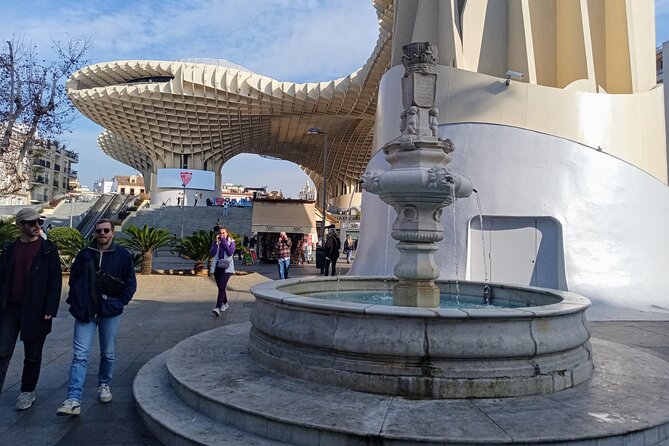
Then you reach Setas de Sevilla (Metropol Parasol)—the modern architectural marvel locals call Las Setas. The shape and materials create a striking contrast against surrounding old stone. It’s one of those moments where you can see Seville as a city that keeps adding chapters instead of freezing in place. If you like modern design or you enjoy contrast in your travel photos, you’ll appreciate this section.
Palacio de las Dueñas and Arco de la Macarena: more texture, less crowding
You’ll also pass by Palacio de las Dueñas, once home to the Duchess of Alba. It’s often treated as a quieter stop compared to the Cathedral-area giants, which makes it a good choice for people who want variety without sprinting between major ticket lines.
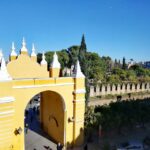
Next is Arco de la Macarena, a historic arch tied to Seville’s religious devotion and past defensive walls. It’s the kind of detail you could walk right past if you weren’t looking for it. Having it in a guided route gives the city’s smaller landmarks a chance to feel meaningful.
Torre Perdigones: a final viewpoint moment
The route also references Torre Perdigones, described as offering panoramic city and Guadalquivir River views. If this is included in your exact departure, it’s a smart way to end with perspective—so you can look back at the route you just ran and see how the city layers align.
What you should bring for photos (and for finishing strong)
Because you’re running, you don’t want your camera setup to slow you down. You’ll likely do frequent quick pauses, so keep gear light. A small crossbody bag and an easily accessible phone or compact camera are usually enough.
For comfort, think about the basics you control:
- Shoes that handle cobblestones
- Light layers you can shed if you start too warm
- A plan for hydration and sun protection, especially if you’re going in the hotter months
One more practical angle: this tour can be a great way to decide where you want to return later. After you’ve seen the city in motion, you’ll have a clearer sense of where you want slow time—whether that means taking a longer walk through Santa Cruz, doing inside visits at the Alcázar and Cathedral, or spending more time around Plaza de España.
Who this Seville running tour fits best
This is a strong match if:
- You like running, or you want a guided push to get moving
- You want a fast orientation to Seville’s major zones
- You prefer your guide to be English-speaking and friendly without dominating the experience
- You’d rather see many highlights from the street than spend the whole day in lines
It might be less ideal if:
- You want to enter major monuments during the tour (this is outside-only)
- Running isn’t comfortable for you right now, even at a moderate level
- You’re hoping for a slow, wandering pace with long stops
Should you book this Seville running tour?
If you’re coming to Seville with limited time and you want to connect the dots across neighborhoods, I’d book it. The price-to-time ratio makes sense for a guided circuit that covers Cathedral-area sights, riverfront landmarks, and the Plaza de España zone without turning your day into constant transportation stress. Also, the fact that Mike adapts pacing is a big deal—this isn’t a one-speed experience.
I’d only hesitate if you’re mainly after interior visits and museum immersion. In that case, you’ll likely want to pair this with separate ticketed time at the big indoor sites afterward. But as an energetic start that helps you understand the city fast, this is a very practical way to do Seville—on the ground and at your own pace.
FAQ
How long is the running tour?
It runs for about 2 hours.
How much does the tour cost?
The price is $53.61 per person.
Is the tour in English?
Yes, it is offered in English.
Does the tour enter any buildings?
No. The tour stays outside and you will not enter any buildings.
Does it include tickets or admission to the sights?
Some stops list admission tickets as free, while others are marked as not included. In any case, the tour is outside-only, so paid entry is not part of this experience.
Does the tour end back at the starting meeting point?
Yes, the activity ends back at the meeting point.
What days and times does it run?
It operates Monday to Tuesday. Times shown are 7:00 AM to 9:00 AM and 6:30 PM to 7:30 PM.
Do I need a high fitness level?
No high level is required, but the tour calls for a moderate physical fitness level since it is a running tour.
Is this a private tour?
Yes. It’s described as private, with only your group participating.
Can I cancel for a refund?
Yes, cancellation is free up to 24 hours in advance for a full refund. If you cancel less than 24 hours before, the amount paid is not refunded.