REVIEW · SEVILLE
Private Tour Jewish Quarter, center and Plaza de España
Book on Viator →Operated by Víctor Fernández · Bookable on Viator
Old Seville’s stories live in plain sight. This private 2-hour walk links the Jewish Quarter era to the grand finish at Plaza de España, with quick stops that turn history into something you can point at.
I love that the route treats Seville like one living map—same square, different faiths, and the city’s later artistic layers woven in.
I also love the way the guide ties in art and language with the religious sites. At Iglesia de Santa Maria la Blanca, you’ll connect an old synagogue location with Murillo (including what’s mentioned about his remains) and the Caminos de Sefarad plaques across the Jewish-quarter network.
One watch-out: it’s a walking tour with multiple changes of scene in about 2 hours, so if you hate cobblestones and short stops, plan for a faster pace.
In This Review
- Key highlights you’ll actually feel on the ground
- Two Worlds in One Walk: Jewish Seville to Plaza de España
- How the Route Reads: From Santa Cruz to Gates, Walls, and a Necropolis
- Iglesia de Santa Maria la Blanca: Where Old Synagogue Site Meets Murillo
- Narrow Streets, Rosina’s Balcony, and Seville’s Old Water System
- Pogroms, Expulsion, and the Legend of Susona
- UNESCO City of Opera Alleys: Courtyards, Artists, and Don Juan
- Torre del Oro to the Ibero-American Exposition: How the City Reinvented Itself
- Universidad de Sevilla at the Royal Tobacco Factory and Mérimée’s Carmen
- Parque de María Luisa and Plaza de España: The Finish That Makes Sense
- Price and Value for a Private Group of Up to 12
- Who This Tour Fits Best (and Who Might Feel Mismatched)
- Should You Book This Jewish Quarter and Plaza de España Tour?
- FAQ
- How long is the tour?
- What does the tour cost?
- Is this tour private?
- What language is offered?
- Where do we meet, and where does it end?
- Is there a mobile ticket?
- Are any stops free to enter?
- Is there free cancellation?
- Is it suitable for people traveling with a service animal?
Key highlights you’ll actually feel on the ground
- One square, many eras: you’ll hear how one plaza historically represented a mosque, a synagogue, and a church.
- Santa Maria la Blanca inside/out: you’ll see the old synagogue site area, then enter the current temple and spot Caminos de Sefarad plaques and Murillo works.
- Literature pop-culture moments: you’ll pause for Rosina’s balcony (think Figaro) and for Don Juan’s presence in Seville’s Golden Age story line.
- Jewish community history with clear markers: walls, gates, Sephardim enclosure, a necropolis stop, pogroms, and the final expulsion by the Catholic Monarchs.
- City-of-Opera viewpoint: you’ll get the UNESCO City of Opera connection while wandering the most picturesque old alleys and courtyards.
- Big sightline ending: Cathedral/Giralda/Real Alcázar/Archivo de Indias viewpoints, then the Ibero-American Exposition-era changes that shape today’s Seville.
Two Worlds in One Walk: Jewish Seville to Plaza de España
This tour is built like a story with a long arc: it starts in the historic Jewish-quarter area (from Plaza de Santa Cruz) and ends in the showpiece gardens of Plaza de España. Along the way, you don’t just “see sights.” You learn what those places were for, and why they mattered to the Jewish communities—and then how later Seville re-used the space in art, religion, and city planning.
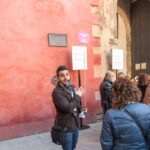
You get an English-speaking guide for just your group, which matters here. The walk includes small lanes, short explanation stops, and moments that work best when someone can answer your questions without slowing down a busload of people.
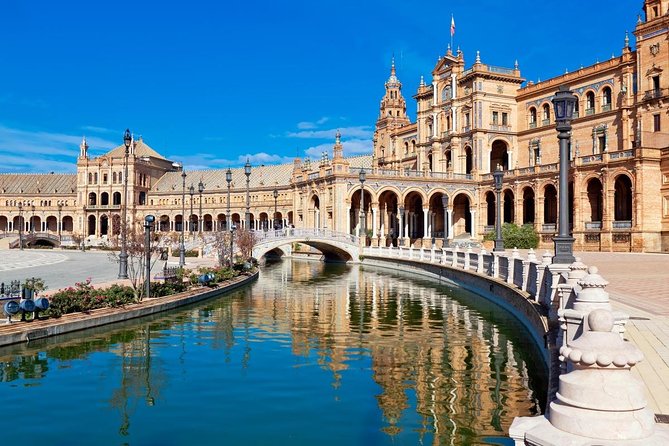
And yes, Plaza de España is a great finish. The route uses it like a full stop: by the time you reach the park and the Spain pavilion link, you understand how Seville’s modern shine grew out of older layers.
You can also read our reviews of more private tours in Seville



How the Route Reads: From Santa Cruz to Gates, Walls, and a Necropolis
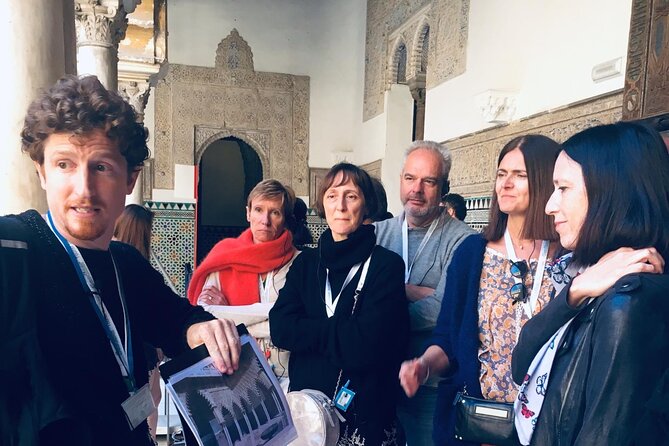
The first stretch sets the context. The walk begins with the relationship of Jewish people in Seville, and you’ll hear how different communities were represented in the same square—an important idea in a city where layers overlap.
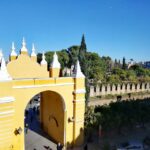
Then you move into the “shape of the neighborhood” part: the walls and gates of the city and what the enclosure of the Sephardim consisted of. This is the part that helps you stop looking at Seville as random postcard streets and start seeing it as an organized world—where boundaries mattered, and where daily life happened inside defined limits.
A necropolis stop is also included. Even if you’re not a cemetery person, the guided framing helps it land as more than an old site. You start to understand how community life, memory, and place all connect in this part of town.
This section also has a quick artistic detour into the Spanish Golden Age, including a stop that places Don Juan next to his statue. It’s a reminder that Seville’s identity isn’t only medieval—it keeps reinventing itself.
Iglesia de Santa Maria la Blanca: Where Old Synagogue Site Meets Murillo
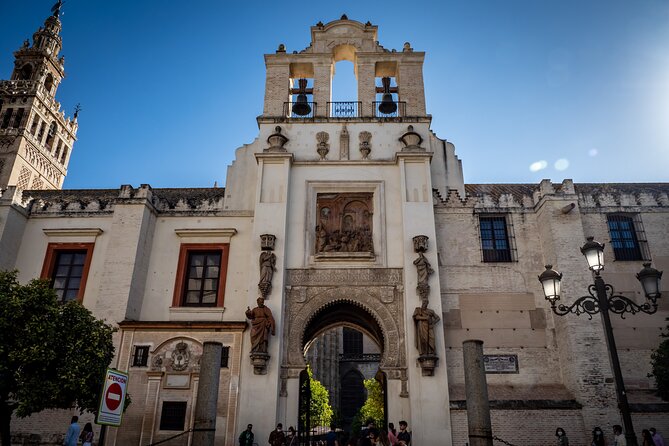
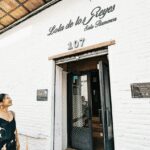
The most central religious stop is Iglesia de Santa Maria la Blanca. You’ll see the site of an old synagogue and then discover additional plaques linked to Caminos de Sefarad, which is the network-style way Spain connects Jewish quarter history across regions.
Next comes the best practical part: you enter the current temple. The tour is set up so you don’t just read a plaque and move on; you step inside and understand how earlier sacred space influenced what came later.
Murillo is part of the mix here too. You’ll learn about outstanding points you’ll encounter during the walk, and at this stop you’ll specifically find his exhibited works referenced in the itinerary. If you like art, this is the moment where the tour’s history and Seville’s painting culture start talking to each other.
Admission is listed as free for this stop, which makes it a strong use of your time. You get real access without needing to line up extra ticket purchases for this highlight.
Narrow Streets, Rosina’s Balcony, and Seville’s Old Water System
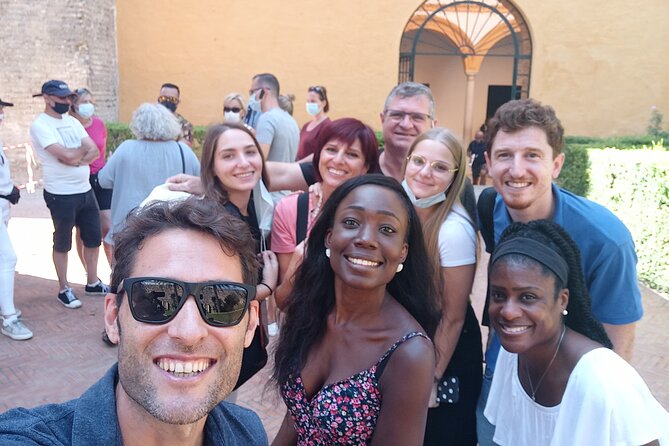
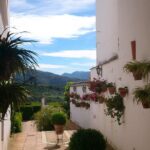
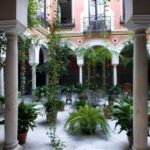
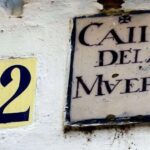
After Santa Maria la Blanca, the tour shifts from “major landmark” mode to “neighborhood feel” mode. You’ll move through beautiful courtyards and alleys, and you’ll get a pause for the narrowest street in the city. That’s one of those small moments that makes the whole area click—you suddenly understand how Seville neighborhoods functioned for walkers, not cars.
You’ll also stop for Rosina’s balcony. This is tied to The Barber of Seville (Figaro), so it’s Seville turning opera and literature into street-level reference points. If opera is in your blood, this stop will make you grin. If opera isn’t, it still helps you see how Seville became a stage for European stories.
And then comes the old waterwork detail: you’ll look out on the old Seville aqueduct. This is one of my favorite types of tour moments because it’s not just “who lived here.” It’s how the city worked: water, streets, and stone engineering that supported a whole community.
Between the narrow lanes, the courtyards, and the aqueduct sightline, this segment gives you a Seville that feels lived-in, not staged.
Pogroms, Expulsion, and the Legend of Susona
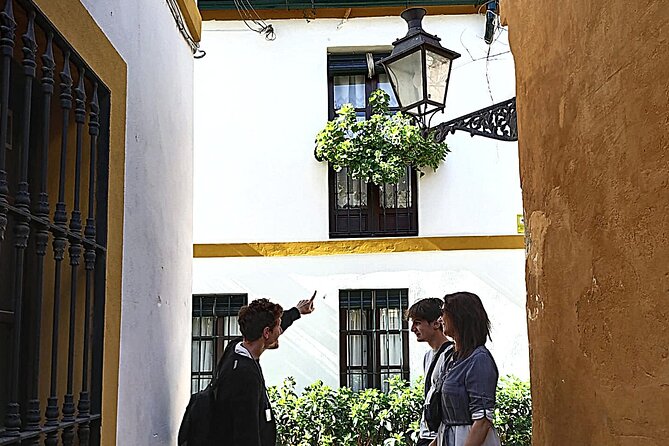
The tour doesn’t avoid the hard chapters. You’ll learn about the vicissitudes of the Hebrew people, with special attention to pogroms and the definitive expulsion of the Jews by the Catholic Monarchs. Hearing this with street context changes the story. Instead of it being abstract dates, it becomes a human timeline with geography attached.
Then the tour adds a legend stop: Susona, described as the “beautiful Susona,” along with her story. Legends can feel fuzzy in some tours, but here it works because it bridges history with the way communities—or later storytellers—kept meaning alive.
This segment is also where the “private” format shines. Sensitive topics require a little extra pacing and room for questions. A smaller group lets the guide steer the conversation with care instead of just blasting through the next stop.
If you want to leave Seville with a clearer understanding of how Jewish life ended and what that meant for the city’s later identity, this is the section that does it.


UNESCO City of Opera Alleys: Courtyards, Artists, and Don Juan
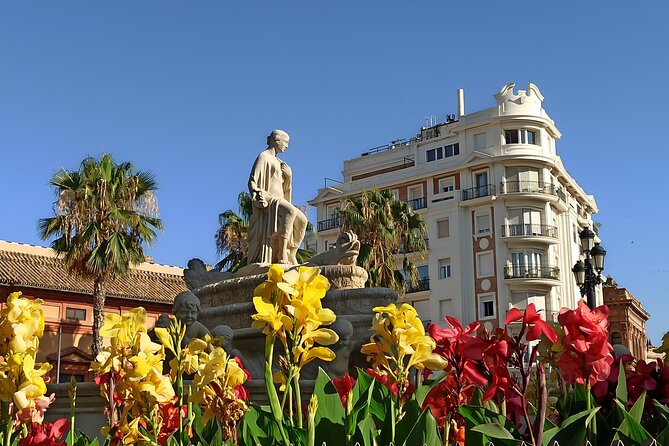
One of the most fun parts of the tour is the way it turns art tourism into real urban context. The neighborhood is described as a place that attracted European artists as settings for novels and plays, and the tour explicitly connects this to Seville’s UNESCO City of Opera status.
As you walk these older lanes and passages, you’re not just learning “what happened.” You’re learning why this area inspired stories. You’ll get the sense that Seville is theatrical by nature—stone, shadows, narrow street angles, and the kind of viewpoints that make scenes feel ready-made.
Don Juan returns as part of the Golden Age thread earlier, but the broader idea continues: Seville kept producing characters and legends, long after the original community boundaries shifted.
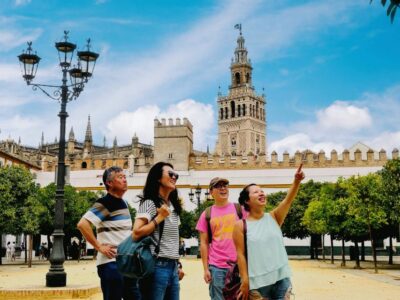
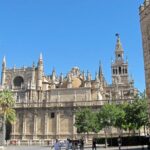
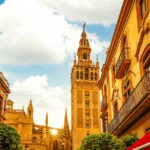
There’s also a shift into a calmer, scenic viewpoint stretch. You’ll enjoy a top-of-the-views moment surrounded by major landmarks, with the focus placed on the Cathedral, Giralda, Real Alcázar, and the Archivo de Indias (described as World Heritage Site). Even if you’ve seen photos, a guided pause helps you see how these buildings frame one another like a designed stage.
Torre del Oro to the Ibero-American Exposition: How the City Reinvented Itself
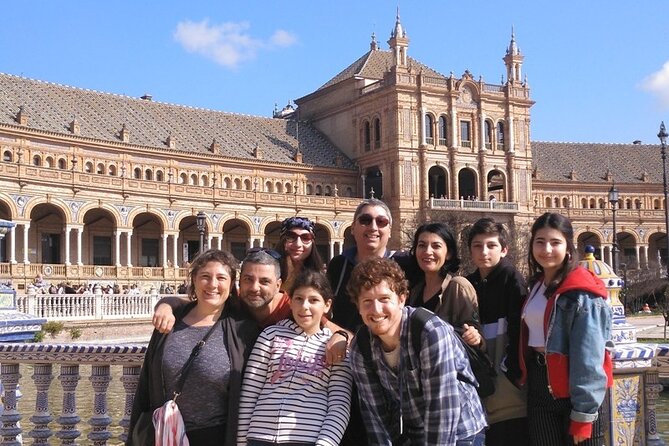
After the historic center vibe, you move to understand the relevance of the Torre del Oro. The tour uses this as a bridge between medieval layers and newer city structure.
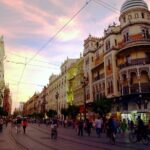
Then you’ll hear about how the city was reconfigured about a century ago during the Ibero-American Exposition. You’ll also spot specific references called out in the itinerary, such as notable buildings like the Alfonso XIII hotel, and major avenues like the Constitution.
This part matters because it explains why Plaza de España looks the way it does. It’s not just “a pretty square.” It’s tied to a planned moment in Seville’s modern history—how the city wanted to present itself, while older neighborhoods still defined the original core.
If you like city planning or you’ve ever wondered why Seville’s center feels both historic and neatly “reshaped,” this is the segment that answers it.
Universidad de Sevilla at the Royal Tobacco Factory and Mérimée’s Carmen
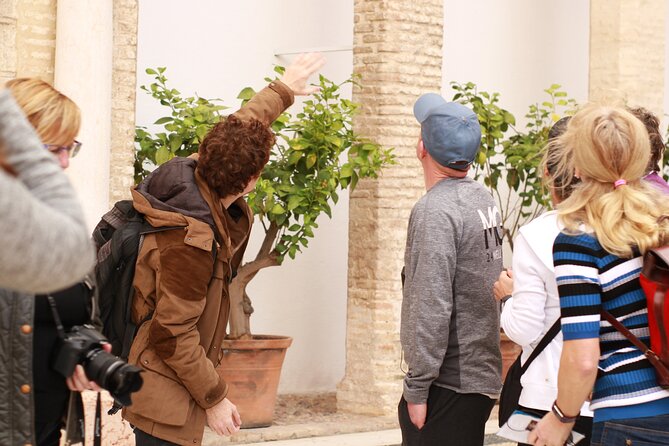
Next up: Universidad de Sevilla, located in the old Royal Tobacco Factory. This stop adds a French literary layer to the story.
The itinerary notes that Mérimée was inspired to create Carmen from what he saw or experienced through this context, and it connects the rise of manufacturing and factories in Spain to French politics and administration under the Bourbons era.
So you get a shift from Jewish-quarter history to a broader Seville identity: industry, culture, and literature. It’s a reminder that city districts evolve. A place that once held one kind of life can become another kind of symbol.
Admission is listed as free for this stop, which makes it easy to fit in without ticket hassle.
Parque de María Luisa and Plaza de España: The Finish That Makes Sense
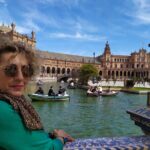
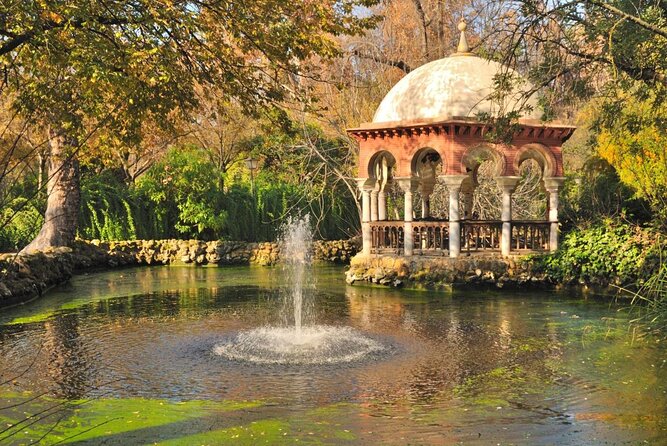
The last third of the tour leans into the visual payoff. You’ll reach Parque de María Luisa, credited to the French garden architect Forestier. That’s a neat detail because it explains why the park feels designed rather than random.
Then the tour connects the park to the Ibero-American Exposition, pointing out that you can now enjoy older pavilions that remain from that era. The key reference is the pavilion in Spain, which gives its name to today’s Plaza de España.
By the time you’re done, you’re not just staring at the famous tiles and fountains. You understand the timeline: old neighborhood edges, major sacred sites and memory, then a modern-world event that helped produce the civic landmark Seville is famous for.
The meeting instructions also match this ending well: the tour finishes in the gardens of María Luisa at Plaza de España, which is a strong “last scene” location.
Price and Value for a Private Group of Up to 12
The price is $189.87 per group (up to 12 people) for about 2 hours, in English. On paper, that sounds like a group deal, because it is. But for families or friends traveling together, the real value is how much ground you cover with a guide instead of piecing together visits on your own.
Here’s the practical way to think about it:
- If you’re a small group, the per-person cost can still feel reasonable compared with booking separate entry-guided experiences.
- If you’re closer to the full 12, you’re getting a private guide price stretched across more people, and the pacing can still stay functional because it’s a walk, not a bus tour.
Also, the tour includes a mobile ticket, which makes it easier to manage day-of plans without digging through printed passes.
The strongest “value” angle is not the number of stops. It’s that the guide connects them: synagogue site + Murillo + Caminos de Sefarad, then pogroms and expulsion placed into street context, then opera-literature references, and finally the exposition-era design of Plaza de España.
That chain of meaning is hard to recreate on your own unless you already know exactly what you’re looking at.
Who This Tour Fits Best (and Who Might Feel Mismatched)
This tour is a great fit if you want:
- A private format with questions and pacing suited to your group
- A focused way to cover a lot of Seville without turning it into an all-day marathon
- Jewish Quarter context plus Seville’s art and literary connections (Murillo, Rosina/Figaro, Don Juan, Carmen)
It may feel mismatched if you:
- Prefer a long sit-down museum day over walking lanes and viewpoints
- Want to choose your own order and linger for long stretches at each stop
- Dislike topic-switching (religious history → legend → opera/literature → city planning)
Should You Book This Jewish Quarter and Plaza de España Tour?
Yes—if you want Seville with a guide who connects places to stories. The route gives you both the meaningful past (enclosure, pogroms, expulsion, and the synagogue site focus at Santa Maria la Blanca) and the “wow, I get it now” ending at Plaza de España and Parque de María Luisa.
Book it especially if your group is small enough for a real conversation. In English, this kind of historical storytelling is where a private guide pays off fast.
If your idea of a perfect day is slow, flexible, and heavily self-paced, then you might prefer to explore the Jewish Quarter on your own and add a separate highlights walk. But if you want the cleanest, most connected version of this Seville arc, this is a smart choice.
FAQ
How long is the tour?
It lasts about 2 hours.
What does the tour cost?
The price is $189.87 per group for up to 12 people.
Is this tour private?
Yes. It’s a private tour/activity, so only your group participates.
What language is offered?
The tour is offered in English.
Where do we meet, and where does it end?
You start at Plaza de Santa Cruz and end at Plaza de España, specifically in the gardens of María Luisa.
Is there a mobile ticket?
Yes. The tour includes a mobile ticket.
Are any stops free to enter?
The itinerary lists free admission for Iglesia de Santa Maria la Blanca, Universidad de Sevilla, and Parque de Maria Luisa.
Is there free cancellation?
Yes. You can cancel up to 24 hours in advance for a full refund.
Is it suitable for people traveling with a service animal?
Service animals are allowed, and most people can participate. The tour is also listed as near public transportation.