REVIEW · SEVILLE
Tour Sevilla de las 3 Culturas
Book on GetYourGuide →Operated by Sevilla&ME · Bookable on GetYourGuide
Seville keeps rewriting itself in stone. This 2-hour tour is interesting because it connects three cultures through real landmarks, with an official guide who explains the why behind every stop. What I like most is the official guidance plus the practical, flat walking route that keeps the pace easy; one possible drawback is that the tour runs in Spanish only, and it packs a lot into a short time.
If you want Seville to make sense fast, the route is a smart shortcut. It moves from the old core near Plaza de San Francisco into the Cathedral and Giralda area, then down into the Judería and Santa Cruz streets, and finishes along the river at Torre del Oro. On the guide side, José is specifically mentioned for answering questions, and the format is built around stories, legends, and characters from Al Andalus and beyond.
In This Review
- Key things to know before you go
- Entering Seville’s timeline at Plaza de San Francisco
- From Giralda to the Seville Cathedral: why power looks the way it does
- Judería streets and Santa Cruz: arches, legends, and coexistence
- Real Alcázar’s Puerta del León: Almohad roots and Christian rebuilds
- Archivo de Indias, the monument, and Giraldillo: Seville’s big shifts in focus
- El Arenal and Plaza del Cabildo: the Indies port mood
- Crossing toward Torre del Oro: ending with a real view
- Price and pace: great value if you like guided stories
- Should you book the Tour Sevilla de las 3 Culturas?
- FAQ
- How long is the Tour Sevilla de las 3 Culturas?
- Where does the tour start?
- Is the tour wheelchair accessible?
- What language is the live guide?
- What’s included with the booking?
- Is free cancellation available?
- Do I need to provide a phone number?
Key things to know before you go
- Official tourist guide in Spanish: you’re not relying on a phone map to understand the layers.
- A “three cultures” route with named places: Giralda, Santa Cruz, Real Alcázar, the Archivo de Indias, and Torre del Oro show up in the story.
- Flat, comfortable walking: everything is said to be flat with no slopes, plus stops are planned for shade in summer and sun in winter.
- Skip-the-ticket-line included: helpful at major sights that usually have lines.
- End-of-walk payoff at the river: Torre del Oro is a strong finish point for views and atmosphere.
Entering Seville’s timeline at Plaza de San Francisco
The walk starts at Pl. de S. Francisco, 17, in a part of town that feels central even before you start moving. From there, you head to Plaza de San Francisco, where the guide typically sets the tone: Seville as a crossroads, not just a postcard city. I like the way this start helps you build an easy mental map before the tour hits heavier hitters.
Next comes a stop at Banco de España. It’s not the usual “wow” landmark for first-timers, but it’s useful for context. Seeing grand city-administration architecture right after the medieval-feeling start makes the point that Seville didn’t stop evolving after the old empires.
You can also read our reviews of more tours and experiences in Seville.

From Giralda to the Seville Cathedral: why power looks the way it does
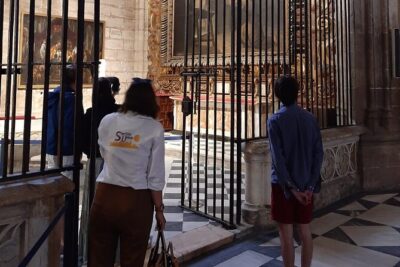
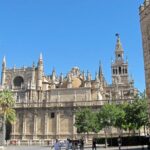
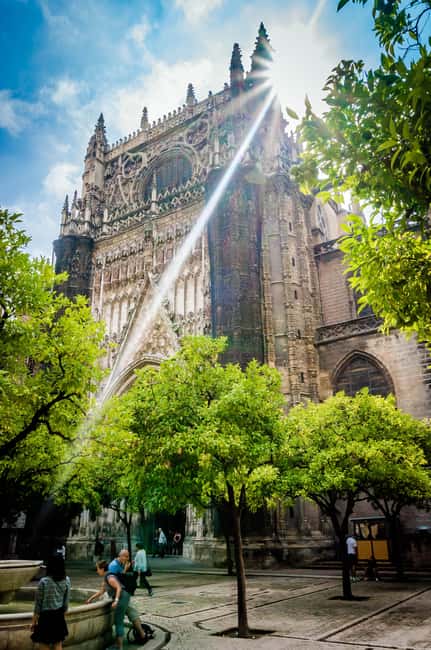
The tour then focuses on the Giralda complex area, starting with the Giralda itself. This is one of those places where even if you’ve seen pictures, an on-the-ground explanation helps you notice details you’d otherwise ignore. You’ll also visit Seville Cathedral, and the contrast between the earlier Islamic influence and later Christian dominance is the whole point of the stop.
Just before you go into the Judería zone, you’ll pass by Palacio Arzobispal (sightseeing). Even if you don’t go deep into every room, the placement matters: it reinforces how the city’s religious and administrative power shifted after the Reconquest by Ferdinand III. It’s a reminder that in Seville, buildings weren’t only for living. They were for control, commemoration, and influence.
One later stop, El Giraldillo, also ties into the big “Giralda and Cathedral” idea: the guide’s storytelling connects these icons to the city’s turning points, so you’re not just ticking boxes.
Judería streets and Santa Cruz: arches, legends, and coexistence
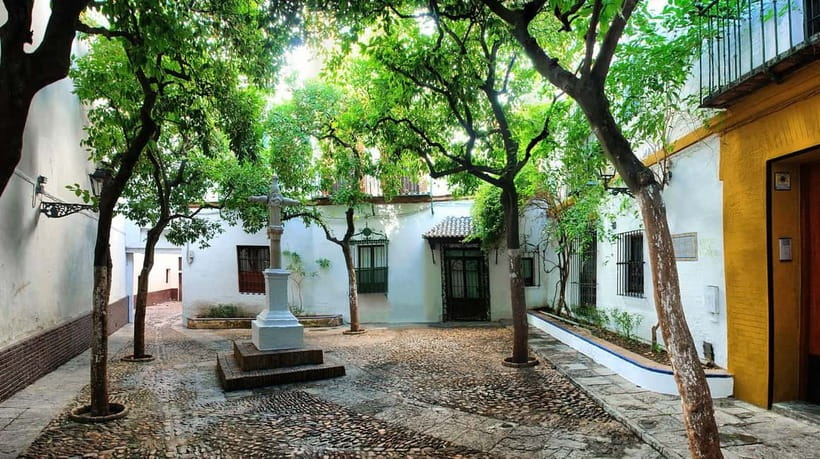
This is the part of the tour where Seville starts to feel like a storybook you can walk through. You’ll go into the Juderia (sightseeing), then continue to Plaza de la Alianza (sightseeing) and Plaza Dona Elvira (visit). These squares aren’t just pauses. They help the guide “place” characters and communities, so the history stays human.
Two narrow streets—Calle Susona and Calle Vida—come next (both sightseeing). Streets like these are where you really start to feel the city’s original layout: winding, close, and shaped by how people lived. It’s also where explanations about the Jewish Quarter’s walls, arches, and palaces land best, because the streets actually show you the architecture.
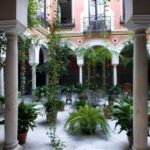
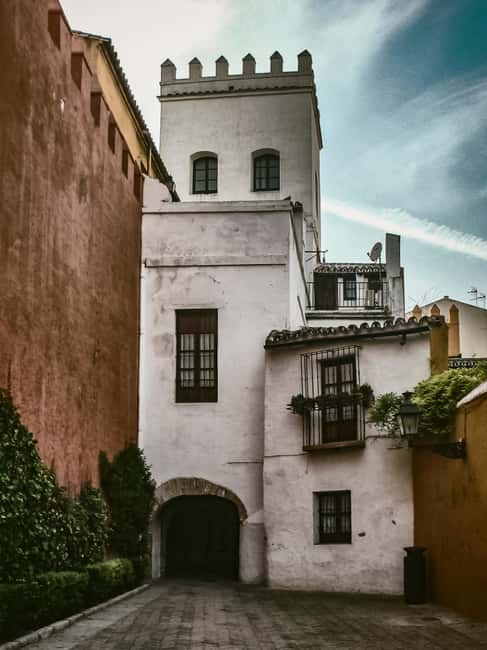
Then you reach Santa Cruz, Seville (visit). Santa Cruz is described as the old Jewish quarter, and the guide’s framing is what makes it click: the Jewish community left a very visible mark here, and the story of coexistence is carried by the buildings and the layout you can still see. The tour also includes Patio de Banderas (sightseeing), which keeps you in the medieval mood right as the walk prepares to move toward the royal compound.
A practical note: this section is where you’ll feel the “short tour, many sensations” reality. The stops are close together, but the guide’s storytelling is what will keep you from drifting. If you’re the type who likes to stop and read signage at your own pace, you may need to choose moments to listen fully rather than speed-scanning.
Real Alcázar’s Puerta del León: Almohad roots and Christian rebuilds
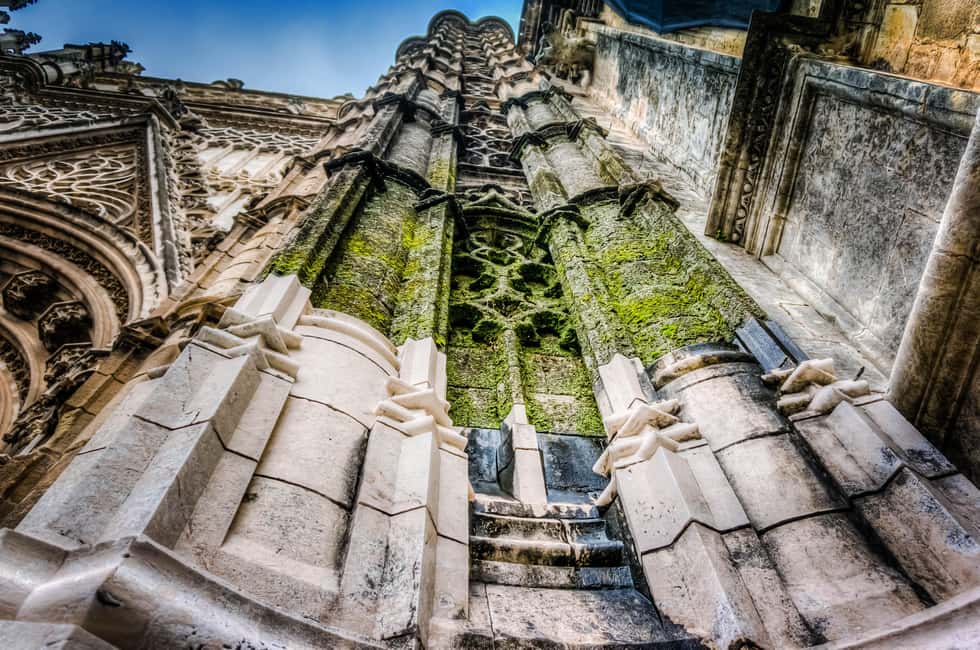
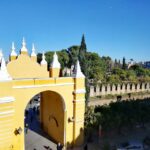
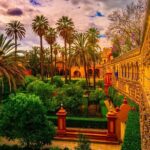
After Santa Cruz and Patio de Banderas, the tour heads to Puerta del León (Real Alcázar de Sevilla) for sightseeing. This is one of those anchor moments on the walk because the Real Alcázar is tied to the city’s overlapping eras. The tour’s narrative specifically references the Almohad period reaching maximum splendour under Almohad rule, and it also points to how Seville became a key Christian center after Ferdinand III.
What I like about this stop is how it connects “style” to “time.” You’re not just hearing that cultures changed; you’re seeing how power expressed itself through monumental gates and royal spaces. If you’re the kind of traveler who wants a simple timeline you can remember later, this stop usually becomes the mental bookmark.
The tour also includes a guided moment at the General Archive of the Indies. Even if you’re not a history expert, archives have a special way of making a place feel real. In the guide’s storytelling, this connects Seville to the Indies era—described as the Port of Europe for America, with the lights and shadows of trade power.
Archivo de Indias, the monument, and Giraldillo: Seville’s big shifts in focus
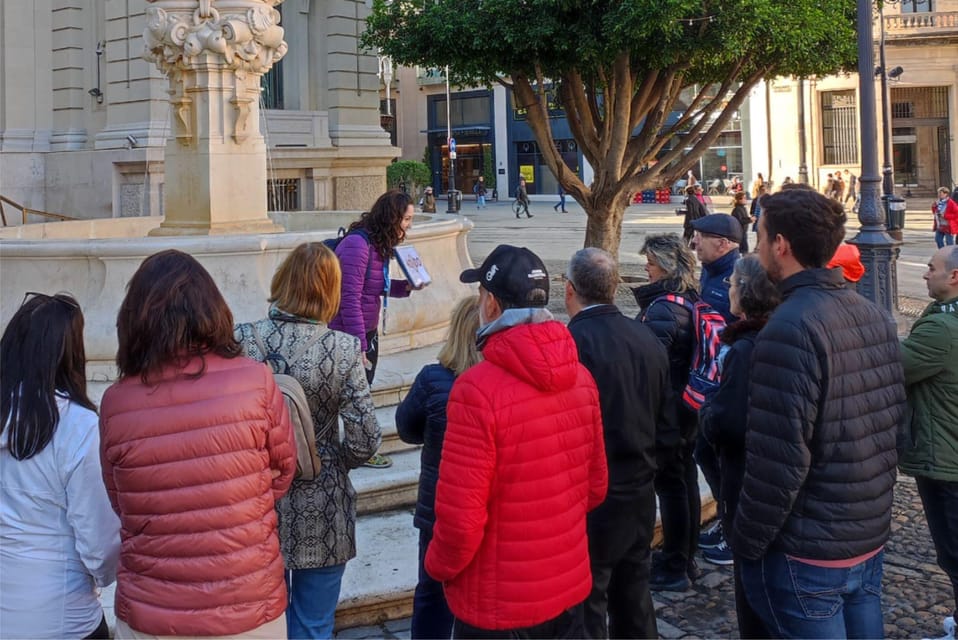
At the General Archive of the Indies, you’ll have a guided tour (so you’re not just looking from the outside). This is where the “Seville of the three cultures” story expands beyond old empires and into Seville’s administrative reach. The point isn’t only who lived here. It’s how Seville managed the world it connected to.
After that, you’ll visit Immaculate Conception Monument (sightseeing). This works as a bridge back into the Christian frame after you’ve been in the royal and archival zones. Then you’ll reach El Giraldillo (visit). Even though it’s a smaller-sounding stop than Giralda or Cathedral, it’s useful because it gives the guide another way to point at how Seville’s iconic silhouettes evolved.


El Arenal and Plaza del Cabildo: the Indies port mood
Next comes El Arenal, Seville (sightseeing), and then Plaza del Cabildo, Seville (sightseeing). This is where Seville starts to feel like a working city tied to movement of people and goods. The tour’s description points to Seville as a port city for America, and the river-adjacent areas naturally support that story better than inland streets do.
You’ll also visit Mercado Artesania El Postigo. It’s a nice counterbalance to the heavy historical stops. Markets give you a chance to slow down for a minute and see what people still buy and carry today, which makes the past feel less like a museum and more like a living backdrop.
Crossing toward Torre del Oro: ending with a real view
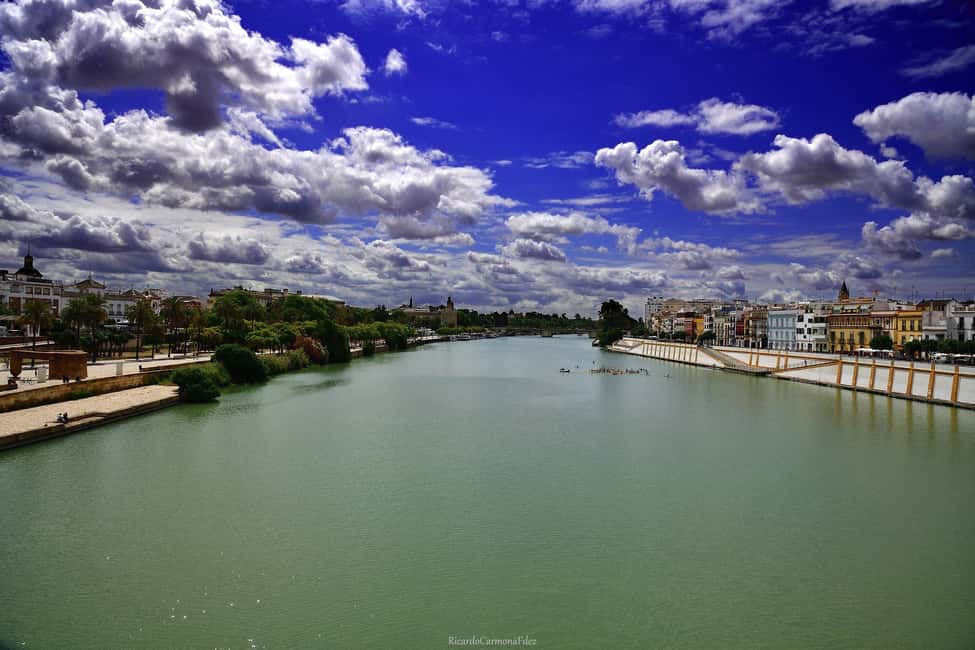
The walk continues to Puente de Isabel II (sightseeing). A bridge stop does two jobs on this kind of tour: it resets your viewpoint and helps you imagine neighborhoods across the water. The tour’s description also includes Gypsy Seville and references the gitanería of Triana since the 15th century, and this river-corridor area is the kind of place where that story starts to feel grounded in geography, not just names.
Finally, you end at Torre del Oro (sightseeing). Ending by the water is smart because it makes the last chapter feel cinematic: you get a strong visual “close” to the walk, and it’s an easy area to keep exploring on your own after the official guide finishes.
One small detail to confirm: the activity info says it ends back at the meeting point, but the itinerary finish point is Torre del Oro. Either way, you’ll want to double-check your end location with the provider so you don’t get surprised when the walk finishes.
Price and pace: great value if you like guided stories
At around $7 per person for a 2-hour official-guided experience, this is strong value. You’re not just buying a generic walk: you get an official guide, and the tour includes skip-the-ticket-line plus a guided stop inside the General Archive of the Indies. For many cities, a “guided history hit” at major monuments costs more than this, especially when you also handle the entry friction.
The pace is also built for comfort. The route is described as flat with no slopes, and the stops are planned to be in shade in summer and in sun in winter. That means you can focus on listening and looking instead of fighting the walking difficulty. Still, bring water and wear comfortable shoes, because even a flat walk adds up when you’re moving between many named places.
Your main consideration is language and fit. The tour is Spanish-speaking only. If you’re comfortable with Spanish, it’s a great way to pick up local phrasing and let the guide’s storytelling carry the meaning. If you need English, you’ll likely miss parts of the legends and character-driven narration.
Should you book the Tour Sevilla de las 3 Culturas?
Book it if you want Seville to feel like a connected story in just two hours. It’s ideal for first-timers who want the big icons (Giralda, Cathedral, Real Alcázar) plus the neighborhood texture (Judería, Santa Cruz) and the trade-era context (Archivo de Indias, El Arenal, Torre del Oro).
Skip it or consider another option if you need an English guide, or if you prefer slow, self-guided wandering over a packed schedule. For everyone else, it’s a low-cost, official-guided route that turns “I’ve seen these places” into “I understand how and why they changed.”
FAQ
How long is the Tour Sevilla de las 3 Culturas?
It lasts about 2 hours (starting times depend on availability).
Where does the tour start?
The meeting point is Plaza de San Francisco, 17.
Is the tour wheelchair accessible?
Yes, the tour is listed as wheelchair accessible.
What language is the live guide?
The live guide provides the tour in Spanish.
What’s included with the booking?
You get a guided tour with an official tourist guide, and the tour includes skip-the-ticket-line. There is also a guided tour stop at the General Archive of the Indies.
Is free cancellation available?
Yes. You can cancel up to 24 hours in advance for a full refund.
Do I need to provide a phone number?
You’re asked to include a phone number with WhatsApp so the provider can share the meeting point information.