REVIEW · SEVILLE
Electric Bike Tour in Seville
Book on Viator →Operated by Rent a Bike Sevilla · Bookable on Viator
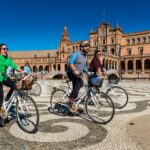
Seville moves fast on an electric bike. You glide through historic streets and major sights without arriving sweaty and fried. The e-bike help makes the route feel smooth, even when you’re bouncing between parks, bridges, and UNESCO powerhouses.
I love how the tour combines Parque de María Luisa (lush, shaded, fountain-filled) with big-ticket architecture like the Plaza de España. I also like that the guide experience is consistently praised for clear, friendly explanations, including strong history and practical bike leadership.
One thing to think about: the bike itself is the main variable. Some riders say the bikes feel large at first, and shorter riders (especially kids) may need to check sizing in advance to avoid surprises.
In This Review
- Key highlights worth marking
- Electric bikes make Seville easier than you think
- Starting at Plaza de Santa Cruz: the quick setup that matters
- Parque de María Luisa: where the park becomes the lesson
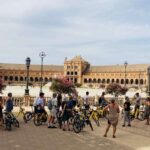
- Plaza de España: architecture you can actually feel while moving
- Torre del Oro and the Triana bridge: the river changes the mood
- Giralda, Seville Cathedral, and the Alcázar: the UNESCO trio in motion
- The Giralda: Moorish minaret roots plus Catholic additions
- Seville Cathedral: the scale is the wow-factor
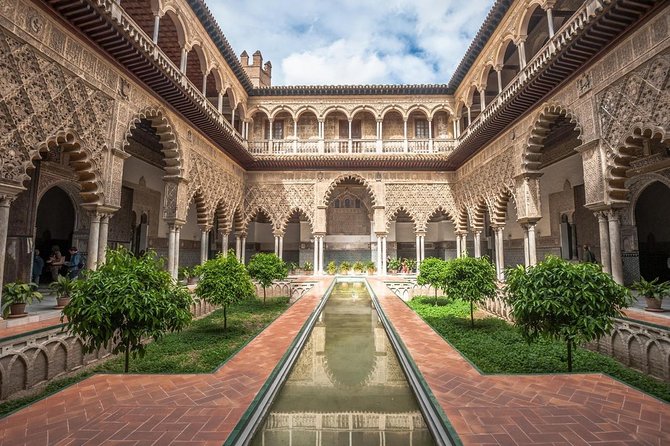
- The Royal Alcázar of Seville: Mudéjar architecture with multiple layers
- Price and value: why $48.06 for 2.5–3 hours can make sense
- Who should book this e-bike tour (and who should ask questions first)
- Should you book this electric bike tour in Seville?
- FAQ
- How long is the Electric Bike Tour in Seville?
- Where does the tour start and end?
- What’s included in the price?
- Are food and drinks included?
- Is the tour offered in English?
- Do I need hotel pickup?
- Is this a group tour or private?
- Does the tour operate in bad weather?
- Is admission free for Parque de María Luisa and Plaza de España?
- How does the child rate work?
- Can I cancel for a full refund?
Key highlights worth marking
- Private group experience: only your group rides.
- E-bike support: pedal with a battery boost when you need it.
- Parque de María Luisa details: botanical-style park vibe with lots of doves and educational panels.
- Plaza de España architecture: Moorish Revival looks mixed with Baroque and Renaissance details.
- River views route: Torre del Oro and the Triana bridge put the Guadalquivir into the story.
- UNESCO trio nearby: Giralda (cathedral tower), Seville Cathedral, and the Alcázar complex all show up on the ride.
Electric bikes make Seville easier than you think
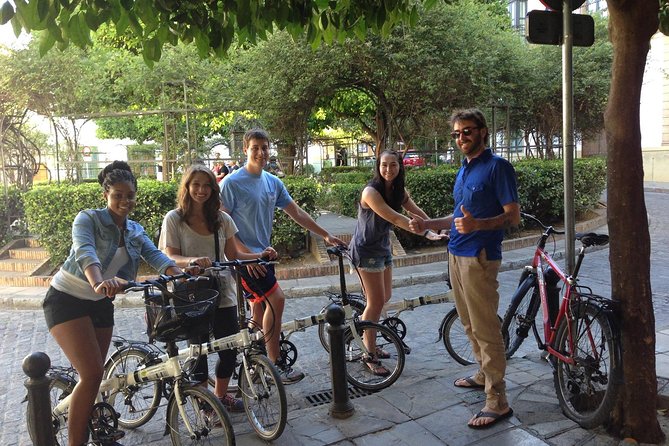
Seville is a gorgeous city, but it’s also a big one. Walking every highlight usually turns into a marathon and then… you miss details. This tour solves that with a simple formula: you cover ground with comfort, then slow down at the moments that matter.
The electric assist is the real cheat code. On paper, parts of Seville can feel flat and doable. In practice, heat, time of day, and short attention spans show up fast. The boost helps you keep a steady pace and stay relaxed enough to actually listen to your guide.
Also, you don’t just get “pretty photos.” The best versions of this tour lean into the stories—how Seville layers Moorish, medieval, and Renaissance-era ideas into the same streets and plazas. That’s exactly what you’ll notice as you roll through the route.
You can also read our reviews of more cycling tours in Seville
Starting at Plaza de Santa Cruz: the quick setup that matters
You meet at Plaza de Santa Cruz, in the Casco Antiguo (historic center). It’s a sensible location for a city ride because you’re already near the thick of the sightseeing. And since the tour ends back at the meeting point, it’s easy to plan what you do next—coffee, tapas, or just more wandering.
A few practical notes help the ride feel better right away:
- Wear comfy shoes. You’ll be steering a bike through stops, turns, and short stretches.
- Expect helmet use. Helmets are included, which is reassuring and normal for this style of tour.
- Bring a layer. The tour runs in all weather, and Seville can switch moods fast (especially in shoulder seasons).
One review tip stuck with me: ask to see the bike controls and how the motor assist works before you start moving. Even if the ride is easy, knowing what each setting does saves time and stress.
Parque de María Luisa: where the park becomes the lesson
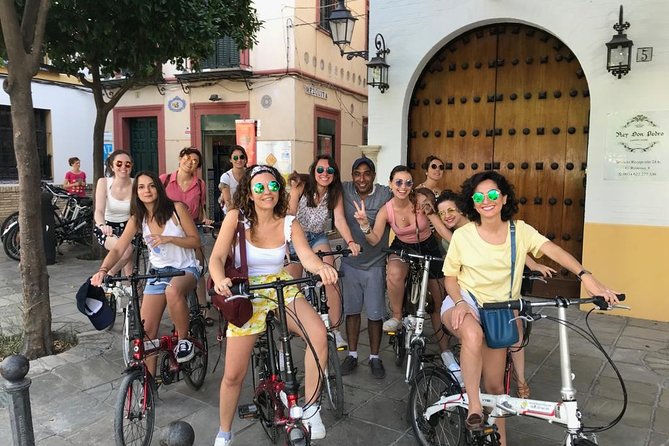
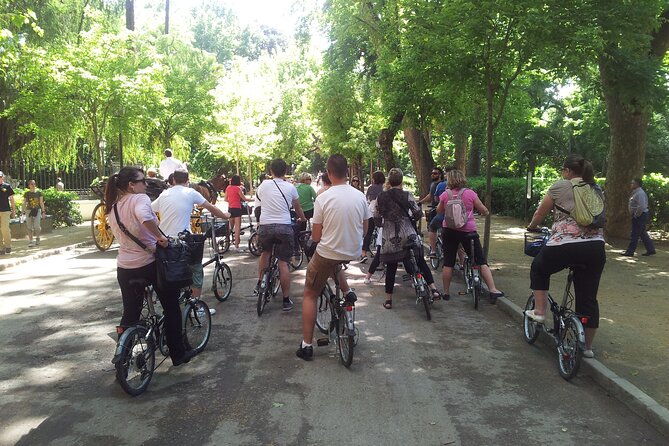
The ride begins with Parque de María Luisa, a park that feels like a mix between a botanical classroom and a Moorish dreamscape. The grounds have a long backstory: they were once gardens tied to the Palace of San Telmo, then donated to the city in 1893 for public use.
In the early 1900s, the big architectural push came with the Ibero-American Exposition of 1929. The centerpiece is Parque de María Luisa itself, with features like tiled fountains, pavilions, walls, ponds, benches, and those semi-circular “exhedras” (think: decorative stone seating or alcoves). The park’s look isn’t random—it’s designed to feel ordered, scenic, and sheltered.
What you’ll love here:
- The shady plant life: palms, orange trees, Mediterranean pines, and stylized flower beds you can actually slow down to notice.
- The park functions like a botanical garden, with educational panels that explain plant species (native and non-native).
- The doves. Yes, really. The park is known for a big population of them, and it gives the whole place a softer, more lived-in feeling.
Timing-wise, you spend about 30 minutes here. That’s long enough to get the vibe, not so long that you start losing your “I’m on a mission” focus.
Possible drawback: if you show up expecting a big museum-style explanation inside the park, you won’t get that. This is about outdoor architecture, gardens, and story-driven guidance while you ride and stop.
Plaza de España: architecture you can actually feel while moving
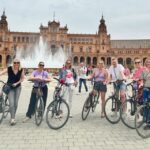
Next up is Plaza de España, one of Seville’s most recognizable scenes. The plaza sits inside the Parque de María Luisa and was built for the Ibero-American Exposition of 1929.
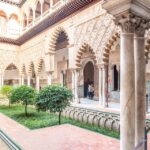
Even if you don’t read architectural terms, you’ll understand the style. It’s an example of Regionalism architecture, which mixes several Spanish influences: Baroque Revival, Renaissance Revival, and Neo-Mudéjar (Moorish Revival). Translation: you’re looking at a place that borrows from multiple eras and blends them into one showpiece.
What makes this stop work on an e-bike tour is speed plus comprehension. You don’t just glide past. You get enough time (about 10 minutes) to register:
- the scale of the plaza,
- the theatrical feel of its design,
- and why this site became such a symbol for modern Seville.
Also, the route keeps you active. If you’ve ever tried to see Seville’s “must sees” on foot, you know the trap: you stand in one spot for ages, then realize you didn’t cover enough. Here, you get a quick hit with context and move on.
Torre del Oro and the Triana bridge: the river changes the mood
After the park scenes, the tour shifts toward the river and the neighborhoods that made Seville powerful.
The Torre del Oro (Tower of Gold) is a military watchtower originally built by the Almohad Caliphate to control access along the Guadalquivir River. It dates to the early 13th century, and the name comes from its golden shine projected onto the water—thanks to the building materials used (a mix of mortar, lime, and pressed hay).
Here’s what’s fun about this stop: the tower isn’t just “old.” It also has layers of purpose. It served as a prison during the Middle Ages, and its structure reflects rebuilding after the 1755 Lisbon earthquake, when damage led to the addition of upper sections.
Then you cross into the view corridor of Puente de Isabel II, sometimes called the Triana Bridge. This metal arch bridge connects Triana with central Seville, and it crosses the Canal de Alfonso XIII, an arm of the Guadalquivir that makes Triana feel like an almost-island.
Built in 1852, it replaced an earlier pontoon bridge. The area’s Moorish and later-era infrastructure story is one of those details you’ll only notice if your guide points it out while you’re standing there.
Practical note: river stops are great for photos, but if weather is windy or rainy, keep one hand ready for balance. The e-bike is stable, but bridges always add motion to the scene.
You can also read our reviews of more tours and experiences in Seville
Giralda, Seville Cathedral, and the Alcázar: the UNESCO trio in motion
By the time you reach the cathedral area, the tour becomes all about landmarks that define Seville’s skyline.
The Giralda: Moorish minaret roots plus Catholic additions
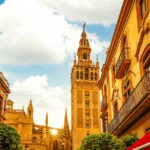
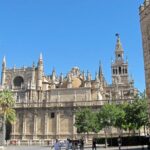
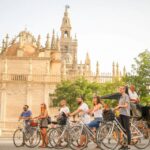
The Giralda is the bell tower of Seville Cathedral, but it started life as a minaret for the Great Mosque of Seville in al-Andalus. Built under the Almohad dynasty, it later received a Renaissance-style top after the Catholic period followed the expulsion of Muslims from the area.
The tower’s height—about 104 meters—is part of why it remains a city symbol. UNESCO recognized it as part of the broader Cathedral, Alcázar, and General Archive of the Indies World Heritage listing.
Seville Cathedral: the scale is the wow-factor
Seville Cathedral is a major Gothic church and the largest Gothic church, plus it’s the fourth-largest in the world by floor area. It covers about 11,520 square meters.
A few anchor facts help your guide make the stop feel real:
- It’s tied to major royal moments, including the baptism of Infant Juan of Aragon in 1478.
- It contains royal tombs for figures like Ferdinand III of Castile and later members of his line.
- It also has famous burials, including Christopher Columbus and his son Diego.
Even if you don’t go inside on this ride, just understanding what you’re looking at changes the experience.
The Royal Alcázar of Seville: Mudéjar architecture with multiple layers
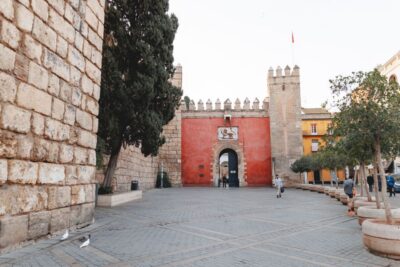
Then comes the Royal Alcázar, also called the Alcázar of Seville. This palace complex sits on the site of earlier structures, including an Abbadid Muslim fortress. After the Christian conquest, construction continued and evolved.
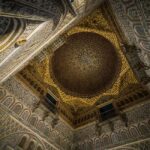
The Alcázar is a standout example of Mudéjar architecture in the Iberian Peninsula, while also featuring Gothic, Renaissance, and Romanesque design elements from different building phases.
Another reason people get excited here: the royal family still occupies upper storeys when in Seville, and it’s administered by Patrimonio Nacional. That’s a living reminder that these sites aren’t frozen in time.
One caution: the stop time for each monument during a bike tour can feel tight. If you want to spend a long stretch inside the cathedral or Alcázar, this ride is still valuable—it’s the “set up your visit” stage. You can use it to decide what to return to later.
Price and value: why $48.06 for 2.5–3 hours can make sense
At about $48.06 per person for roughly 2 hours 30 minutes to 3 hours, this isn’t a budget “just ride around” deal. But it does add up because you get more than motion.
You’re paying for:
- a local guide (including history and navigation),
- bottled water,
- and use of a bicycle and helmet,
- plus an e-bike experience designed to keep you comfortable through the route.
You’re not paying for food here, so plan on eating before or after. Also, there’s no hotel pickup, so you’ll want to be ready to reach the meeting point on your own.
Is the electric assist necessary? Some riders felt the ride was easy even without much help. Still, the boost is what makes this tour work for a wider mix of ages and comfort levels—exactly what you want when Seville’s walking parts can get long fast.
Where value can wobble:
- If your group expects lots of time inside each major site, you might want a separate timed-entry visit afterward.
- If your group is extremely short in size, bike fit matters. Ask ahead so you don’t end up with a standard bike when you expected an e-bike.
Who should book this e-bike tour (and who should ask questions first)
This tour is a strong match if you want:
- a guided overview of central Seville’s top zones,
- a ride that covers distance without turning into a full-day physical project,
- and a route that mixes parks and monuments instead of repeating the same kind of street.
It’s also a good choice for couples and small groups who want their own pace. The experience is private, meaning only your group participates, not a big shared crowd.
Before you book, I’d ask a few questions if any of these apply:
- Child sizing: one review story involved a child around 58 inches being too small for the e-bikes and getting a standard bike instead. If you have a short rider, confirm compatibility before you show up.
- Rain comfort: the tour runs in all weather. If you’re not a fan of wet city walking, pack accordingly and accept that you’ll still ride.
- First-time e-bike users: request a quick demo of bike settings and motor use before you start pedaling. It speeds up confidence for everyone.
Guide quality seems to be one of the biggest strengths, with multiple names showing up in positive feedback—like Veronica, Juan, Danny, Elena, Tristan, Daniel, Alejandro, Ben, and Medhi. When a guide is good at safety and story-telling, it makes short stops feel like a real tour, not a photo lineup.
Should you book this electric bike tour in Seville?
If your goal is to see major Seville highlights in a short window, I think this is a smart booking. The route makes practical sense: start in the old center, get park beauty at Parque de María Luisa and Plaza de España, then shift to river and skyline icons like Torre del Oro, Giralda, Seville Cathedral, and the Alcázar.
Book it if:
- you want a guided “greatest hits” route,
- you’d rather spend your energy watching instead of climbing hills on foot,
- and you like learning quick, clear explanations while you move.
Skip or adjust if:
- you want long, slow museum-style time inside each monument,
- your group needs very specific bike sizes and you haven’t confirmed them,
- or you’re expecting a mostly hands-off tour with no riding instruction.
FAQ
How long is the Electric Bike Tour in Seville?
It runs about 2 hours 30 minutes to 3 hours (approx.).
Where does the tour start and end?
The tour starts at Plaza de Santa Cruz (Pl. de Sta Cruz, Casco Antiguo, 41004 Sevilla, Spain) and ends back at the same meeting point.
What’s included in the price?
Included items are bottled water, a local guide, and the use of a bicycle and helmet.
Are food and drinks included?
No. Food and drinks are not included.
Is the tour offered in English?
Yes, the tour is offered in English.
Do I need hotel pickup?
No. Hotel pickup and drop-off are not included.
Is this a group tour or private?
It’s a private tour/activity. Only your group participates.
Does the tour operate in bad weather?
Yes. It operates in all weather conditions, so dress appropriately.
Is admission free for Parque de María Luisa and Plaza de España?
The information provided shows admission ticket free for both Parque de María Luisa and Plaza de España.
How does the child rate work?
Child rate applies only when sharing with 2 paying adults.
Can I cancel for a full refund?
Free cancellation is available. You can cancel up to 24 hours in advance for a full refund. If you cancel less than 24 hours before the start time, the amount paid is not refunded.