A night walk in Seville changes everything. Seville Obscure uses legends and dark local stories to help you read the city like someone who lives here, not like a checklist tourist. I like how the guide ties small street details into big historical ideas, and I also like that it is explicitly not a ghost-paranormal tour.
One thing to consider: this is a 2-hour stroll at 9:00 pm through the historic center, so it is best suited to people who feel comfortable walking at night and moving through tight old streets. If you’re bringing a stroller, the tour notes it is possible but not recommended.
In This Review
- Key Takeaways Before You Go
- Seville After Dark: What the Night-Story Walk Really Feels Like
- Meeting at Parroquia de San Pedro Apóstol: Where the Story Starts
- The 2-Hour Route: How the Tour Keeps Moving (and Keeps You Interested)
- Street Names and Statues: Learning History Through Local Details
- The Black Stories Approach: Dark, Historical, and Still Grounded
- Guide Filippo and the Small-Group Advantage
- Value for Money: Why This $53.36 Price Can Make Sense
- Who This Tour Suits Best (And Who Might Want a Different Style)
- Should You Book Seville Obscure?
- FAQ
- What is the duration of Seville Obscure?
- When does the tour start?
- Where does the tour meet and where does it end?
- Is this a ghost or paranormal tour?
- How large is the group?
- Is a mobile ticket used?
- Is free cancellation available?
Key Takeaways Before You Go
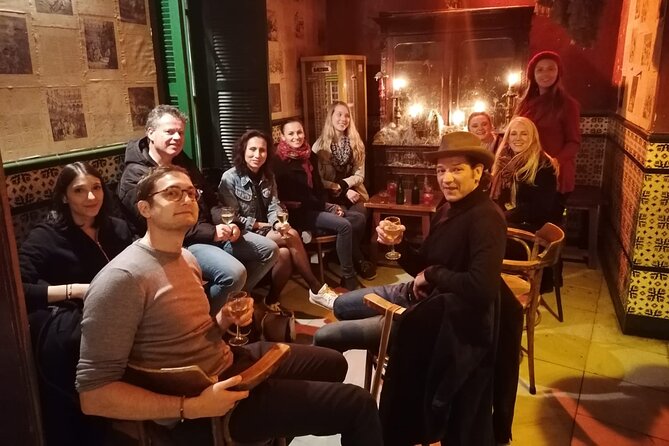
- Night focus (9:00 pm): you get Seville’s mood after dark, with stories that fit the setting
- Legends + street details: street names and landmarks get explained through local oral history
- Not paranormal: it is dark storytelling, not ghost hunting
- Small group cap (8): better questions and a more personal pace
- Guide-led, legend-driven route: you leave with a different way to look at the city
- Mobile ticket: easy to manage on your phone
Seville After Dark: What the Night-Story Walk Really Feels Like
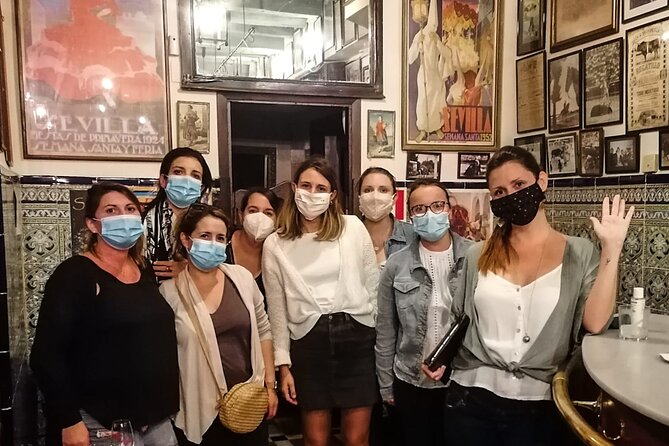
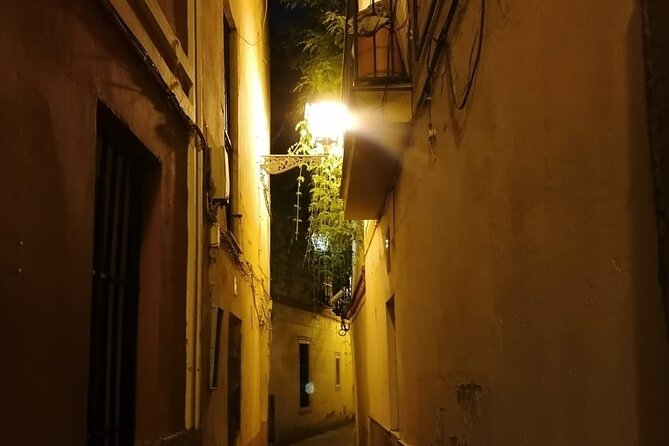
Seville is beautiful in daylight. It is different at night, when the streets feel quieter and the details you normally ignore start to matter. This tour leans into that idea on purpose. You start at a church in the old center and then you move through the city with a storyteller’s mindset: names, corners, symbols, and little facts become the doorway to larger history.
What makes this work is the tone. The experience promises legends and black stories, but it also makes a clear point: this is not about ghosts or paranormal phenomena. You are not being sold a horror show. Instead, you’re learning how Seville’s traditions of oral storytelling shape what people notice and remember.
I also appreciate that the tour aims for a local look. The goal is that you end the walk seeing the city through references that feel native to Seville—things you’d likely hear in conversation, not in a museum script. That is a big part of the value, because it changes how you wander the rest of the trip.
The main trade-off is simple: night + walking. It is about 2 hours, and it happens in the evenings. If you prefer to rest often, or if you don’t like stepping out after dark, you might find the timing less comfortable than daytime sightseeing.
You can also read our reviews of more tours and experiences in Seville.


Meeting at Parroquia de San Pedro Apóstol: Where the Story Starts
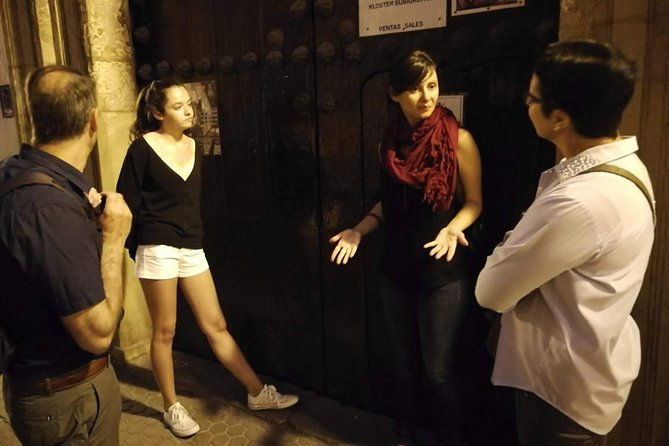
Your starting point is Parroquia de San Pedro Apóstol, at C. Doña María Coronel, 1, in the Casco Antiguo (41003 Sevilla). The tour begins at 9:00 pm, and it ends back at the same meeting point.
That round-trip structure matters more than it sounds. It keeps the experience manageable: you are not being sent across town, and you do not have to figure out a second meeting point later. When the tour wraps, you’re already in the area where you started, which makes it easier to grab dinner afterward or connect to public transport.
The tour also notes that it is near public transportation and that most travelers can participate. On top of that, service animals are allowed and dogs are pet-friendly. So if you’re traveling with a small dog, it’s at least designed with you in mind—not as an afterthought.
If you’re with a baby, strollers are possible but not recommended, and a baby carrier is noted as a better option. That is worth taking seriously. Tight historic streets and a story-focused pace usually work better with a carrier than with a pushed stroller.
The 2-Hour Route: How the Tour Keeps Moving (and Keeps You Interested)
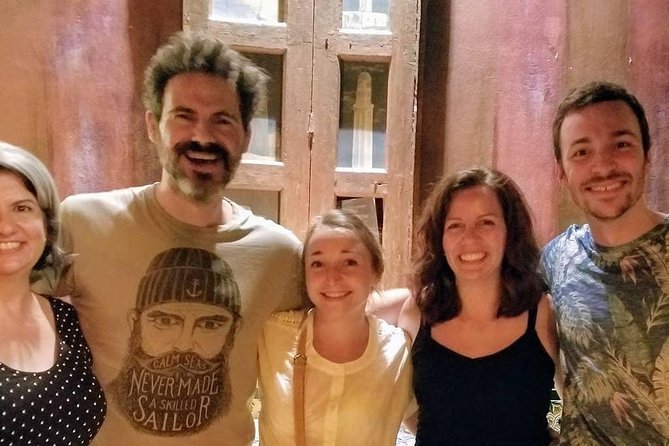
There isn’t a long, stop-every-10-minutes itinerary on the surface. The tour is built around a steady walk with story stops—moments where the guide points out something you can’t easily see on your own. You’ll cover the city for about 2 hours, and the approach is to start from a small story and use it to interpret bigger historical context.
That method is a smart way to learn. Instead of memorizing dates, you get a human-scale narrative and then the history becomes meaningful. A street name might connect to a legend. A statue or landmark might point you toward how Seville remembers certain figures or events. Over time, those quick connections add up to a clearer picture of the city’s identity.
Practically, the small group size supports this style. The experience caps at 8 travelers, so you’re more likely to get personal attention and follow-up questions rather than watching from the back while the guide tries to manage a crowd.
You should expect a conversation-based walk more than a lecture. The tour description emphasizes legends and black stories from Seville’s oral heritage, and that signals a storytelling rhythm—short arcs, then a transition to a new street detail, then a bigger historical thread.
Street Names and Statues: Learning History Through Local Details
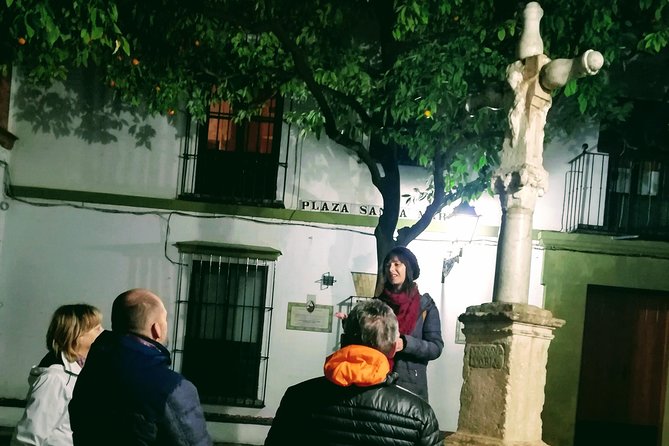
One of the most praised aspects of this experience is how it connects the city’s visible features to the stories behind them. The reviews highlight anecdotes and legends that help explain things like street names and statues, and that this helps you better understand Seville’s history.
That might sound abstract, but it’s actually practical when you’re on the ground. Street name plaques can look random if you don’t know what to look for. Here, you’re taught to treat them like a clue. A guide points you toward the meaning, and suddenly you notice patterns while walking—how different parts of the city keep repeating certain themes.
The same idea applies to statues and landmarks. A monument is not just decoration. It usually reflects who or what the city decided was important, and those choices often connect back to stories people repeated over generations. When a guide ties that symbolism to local legend, the city stops feeling like scenery and starts feeling like a living record.
I especially like this approach because it makes your next days easier. After a tour like this, you don’t need to keep booking paid activities to feel like you understand Seville. You start reading the place yourself, one sign and corner at a time.
A possible drawback: if you’re expecting a tour where you sit at major landmarks for long photo stops, this may feel more like a focused walk through lesser-seen details. The payoff is in the connections, not in big-ticket views.
The Black Stories Approach: Dark, Historical, and Still Grounded
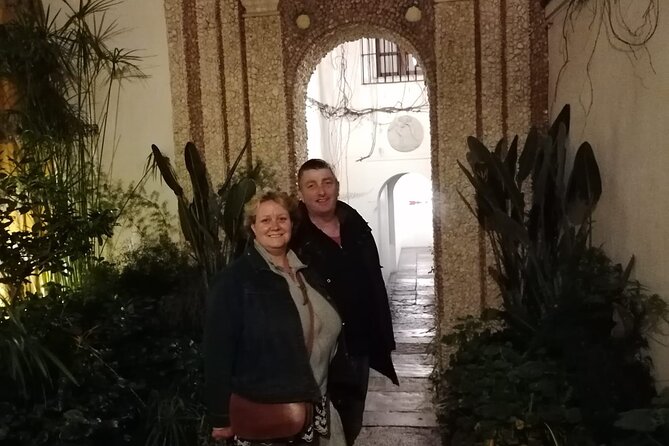
The tour description calls out legends and black stories, which can create the wrong expectation if you’ve only experienced standard ghost tours or jump-scare street walks. The key line here is that it is not about ghosts or paranormal phenomena. So you’re getting dark storytelling with a historical and cultural framing.
What does that mean in practice? It means the darker elements are treated as part of Seville’s tradition—stories passed along, remembered, and retold—rather than as proof of supernatural activity. You’re looking at how fear, conflict, and human drama shaped the city’s memory.
This is a helpful distinction for planning. If you want spooky vibes, you might enjoy the atmosphere of night and the darker themes. But if you want facts and cultural context without paranormal claims, you’re on the right track here.
Also, the tour aims to interpret the city’s larger history from smaller starting points. That can be surprisingly effective. You’ll likely notice that some stories act like shortcuts into historical understanding. One legend points to a broader shift. One street detail links to a larger era. By the end, you’re not just repeating plot points—you’re understanding how Seville tells itself stories.





Guide Filippo and the Small-Group Advantage
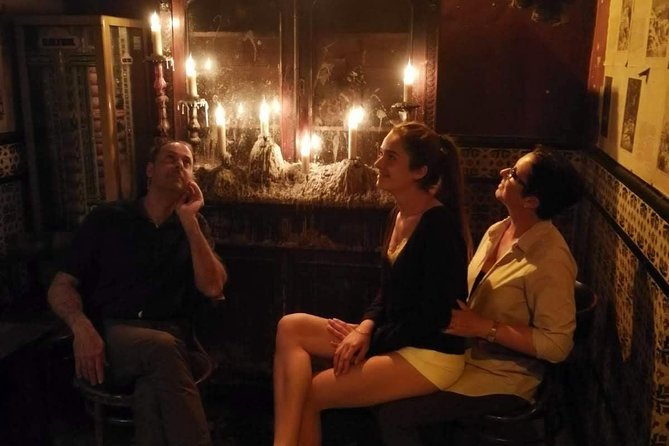
The experience is run by Vivir al Andalu, and one of the guide names that shows up clearly in the feedback is Filippo. The reviews praise him as a great guide and highlight how the anecdotes and legends work through the streets and landmarks.
Small groups matter here because story tours live and die by interaction. With a maximum of 8 travelers, you’re more likely to hear everything clearly, ask questions, and keep a steady pace without getting separated. It also helps the guide steer the experience toward what your group finds interesting.
If you enjoy asking, Why is that named that? or What does that statue represent?, this style is built for you. If you prefer to be left alone with your own pace, you can still enjoy the walk—but a storytelling tour is naturally more social.
Value for Money: Why This $53.36 Price Can Make Sense
At $53.36 per person for about 2 hours, this isn’t a budget street stroll. But it also isn’t priced like a full-day attraction. So the question is: what are you buying?
You’re buying guided interpretation. The tour’s promise isn’t just that you’ll walk through Seville at night—it’s that you’ll learn how the city’s legends connect to street names, statues, and historical meaning. That is hard to replicate without a guide, because street-level context is exactly what you miss when you wander solo.
You’re also buying time efficiency. In a couple hours, you get a framework for how to look at Seville afterward. If you’re only in town briefly, that framework can save you from spending hours reading online or searching for the right museum exhibits.
Another value point is the booking cadence. This tour is commonly booked about 23 days in advance on average. That suggests it is not the kind of thing you should assume will be available last minute, especially if you’re traveling during busy weeks.
For best value, I’d pair this with a flexible evening. Do it early enough that you can use the stories the next day while walking on your own. If you do it on the last night, you still benefit, but you have less time to use what you learned.
Who This Tour Suits Best (And Who Might Want a Different Style)
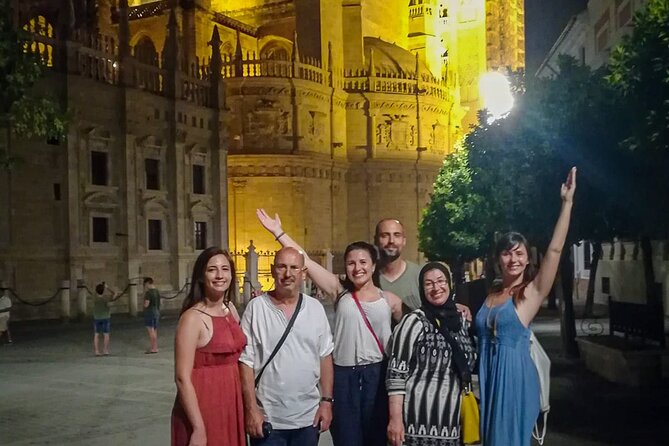
This experience fits travelers who like narrative travel—people who enjoy hearing how places got their meanings over time. You’ll likely enjoy it if:
- You like history told through stories instead of timelines
- You want a different view of Seville at night
- You enjoy smaller groups and a guide you can actually talk to
- You’re okay with a walking tour that lasts around 2 hours
It may be less ideal if:
- You want major monuments and long landmark photo sessions
- You strongly dislike walking at night
- You rely on a stroller; it’s not recommended, even if it’s possible
- You need a very slow pace with frequent breaks
The good news is that it’s designed for “big and small” (as described), and it also explicitly supports service animals and dogs. That’s a solid sign the tour is built for real travel situations, not just for ideal conditions.
Should You Book Seville Obscure?
I’d book Seville Obscure if your idea of a great Seville evening includes stories, street-level meaning, and a guided way to see things you’d likely miss alone. The combination of night timing, oral-heritage legends, and the way the guide connects street names and statues to history is exactly the kind of experience that changes how you look at a city.
Skip it if you want a purely sightseeing tour with big stops and lots of downtime, or if nighttime walking makes you uneasy. This is story-first travel, and it works best when you’re willing to listen and keep walking.
If you’re on the fence, here’s my practical checklist: book it when you can arrive to the meeting point on time, wear comfortable shoes, and plan to use the stories afterward while wandering. If that sounds like your style, you’ll probably walk away with the city feeling less like a postcard and more like a place with memory.
FAQ
What is the duration of Seville Obscure?
The tour lasts about 2 hours.
When does the tour start?
The start time is 9:00 pm.
Where does the tour meet and where does it end?
It starts at Parroquia de San Pedro Apóstol, C. Doña María Coronel, 1, Casco Antiguo, 41003 Sevilla, Spain, and it ends back at the same meeting point.
Is this a ghost or paranormal tour?
No. The tour is not about ghosts or paranormal phenomena.
How large is the group?
The experience has a maximum of 8 travelers.
Is a mobile ticket used?
Yes, the tour uses a mobile ticket.
Is free cancellation available?
Yes. You can cancel up to 24 hours in advance for a full refund.