REVIEW · SEVILLE
Seville: Historic Center Bike Tour
Book on GetYourGuide →Operated by Centerbici · Bookable on GetYourGuide
Seville’s walls make a great bike story. This Seville Historic Center Bike Tour strings together the city’s key monuments with the defensive route of old Seville, from Roman-era origins to the riots of 1868. You’ll roll through architectural styles that change as you move, and the ride makes the timeline feel physical, not textbook.
I especially like two things: the chance to see how Seville became a top-tier walled city under the Almoravids, and the way the bilingual live guide keeps the big story clear while you’re moving. You also get smart little support items like a water bottle and map, which help you stay relaxed instead of constantly re-orienting.
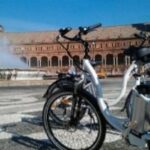
One heads-up: the bike quality can vary. One mention notes that some bikes may feel like they’re past their prime, so it’s worth doing a quick check at pickup and asking about a safer, smoother ride if something feels off.
In This Review
- Key highlights to look for
- Why a bike tour makes sense for Seville’s historic center
- Route big picture: from Roman roots to the 1868 riots
- Defensive walls and the Macarena area: the city’s protection explained
- Puerta de Córdoba and the Alcázar legacy after 1868
- Gates with real atmosphere: Puerta Carmona, Osario, and Triana
- What the guide does for you in Spanish, English, or French
- Practicalities you’ll care about: timing, pace, and getting comfortable
- Value for $35: what’s included and why it can be a bargain
- Who this tour suits (and who should think twice)
- Should you book this Seville Historic Center Bike Tour?
- FAQ
- Where is the meeting point for the tour?
- How long is the Seville Historic Center Bike Tour?
- What languages are available for the live guide?
- Is bike rental included?
- Does the tour include any extra gear for children?
- What else is included besides the bike and guide?
- Is the tour suitable for people with mobility impairments?
- Do I need to buy tickets in advance?
- Can I cancel and get a full refund?
- Can I reserve now and pay later?
Key highlights to look for
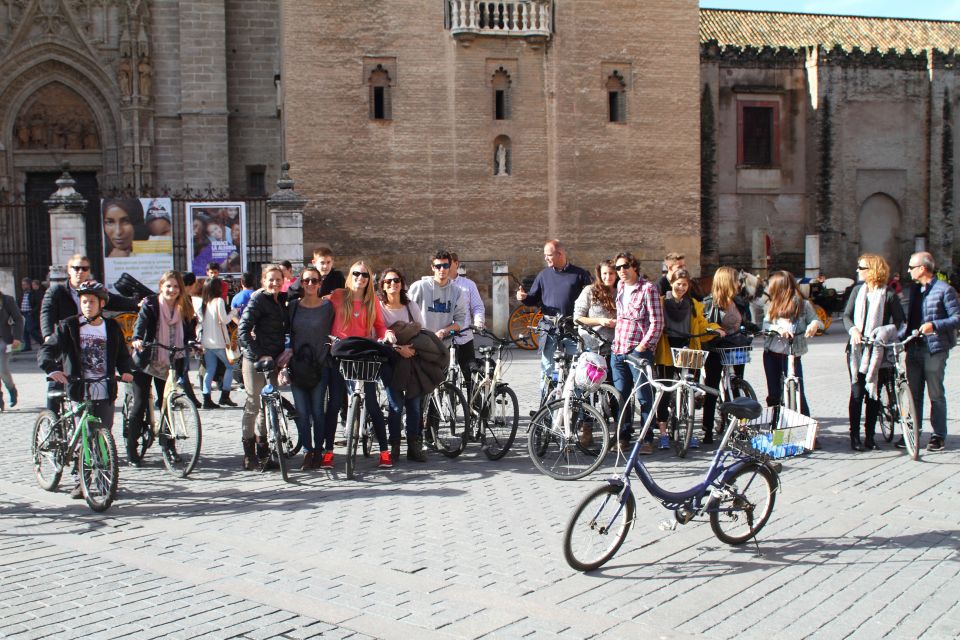
- Former defensive walls in action: you cycle along wall sections that shape Seville’s layout
- Puerta stops with story moments: Puerta Carmona, Puerta Osario, and Puerta Triana are built into the route
- A timeline you can ride through: Tartessians, Carthaginians, Romans, Almoravids, and the 1868 riots
- Architecture styles, not just landmarks: the guide ties buildings to changing rulers and eras
- Live language support: Spanish, English, and French live guides on-site
- Practical extras: bike rental, water bottle, and map included (plus child helmets)
Why a bike tour makes sense for Seville’s historic center
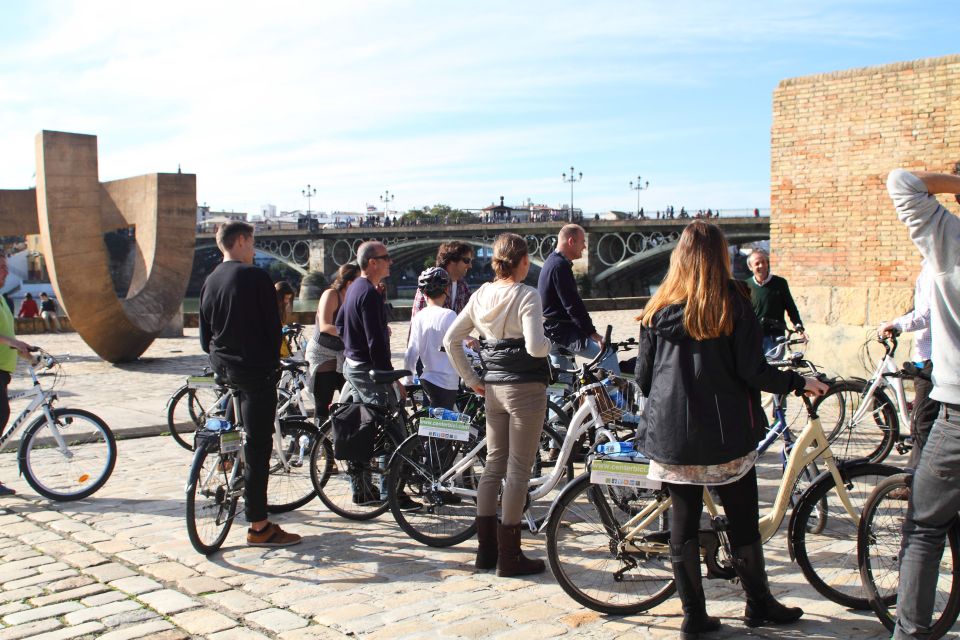
Seville’s historic core is gorgeous, but it’s also compact and layered. On foot, you can end up crisscrossing and losing time. On a bike, the same streets become a route, and the monuments feel connected instead of scattered.
You’ll cover meaningful ground in about 2.5 hours without turning the day into a endurance test. And because the tour follows the old defensive lines, it gives you a framework for understanding where the city’s power and movement used to go.
You can also read our reviews of more cycling tours in Seville
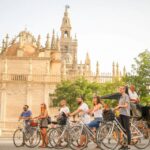
Route big picture: from Roman roots to the 1868 riots
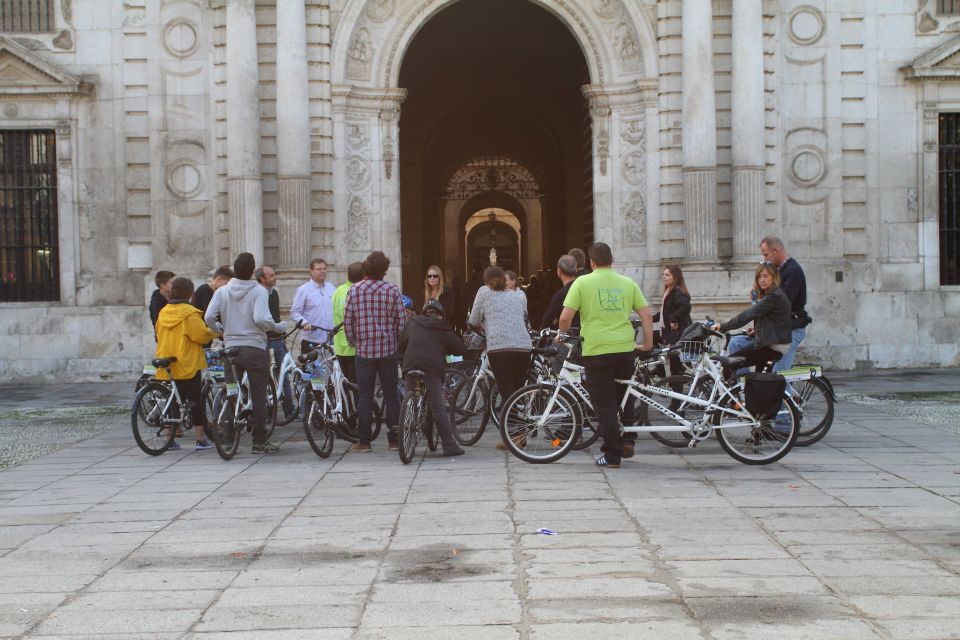
You’ll start with a guided walk-through of the city’s story as you ride—starting with the area’s earliest settlers and moving forward through major powers. Expect a guided storyline that touches the Tartessians, Carthaginians, and Romans, then jumps ahead to the Almoravids, when Seville earned a reputation for strong defenses.
The tour also connects political change to the built environment. You’ll hear about the riots of 1868 and the Glorious Revolution, and you’ll see how that era left traces in the urban fabric—especially around the parts of the city connected to the Alcázar.
What makes this valuable is the pacing. You’re not just hearing dates. You’re cycling through the spaces where those shifts would have mattered: entrances, walls, and key structures.
Defensive walls and the Macarena area: the city’s protection explained
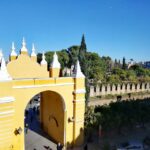
One of the main draws here is that you’re not only sightseeing monuments—you’re riding the logic of defense. The route includes sections of Seville’s former defensive walls, so you can see how the city’s fortifications shaped travel, movement, and where people gathered.
You’ll also pass through key areas and named stops that anchor the story. The Macarena area and wall-adjacent sections help you picture how Seville used its edges. It’s a different way to experience neighborhoods: less about wandering, more about understanding why they formed where they did.
A nice bonus is how the guide reads the city for you. Architecture isn’t treated as decoration. It becomes evidence—something that helps explain how each era organized control, security, and daily life.
Puerta de Córdoba and the Alcázar legacy after 1868
Gates are where stories get interesting, because they’re built for traffic and control. On this tour, you’ll see the Puerta de Córdoba area as part of the defensive narrative, not as a one-off photo stop.
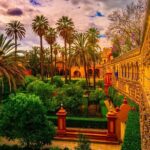
Then you’ll connect the route to the Alcázar, with the added context that you’ll be looking at parts left after the 1868 riots. That matters because it turns a famous landmark into a place with aftermath—how conflict and political change alter what survives and what gets rebuilt.
If you like history that ties into street-level form, this part hits. You’ll be looking at the city’s shapes as the result of decisions, not just as background scenery.
Gates with real atmosphere: Puerta Carmona, Osario, and Triana
Some tours name gates and move on. This one builds in time to understand what the gates meant, with stops at Puerta Carmona, Puerta Osario, and Puerta Triana.
Here’s what you can expect from these gate moments:
- Puerta Carmona: presented as part of the defensive layout—another key entrance tied to how people and goods moved.
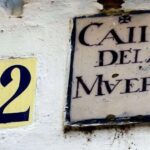
- Puerta Osario: you’ll hear stories that focus on mysteries and urban lore tied to the area.
- Puerta Triana: this one gets extra narrative attention, including details about carriages being stopped and more layered storytelling around the site.
These stops are where the tour becomes memorable. Even if you’ve seen a map of Seville before, gates give you a real sense of direction. You start thinking like the city: where would access be controlled, where would people funnel through, and how did power show up in everyday movement?
And since you’re on a bike, you get those moments without the fatigue that often comes with heavy historic walking days.
You can also read our reviews of more historical tours in Seville

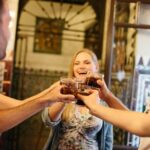

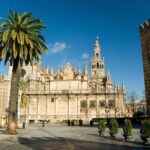

What the guide does for you in Spanish, English, or French
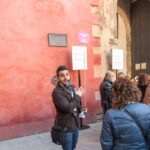
The value here hinges on the guide experience. The tour runs with a live guide in Spanish, English, and French, and that language flexibility makes a difference in how well you’ll follow the storyline.
What I like is the tour’s emphasis on clarity while you’re riding. One of the recurring themes is that the guide stays tuned to understanding—if language preferences don’t match perfectly, the guide works to make sure you can follow along. That can be especially helpful when you’re moving quickly between wall sections and gates and you want the story to land while it’s still fresh.
You may also encounter guides with a strong personal focus on making the ride comfortable. Some guides are described as especially attentive to the well-being of their group, which matters on a route that mixes historic stops with street cycling.
Practicalities you’ll care about: timing, pace, and getting comfortable
The tour lasts 2.5 hours, which is long enough to feel like you did something real, but short enough that you can still enjoy the rest of your day in Seville. That timing also helps keep the ride manageable for most people who can comfortably pedal on city streets.
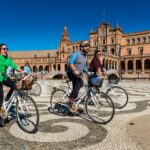
Bikes and helmets are part of the package. Bike rental is included, and there’s helmet rental for children. Adults should still treat helmet use as smart safety, even if it’s not spelled out for everyone.
Since one note flags bikes that may be worn, do a quick safety check:
- test the brakes before rolling out
- check that the seat feels stable
- make sure shifting is smooth enough for easy speed changes on turns
You’ll be grateful you did this at the start. On a historic route with gates and street corners, small discomforts add up fast.
Value for $35: what’s included and why it can be a bargain
At around $35 per person, this tour is priced for accessibility. It also includes the items that often add hidden costs on your travel day: bike rental, a bilingual live guide, and practical extras like a water bottle and map.
You’re not paying extra for language support if you choose Spanish, English, or French. And you also get skip-the-ticket-line handling as part of the activity, which can save time and reduce day-of stress.
Most importantly, the tour’s value isn’t only the objects you see. It’s the framework you get while moving: Roman origins to Almoravids, then the 1868 riots and the Glorious Revolution, tied to walls and gates. If you want Seville to make sense quickly, that storytelling component is what you’re paying for.
Who this tour suits (and who should think twice)
This is a strong choice if you:
- enjoy cycling and want a structured route in Seville
- like history that explains how cities work, not just what they look like
- want to cover defensive walls and key gates without heavy walking
It’s not suitable for people with mobility impairments, so keep that in mind if accessibility is a concern. If you need a lower-impact option, you’ll likely prefer a different format.
If you’re traveling with kids, the presence of child helmets is a practical plus. If you’re sensitive about bike ride quality, also plan to check the bike condition at pickup.
Should you book this Seville Historic Center Bike Tour?
I’d book it if you want a compact, high-impact way to understand Seville. The route is built around defenses and entrances—walls, gates, and the city’s changing power—so the city feels like one connected story instead of a checklist.
I’d pause only if you’re picky about bike condition. Since one note suggests some bikes may be past their best, you’ll want to do that quick check at Centerbici before you commit your comfort and safety to the ride.
If you’re ready to pedal through the story of Seville—Roman-era beginnings through Almoravids to the 1868 riots—this tour is a solid, straightforward value for your time.
FAQ
Where is the meeting point for the tour?
The meeting point is Centerbici Store, C/ Espronceda, 5 – 41004 – Sevilla.
How long is the Seville Historic Center Bike Tour?
The duration is 2.5 hours.
What languages are available for the live guide?
The tour offers live guide service in Spanish, English, and French.
Is bike rental included?
Yes. Bike rental is included in the tour.
Does the tour include any extra gear for children?
Yes. Helmet rental for children is included.
What else is included besides the bike and guide?
You’ll also receive a water bottle and a map.
Is the tour suitable for people with mobility impairments?
No. The activity is not suitable for people with mobility impairments.
Do I need to buy tickets in advance?
The activity includes skip-the-ticket-line handling.
Can I cancel and get a full refund?
Yes. Free cancellation is available up to 24 hours in advance for a full refund.
Can I reserve now and pay later?
Yes. You can reserve now and pay later to keep travel plans flexible.