REVIEW · SEVILLE
White Villages and Ronda Day Tour from Seville
Book on Viator →Operated by Naturanda Turismo Ambiental · Bookable on Viator
One day, three White Villages and Ronda. This tour strings together the Andalusian white villages of Zahara de la Sierra and Grazalema plus the dramatic city of Ronda, with round-trip transfers from Seville so you’re not fussing with trains or car rentals. I especially like the slow, scenic country-road feel between stops and the olive oil tasting at Zahara, which gives you a real taste of how this region feeds itself. One thing to think about: if storms roll in, Ronda’s cliff views can be reduced and the day can feel less satisfying.
The setup is built for convenience. You meet your guide at one of three Seville pickup points at about 9:00–9:15am, board a shared bus (max 30 people), and get guided stops in English. The guide quality really matters on a day like this, and the good days tend to be led by guides with lively pacing and clear direction on what to see and where to stand.
Food is on your own, and you’ll also want to budget a bit of time for the inevitable in-between moments—coffee breaks, quick walks through town, and the transitions between villages. If you like structured freedom (short guided moments, then time to wander), this is a solid way to do a lot of Andalusia without rushing on your own.
In This Review
- Key highlights to know before you go
- Your day from Seville: a long bus ride with a clear payoff
- Zahara de la Sierra: where the views earn their coffee
- Grazalema and Sierra de Grazalema: mountain air and big overlooks
- Ronda: Puente Nuevo and the cliff-city feeling (time matters)
- Walking and weather: why this day lives or dies by conditions
- Price and logistics: what you’re paying for
- Who this tour fits best
- Should you book White Villages and Ronda from Seville?
- FAQ
- What does the tour include, and what doesn’t?
- How long is the tour?
- What villages and towns are visited?
- What time do pickup and the tour start?
- Where are the pickup points in Seville?
- Is the tour in English?
- Do I need a lot of physical fitness?
- Are dogs allowed?
- What if the weather is bad?
Key highlights to know before you go
- White Villages in one day: Zahara de la Sierra plus Grazalema, with short town strolls and big viewpoint energy
- Olive oil factory tasting: an actual production stop in Zahara, not just a roadside shop
- Scenic drive through cork-and-oak country: part of the magic on the road to Ronda
- Ronda time is the payoff: you get a guided arrival, then free time for Puente Nuevo and the cliff views
- Small-ish group for a full-day bus tour: max 30 travelers, shared transport, English guide
Your day from Seville: a long bus ride with a clear payoff
This is a full-day, 10-hour-style outing built around efficient travel time. After you meet your guide at one of the pickup points (you’ll choose among three options around 9:00–9:15am), you’ll head out through wide farm fields—expect sunflowers and wheat along the way—before you hit the first medieval-era stop and then start the village circuit.
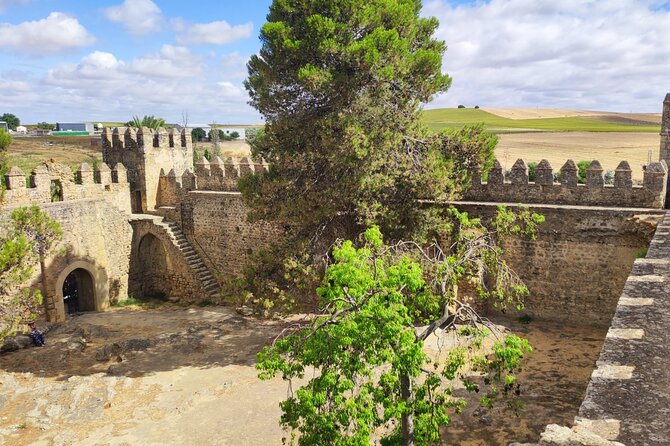
A big plus here is the sequencing. Las Aguzaderas is a quick stop that sets the stage for how this region sat between worlds, with its medieval castle history tied to the border between the Catholic kingdom and the Moorish empire. From there, the day shifts into pure “Andalusia postcard” mode at Zahara de la Sierra, then into mountain scenery near Grazalema, and finally into the dramatic drop-off world of Ronda.
You’ll likely feel the day most in two places: (1) the stretches of winding roads and (2) the time pressure in Ronda. That second part is what decides whether your Ronda feels leisurely or rushed. When weather is cooperative and the group moves smoothly, you get the best of it. When conditions are poor, you spend more time waiting for the bus schedule to catch up with reality.
You can also read our reviews of more tours and experiences in Seville.



Zahara de la Sierra: where the views earn their coffee
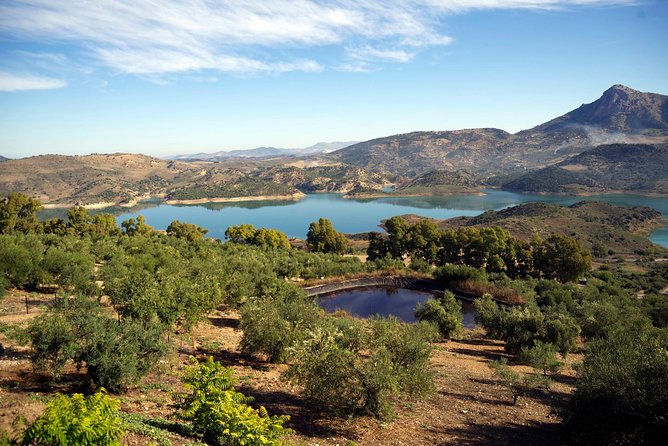
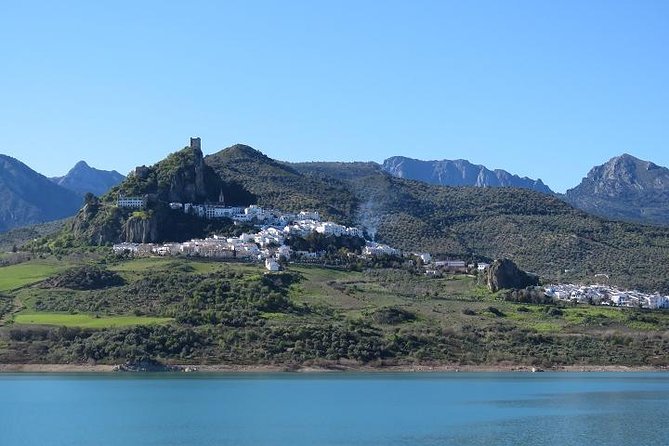
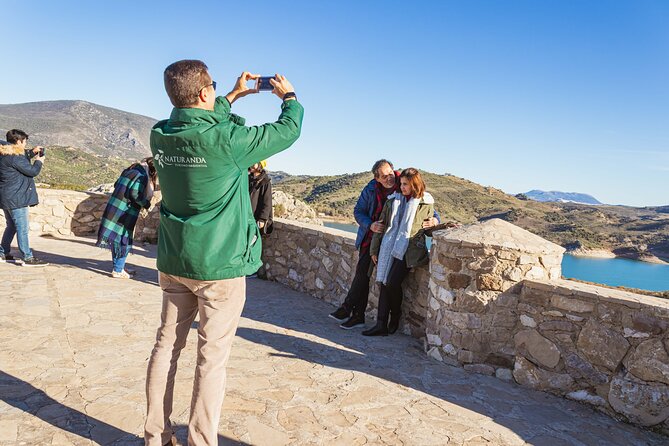
Zahara de la Sierra is a true White Village—whitewashed buildings, a laid-back feel, and that “I can’t believe this is real” viewpoint effect when you look out over the countryside. You’ll have about an hour here to walk around at a comfortable pace, soak in the town atmosphere, and get oriented.
One practical detail I like: the schedule explicitly builds in time for coffee. You’re free to grab something on your own expense before moving on to the olive oil stop. This matters because it breaks up the bus day and keeps you from feeling like every minute is scheduled.
Then comes the olive oil factory tour and tasting. This is one of the reasons I think the tour has better value than a purely sightseeing day: you’re not only looking at rural life, you’re getting a direct product experience. In some cases this can feel like more of a sales-focused stop than others—one person described it as a forced pitch—but even if you’re not buying anything, it’s still a good way to understand why olive oil is such a big deal here.
If you want to make this stop work for you, keep your expectations realistic. Think of it as a short factory visit plus tasting, not a museum lesson that will replace a full food tour. You’re doing it for context and flavor, then using the rest of the day for the towns and Ronda.
Grazalema and Sierra de Grazalema: mountain air and big overlooks
After Zahara, you continue to Grazalema. You’ll pass through the Sierra de Grazalema nature park area en route, and the drive itself is part of the point—panoramic moments and frequent chances to glimpse the rugged, higher-country shape of Andalusia.
Grazalema gets about an hour. That’s not long enough for deep, slow wandering, but it is enough time to enjoy the town’s colors and character and get a sense of why this area earned its name. You’re also using it as a bridge between “valley white village life” and “cliff-city drama” at Ronda, so the short stop feels like a natural rhythm rather than just another quick checkmark.
A note worth keeping in mind: if it’s raining or low clouded, you might lose some of the distance views. Some days you’ll see the mountains as a layered wall of forms; other days the scenery turns more muted. That doesn’t ruin Grazalema itself, but it changes the feeling.
If you’re the type who loves photos, watch what you photograph here. The best pictures are often not the postcard streets—they’re the viewpoints and the way the town sits against the surrounding hills.
Ronda: Puente Nuevo and the cliff-city feeling (time matters)
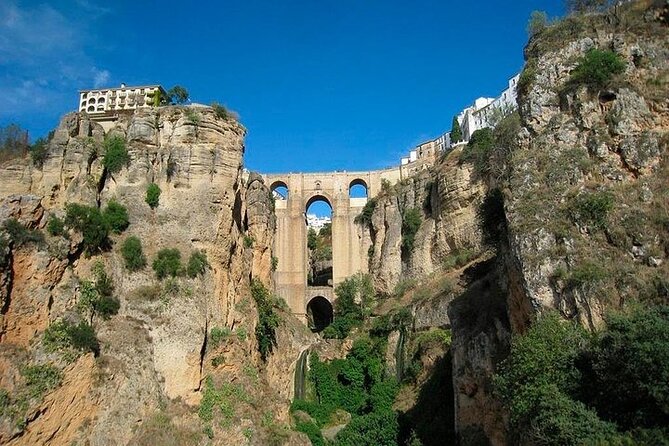
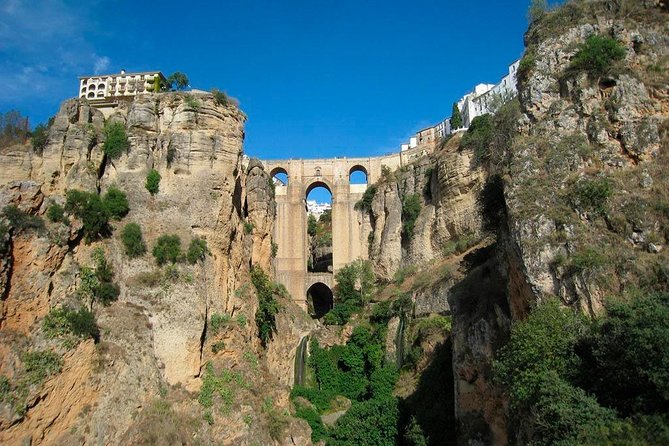
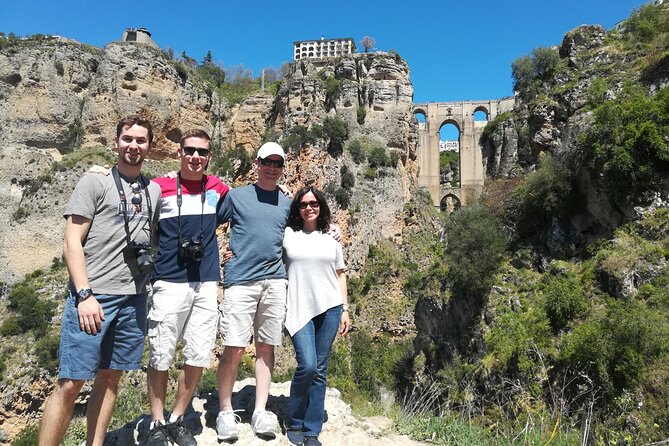
Ronda is the headline. It’s one of Spain’s oldest towns, and it sits in that unforgettable setup of being divided across dramatic cliffs. When you arrive, you’ll have about two hours free time after the guided arrival and orientation.
You’ll see why people obsess over Puente Nuevo, the famous bridge area. Even if you’ve read about Ronda before, it’s one of those places where the geography hits you physically. You feel the drop. You get the sense that the town is built for looking out as much as looking in.
Two realistic tips help you get more from those two hours:
First, plan your walking path before you head downhill for photos. On wet or windy days, footing gets more serious and your time can disappear fast in careful steps.
Second, prioritize what you want most: bridge views from the main overlooks, the streets around them, and any short stop for photos in the adjacent viewpoints. If you spend your whole free time drifting randomly, it’s easy to end up wishing you had one more stop option.
The tour does not pretend two hours is enough to do everything in Ronda. Some people feel they want more time here. I get that. If you want Ronda at full speed, you’ll need an overnight. But if your goal is a taste of Ronda plus a quick hit of the White Villages, this tour delivers.
Walking and weather: why this day lives or dies by conditions
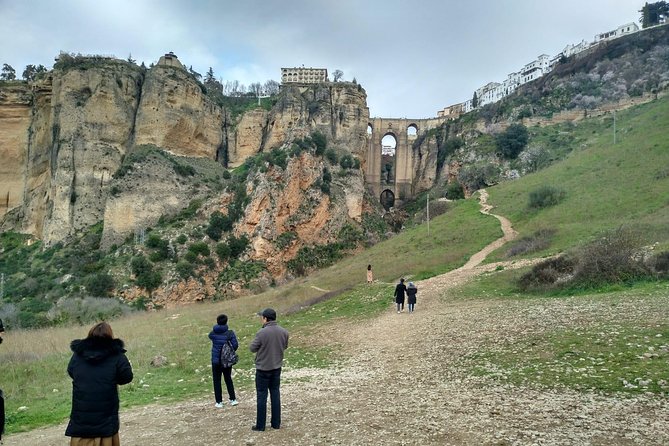
This is not a sit-on-a-bus-and-leave type of outing. It’s built around moderate walking and hills. Even on smooth-weather days, you’ll be on foot in the villages and doing short walks to viewpoints. The Ronda area can involve stairs and paths that feel steep, and some routes get slippery in rain.
Weather is the other big variable. The experience is explicitly described as requiring good weather. That’s not marketing fluff—it changes what you can see, how long you can safely linger, and how much you can enjoy town wandering instead of playing catch-up with the schedule.
Some days run beautifully. Others can turn chaotic if storms hit hard enough. One complaint focused on a severe storm situation where the itinerary didn’t adapt in a way that protected visibility and comfort. Another set of comments pointed out that rain led to less walking and more time stuck in cafés until conditions improved.
So here’s my practical advice: pack like you’re going somewhere you might walk in the rain. Even if the forecast looks fine in Seville, higher areas can change fast. A light rain layer and shoes with grip can save your day.
Also, keep expectations flexible. If Ronda is shrouded in clouds, you can still enjoy the town’s streets and the bridge area angles you can reach—but your “big reveal” moments may be smaller. That’s just how Ronda works when the sky won’t cooperate.




Price and logistics: what you’re paying for
At $95.53 per person, you’re paying for transportation, a professional guide, and a full-day route that strings together three major places. You’re not paying for meals. Food and drinks are on your own expense throughout the day, including coffee and the meal break.
So is it worth it? I think it can be, because the cost of getting from Seville to multiple towns—plus the time and stress of coordinating without a car—adds up fast. A shared bus with transfers helps you spend the day where it counts: in Zahara, Grazalema, and Ronda.
Where value can shift is in pacing and stop choices. Some people loved the overall flow. Others felt the olive oil tasting stop dragged or felt sales-heavy. A few also said they wanted more time in Ronda and less time elsewhere, and there were mentions of long restroom lines and the general friction that can come with larger groups.
The tour runs with a maximum of 30 people, which is a reasonable size. You’re still going to deal with counting, boarding, and timing at each village. That’s normal. But if you’re sensitive to delays, you’ll feel them more on days when weather forces more in-town waiting.
On the upside, punctuality and driver skill tend to be a strong point. Multiple comments praised the driver as excellent, even on windy mountain roads. That matters because these are narrow, curvy roads, and good driving keeps everyone calmer.
Who this tour fits best
This is a strong choice if you want a first-time taste of the White Villages plus Ronda without planning a full multi-day road trip. It’s also good for visitors who like a mix of guidance and freedom: you get a guide to explain what you’re looking at and then free time to wander and take photos.
If you’re traveling solo or with friends and you want the comfort of being taken to the places, guided, and brought back, it’s an efficient solution. If you’re a hardcore hiker who wants long nature walks, you might prefer a smaller group or a half-day hike-focused option. The day is designed for viewpoints and town strolls, not hours of trail time.
Language is English, and the guide experience level can be excellent on the right day. Names that showed up positively include Kate/Katherine, Jesús, Ramon, Benoit, Emilio, Ismael, Petra, Rebecca, Laura, Antonio, and Juanra. Obviously, your exact guide can vary, but the overall format is built for interpretation and directions, not just transportation.
Should you book White Villages and Ronda from Seville?
Yes—if your goal is to see a lot of Andalusia in one day and you’re comfortable with a full schedule and some walking in hills. I’d book it if you’re excited by the idea of Zahara’s views plus Grazalema’s mountain-town atmosphere and then ending in Ronda for Puente Nuevo.
I’d think twice if you know you’re very weather-sensitive or you hate the idea of schedule shifts. Ronda can look incredible in clear conditions, but when it’s stormy, visibility drops and the day can become more about waiting and less about exploring.
My final take: this tour is best when you treat it like a curated highlights route. If you want the slow, deep version of any single place—especially Ronda—then plan more time there separately. But if you want the greatest hits, with transfers and a guide doing the heavy lifting, this is a practical and worthwhile day from Seville.
FAQ
What does the tour include, and what doesn’t?
It includes a professional guide and round-trip shared transfer from Seville. Food and drinks are not included, so you’ll budget for coffee and a meal of your choice during the day.
How long is the tour?
The duration is about 10 hours.
What villages and towns are visited?
You’ll go to Zahara de la Sierra and Grazalema as part of the White Villages, plus Ronda. There’s also a brief stop at Las Aguzaderas and scenic driving through the Sierra de Grazalema area.
What time do pickup and the tour start?
The start time is 9:00am. Pickup is done at one of three points in Seville, around 9:00–9:15am depending on which pickup spot you selected.
Where are the pickup points in Seville?
The pickup points are Calle Trajano, 6; Plaza Padre Jerónimo de Córdoba nº4 (outside Hotel Don Paco); and Calle Rastro, 12A.
Is the tour in English?
Yes. The tour is offered in English, and you’ll use a mobile ticket.
Do I need a lot of physical fitness?
You should have a moderate physical fitness level. There’s walking and some hills, especially around Ronda.
Are dogs allowed?
No. Dogs are not allowed on this tour.
What if the weather is bad?
This experience requires good weather. If it’s canceled due to poor weather, you’ll be offered a different date or a full refund.