REVIEW · SEVILLE
Seville: Medieval Walking Tour
Book on GetYourGuide →Operated by Andalusia Tour Travel · Bookable on GetYourGuide
Seville turns medieval fast on foot. This walk threads Seville’s oldest streets with stories of Hercules, Romans, and Arabic rule, then lands you in the Santa Cruz Jewish Quarter for narrow lanes and romantic squares. My favorite part is how the guide keeps the city moving while pointing out what matters; the main drawback to weigh is that the live guide is Spanish (with occasional two-language operation), so language can be a factor if you don’t speak Spanish.
You’ll cover the Cathedral area and the Real Alcázar zone, then head into Barrio Santa Cruz for the “old and new” Jewish neighborhoods. It’s short on purpose—75 minutes—so it’s best as a strong orientation before you start exploring on your own.
In This Review
- Key highlights to look for
- A Fast Medieval Primer Through Seville’s Old Streets
- Where You Meet at Plaza del Triunfo (and How the Walk Gets Going)
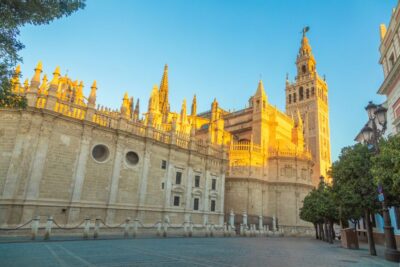
- Cathedral Area: What to Notice Before You Go Inside
- Real Alcázar of the Moors: Palace Energy in a Short Stop
- Entering Barrio Santa Cruz: Old and New Jewish Neighborhoods
- La Calle del Beso and Romantic Squares You Can Actually Find
- Price and Value: Is $47 Worth It?
- Language and Group Size: What to Expect in the Real World
- Practical Tips for a Smooth Medieval Walk in Seville
- Who Should Book This Tour (and Who Might Skip It)
- Should You Book the Seville Medieval Walking Tour?
- FAQ
- How long is the Seville Medieval Walking Tour?
- Where is the meeting point?
- What language is the live guide?
- Is the price $47 per person?
- Are entrance tickets included?
- Does the tour help you skip the ticket line?
- What should I bring?
- Is the tour wheelchair accessible?
- Is there a minimum number of adults for booking?
- What happens if there are delays or cancellations at monuments?
- Is free cancellation available?
Key highlights to look for
- A tightly timed route (75 minutes) that still covers the big medieval neighborhoods
- Santa Cruz Quarter focus, including the lanes people associate with romance
- Cathedral and Real Alcázar viewpoints explained as living power, not just monuments
- Legends and city origins, including Hispalis and Isbiliya
- Guide-led storytelling that invites questions (especially when the group is small)
A Fast Medieval Primer Through Seville’s Old Streets
If you like history, Seville can feel like a movie set—beautiful, but a little hard to sort out on your own. This tour helps you get your bearings fast by pairing two things that work together: medieval-era stories and the exact street-level details you’d otherwise miss.
I like that the emphasis isn’t only on buildings. You also learn the origin legends of Sevilla—Hercules founding it, then the name Hispalis under Roman domination, and Isbiliya during Arabic rule. And then you connect those early chapters to later international moments, including Seville’s role during the Ibero-American Exposition of 1929 and the Universal Exhibition of 1992. It’s not a lecture; it’s the kind of context that makes you understand why certain areas mattered.
One more reason this works: the route is built for walking. Seville’s medieval feel shows up best in the narrow streets and small squares. That’s where the guide points so you can feel the city’s layout instead of just staring at facades.
You can also read our reviews of more walking tours in Seville


Where You Meet at Plaza del Triunfo (and How the Walk Gets Going)
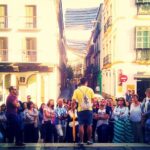
You meet at the foot of the Monument to the Immaculate, next to the Cathedral at Plaza del Triunfo. From there, your guide leads you into the historic core, in the general Cathedral–Real Alcázar area, and toward Barrio Santa Cruz.
Why the meeting point matters: you’re starting in the right zone. You’re not crossing town to begin the “medieval” part. You get immediate architecture context—big stone mass, street corridors, and the way the city funnels people between major sights.
Also, pay attention to timing. Being on time helps a short tour stay useful. This isn’t one of those experiences where the group can wander while the clock resets.
Cathedral Area: What to Notice Before You Go Inside
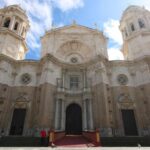
The tour centers on the Cathedral area—one of the largest cathedrals in the world—without pretending 75 minutes is enough to do a full interior visit. Instead, you get what I think is the better move first: you learn what the Cathedral represents in the city’s medieval identity and how the surrounding streets shape the experience.
You’ll likely spend time walking around the Cathedral zone while the guide ties in the city’s story. If you’re the type who enjoys photo moments, you’ll also understand what you’re photographing. It turns the Cathedral from a background landmark into part of a larger medieval map.
One practical note: entrance tickets aren’t included, even though the tour offers help with skipping the ticket line. That’s a good deal for your time, but you still have to plan for monument entry costs separately if you want to go in.
Real Alcázar of the Moors: Palace Energy in a Short Stop
Near the Cathedral area, you’ll also focus on the Real Alcázar of the Moors. This is one of those places where the building itself carries the message. The guide’s job here is to help you see the palace as a statement—power, prestige, and cultural overlap—rather than only as a visual highlight.
Even if you don’t enter on this specific stop, walking in the Alcázar orbit matters. The surrounding streets show how the palace sits in the urban fabric. You’ll feel the difference between open civic spaces and tighter medieval routes, which is exactly what makes Seville’s old core feel different from modern streets.
As a reality check, remember that the operator isn’t responsible for delays at monument entrances. If you decide to enter during your visit, plan for possible waiting on the spot.
Entering Barrio Santa Cruz: Old and New Jewish Neighborhoods
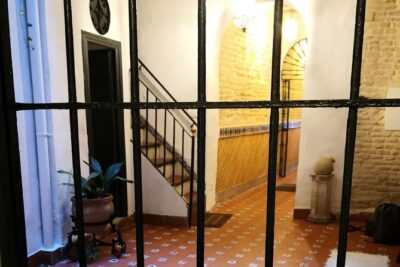
The heart of the tour is Barrio Santa Cruz—the famous Santa Cruz Quarter. This is where you get the medieval Seville mood: small lanes, subtle turns, and squares that feel made for lingering.
What I like here is the guide’s balance between “old” and “new” neighborhood framing. You’re not just being shown a themed postcard zone. You’re being walked through how the area is understood today while still tied to the medieval context that brought it into focus historically.
You’ll also learn how the Jewish Quarter fits into Seville’s broader timeline. When the guide connects the neighborhood to the legends and naming changes—Hercules to Hispalis to Isbiliya—you stop seeing Santa Cruz as isolated sightseeing and start seeing it as a chapter in a longer story.
In practical terms, this part of the tour is where Seville’s streets do the work for you. Comfortable shoes help a lot, because narrow lanes can mean lots of small steps and turns.





La Calle del Beso and Romantic Squares You Can Actually Find
One of the fun specifics on this walk is La Calle del Beso. The name alone pulls you in, but the bigger value is that the guide helps you place it in a working route through the quarter.
This is the kind of stop that’s great even if you’re not chasing folklore. It’s a quick “you’re here” moment that makes the whole neighborhood feel more coherent. You’re not wandering; you’re following a guided path where each turn makes sense.
Then you’ll move on to romantic squares—small open spaces where the city’s tight lanes suddenly give way to breathing room. These squares are where you’ll appreciate the contrast between medieval narrowness and the occasional open vista.
If you’re someone who likes to travel lightly through a city’s layout, this section is especially satisfying. You’ll likely remember the route long after you leave.
Price and Value: Is $47 Worth It?
At about $47 per person for a 75-minute guided walk, this is priced like a focused “see the essentials with context” experience. The value comes from three things:
First, you’re paying for a guide. Not generic commentary—legends, city naming history, and a guided way to interpret the Cathedral and Alcázar zones and the Santa Cruz quarter.
Second, you’re paying for time efficiency. With skip-the-line support for monument entry, you’re less likely to lose your precious sightseeing hours to queues—assuming you’re planning to enter monuments.
Third, you’re buying a curated route that’s short enough to fit into a busy day. This tour works as a first pass, not a replacement for long museum time. If you already plan to return later for deeper time, the tour becomes a high-value orientation.
The main cost consideration is what isn’t included: entrance tickets. If you want to go inside the big monuments, budget for those separately. That doesn’t make the tour “expensive,” but it does mean your day’s total spending will depend on how many interiors you choose.
Language and Group Size: What to Expect in the Real World
The guide language is Spanish. On some occasions, the tour could be conducted in two languages, but you shouldn’t count on that. If you speak basic Spanish—or you’re comfortable with a slower pace for explanations—you’ll get more out of the stories and the architectural pointers.
On the positive side, the reviews highlight strong guiding energy. One traveler specifically praised a guide named Sara for being engaging and knowledgeable, and for giving plenty of time for questions when the group was small. Another review praised a guide’s good English and conversational friendliness. Translation: when the group is small, you can get a more personal, Q-and-A style experience.
The only real caution is that group dynamics can change. A short tour plus a language mix can make the experience feel smoother or less smooth depending on the day.
Practical Tips for a Smooth Medieval Walk in Seville
This tour asks for a simple setup: comfortable shoes and water. Take that seriously. Seville’s historic center can be a mix of uneven pavement and tight lanes, and your feet will notice if you choose footwear that looks good but isn’t supportive.
A few more practical ideas that help:
- Plan your day so you’re not racing from the tour to your next major stop. The route ends with you in a great location to continue exploring.
- Bring water and pace yourself. Squares and lane turns create lots of stop-and-look moments, even if the tour keeps moving.
- If you want interior monuments, decide ahead of time which ones matter most. Because tickets aren’t included, you’ll save time by choosing your priorities before you get to the entrances.
Also, be aware of itinerary changes as a possibility. If force majeure or special circumstances prevent visiting a site, your guide will choose another similar location and inform you at the beginning of the tour.
Who Should Book This Tour (and Who Might Skip It)
Book it if:
- You want a quick, street-level introduction to Seville’s medieval neighborhoods
- You like your history tied to specific places, not just dates
- You want to walk away with a mental map of Cathedral, Real Alcázar, and Santa Cruz
Skip it (or think twice) if:
- You need a long, inside-the-museum experience. This is 75 minutes, built for walking and orientation.
- You don’t want Spanish-led guidance and you’re relying on English all the time. Two-language operation can happen, but it isn’t guaranteed.
This tour is a strong match for first-timers and for anyone doing Seville in a time crunch. It also works well as your morning or early afternoon foundation, when you still have energy to explore on your own afterward.
Should You Book the Seville Medieval Walking Tour?
I’d book it if you want a guided way to understand why Seville’s old center feels the way it does. For $47, you’re not just paying for a route—you’re buying a story-driven walk that connects legendary origins (Hercules, Hispalis, Isbiliya) to the streets you’ll actually walk.
Do it if Santa Cruz, Cathedral-area sights, and the Real Alcázar zone are on your must-see list, and you’re willing to handle entrance tickets separately. If you speak Spanish (or can handle some language variability), you’ll likely get the most out of the guide’s storytelling.
If you want a calm, flexible sightseeing day and you enjoy street-level exploration, this is one of the better “first pass” tours in Seville.
FAQ
How long is the Seville Medieval Walking Tour?
The duration is 75 minutes.
Where is the meeting point?
Meet your guide at the foot of the Monument to the Immaculate, next to the Cathedral at Plaza del Triunfo, Seville.
What language is the live guide?
The tour has a live guide in Spanish. On some occasions, the tour could be conducted in two languages.
Is the price $47 per person?
Yes, the price is listed as $47 per person.
Are entrance tickets included?
No, entrance tickets are not included.
Does the tour help you skip the ticket line?
Yes, it includes skip-the-ticket-line support, but you’ll still need to have tickets for the sites.
What should I bring?
Wear comfortable shoes and bring a bottle of water.
Is the tour wheelchair accessible?
Yes, it is listed as wheelchair accessible.
Is there a minimum number of adults for booking?
Yes. A minimum of 2 adults per booking is required, and children must be accompanied by 2 adults minimum.
What happens if there are delays or cancellations at monuments?
The operator is not responsible for delays at the entrance to monuments. If force majeure or special circumstances prevent visiting sites, the guide will choose another similar location and inform you at the beginning of the tour.
Is free cancellation available?
Yes. You can cancel up to 24 hours in advance for a full refund.