REVIEW · SEVILLE
Seville: Spanish Cooking Class with Dinner
Book on GetYourGuide →Operated by Taller Andaluz de Cocina -Cooking School · Bookable on GetYourGuide
A good dinner in Seville is easy to find, but learning how to cook it? That’s the treat. This chef-led Spanish cooking class turns Triana Market into your kitchen, and you’ll leave with a real paella (plus starter, tapas-style bites, and dessert) you helped make. It’s hands-on, social, and built for a wide range of skill levels.
I love that you’re not just watching—you’ll cook—then you sit down and eat what you made with drinks. Two other big wins: the setting at Triana Market (easy to reach and lively) and the way the chefs keep things fun, interactive, and practical (names like Carlo, Leo, and Pedro show up often in the class experience). One thing to consider: it’s a group format, so you’ll share tasks and sometimes rotate through steps rather than doing every single action by yourself.
In This Review
- Quick Takeaways Before You Go
- Triana Market Meeting Point: Stalls 75–77 in Triana
- A 3-Hour, Chef-Led Evening in English
- Starter Choice: Salmorejo or Gazpacho (Chilled and Practical)
- Tapas-Style Dishes: Spinach with Chickpeas and Egg Options
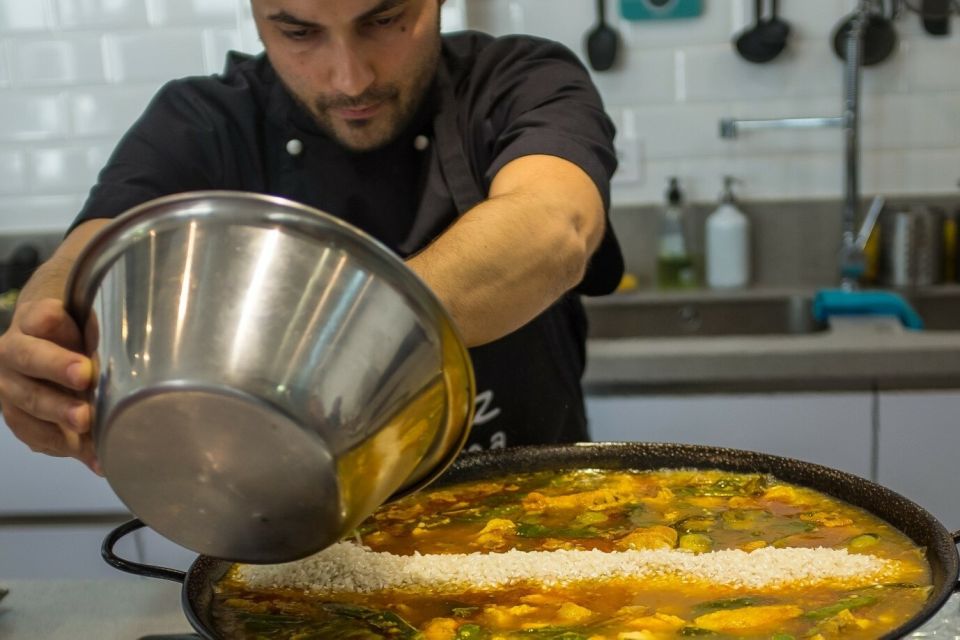
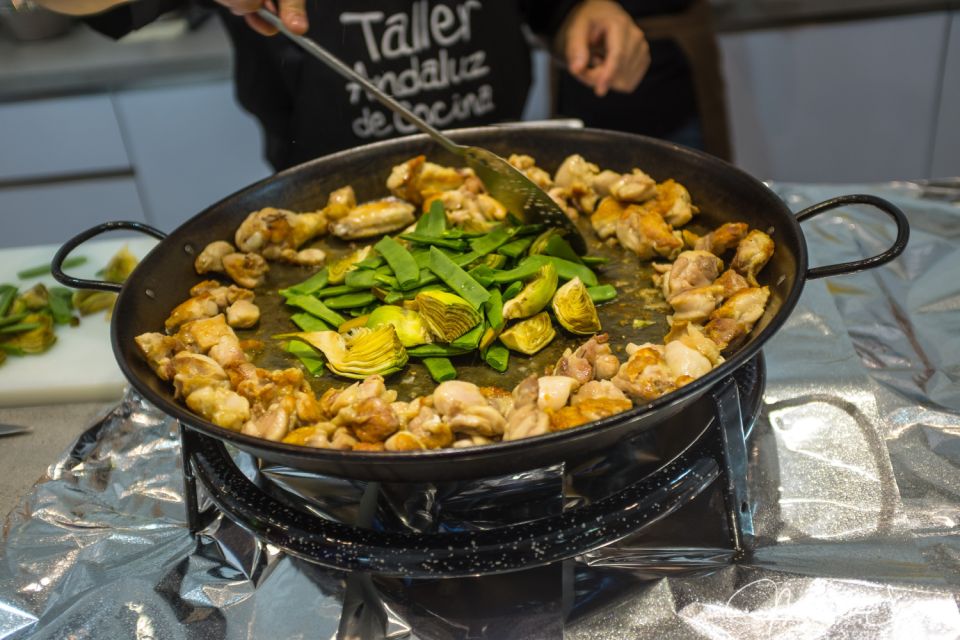
- The Main Event: Valencian Paella with Chicken and Seasonal Vegetables
- Dessert That Actually Ends the Meal: Lemon Sorbet and Cava
- Drinks Included: Sangria During Cooking and Two Drinks with Dinner
- Price and Value: What $82 Really Buys You
- Who This Seville Cooking Class Fits Best
- Should You Book This Cooking Class in Seville?
- FAQ
- What dishes do we cook and eat?
- Where is the meeting point?
- How long is the class?
- Is the class taught in English?
- What drinks are included?
- Can the menu be adapted for dietary restrictions?
- Do I get recipes to take home?
Quick Takeaways Before You Go
- Triana Market meeting point: meet at stalls 75–77 on Plaza del Altozano, right where the action is.
- English instruction: the class runs in English, so you’re not stuck translating while you cook.
- A full meal you make: chilled starter, tapas-style dishes, Valencian paella, and lemon sorbet with Cava.
- Drinks are part of the night: sangria while you cook plus two additional drinks with dinner.
- You’ll learn technique, not just recipes: chefs explain what to do and why, and you can ask questions about Spanish food and culture.
- Group energy, shared work: you’ll participate, but expect a mix of doing and observing as dishes come together.
Triana Market Meeting Point: Stalls 75–77 in Triana
Your evening starts in Triana Market, one of the most convenient neighborhoods in Seville to wander and snack. The meeting point is specific: stalls 75–77 at Plaza del Altozano. Show up a bit early so you’re not trying to match faces while people are grabbing ingredients and moving around.
This location matters more than you’d think. Because the class begins inside the market zone, it gives you an immediate sense of how Seville food actually lives—ingredients are visible, the vibe is local, and you’re already in eating mode before you ever touch a knife. For first-time visitors, this is a fast way to get your bearings.
If you want a quiet, candlelit dinner, this isn’t that. The market setting brings noise and bustle, and the cooking school environment tends to be lively.
You can also read our reviews of more cooking classes in Seville

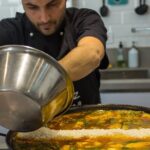
A 3-Hour, Chef-Led Evening in English
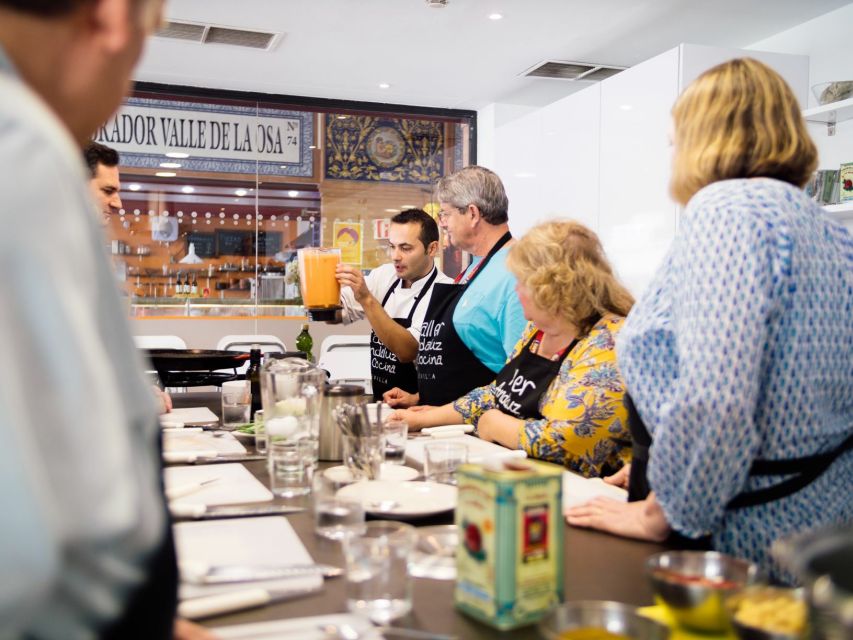
The class runs about 3 hours, led by a professional chef and taught in English. That timing is a sweet spot: long enough to learn multiple dishes, short enough that you’re still free for evening plans after dinner elsewhere in Seville.
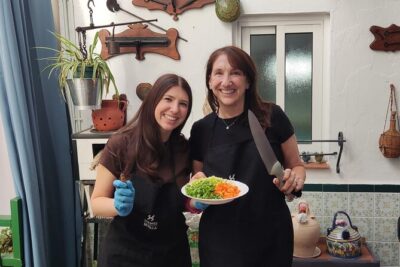
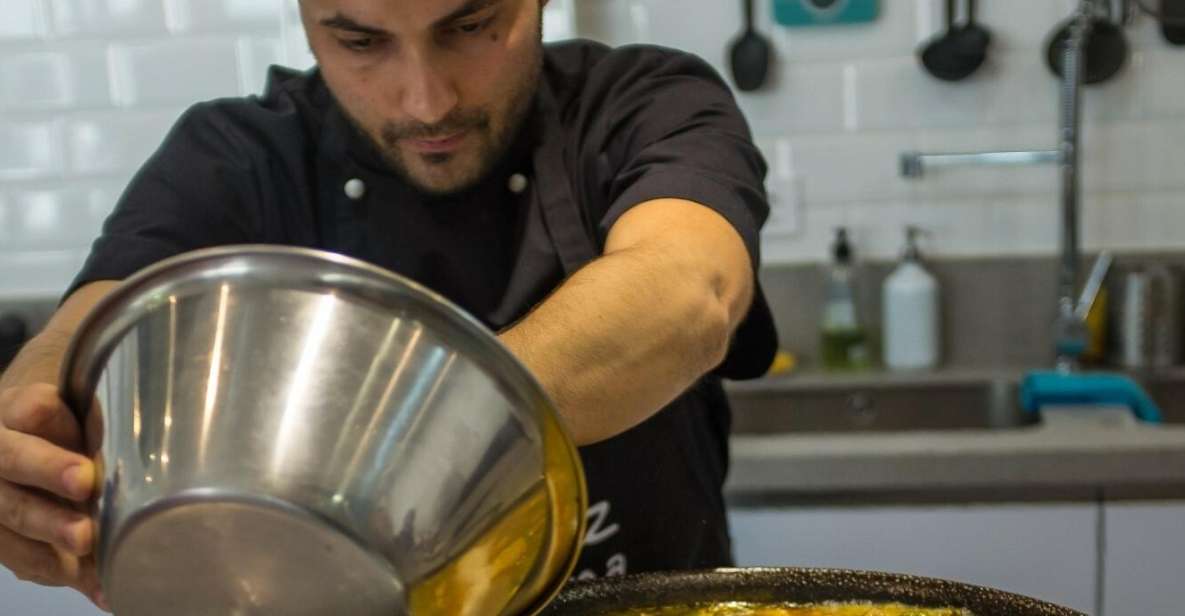
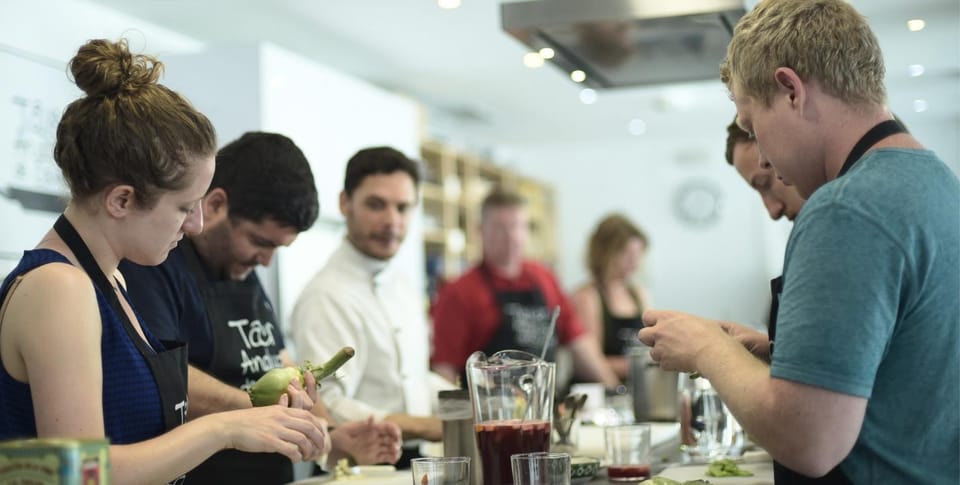
Expect the chef to guide you step-by-step, with an interactive pace. Many participants highlight instructors who bring a mix of pro-chef technique and humor—so even if you’re a beginner, you’re not going to feel lost. And if you’ve cooked before, you’ll still pick up useful methods (how to handle components, how to balance seasoning, and how to time tasks so things don’t fall behind).
Group size is usually small. Some classes are described as around 10 people, which helps. You’re more likely to get personal attention, but you’re still in a social setting where you’ll work with others.
Starter Choice: Salmorejo or Gazpacho (Chilled and Practical)
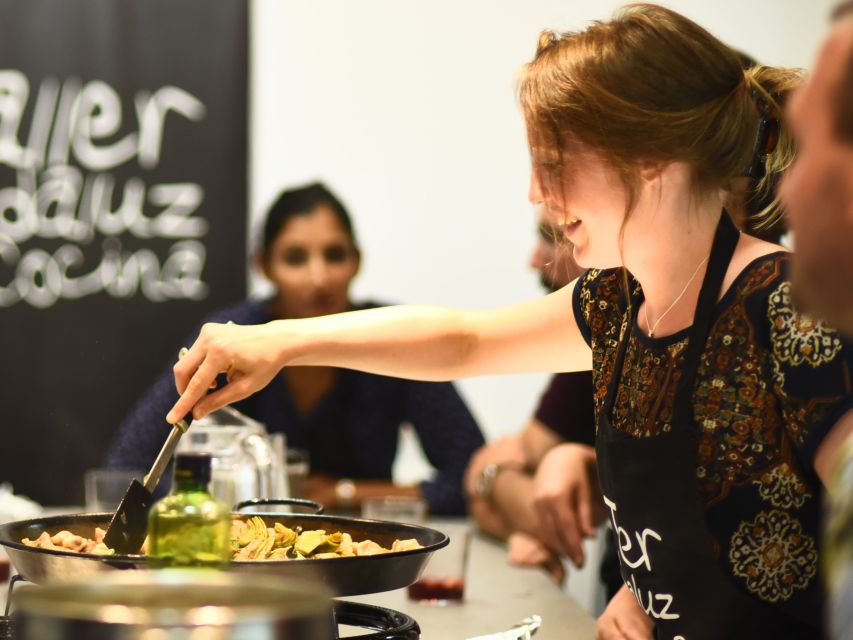
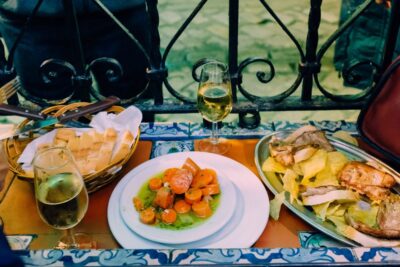
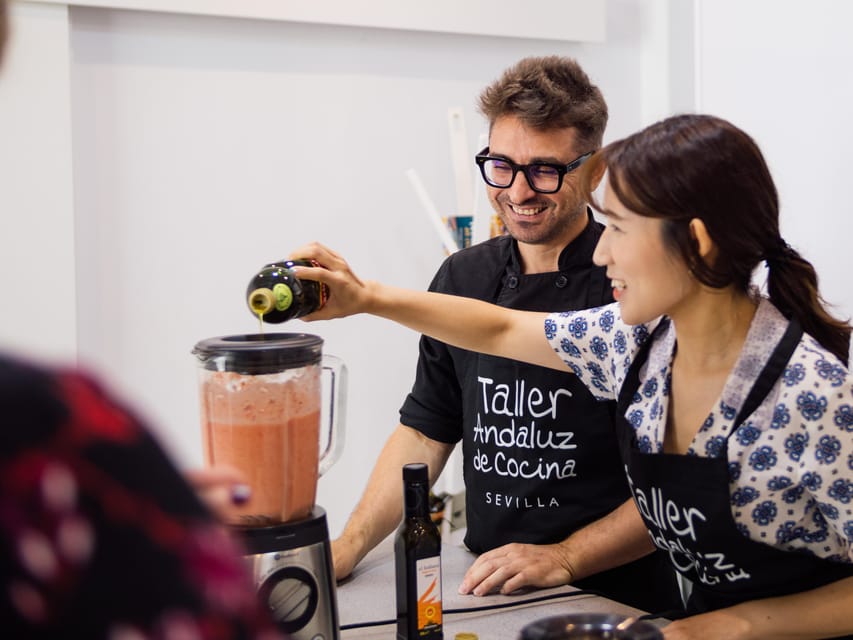
You’ll begin with a chilled starter, chosen from salmorejo (thick, tomato-forward) or gazpacho (more liquid, lighter). This is smart teaching because both are “no heat stress” dishes. You can focus on texture, flavor balance, and the process of turning fresh ingredients into something that tastes like it came from a Spanish kitchen—not a classroom worksheet.
What I like about this start for you: it’s forgiving. Even if you’re brand new to cooking, you can still help make something that lands well right away. It also sets expectations for Spanish cuisine in southern Spain: fresh ingredients, bold seasoning, and dishes built for hot weather.
The chef’s job here is to show you the right consistency and how to season thoughtfully. You’ll also get a feel for how Spaniards eat—starter first, then tapas-style bites, then the main event.
Tapas-Style Dishes: Spinach with Chickpeas and Egg Options
After the starter, you’ll move into typical Spanish tapas-style cooking. The menu includes a classic vegetarian option: spinach with chickpeas. That combination is a real lesson in comfort food structure—earthy legumes plus greens—so you learn how to build flavor in a simple dish.
Then you’ll likely tackle an egg-based choice, such as:
- huevos a la flamenca, or
- a Spanish omelet (tortilla-style)
Egg dishes can look intimidating, but a good chef makes them manageable. The teaching focus is on timing and technique—how to handle heat, how to know when it’s set, and how to avoid common problems like overcooking or uneven texture.
A key practical point: because this is a shared class, you may not be the only person doing every step. Still, you’ll get a real role and learn the logic behind the method. If you like cooking with others—hands moving, questions flying, music on in the background—this part is where the energy really clicks.
The Main Event: Valencian Paella with Chicken and Seasonal Vegetables
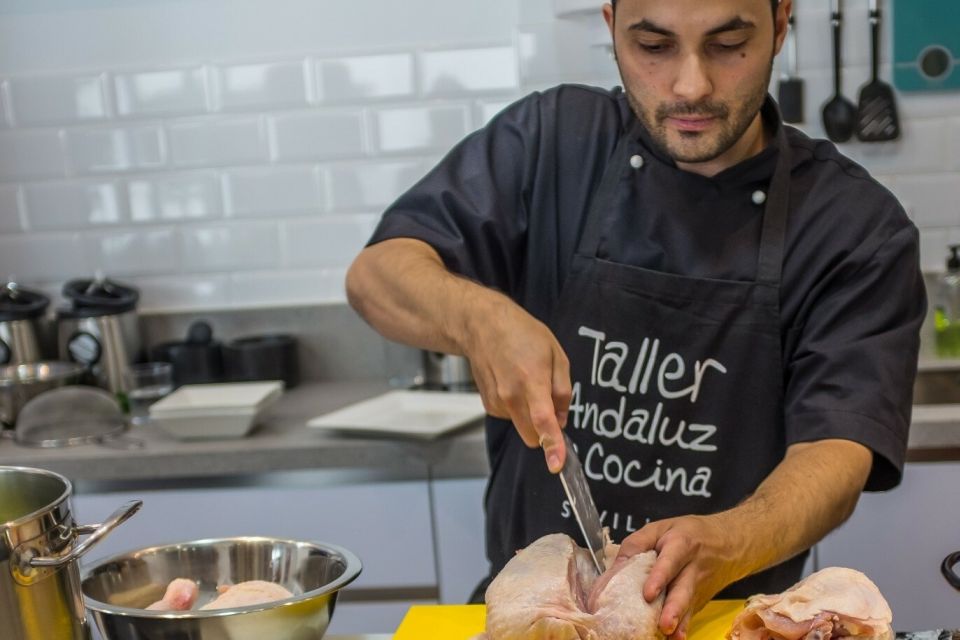
The centerpiece of the menu is Valencian paella with chicken and seasonal vegetables. Paella is the dish most people come for, and it’s also a great choice for a class because it forces you to pay attention to timing and flavor building.
In a 3-hour format, you’re not trying to create restaurant-level perfection from scratch. Instead, you learn the essentials: how to approach the ingredients, how to season, and how to keep the process moving so the pan ends up right. When a chef is doing this well, paella becomes less mystical and more repeatable.
From the class vibe described here, instructors often teach small professional secrets—like how to prep ingredients efficiently, how to keep a smooth workflow, and how to explain what you’re doing as you do it. People also mention learning more than just steps, including method and context behind the dish. That’s valuable if you want to cook again at home instead of just collecting memories.
One more thing: paella in this setting is communal. You’ll likely participate in prep and cooking, but you’ll also see how the chef coordinates the pan so everyone gets a turn. That’s part of the fun, and it keeps things on schedule.
You can also read our reviews of more tours and experiences in Seville



Dessert That Actually Ends the Meal: Lemon Sorbet and Cava
For dessert, you’ll make a light finish: lemon sorbet with Cava. This is a clever pairing. Sorbet resets your palate after savory dishes, and the Cava adds a celebratory, slightly bready sparkle without turning dessert into something heavy.
It’s also a nice moment to slow down. By the time dessert arrives, you’ve already handled the main cooking tasks. So you can enjoy the sweet part without needing to concentrate on technique like you did with starters or paella.
If you’re someone who prefers balance—fresh, not sugary—this ending fits.
Drinks Included: Sangria During Cooking and Two Drinks with Dinner
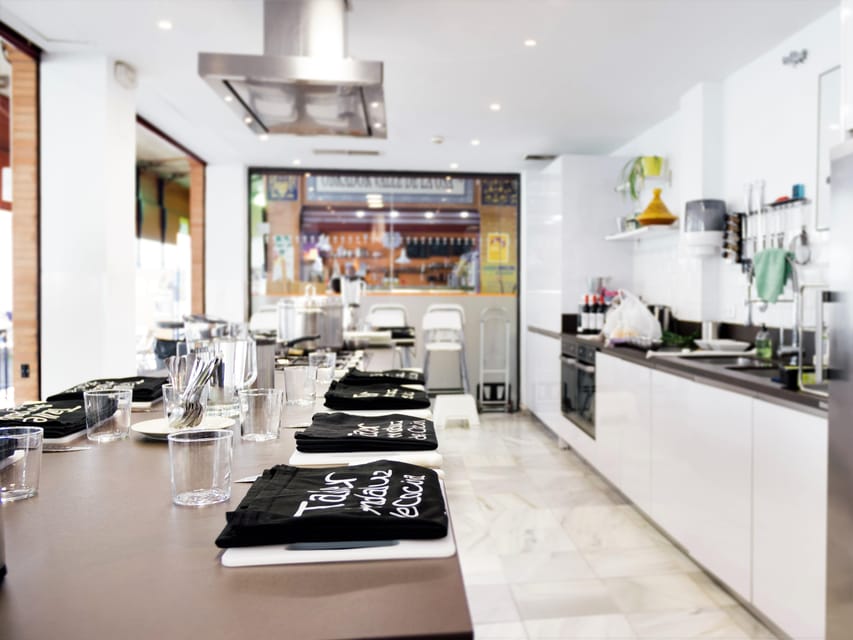
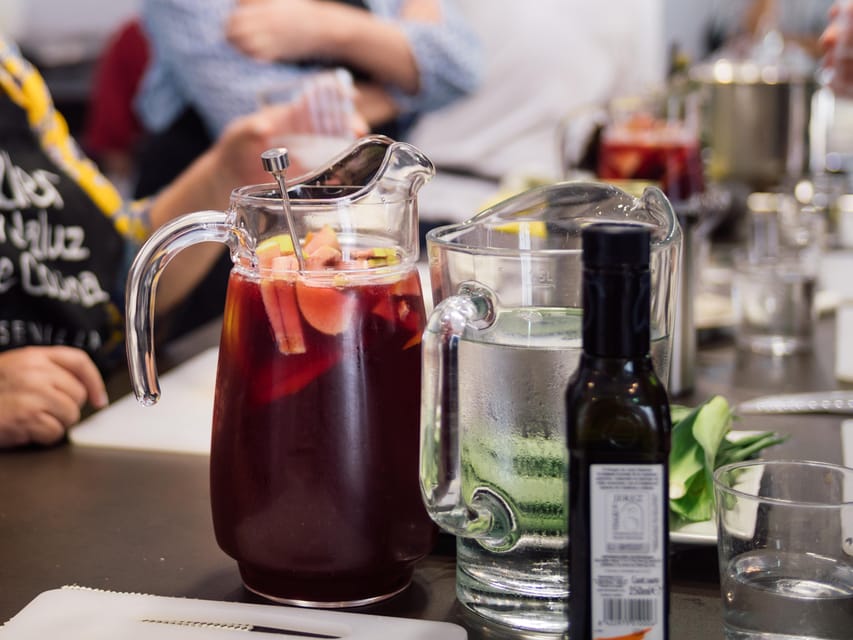
Let’s talk about the drinks, because this is part of the experience. Sangria is served while you cook, helping set a social pace as you go from chopping to stirring to tasting. Then, with your dinner meal, you’ll get two additional drinks—white or red wine, local beer, or soft drinks.
This matters for value. A $82 price tag can feel high if you’re only thinking about cooking instructions. But once you factor in a full dinner, the ingredients, chef time, and multiple drinks, the math changes. You’re not paying extra for “one dish and a sip of something.” You’re paying for a complete evening meal experience.
Important note for your planning: since alcohol is involved, this is best for a relaxed evening. If you’re trying to stay strictly sober or avoid alcohol completely, you can plan to choose soft drinks when available—but dietary and drink preferences should be handled when you book.
Price and Value: What $82 Really Buys You
At $82 per person for 3 hours, you’re paying for three things at once:
- a guided, hands-on cooking experience,
- the ingredients and equipment (apron included),
- and a full sit-down meal with drinks.
That’s why this class can feel like better value than doing dinner on your own and then trying to find a standalone cooking workshop. You get both the learning and the payoff plate, and you’re not scrambling to source ingredients or figure out timing.
The other value angle is social. This class is set up to help you meet people from different places and share tasks at the same time. If you’re traveling solo, this can turn an evening into something more memorable than yet another tapas crawl.
Who This Seville Cooking Class Fits Best
This is a strong fit if you:
- want an intro to Spanish home-style cooking without worrying about complicated prep,
- like hands-on learning more than museum-style sightseeing,
- enjoy group meals and don’t mind a lively atmosphere,
- want English instruction for comfort and clarity,
- and are paella-forward, meaning you want the dish but also want to understand how it’s built.
It’s less ideal if you:
- want a private chef experience with no sharing,
- need a totally quiet, low-energy setting,
- or are extremely picky about hands-on mixing and cooking (because it’s a shared workflow, not one person per dish).
Should You Book This Cooking Class in Seville?
Yes—if you want a real “learn, cook, eat” evening in Seville. The Triana Market location is a great start, the menu hits the core of southern Spanish cooking, and the format is built for mixed skill levels. Add in the drinks and the fact that you eat what you make, and you get a night that feels like you earned it.
Before you book, do one quick check: think about whether you’ll enjoy a social, interactive class environment. If you’re in the mood for fun, food, and a practical takeaway for cooking at home, this is a very solid use of time.
FAQ
What dishes do we cook and eat?
You’ll prepare a chilled starter (salmorejo or gazpacho), tapas-style dishes such as spinach with chickpeas and either huevos a la flamenca or a Spanish omelet, a Valencian paella with chicken and seasonal vegetables, and a light dessert of lemon sorbet with Cava.
Where is the meeting point?
Meet at stalls 75–77 in Triana Market on Plaza del Altozano.
How long is the class?
The experience lasts about 3 hours.
Is the class taught in English?
Yes, the cooking class is in English.
What drinks are included?
You’ll have sangria while you cook, plus two extra drinks with your meal (white or red wine, local beer, or soft drinks).
Can the menu be adapted for dietary restrictions?
Yes. The recipes can be adapted for dietary restrictions, and you should advise in advance if you need a menu change.
Do I get recipes to take home?
Many participants note that recipes are shared by email after the class, so you might receive the instructions for recreating the dishes at home.