REVIEW · SEVILLE
Casa de Salinas Entry Ticket with Audio Guide
Book on GetYourGuide →Operated by CASA DE SALINAS (Servotel) · Bookable on GetYourGuide
Seville has a smaller Alcázar-like secret. Casa de Salinas turns the spotlight on Mudéjar plasterwork arches and a Roman mosaic in a privately owned home setting, not a big-ticket palace show. If you’ve already done the Alcázar, this feels like the same vibe—more intimate, with details you can actually take your time with.
What I really like is that you’re stepping into a privately-owned mansion where the family still resides, so the place feels lived-in, not staged. The main consideration is that the audio tour is only 25 minutes, so it’s best for people who want a crisp hit of architecture rather than a long, slow wander.
In This Review
- Key highlights you’ll care about
- Casa de Salinas: Why this private mansion feels different
- The 25-minute audio tour that keeps your day moving
- Entering the 16th-century patios with Mudéjar plasterwork arches
- The Roman mosaic and the decor that breaks expectations
- Winter and summer drawing rooms with painted wooden ceilings
- Warm welcome and a well-made audio guide
- Where this fits in your Seville day plan
- Price and value: What $14 buys you (and what it doesn’t)
- Who should book Casa de Salinas
- Should you book this Casa de Salinas ticket?
- FAQ
- How long is the Casa de Salinas audio-guided experience?
- Does the ticket include the audio guide?
- Which languages are available for the audio guide?
- Is there a way to skip the ticket line?
- Where is the meeting point?
- Is Casa de Salinas wheelchair accessible?
- Who owns Casa de Salinas?
- What’s the cancellation policy?
Key highlights you’ll care about
- A micro-version of the Alcázar in the same Seville “palace mood,” but on a smaller scale
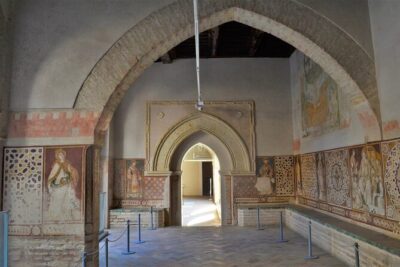
- 16th-century patios with Mudéjar plasterwork arches that reward slow looking
- A Roman mosaic showing Bacchanalian shenanigans, a real curveball in a Renaissance-era house
- Original ceramic tiles and preserved decorative details that feel more authentic than replicas
- Winter and summer drawing rooms with exquisitely painted wooden ceilings
Casa de Salinas: Why this private mansion feels different
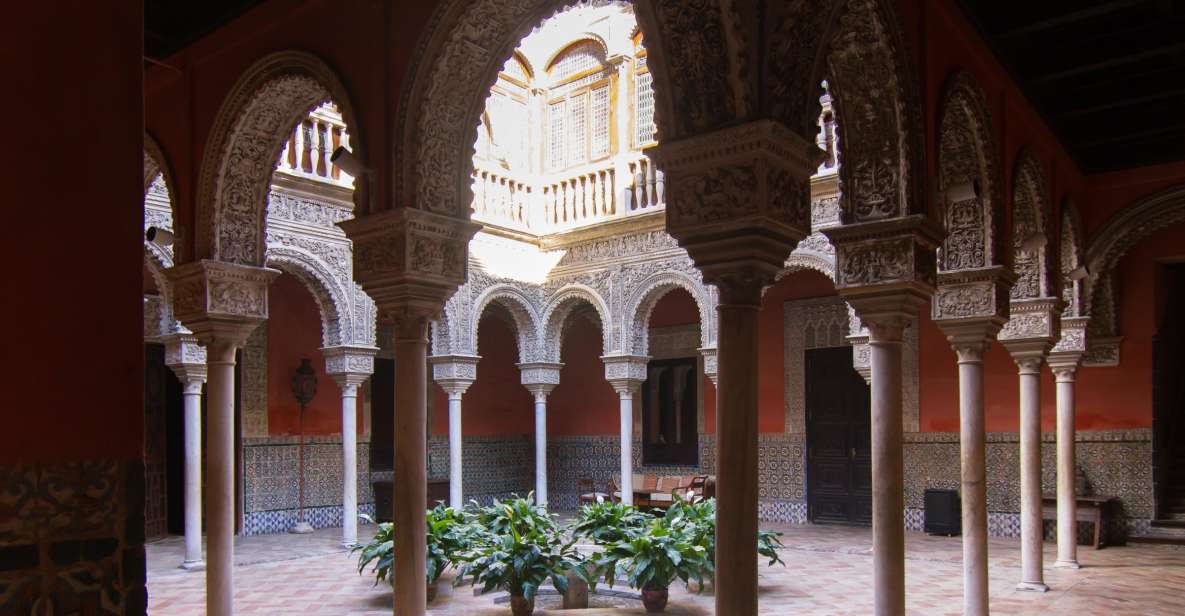
Casa de Salinas sits in Seville’s monumental Old Town, extremely close to the cathedral and La Giralda, and also near Los Reales Alcázares. That location matters, because you’re not going to feel trapped in a far-off attraction. You can treat this like a smart stop in the middle of your sightseeing day.
The biggest difference is the ownership. Like other famous Seville houses such as Casa de Pilatos, Palacio de Lebrija, and Palacio de Las Dueñas, Casa de Salinas is privately owned and still home to a family. That changes the atmosphere. The experience tends to feel calmer and more personal than the big public sites, even though you’re still getting major 16th-century architecture.
Casa de Salinas is also a great option if you’ve already seen the Alcázar. This is a smaller cousin in spirit—ornate, decorative, and heavy on courtyard life—but it won’t copy the same exact route and scenes. You’ll get a fresh set of visual ideas without repeating the whole day’s highlight.
You can also read our reviews of more tours and experiences in Seville



The 25-minute audio tour that keeps your day moving
The ticket includes an audio guide, and the visit centers on a roughly 25-minute guided experience. You get Spanish, English, French, and Italian. In practice, that’s a comfortable length in Seville, where midday heat can make long indoor queues and slow galleries feel exhausting.
The audio guide format also helps you get more out of the house without being stuck with a rigid group pace. If you want to pause to look closely at a plaster arch or a tile pattern, you can usually do that without turning the whole plan into a marathon.
Two practical points that help: the ticket is set up to skip the ticket line, and the entry is valid for one day with starting times you can choose based on availability. If you’re trying to stitch together a day around the cathedral area, that time flexibility is valuable.
Entering the 16th-century patios with Mudéjar plasterwork arches
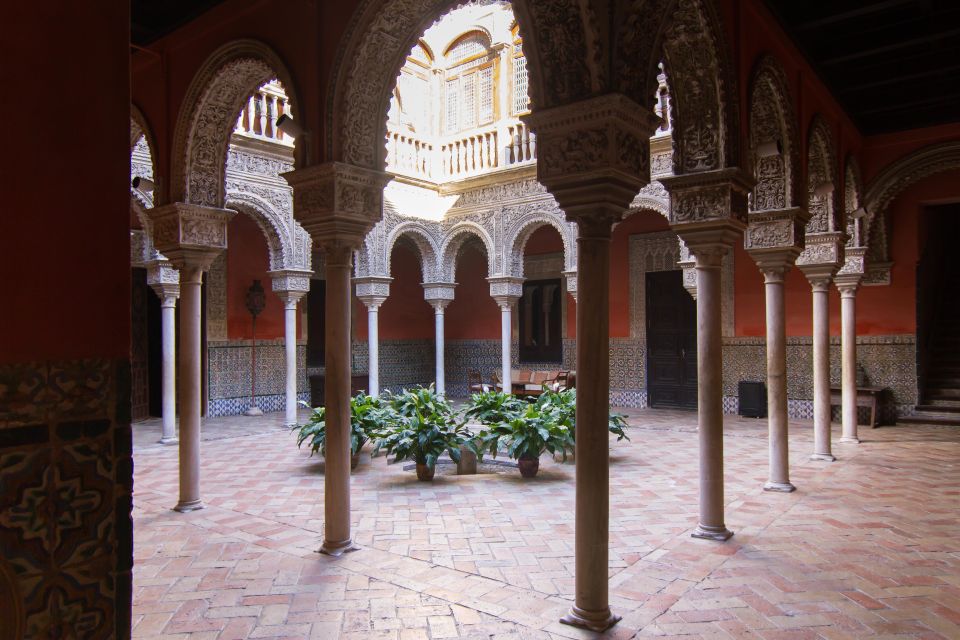
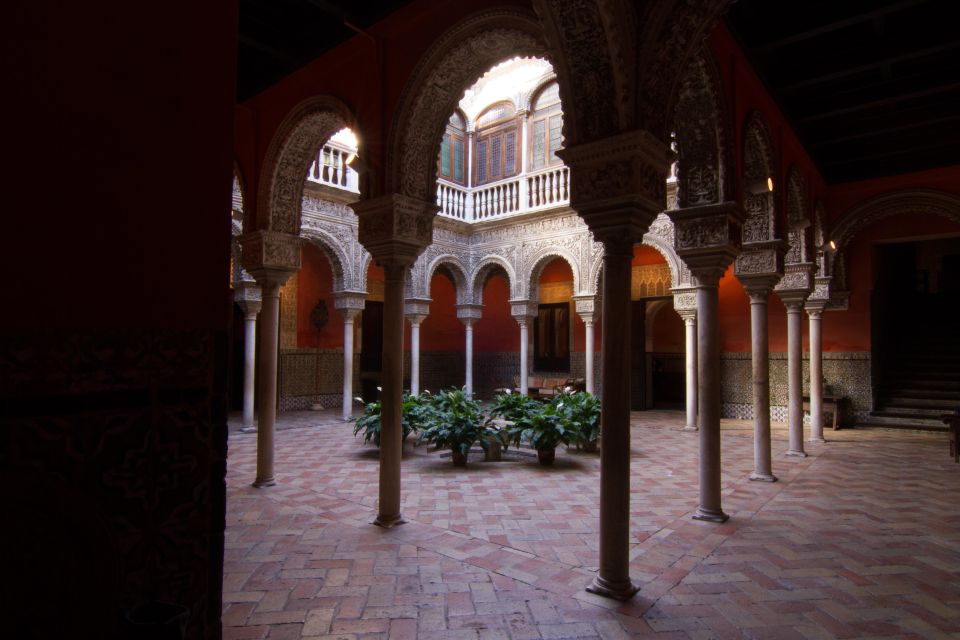
The patio is where Casa de Salinas flexes. You’ll see 16th-century patios and some of the standout design comes from Mudéjar plasterwork arches. This is the style blend Seville is famous for—where Gothic, Renaissance, and Mudéjar design language can sit side by side without feeling forced.
Why that matters for you as a visitor: Mudéjar work is all about detail and pattern. In a courtyard, those details frame the light. You’ll often notice more by looking up and around slowly than by rushing from wall to wall.
This is also where the big historical context of Seville helps you understand what you’re looking at. In the 16th century, Seville was described as the most important city in Europe. The city’s port brought the riches of the New World, and those fortunes spread across the continent. The house was built in that setting, when it was called Nova Roma for its splendor and attracted leading Italian and Flemish artists.
You don’t need to memorize that story to enjoy the building, but it does explain why the architecture feels so intentionally ornate. The patios, arches, and decorative surfaces weren’t built just to impress—they were built to signal status in a city that had become a magnet for top talent.
The Roman mosaic and the decor that breaks expectations
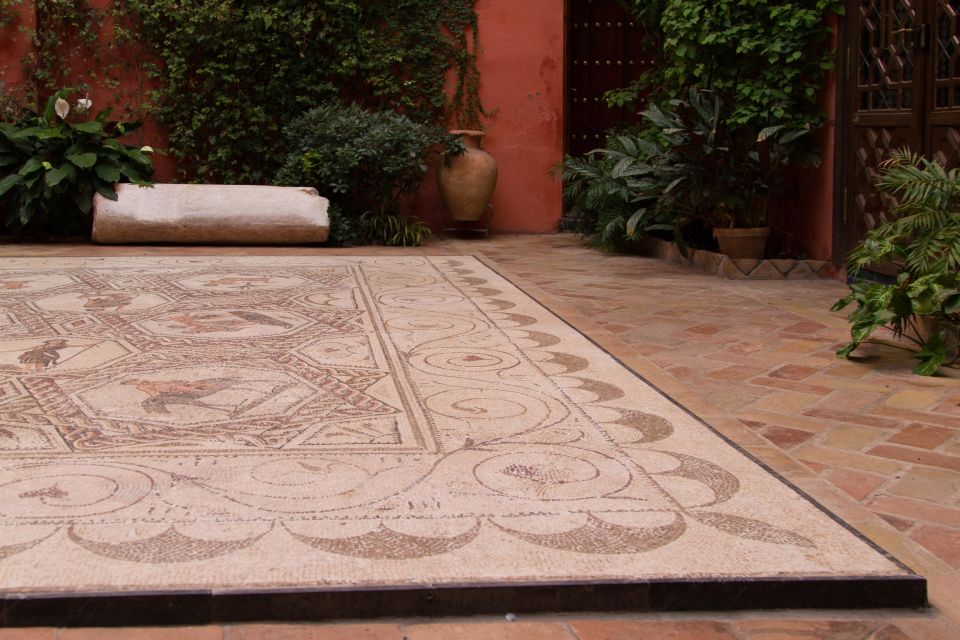
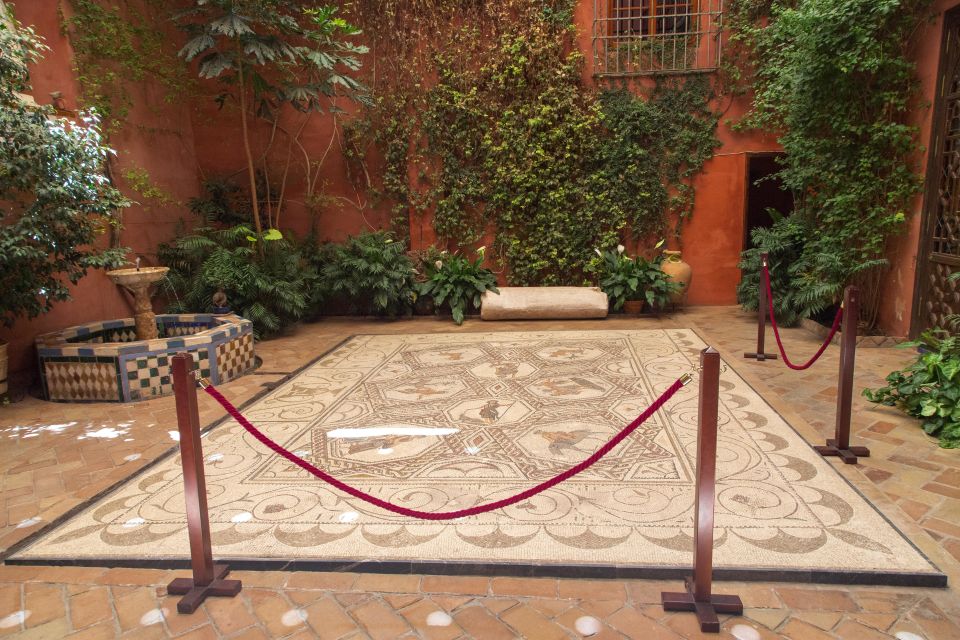
One reason Casa de Salinas works even for people who think they’ve seen everything is the Roman mosaic inside. You’re looking at a Roman scene with Bacchanalian shenanigans, which is a fascinating contrast in a home dominated by 16th-century style.
This mosaic is the kind of detail that can make the visit click. It gives you a “wait, what?” moment—like finding a time-jump artifact in the middle of a Renaissance house. If you’re the type who loves figuring out why objects and styles show up together, this portion is a highlight.
Beyond the mosaic, you’ll also see original ceramic tiles. Tiles in Andalusian houses are more than decoration; they shape how light hits the room and add that layered, lived-with-for-centuries texture. Even if you don’t catch every historical explanation from the audio guide, you can still appreciate the craft and preservation.
Winter and summer drawing rooms with painted wooden ceilings
Casa de Salinas doesn’t just show you outdoor beauty. You also step into areas that were meant for everyday life in different seasons. The house includes the family’s winter and summer drawing rooms, with exquisitely painted wooden ceilings.
This is the part where the privately owned feel really pays off. You’re not only viewing architecture as an object; you’re seeing how space was organized for comfort. In Seville, where seasons can shift how people use interiors, having distinct rooms for different weather is practical—and it makes the house feel intelligently designed.
When you’re inside, don’t just look at the walls. Tilt your attention upward to the ceilings. The audio guide tends to help you notice what you might otherwise miss, especially in a place like this where the decoration isn’t huge and loud—it’s careful and detailed.
This stop also works well if you’re tired of “one big hall” palaces. Drawing rooms are smaller, more human-scale, and they help you imagine the daily rhythm of the household.
You can also read our reviews of more guided tours in Seville





Warm welcome and a well-made audio guide
The audio guide is part of the ticket, and it matters that it’s actually helpful. The experience is short, so the audio has to do real work: explain what you’re looking at, point your attention to key features, and keep the flow moving.
You’ll also benefit from the fact that the house is still functioning as a home. That tends to create a warmer, more respectful atmosphere. One visitor described a warm welcome, and that matches the overall feel you’re aiming for: a historic home you enter carefully, not a theme park.
If you prefer tours where you can listen, pause, and look at details at your own speed, this setup is a good fit. If you need a fully guided walking tour for every room, the audio-only format might feel lighter than you expect.
Where this fits in your Seville day plan
Casa de Salinas is located two steps from the cathedral and La Giralda, and close to Los reales Alcázares. That makes it easy to place between big-ticket stops.
A smart way to use it:
- Start with a major anchor sight (cathedral or Alcázar complex).
- Then treat Casa de Salinas as a “detail break” where you slow down for courtyards, arches, tiles, and ceilings.
- Finish nearby while you’re already in the historic core.
Because the guided portion is about 25 minutes, you’re not locking yourself into an all-day commitment. You can keep energy for other sites, plus time for wandering side streets, which is where Seville often surprises you.
Price and value: What $14 buys you (and what it doesn’t)
At about $14 per person, Casa de Salinas is priced for people who want high-quality architecture without the cost or time of a massive guided mega-attraction. You get two key elements: entrance and an audio guide. You also get skip the ticket line, which can be a real time-saver in this part of town.
So is it worth it? I think it’s good value if:
- You already saw the Alcázar and want a different angle.
- You care about patios, arches, tiles, and interior decoration.
- You like audio guides that tell you what to look for in a short, focused window.
It may feel less worth it if:
- You want a long, guided walk with lots of rooms and extended commentary.
- You’re expecting a huge public palace experience. This is more of a concentrated “house visit,” not a sprawling complex.
For most people staying in the central Old Town, the real value is convenience plus the chance to see a preserved private residence with major decorative features.
Who should book Casa de Salinas
This ticket fits best if you’re into:
- Architecture and interior details, especially Mudéjar styling and courtyard design
- People who want a smaller-scale alternative to the Alcázar
- Visitors who like historic homes where the setting feels human, not purely theatrical
It’s also described as wheelchair accessible, which is a useful note if you need step-free comfort in historic areas.
If you’re traveling with limited time, the short guided format helps. If you’re traveling at a pace where you like to dip into places between longer stops, this works well.
Should you book this Casa de Salinas ticket?
I’d book it if you want a focused, high-detail Seville experience in a privately lived-in mansion setting. The combination of Mudéjar plasterwork arches, a Roman mosaic, original ceramic tiles, and winter/summer drawing rooms gives you variety without turning your day into a checklist.
Pass on it if you need a long guided tour or if you’re only satisfied by the biggest, grandest palace-sized experiences. Casa de Salinas is intentionally smaller, and the payoff comes from close attention, not from volume.
If you’re in the cathedral–Giralda–Alcázar triangle and you’ve already hit the Alcázar once, this is one of the best ways to keep your architecture day fresh.
FAQ
How long is the Casa de Salinas audio-guided experience?
The tour is designed around a 25-minute audio guided visit.
Does the ticket include the audio guide?
Yes. The entrance ticket includes an audio guide.
Which languages are available for the audio guide?
The audio guide is available in Spanish, English, French, and Italian.
Is there a way to skip the ticket line?
Yes, the experience includes skip-the-ticket-line entry.
Where is the meeting point?
The meeting point is Casa de Salinas, Calle Mateos Gago, 39, 41004 Sevilla, Spain.
Is Casa de Salinas wheelchair accessible?
Yes, it is wheelchair accessible.
Who owns Casa de Salinas?
It is a privately owned mansion, and the family still resides there.
What’s the cancellation policy?
Free cancellation is available up to 24 hours in advance for a full refund.