REVIEW · SEVILLE
Complete Triana Tour “Corrales included”
Book on Viator →Operated by Sevilla&ME · Bookable on Viator
Triana teaches you Seville fast. This 2-hour guided walk is packed with riverside views, chapel stops, and hands-on neighborhood culture in Triana, including the corrales/patios vibe. I especially like how the route connects big landmarks like Torre del Oro with intimate details—ceramic workshops, tiled courtyards, and the little squares where locals actually meet. One consideration: the walk is weather-dependent, and Torre del Oro has an admission ticket that’s not included.
I also love the value here: at $9.49 per person, you get a lot of ground covered with mostly no extra entry fees along the way. The group stays small (up to 30), and you’ll use a mobile ticket. Do note there’s been at least one reported problem where a guide didn’t show up, so keep an eye on your confirmation and meeting point.
In This Review
- Key highlights to look for
- Why this Triana walk works so well (2 hours, but it adds up)
- Torre del Oro to San Telmo Bridge: your river-side orientation starts here
- Milla Cero and Calle Betis: the Seville vs Triana story in plain terms
- Cervantes to the Triana port myths: legends you can point at
- Puente de Triana and the corrales/patios moment that locals care about
- Santa Ana, Marineros, and the Dominicans: where faith becomes local art
- Calle San Jacinto: the street where you plan your next drink (and learn why)
- Capilla Virgen del Carmen, flamenco tributes, and the market you should not skip
- Castillo de San Jorge to Centro Cerámica Triana: persecution and craft, side by side
- La Cartuja and Calle Pages del Corro: yesterday, today, and tomorrow
- Tapas time: how to use the tour for better eating
- Who should book Triana al Completo with Corrales included
- Should you book this Triana tour?
- FAQ
- How long is the Triana al Completo tour?
- What’s the price per person?
- Do I need to buy separate entry tickets during the tour?
- Where does the tour start and end?
- Is this tour a guided group experience?
- How do I get my ticket?
- Does it require good weather?
- Are service animals allowed?
Key highlights to look for
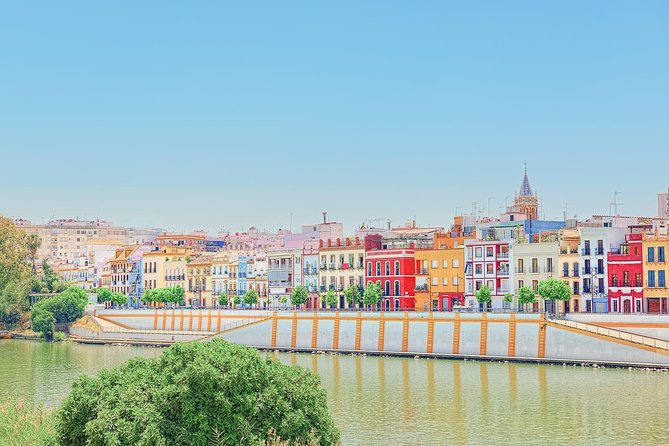
- Torre del Oro panorama to kick things off with a proper Seville introduction
- Puente de Triana (Isabel II bridge) with the oldest preserved iron in Spain, built in 1852
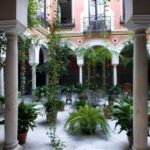
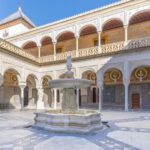
- Corrales/patios time in Triana, where courtyards are part of everyday life
- Sailors’ chapel and the Hope of Triana stop with unique local religious art
- Ceramics focus at Centro Cerámica Triana plus workshop courtyards nearby
- Flamenco tribute that links the neighborhood to an Intangible Cultural Heritage of Humanity
Why this Triana walk works so well (2 hours, but it adds up)
This is one of those tours that feels short on purpose. Stops are brief—often a few minutes—so you get orientation quickly. You’re not meant to “marathon” any one place. Instead, you come away with a map in your head: river, bridges, courtyards, churches, markets, then the big historical anchors.
The price is a big part of the appeal. $9.49 is low for a guided neighborhood walk that covers a lot of different angles of Triana—religious art, flamenco symbolism, ceramic craft, and the river myth-making that surrounds Seville.
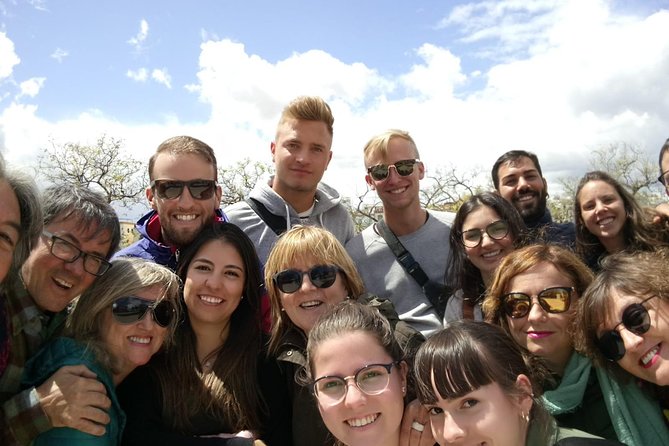
Small-group limits matter too. With up to 30 people, the guide can keep the pace human, and you’re not stuck in the back of a wandering crowd. I’d treat this as a “get your bearings” tour before you start choosing your own detours for the rest of the day.
You can also read our reviews of more tours and experiences in Seville.


Torre del Oro to San Telmo Bridge: your river-side orientation starts here
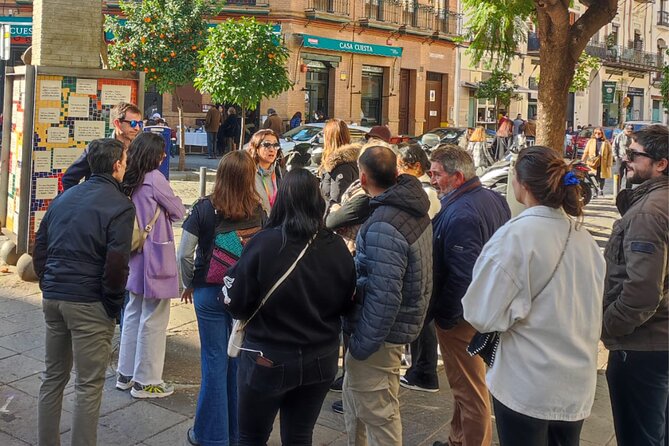
You meet at the start area near Puente de Isabel II (and the first stop is the Gold Tower, Torre del Oro). The Gold Tower is more than a pretty photo spot. It was a defensive bulwark and beacon—so when you look at the river from here, the viewpoint feels earned.
From Torre del Oro, you cross toward the San Telmo Bridge, where the views of Seville and Triana open up in a different way than from the streets. It’s a quick stretch, but it sets expectations: Triana isn’t only lanes and chapels. It’s also water, ports, and trade routes that shaped daily life.
Practical note: Torre del Oro includes the kind of monument stop where admission may apply. On this route, the admission ticket isn’t included for that specific monument, so if you want to go inside, you should be ready for a small extra cost.
Milla Cero and Calle Betis: the Seville vs Triana story in plain terms
A smart move in this tour is the stop at Monumento Milla Cero de la Tierra, the “Zero Mile” reference point tied to the first round-the-world expedition. Even if you’ve heard of Seville’s global connections, this kind of landmark gives you a starting coordinate for the city’s identity.
Then you shift into Calle Betis, one of the areas used to explain how Seville and Triana were historically separated and developed their own weight and character. That’s the key Triana lesson: it feels like a neighborhood with its own personality, not just a district you pass through.
This segment is short, but it helps you understand why the rest of the tour feels so local. Triana’s churches, markets, and craft traditions aren’t random stops. They’re responses to a place that lived differently than the rest of Seville for a long time.
Cervantes to the Triana port myths: legends you can point at
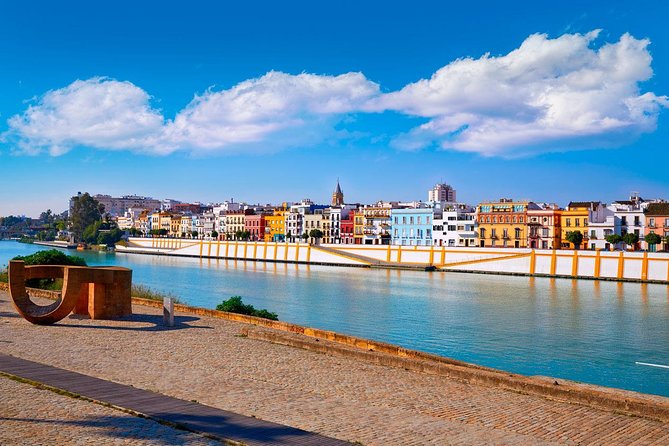
Next you move along to Calle Troya, tied to Miguel de Cervantes spending time in Seville. The point here isn’t literary trivia. It’s a way to see how writers, stories, and places overlap in real streets.
Then the tour heads toward El Embarcadero, an ancient port area with strong ties to the famous Carmen legend—specifically the myth connection to Carmen and the cigarette workers (Las Cigarreras) linked to the Tobacco Factory. Even if you don’t care about the opera side, this is where Triana’s “water story” becomes visual: the river is the stage, and the neighborhood grew around it.
Puente de Triana and the corrales/patios moment that locals care about

The tour crosses Puente de Isabel II (Puente de Triana), described as the oldest preserved iron bridge in Spain, built in 1852. This isn’t just an engineering flex. It’s a moving frame: every angle gives you another way to read Triana’s geography.
Then comes one of the most Triana-feeling stops: the patio/courtyard world. The tour talks about Triana having had more than 100 “pens” historically, and now closer to about 15. That change is the whole point—courtyards aren’t decorative. They’re community life, built into the way neighbors share air, light, and space.
If you like places where daily life is visible through architecture, this is a must. Also, if you’re thinking about photos: courtyards can look different depending on the light, so you’ll appreciate getting to them early in the walk rather than later.



Santa Ana, Marineros, and the Dominicans: where faith becomes local art
Triana’s churches show up here as emotional and community landmarks, not just sightseeing. You’ll visit Plazuela de Santa Ana, a corner that connects to former Flemish presence in the neighborhood, then move to the Real Parroquia de Señora Santa Ana. This area is described as the center of ancient Triana and associated with the history and legends of the Trianeros (the neighborhood’s Gypsy community and identity).
After that, you head to Capilla de los Marineros, a sailors’ chapel tied to Triana’s brotherhood network. The highlight is the image of the Hope of Triana, noted as unique for many reasons. The takeaway for you: these chapels aren’t one-size-fits-all religious stops. They’re specific to the neighborhood’s trades—especially the port and shipping connections.
Then you reach the Parroquia de San Jacinto (Dominicos), the former Dominican Convent of San Jacinto. The tour description also places it in a darker historical frame: it belonged to an old hospital, and the surrounding area served as a mass grave during a plague epidemic. That’s heavy material, but it matters because it shows how places keep layered meanings.
Quick caution: because this is a walking route with many stops, you might not get long inside-time at each site. If you want deeper time in chapels or churches, use this tour to set your priorities, then return on your own.
Calle San Jacinto: the street where you plan your next drink (and learn why)
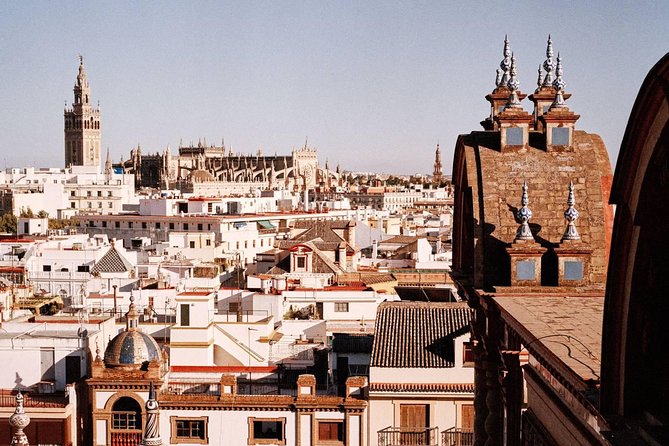
Calle San Jacinto is presented as the busiest street in Triana, and that’s practical advice as much as it is cultural. If you’re trying to decide where to grab something, this street is exactly where you’ll feel the neighborhood rhythm.
This stop also includes a very specific thread of modern history: a reference to the Hispano-Aviación factory area, mentioned as where the first Spanish reactor was made—opening the way to modern fighters. It’s the kind of detail that makes Triana feel like it’s not stuck in the past.
Then you pass the Hermandad De La Estrella chapel area, connected to the patron saint of former shippers of the port. Again, the point is connection: neighborhood work and neighborhood belief share the same streets.
Capilla Virgen del Carmen, flamenco tributes, and the market you should not skip
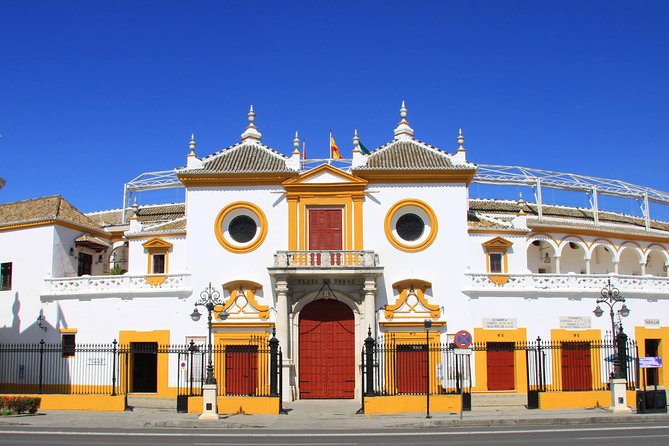
You’ll see Capilla Virgen del Carmen, described as one of the last works of architect Aníbal González (also linked to the 1929 universal exhibition and Plaza de España). This kind of architectural breadcrumb helps you recognize patterns across Seville.
After that, you hit a flamenco-themed cultural stop: Monumento Triana al Arte Flamenco, a tribute to singing, dancing, guitar, and palms. Flamenco is mentioned here as an Intangible Cultural Heritage of Humanity, and the monument works like a shortcut understanding of why Triana is so tied to the art form.
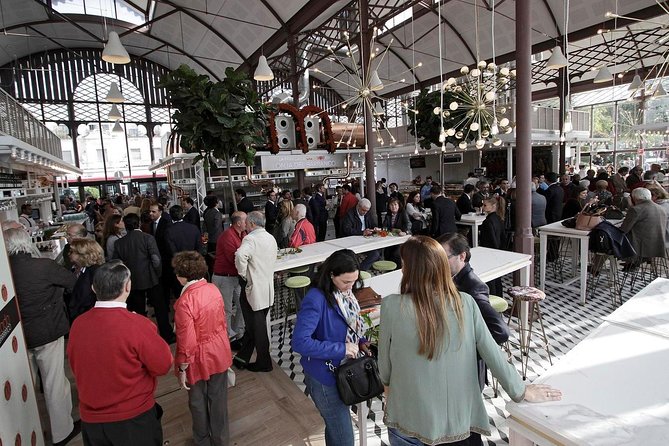
Then it’s time for Mercado de Triana. The tour frames it as essential for gastronomy and “life” in the neighborhood. Even if you don’t buy much, this is where you feel Triana through what people are shopping for and how the market moves.
Castillo de San Jorge to Centro Cerámica Triana: persecution and craft, side by side
This tour doesn’t pretend history is comfortable. It includes the Castillo de San Jorge, explained in connection with persecution and the inquisition. The description ties it to the Catholic Monarchs establishing the Inquisition. When you’re standing in a place like this, you get a sense of how political power can sit right over a working neighborhood.
From there, you head into streets like Calle San Jorge, where courtyards and small ceramic workshops are connected to large furnaces that still survive in parts. That brings you into the craft zone, and it leads right to Centro Cerámica Triana.
Ceramics aren’t a “maybe.” Triana ceramics have a reputation, and this stop is how you back that up with something you can actually point at: collections, history, and the sense that craft is part of Triana identity. If you’re the type who likes buying one meaningful souvenir instead of ten random ones, this is a good place to shop with intention afterward.
The tour description also references the Royal Almonas Almohades tunnels and links them to the famous soap mentioned as popular in Europe and America. Even without details about how long you’ll spend there, it’s a reminder that underground and everyday “made things” are part of the Triana story too.
La Cartuja and Calle Pages del Corro: yesterday, today, and tomorrow
The route ends by moving into the Isla de La Cartuja area, tied to the evolution of Triana and presented through Calle Pages del Corro—yesterday’s Triana, today’s, and tomorrow’s. That framing helps you understand why Triana feels both traditional and in motion.
You’ll finish near Triana Market (the listed end point is C. Arfian, 13, close to the neighborhood center). It’s a smart landing zone. You’ve got food nearby, and you’re right where you can keep exploring on your own—without needing to navigate far.
Tapas time: how to use the tour for better eating
One promise in this experience is that you’ll get recommendations for the best tapas of the neighborhood. I love tours like this because they do one thing right: they give you a short list of where to start, not a single forced restaurant.
After the tour, I’d use the walk itself to choose your final spot:
- Find a place on or near the lively streets you just learned (Calle San Jacinto and around the market).
- Look for menus with local staples rather than just tourist-style English translations.
- If you see a line, don’t panic—just ask yourself if the area feels like it’s serving neighborhood life, not showroom life.
You’ll also be well-timed for dinner energy. The tour ends in the market area, so you’re not stuck wandering for hours before you find food.
Who should book Triana al Completo with Corrales included
This one is best for you if you want:
- A guided introduction to Triana’s religion, craft, and river identity in one compact loop
- A walking tour that’s paced for seeing, not staring at your phone the whole time
- A value-first option at $9.49, especially if you plan to snack and keep exploring afterward
It’s also a good choice if you’re traveling with someone who likes variety: chapels, markets, bridges, ceramics, and flamenco symbolism show up in the same itinerary.
If you’re the type who wants long museum time or long church time, you might feel it’s too fast. The route is designed as a sampler—excellent for orientation, then you come back for depth.
Should you book this Triana tour?
If your goal is to understand Triana as a place with its own logic—courtyards (corrales), bridges and ports, craft and flamenco—this is a solid buy. The price is low, the route covers major anchors like Torre del Oro, Puente de Triana, Centro Cerámica Triana, and Castillo de San Jorge, and you finish in a useful location near Triana Market.
I’d book with two small things in mind: check the weather (it needs good conditions), and know that at least one guide no-show issue has been reported. If you do book, arrive a few minutes early and double-check where your guide is supposed to meet so you can start clean and stress-free.
FAQ
How long is the Triana al Completo tour?
It lasts about 2 hours.
What’s the price per person?
The price is $9.49 per person.
Do I need to buy separate entry tickets during the tour?
The Torre del Oro stop lists admission ticket not included, while the Milla Cero monument lists an admission ticket included. Other listed stops show admission ticket free.
Where does the tour start and end?
You start near Monumento al Arte Flamenco / Puente de Isabel II area, and you end at C. Arfian, 13, near Triana Market in the heart of the neighborhood.
Is this tour a guided group experience?
Yes. It’s a guided experience with a maximum of 30 travelers.
How do I get my ticket?
You’ll receive a mobile ticket.
Does it require good weather?
Yes, it requires good weather. If it’s canceled due to poor weather, you’ll be offered a different date or a full refund.
Are service animals allowed?
Yes, service animals are allowed.