REVIEW · SEVILLE
Italica Roman City Tour from Seville
Book on Viator →Operated by Andalsur Viajes, Congresos y excursiones S.L · Bookable on Viator
Italica feels like time travel, with footpaths. This guided tour from Seville is a simple way to reach a top Roman site fast, then walk through places tied to emperors Trajan and Hadrian. You get skip-the-line entry plus a guide who connects the mosaics, baths, and public spaces into one story.
I especially like the professional art historian style of commentary. And I like the on-site focus: you’re there to see the amphitheater, the Traianeum, and the restored Roman theater area in Santiponce—not just to pass by a couple of stones.
One thing to watch: the route includes a lot of walking on rough, uneven ground, and the bus ride can be bumpy if you get motion sickness. Bring sturdy shoes, and plan your pace.
In This Review
- Key things that make this Italica tour worth your time
- Italica Near Seville: the Roman city that started big
- The 10:00am to 4-hour day: what timing feels like
- Archaeological Ensemble of Italica: your main walk, with the big names
- Traianeum and mosaics: the art-historian angle that matters
- Santiponce Roman theater: partially reconstructed, still worth the stop
- Monastery stop: good timing for some, an annoyance for others
- Comfort and logistics: air-conditioned ride, but uneven walking
- Guide quality and language: what you can realistically expect
- Photos and pacing: how to get the best shots without rushing
- Price and value: why €-to-hour comparisons can help
- Who should book this Italica Roman City Tour from Seville
- Should you book it? My straightforward take
- FAQ
- What is the duration of the Italica Roman City Tour from Seville?
- What time does the tour start?
- Is admission to Italica included?
- What language is the tour offered in?
- How many people are in the group?
- Is the tour walking-heavy?
- Can I use the air-conditioned vehicle?
- Is breakfast included?
Key things that make this Italica tour worth your time
- Skip-the-line access with an admission ticket included
- 4-hour guided format that’s built for seeing the main highlights without a full day commitment
- Classic Italica targets like the amphitheater (25,000-seat scale) and the Traianeum
- Air-conditioned vehicle for the ride out of Seville
- Limited group size (up to 55), which keeps the pace manageable
- A possible extra stop at a nearby monastery on some departures
Italica Near Seville: the Roman city that started big
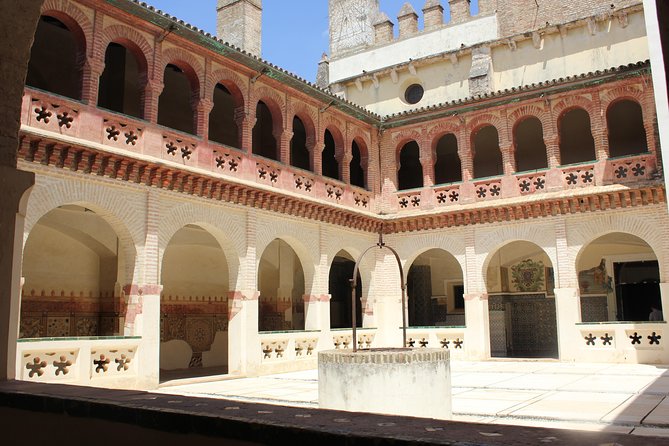
Italica is a short hop from Seville, but it hits hard. This was the first authentically Roman city in Spain, founded in 206 B.C. by Roman General Publius Cornelius Scipio Africanus. And it has star power: it’s the birthplace of emperors Trajan and Hadrian.
What makes the ruins more satisfying than a typical sightseeing stop is that Italica wasn’t a random settlement. You’re walking through a planned Roman world—streets, houses, public buildings, and civic monuments—laid out for daily life and for status. With a good guide, it clicks into place fast: baths mean social life, mosaics mean wealth and taste, and the amphitheater tells you how entertainment worked on a large scale.
You can also read our reviews of more city tours in Seville



The 10:00am to 4-hour day: what timing feels like
This tour runs about 4 hours total, starting at 10:00am, and it ends in a different location than where it starts. The time window matters because Italica is outside Seville, so you’ll spend part of your day traveling.
In practice, you should expect the day to feel like three chunks:
- Ride out to Italica
- Guided time on the archaeological grounds
- Then the return trip (sometimes with an additional short stop)
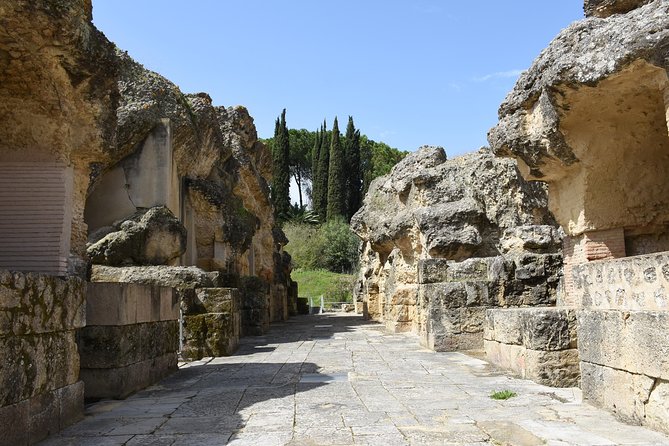
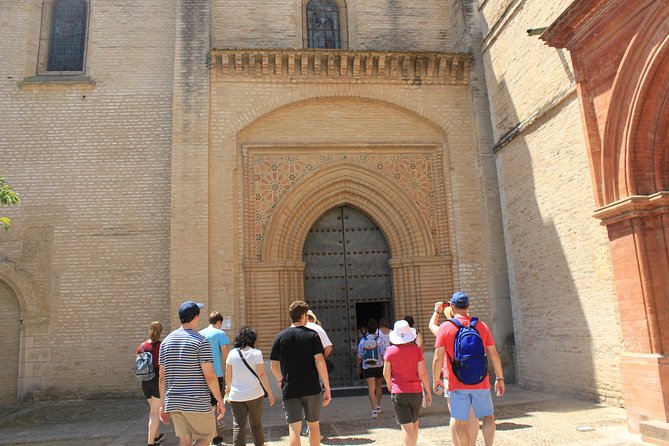
Several departures include a quick visit to a nearby monastery (often around half an hour). That can be a bonus if you want more variety beyond Roman ruins. If you came only for the Roman site, treat it like a planned detour you might not love.
Also note this: the order of visits may change due to unexpected circumstances, and the tour can be conducted in two different languages to make adjustments smoother. The good news is you’re not left guessing—English is offered, and the logistics are built around keeping the group moving.
Archaeological Ensemble of Italica: your main walk, with the big names
Your big focus is the Archaeological Ensemble of Italica. This is where the tour earns its keep, because it concentrates on the most meaningful and photogenic parts, not a scattershot stroll.
Here’s what you’ll see as you move through the ruins:
- Old streets and Roman houses, giving you a sense of how neighborhoods and daily life were organized
- Public buildings, which help you understand how power and community showed up in architecture
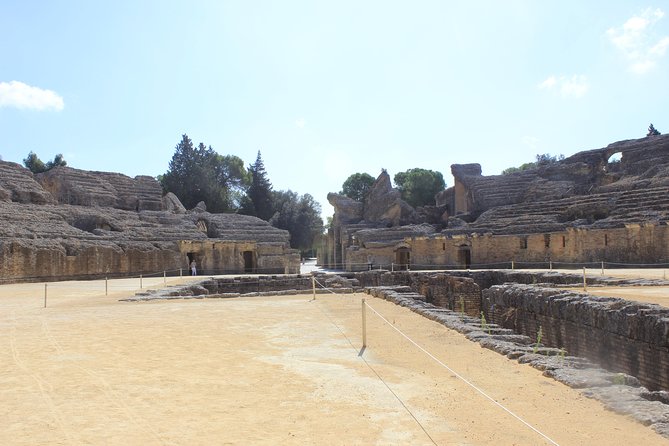
- The amphitheater, with a seating capacity of about 25,000 and described as the third-largest in the Roman Empire
That amphitheater detail is more than a trivia flex. It helps you picture scale. Roman entertainment wasn’t just casual. It was political and cultural, and it required serious planning. Standing there, you can often “read” the design faster with a guide pointing out how the space was meant to function.
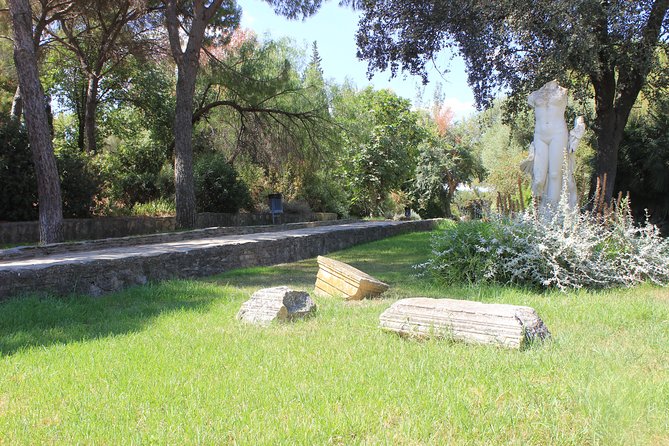
You’ll also get to mosaic floors, the Traianeum, and statues linked to major figures and the city’s Roman identity—Diana, Venus, and Trajan. And yes, the public baths are part of the route. Baths at Roman sites are often the best way to understand the culture, because they weren’t only about hygiene; they were social spaces where people talked, met, and traded news.
Traianeum and mosaics: the art-historian angle that matters
This tour isn’t just “Roman facts.” It leans into what makes Italica look the way it does. That’s a big deal because mosaics and ceremonial areas can feel flat if you’re staring without context.
The Traianeum is one of those places where the design and symbolism matter. A strong guide helps you connect what you see to what the Romans wanted people to feel—importance, stability, and civic pride. The statues of Diana and Venus also matter, since they point toward how Roman religion and mythology were woven into public spaces.
If you care about art and decoration—tiles, patterns, placement—this is where the tour can feel especially satisfying. You come away not just with photos, but with a clearer sense of what the site was built to communicate.
Santiponce Roman theater: partially reconstructed, still worth the stop
The tour also includes a view into the partially reconstructed Roman theater in Santiponce. Reconstruction can be a tricky topic in archaeology, but even without a fully “complete” structure, you can still learn a lot.
Why does it work? Because a theater reveals Roman priorities in design: sightlines, public gathering, and how performance space shaped the city’s rhythm. The partially reconstructed portion gives you enough structure to visualize the whole idea, especially when your guide explains how the Romans used theater as a civic event.
This stop is also helpful for slowing down after you’ve taken in amphitheater scale. If you’re the type who likes comparing how Romans used different entertainment spaces, this is a strong pairing.





Monastery stop: good timing for some, an annoyance for others
Some departures add a short visit to a nearby monastery, often around 30 minutes. It’s not guaranteed on every departure, so you’ll want to check what your specific date includes.
Here’s how to think about it:
- If you like variety, it’s a quick chance to see Andalusia’s religious architecture before you head back.
- If you only want Roman ruins, treat it as time traded away from more Italica walking.
Either way, I’d plan mentally for a slightly tighter schedule than you might expect if you assumed 100 percent of the day is spent inside the Italica site.
Comfort and logistics: air-conditioned ride, but uneven walking
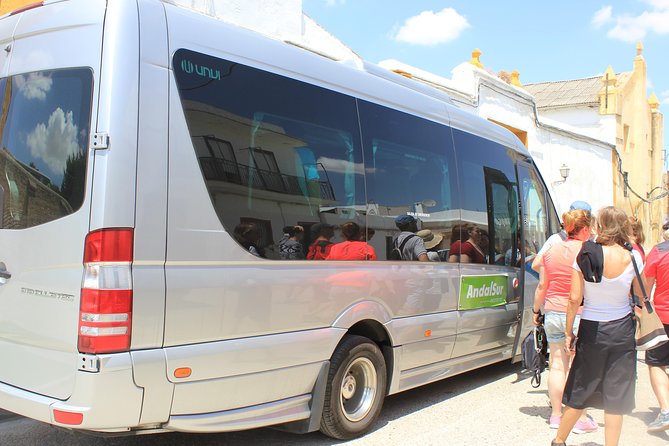
This tour includes an air-conditioned vehicle, which is a real plus when you’re traveling out of Seville in warm months. You’re also getting guaranteed to skip the long lines, so you spend less time stuck and more time seeing.
Now for the part you should take seriously: the archaeological ground is rough and uneven, with level changes. You’ll want:
- Sturdy shoes (non-negotiable if you hate tripping)
- A calm pace if you’re carrying a heavy camera bag
- A little extra patience if you’re visiting when it’s hot
If you’re prone to motion sickness, keep in mind the bus ride can be bumpy because of winding roads and vehicle sway. If that’s you, sit where you feel most stable (often front or near the center) and consider motion-sickness medication if you use it.
Guide quality and language: what you can realistically expect
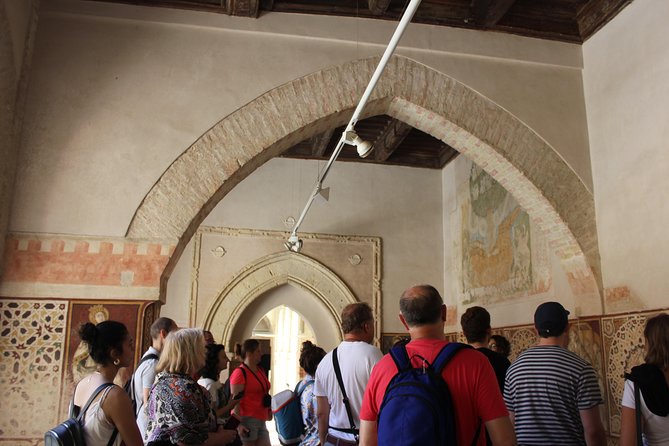
The tour is offered in English, and it’s led by a professional art historian guide. That’s a strong baseline. Still, guide comfort can vary.
From the range of guides reported on this route, you might meet names like Jesus, Luca, Catherine, Alberto, Jose, Mario, Carmen, Adrián, or Carlos. When the guiding hits, it’s the difference between wandering and understanding. Guides like Jesus and Luca are specifically described as bringing humor and story-driven explanations, with concepts that help you visualize how the site functioned.
Language is the second variable. Even with English available, some guides have accents that can make certain words harder to catch. Also, on days when the itinerary order changes, your guide team may use two languages so the group stays coordinated. The practical takeaway: if your English comprehension is a little rusty, pack patience and don’t rely on hearing every single word to enjoy the experience.
Photos and pacing: how to get the best shots without rushing
Italica has a natural photo rhythm: amphitheater angles, mosaics and detail work, and ceremonial spaces like the Traianeum. But the ruins are active walking terrain, not a flat museum floor.
I’d set your expectations like this:
- You’ll get meaningful time at the key monuments, but you won’t have endless wandering.
- If your goal is photos, move with intention during the guided walk, then save a brief personal pause for compositions.
One practical tip: after you finish guided segments, look for spots where you can frame the ruins with less foot traffic. That’s often where you’ll get clearer photos without people blocking your view.
Price and value: why €-to-hour comparisons can help
At $46.85 per person for about 4 hours, this tour sits in the “reasonable convenience” category. You’re not paying for a luxury bus tour. You’re paying for three things that add up:
- A guided explanation that turns stones into context
- Skip-the-line access plus an admission ticket included
- Comfort on the round-trip ride from Seville, including air-conditioning
If you were to DIY, you’d need to solve transport, tickets, and what to focus on once you arrive. Here, you’re outsourcing the hardest parts: planning and interpretation. That’s the value.
The tradeoff is that you share time with a group and you may include the monastery stop depending on your departure. If you love freedom and want to linger, a private tour would usually fit better. If you want a smart half-day plan that keeps you from missing the big hits, the price-to-time ratio works.
Who should book this Italica Roman City Tour from Seville
This tour is a strong fit if you:
- Want a half-day Roman fix without committing to a full day
- Like ruins with guidance that explains the why, not just the what
- Enjoy history with visible art details like mosaics and statues
- Appreciate the reassurance of English-speaking guidance and a structured itinerary
It may be less ideal if you:
- Need very smooth surfaces for walking
- Have serious motion sickness issues (the bus route can sway)
- Dislike itinerary surprises like the monastery stop
And if you’re traveling with older adults or anyone with mobility limits, the “moderate physical fitness” label should be taken seriously. Plan on uneven ground and expect slow, careful steps.
Should you book it? My straightforward take
Book this tour if you want an efficient, well-structured way to see Italica’s main Roman monuments with a guide who can make the site coherent. The big wins are the skip-the-line entry, the Roman highlights (amphitheater, mosaics, Traianeum, baths), and the chance to connect architecture to culture.
Don’t book it if your top priority is maximum time inside Italica with zero extra stops, or if uneven ground and motion sickness are deal-breakers. In those cases, you’ll likely enjoy a different format more.
If you’re in the middle—curious, comfortable walking, and happy to trade a bit of flexibility for clarity—this is one of the better ways to make Italica feel alive.
FAQ
What is the duration of the Italica Roman City Tour from Seville?
The tour is about 4 hours.
What time does the tour start?
The start time is 10:00am.
Is admission to Italica included?
Yes. Admission ticket is included.
What language is the tour offered in?
It is offered in English. The tour may use two languages if the visit order changes due to unexpected circumstances.
How many people are in the group?
The maximum group size is 55 travelers.
Is the tour walking-heavy?
Yes. You should have moderate physical fitness, since you’ll walk on rough, uneven surfaces with level changes.
Can I use the air-conditioned vehicle?
Yes. The included transportation is described as having an air-conditioned vehicle.
Is breakfast included?
No, breakfast is not included.