REVIEW · SEVILLE
Legends of Triana Walking Tour in Spanish
Book on Viator →Operated by Naturanda Turismo Ambiental · Bookable on Viator
Triana has a secret side. This 2-hour Spanish walking tour sends you through the streets of the Triana neighborhood across the Guadalquivir, where colorful facades, church steeples, and flamenco-born lore get explained by a local guide.
I love the small-group feel (max 15), which makes it easier to keep up and ask questions without getting lost in the crowd. I also love that the stories are tied to specific places you pass—Calle Betis, Santa Ana Church, the old potters quarter, and even the inquisition-related stop—so nothing feels like generic trivia.
The main thing to consider is simple: it’s a walking tour, so plan for moderate fitness, and be ready for some darker historical legend material.
In This Review
- Key highlights you can count on
- Why Triana Legends Feel Different Than a Standard Walk
- From Puente de Isabel II Into Triana’s Old Core
- Calle Betis: Colorful Streets That Actually Mean Something
- The Old Navigators University and Monipodios House
- Santa Ana Church: Where the Steeples Pay Off
- The Old Potters Quarter: Craft Stories You Can Picture
- Inquisition Headquarters: A Darker Chapter in Triana’s Legends
- Riverbank Ending: Better Views, Better Sense of Place
- Price, Timing, and Group Size: What $14.23 Buys You
- The Guides Are the Whole Point (And That’s Not a Small Claim)
- Should You Book This Legends of Triana Tour?
- FAQ
- Is the tour in Spanish?
- How long is the tour?
- Where does the tour start?
- Does the tour include an admission ticket?
- What size is the group?
- Is food included?
- What kind of fitness level do I need?
- Are service animals allowed?
- Can I cancel for a refund?
- Do I get a mobile ticket?
Key highlights you can count on
- Max 15 people means the guide can actually work the group, not just recite facts
- Triana’s core streets start at Puente de Isabel II and wind through the oldest part of the quarter
- Landmarks with payoff: Calle Betis, Santa Ana Church, the old potters quarter, and the inquisition headquarters area
- Guides are repeatedly praised for energy and detail, including Yohanna, Mari Paz, Joana, Nieves, Jesús, Valentín, and Bárbara
- You get visual support sometimes, with guides using tablets to show historical images/videos
- Admission ticket included makes the price feel more like a guided “value bundle” than a basic walk
Why Triana Legends Feel Different Than a Standard Walk
Triana sits across the Guadalquivir from central Seville, and that change of scenery matters. The streets feel more local than the main tourist routes, with the famous bright buildings along Calle Betis and church steeples rising above the rooftops.
What makes this tour work is the way it connects legend to place. You’re not just hearing stories floating in the air—you’re standing near the kind of corners that would naturally spark myths in the first place. Triana is known as the birthplace of flamenco dance, and that cultural thread shows up in the overall vibe, even when the tour is talking history, mysteries, or neighborhood anecdotes.
This is also one of those walks where a guide changes how you see the same walls. Multiple guides are praised for making the stories lively, funny at times, and clear enough that the group stays “awake” for the full 2 hours. If you’ve been to Seville before and already know the big sights, Triana is a smart way to get a different angle.
There’s a practical bonus too: you finish with a stronger sense of how Seville’s neighborhoods connect. Crossing to Triana early in the experience helps you understand the river as more than a view—it’s a divider, a route, and part of the storytelling.
You can also read our reviews of more walking tours in Seville


From Puente de Isabel II Into Triana’s Old Core

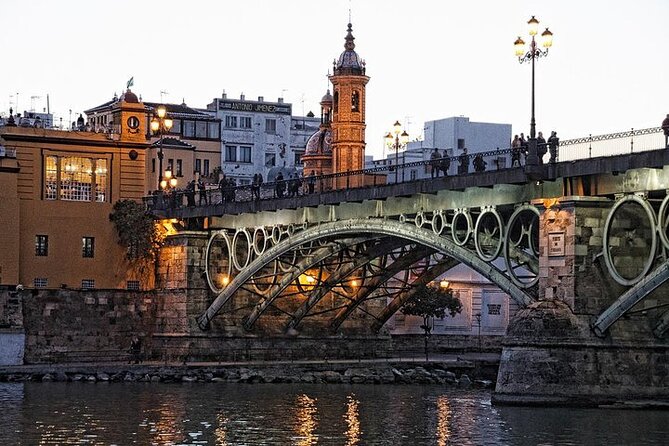
You meet at Puente de Isabel II, and that start point is useful. Seeing the Guadalquivir from the bridge gives you a quick mental map before the tour starts threading through the neighborhood.
Then you begin walking around the oldest part of the quarter. That opening loop sets the tone: you’re not racing. The pace is meant for listening, spotting details, and letting the guide’s narrative “land” while your feet are still close to the action.
Puente de Isabel II also matters because it frames Triana as a separate world from central Seville. Even if you’ve never studied the neighborhood, you’ll feel the shift. The bridge isn’t a tourist photo stop only—it’s the moment your walk becomes a story.
From there, you head toward the heart of Triana, where you’ll recognize the visual signatures quickly: colorful facades along Calle Betis and the dramatic church steeples. That recognition helps you follow the guide more easily later, especially when you start getting into the older quarters and the more specific legend stops.
If you’re visiting on an evening departure, the effect can be extra good. Several guides in the feedback are praised for night visits being especially enjoyable, with a touch of wonder that fits the subject matter. The tour still runs on a walking schedule, so comfortable shoes still win.
Calle Betis: Colorful Streets That Actually Mean Something
Calle Betis is the recognizable face of Triana, lined with those colorful buildings that make first-time visitors go “oh, this is Triana.” On this tour, it’s not just a pretty street. It’s where the guide’s storytelling makes the neighborhood feel lived-in instead of staged.
This is where you’ll likely get the “you are here” context that helps you connect the dots. Triana’s reputation as flamenco’s birthplace gives the street a cultural weight, and the guide’s legends help explain why music and myth often travel together in old neighborhoods.
One reason I like tours built around Calle Betis is that you can see what you’re being told. If a guide points out the significance of a building, a doorway, or a street corner, you can immediately look around and match the story to the setting. That’s the opposite of sitting in a classroom with city photos.
Also, Calle Betis is a naturally walkable spine. It helps the group stay together and keeps the flow smooth, especially with a small maximum group size. In feedback, guides are described as friendly and good at keeping the group active and engaged, which matters on a route where listening is the whole point.
The Old Navigators University and Monipodios House
A good legend walk doesn’t just mention famous spots. It gives you the “in-between” landmarks that make a neighborhood feel real.
Two of those stops are the old navigators university and the Monipodios house. Even if you don’t know the details right away, seeing these kinds of buildings in context helps you understand Triana as more than a single landmark or a single vibe.
With the old navigators university, the value is in the theme: Triana ties into Seville’s wider river and travel connections. You’re walking in a neighborhood shaped by movement—people, goods, and stories traveling along the river—and the tour uses that theme to connect past and present.
Monipodios house adds a different kind of curiosity. Historic homes like this one can be story magnets because they often sit at the intersection of daily life and local legend. The guide’s job is to make the place feel like it has a memory, not just a facade.
If you’re the type who likes architecture, even basic observation helps: look at how the building sits in the street, how it relates to the surrounding lanes, and how the neighborhood layout funnels you toward the next stop. The tour’s structure does that for you—showing you one meaningful setting at a time.
Santa Ana Church: Where the Steeples Pay Off
Triana’s identity shows up fast in its church steeples, and Santa Ana Church is one of the stops that anchors the experience in visible landmarks.
This kind of stop is valuable because it balances the legend talk with something physically solid. When you’re in the middle of mystery stories, it helps to pause at a real civic and spiritual landmark. It gives the tour emotional weight and also helps you understand why Triana has a reputation for strong traditions and local pride.
Santa Ana Church also makes sense within the route. It fits the feeling of old Triana streets: small lanes, old quarters, and then a landmark that rises above everything else. That contrast is part of what makes Triana visually memorable.
Practical note: church-area stops can mean slower moments while the guide explains and the group gathers. That’s not a problem on a 2-hour walk, but it’s one more reason you’ll enjoy the small-group size. You’re not stuck behind a wall of shoulders.





The Old Potters Quarter: Craft Stories You Can Picture
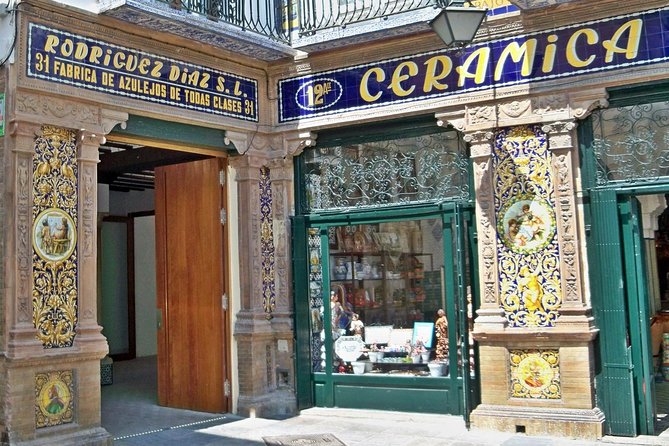
You’ll also visit the old potters quarter. Even without turning this into a workshop visit, the idea matters. Neighborhoods that are known for crafts usually leave traces in street patterns, building types, and local identity.
Potters quarter stop works especially well on a legend walk because “craft” naturally connects to people, routines, and the kinds of stories that spread through a community. It’s the contrast to big-name monuments: this is about how everyday labor becomes part of the neighborhood’s legend.
And because the guide keeps pointing you toward what to notice, it’s not just an abstract mention. You’ll be walking through an area that helps you imagine the rhythm of the past—work happening close to home, materials moving through familiar streets, and local history staying in plain sight.
This is also a great moment for anyone who wants a more human Seville. If you like the idea of flamenco and myth but you also want the physical neighborhood behind the culture, the potters quarter stop gives you that.
Inquisition Headquarters: A Darker Chapter in Triana’s Legends
Not all Triana stories are light. One of the stops is the inquisition headquarters, or the area tied to it.
This is where you should go in with the right expectations. Even if the tour frames it through legend and mystery, the subject is historically heavy. I like that the tour doesn’t sugarcoat what the neighborhood went through—it adds realism to the myth-making.
If you prefer only light sightseeing stories, this stop might feel intense. But if you want Seville to feel like a real place with real shadows, it’s an important part of the picture.
Guides in the feedback are praised for balancing storytelling with clarity and good communication, which helps on a topic like this. A strong guide can keep the energy moving while still handling the topic with care.
If you’re sensitive to heavy history, mentally prepare for that shift. The walking pace continues, so you’re not trapped in a lecture, but the content turns serious.
Riverbank Ending: Better Views, Better Sense of Place
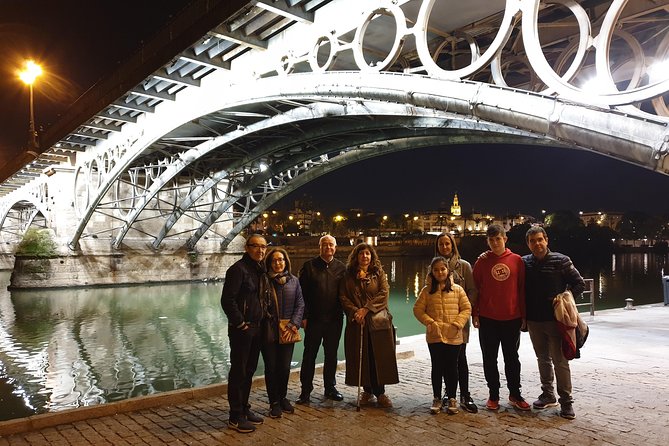
The route walks by the riverbank to wrap up. Ending near the Guadalquivir helps you close the loop: you started at the bridge, and now you feel the river as the neighborhood’s boundary and connection.
This is one of those practical endings that also makes the tour feel complete. After 2 hours of legends, you get a moment to look around with new eyes—toward the water, toward the opposite shore, and toward the streets that connect the two halves of Seville.
The walk-by-the-river finish also gives you options afterward. You’re back where you started—near the bridge area—so it’s easy to keep exploring Triana on your own or head back toward the center without complicated transit decisions.
The overall feel from guide praise is that the ending doesn’t fizzle. Guides are described as engaging and attentive, keeping the group together and making sure the full experience lands before the tour ends.
Price, Timing, and Group Size: What $14.23 Buys You
At $14.23 per person for about 2 hours, the value comes from a few specific things bundled together.
First, you get a local professional guide and a walking tour designed for small groups, with a maximum of 15. That’s a big deal in Seville, where crowds can swallow context. Here, the group size is small enough that you’re more likely to hear the story clearly and stay engaged.
Second, there’s an admission ticket included. Even when you’re mostly walking, a included admission item changes the math. It’s not just a guided stroll with a story; there’s a built-in extra component.
Third, the guide effort is repeatedly praised. Names like Yohanna, Mari Paz, Joana, Nieves, Jesús, Valentín, Adrián, Cristina, and Bárbara show up in feedback as people who kept the tour entertaining and well explained. Some used tablet visuals with historical images and videos, which is a smart way to make legends feel less abstract.
Timing matters too. If you catch an evening departure, the mood can fit the theme. Some feedback specifically connects night timing with a sense of wonder. That said, it’s still an outdoor walking route, so dress for the weather and keep your pace realistic.
Language note: this is a Spanish tour. If you’re comfortable enough for listening, it’s a great way to pick up more local flavor quickly. If not, you might want to consider a different-language option so you don’t spend the tour translating silently.
The Guides Are the Whole Point (And That’s Not a Small Claim)
Across the feedback, the guides earn the praise in the same way: they don’t just recite. They manage the group, tell stories with energy, and explain enough detail to make the legends feel credible.
A few examples that stand out:
- Yohanna gets described as entertaining and fun, with the ability to connect with the group.
- Mari Paz is praised for friendliness and for using a tablet with historical images and videos to expand the context.
- Joana and Jo(h)anna are repeatedly mentioned for clear, enjoyable legend explanations.
- Jesús is noted as cheerful and detailed, with stories that go beyond what you might notice on a casual walk.
- Valentín is remembered as funny and communicative, with experience and wisdom.
- Bárbara is credited with making the legends feel captivating, even for people who think they already know Seville.
- Adrián and Cristina are mentioned for professionalism, attention to the group, and making details feel accessible.
You don’t need to memorize names to benefit, but it helps to know that the quality comes through in how the stories are delivered. If you like guided tours where the guide is part storyteller and part teacher, this experience matches that style.
For you, the best move is simple: arrive with curiosity and let the guide steer. Ask a question if you’re confused, and don’t be afraid to say you want a little more context on a stop. Guides on this route are used to keeping people engaged, not just walking in silence.
One more practical tip: bring water if you’ll be out during warmer hours. The tour runs about 2 hours and stays outdoors, so comfort keeps your listening sharp.
Should You Book This Legends of Triana Tour?
Book it if you want Seville to feel less like a checklist and more like a lived-in neighborhood. Triana is one of the best places to do that, and this tour focuses on the streets and sites that make local legends believable. The small group size, included admission ticket, and the consistently praised guide storytelling are what make the price feel fair.
Skip it if you don’t want heavier historical themes, or if you dislike walking tours where you’re spending most of the time listening. If you’re short on time and only want a few big monuments, Triana’s strength is depth over wow-factor.
If you’re trying to understand Seville’s personality, this is a strong choice. You’ll leave with better city sense: where Triana starts, why it’s different, and how flamenco culture and local mysteries became part of the neighborhood’s identity.
FAQ
Is the tour in Spanish?
Yes, the Legends of Triana Walking Tour is listed as a Spanish tour.
How long is the tour?
The duration is about 2 hours.
Where does the tour start?
The meeting point is Puente de Isabel II, Sevilla, Spain.
Does the tour include an admission ticket?
Yes. An admission ticket is included.
What size is the group?
The tour has a maximum of 15 travelers.
Is food included?
No. Food and drinks are not included.
What kind of fitness level do I need?
You should have a moderate physical fitness level, since it’s a walking tour.
Are service animals allowed?
Yes, service animals are allowed.
Can I cancel for a refund?
You can cancel up to 24 hours in advance for a full refund.
Do I get a mobile ticket?
Yes. The tour includes a mobile ticket.