REVIEW · SEVILLE
Seville Former Jewish Quarter Walking Tour: Santa Cruz
Book on Viator →Operated by Amsterdam Guías & Tours · Bookable on Viator
Jewish Seville hides in plain sight. This Santa Cruz walking tour turns ordinary-looking corners into a story you can follow, from royal-era squares to the streets tied to local legends, guided by people who can keep the thread moving, like Julio. I especially love the small group setup, which means questions don’t get lost.
I also like how the route mixes Jewish life themes with what you can physically see today—plus the kinds of “look closer” tips that help you explore on your own after the walk. You’ll get English or Spanish guiding, and you can expect the guide to pair legends with historical context and consequences.
One caution: the walk is only about 2 hours, so it may feel a bit short if you want a deep focus on every aspect of daily Jewish life in the neighborhood. A few people come away wanting more detail about how Jewish families shaped society during both good and bad times.
In This Review
- Key highlights
- Santa Cruz Judería in 2 Hours: What This Walk Gives You
- Plaza del Triunfo to Fuente de la Plaza de la Alianza: Starting With Power
- Plaza de Doña Elvira, Calle Susona, and the Power of a Name
- Hospital de los Venerables and Casa de Murillo: Art After the Golden Age
- Calle Sierpes, Urban Legends, and Rosina’s Balcony
- Callejón del Agua and Plaza Patio de Banderas: Water, Alcázar Walls, and Memory
- Guides, Group Size, and How the Stories Land
- Price and Value: Paying for a Guide, Not Tickets
- Who This Walk Is Best For (and When It Might Feel Too Short)
- Final Take: Should You Book the Santa Cruz Jewish Quarter Walk?
- FAQ
- How long is the Seville Former Jewish Quarter Walking Tour in Santa Cruz?
- What language is the guided tour offered in?
- How much does the tour cost per person?
- What’s the group size limit?
- Where does the tour start and end?
- Is a mobile ticket included?
- Are the stops included in the tour free to visit?
- Is hotel pickup included?
- Are service animals allowed?
- What is the cancellation window for a full refund?
Key highlights
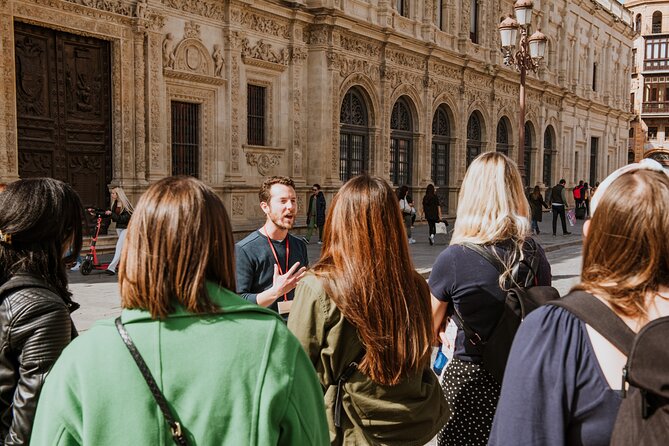
- Small-group attention (max 15 travelers) so your guide can answer questions as you go
- English and Spanish options, handy if you’re traveling with mixed-language friends
- Free-to-visit stops tied to the Santa Cruz setting, so your cost goes mostly to the guide
- Story-driven route that links street legends with real landmarks you’ll recognize later
- Art and architecture moments like Hospital de los Venerables and Casa de Murillo
- A feel for place through water, opera references, and Alcázar-adjacent courtyards
Santa Cruz Judería in 2 Hours: What This Walk Gives You
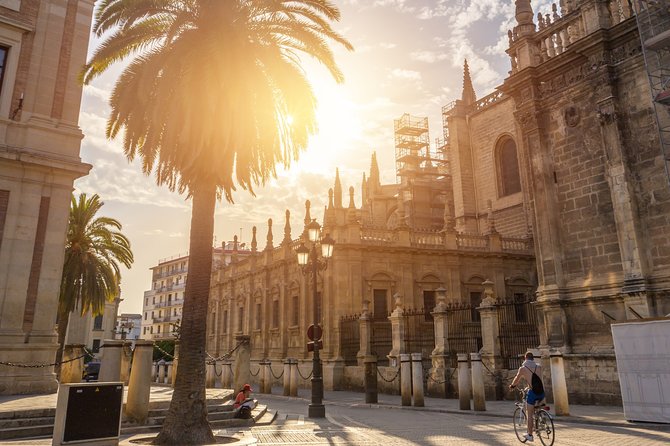
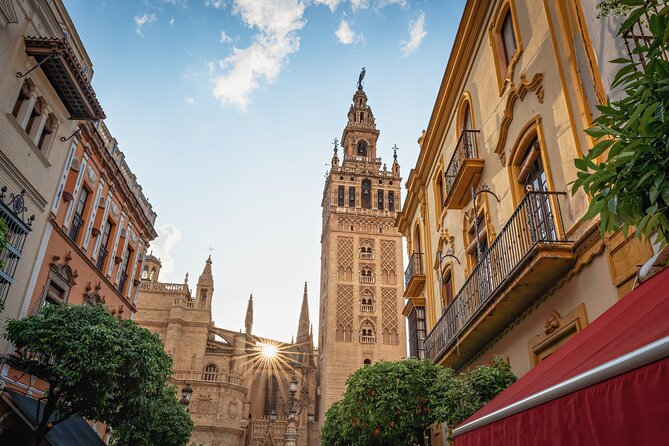
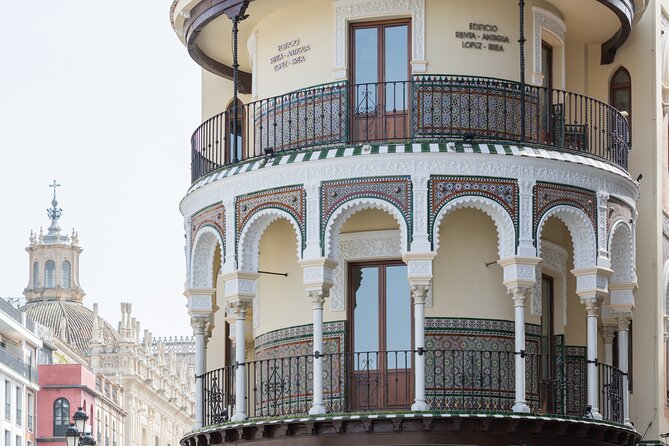
Seville’s Santa Cruz can look like a postcard from above, but at street level it’s all angles, courtyards, and sudden views. This tour is designed to help you read that maze, connecting the Jewish history of Seville to the exact streets and plazas you’re walking through.
You’re not just collecting facts. You’re learning how the neighborhood’s identity formed, changed, and left traces—sometimes visible, sometimes only in names, stories, and the way the buildings frame the past. And because the group stays small, you get time to ask what you’re really wondering, like why certain places matter or what happened when the Jewish community was no longer able to live openly here.
The route also gives you a practical benefit: once you’ve seen it with a guide, you’ll know where to point your own curiosity afterward. A lot of visitors try to “wing it” in Santa Cruz; this helps you avoid that blank-stare feeling and gives you handles to grab onto.
You can also read our reviews of more walking tours in Seville


Plaza del Triunfo to Fuente de la Plaza de la Alianza: Starting With Power
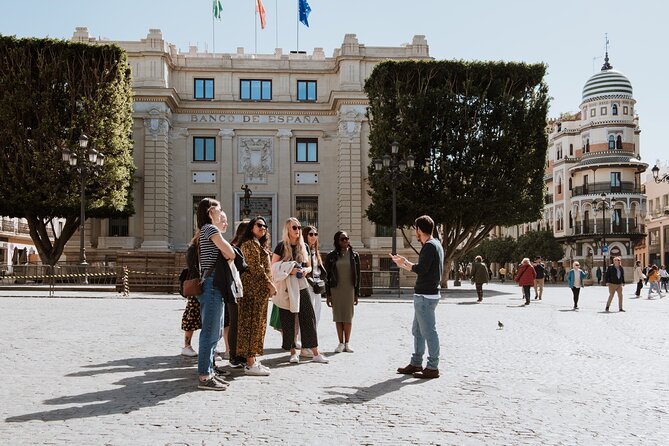
The walk begins at Plaza del Triunfo, right in the older heart of Seville. The square is the kind of place where layers stack—events, ceremony, shifts in power—so it works well as a launchpad for the rest of the neighborhood stories.
From there, you move into quieter territory with Fuente de la Plaza de la Alianza. This smaller, tucked-away square is the sort of setting that makes you slow down. The tour frames it as a meeting place tied to nobles and medieval court intrigue, which is a nice reminder that the Judería didn’t exist in a bubble. It sat inside the wider political and social currents of the city.
One thing to watch for here is expectations. You’re learning the “why” behind place names and locations more than chasing a single monument. If you like guided narrative walking, you’ll enjoy this part; if you only want doorways and museums, you might find it more atmospheric than “site-by-site.”
Plaza de Doña Elvira, Calle Susona, and the Power of a Name
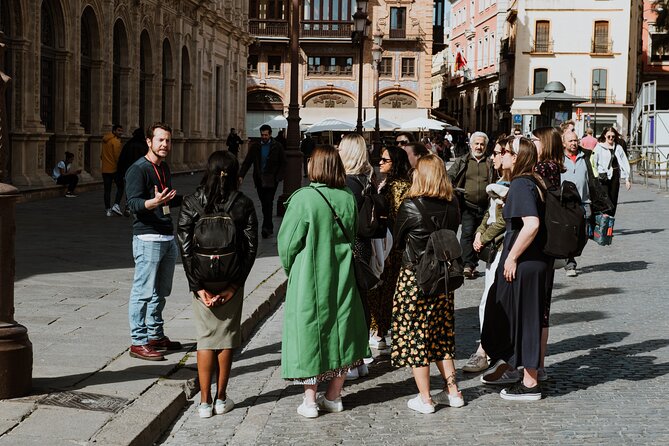
Next you reach Plaza de Doña Elvira, a charming corner that the tour connects to legend and nostalgia. It’s a good stop for getting your bearings, because the square’s mood helps you understand how stories get remembered in Seville—especially when physical evidence can be limited.
Then comes one of the most memorable streets on the walk: Calle Susona. The tour points to the tale behind the name—Susona, a young Jewish woman caught between love and betrayal—and explains why that story has stayed in local memory. Even if you already know the headline of the legend, it lands better when you’re hearing it in the street space that gave it a life.
A balancing thought: this tour uses both legend and history to explain the neighborhood. That’s often what makes it emotionally clear. Just keep in mind that some of what you’ll hear is story-based, even when the tour does its best to ground it in the real context.
Hospital de los Venerables and Casa de Murillo: Art After the Golden Age
If your mental image of Santa Cruz is mostly street corners and romance, this stretch adjusts your view. You’ll stop at Hospital de los Venerables, described as a stunning Baroque building tied to retired priests, now associated with sacred art and the spirit of Seville’s Golden Age.
This stop matters for one simple reason: it shows how Seville’s cultural priorities shifted over time. The tour uses the building’s presence to help you understand what came after—how institutions, art, and religious life shaped the city’s later identity.
Then you’ll visit Casa de Murillo, connected with the painter Bartolomé Esteban Murillo. The guide’s job here is to connect the street-level neighborhood feeling to 17th-century creativity and the way the city’s light shows up in art. If you like art history but don’t want a long museum day, this kind of stop hits a sweet spot.
Reality check: you’re moving on fairly quickly at each location. Expect to appreciate the buildings, not to exhaust them. If you love looking longer, plan to add extra time later in Seville using what the guide points out.
Calle Sierpes, Urban Legends, and Rosina’s Balcony

Calle Sierpes is one of those Seville streets you instantly recognize as iconic. The tour uses it for a specific kind of storytelling: mysterious disappearances that fed into older urban legends. It’s not just spooky flavor; the guide helps you see how rumor, fear, and social tension can become part of a neighborhood’s language.
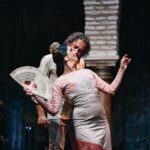
After that, you’ll reach Rosina’s Balcony, a stop with a pop-cultural wink. The tour links this balcony to the opera The Barber of Seville, with Rosina as a character inspired by the spirit of the area. This is a fun breather in the middle of heavier themes, and it also shows how Santa Cruz inspires art, not only tragedy.
If opera references make you smile, this stop is a highlight. If you’d rather stick only to strict history, you can still appreciate it as evidence of how the neighborhood’s “vibe” traveled into music and performance.





Callejón del Agua and Plaza Patio de Banderas: Water, Alcázar Walls, and Memory
The walk closes with two stops that help you understand Seville’s geography in a more intimate way. First is Callejón del Agua, a narrow, cool passage tied to water that once flowed from the Royal Alcázar. The guide frames it like an echo chamber—poems, love stories, whispered secrets—because the physical feel of the alley supports the storytelling.
Then you reach Plaza Patio de Banderas, behind the walls of the Alcázar. The tour presents the courtyard as a memory space: empires, royal ceremonies, and the evolution of Seville over the ages. It’s a strong closing note because it reminds you that the Judería story didn’t happen on a flat map—it happened beside power centers.
What I like about these last two stops is that they connect history to atmosphere. They help you remember that cities aren’t made of dates alone. They’re made of water channels, walls, courtyards, and routes people used every day.
Guides, Group Size, and How the Stories Land
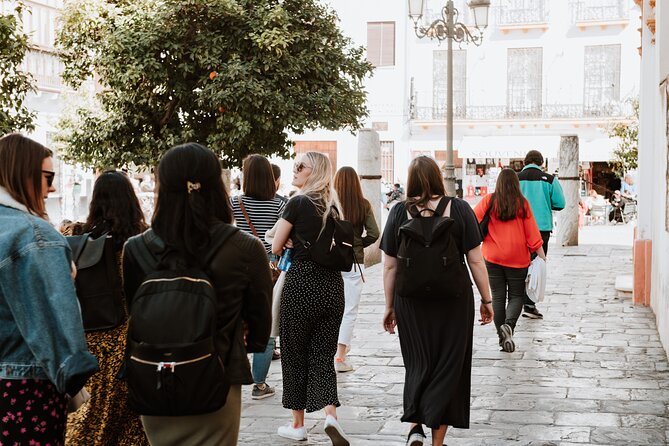
A tour like this rises or falls on the guide. The good news is that the experience is built around a small group size, which tends to bring out the guide’s best teaching style. You may hear the same locations described in totally different ways depending on whether your guide likes humor, careful chronology, or quick Q&A.
From the guide names you might encounter—Julio, Lara, Maria, Anna, and Ana—there’s a consistent theme in how people describe the experience: the guides take time, answer questions, and connect “what you see” to “what it meant.” One person specifically noted that a guide gave legend alongside historical truth, which is exactly the approach that makes a walk feel satisfying instead of just dramatic.
Still, here’s the only real risk: because the group moves together and time is tight, you can’t expect every guide to spend the same amount of time on the same topic. If you’re deeply focused on the economic or social contributions of Jewish residents to Seville society, you might want to ask your guide directly early on. One mixed note from a visitor suggested they left still unsure about specific contributions, which is a fair thing to clarify in real time.
Price and Value: Paying for a Guide, Not Tickets
The price—$18.02 per person—is surprisingly reasonable for a structured, guided walk in a central historic area. Each stop is presented as free to access on your own, which means your money mostly goes toward explanation, pacing, and context rather than entry fees.
For value, think about what you’d do otherwise. If you wander Santa Cruz without a guide, you’ll see stunning streets—but you’ll often miss the connections between names, buildings, and the neighborhood’s Jewish past. For many first-timers, that’s the whole point: paying a modest amount to get the interpretive map that turns “pretty streets” into “I understand what I’m looking at.”
Also, the booking pace (often reserved about a few weeks ahead) suggests this is a popular time slot. If you want a calmer day and a better chance of matching your preferred language, try booking earlier rather than waiting.
Who This Walk Is Best For (and When It Might Feel Too Short)
This tour suits you best if you like walking tours that act like a storyteller with a fact-checking habit. It’s ideal for:
- First-time visitors who want Santa Cruz context without a full day of museums
- People who like legends, as long as they get explained and connected to reality
- Travelers who enjoy art and architecture references, not just social history
- Families, since some visitors found it engaging even with kids
It may not satisfy you fully if you want:
- A long, deep look at everyday Jewish life in the ghetto, including institutions, routines, and detailed community structure
- A heavy focus on specific contributions of Jewish residents to Seville’s broader society
That second group isn’t “wrong” to want that. It just means you should treat this as a strong orientation walk, not as a full academic course.
Final Take: Should You Book the Santa Cruz Jewish Quarter Walk?
Yes, I think you should book it if you want to see Seville with better questions in your head. The route is tight, the stops are recognizable, and the guide-led explanations are the value engine—especially with a small group where names like Julio and Lara are the kind of energy that keeps people listening.
If you’re the type who wants very detailed historical documentation at every step, consider pairing this with your own research afterward or choosing another longer format. But for a focused, two-hour dose of Jewish history, legends, and landmark context in Santa Cruz, this is a solid way to spend an afternoon—on foot, in the place where the stories still echo.
FAQ
How long is the Seville Former Jewish Quarter Walking Tour in Santa Cruz?
The tour runs for about 2 hours.
What language is the guided tour offered in?
The tour is offered in English or Spanish.
How much does the tour cost per person?
The price is $18.02 per person.
What’s the group size limit?
This tour has a maximum of 15 travelers.
Where does the tour start and end?
It starts at Plaza del Triunfo (Pl. del Triunfo, Casco Antiguo, 41004 Sevilla) and ends at Plaza de Santa Cruz (Pl. de Sta Cruz, Casco Antiguo, 41004 Sevilla).
Is a mobile ticket included?
Yes, it includes a mobile ticket.
Are the stops included in the tour free to visit?
The stop locations listed indicate admission ticket free.
Is hotel pickup included?
No, hotel pickup is not included.
Are service animals allowed?
Yes, service animals are allowed.
What is the cancellation window for a full refund?
You can cancel up to 24 hours in advance for a full refund.