REVIEW · SEVILLE
Seville: Guadalquivir & Secrets of Triana Small Group Tour
Book on GetYourGuide →Operated by Seville Unique Experiences · Bookable on GetYourGuide
Follow the river to Triana. Seville clicks into place when you walk the Guadalquivir and hear how it shaped trade, ships, and everyday life. I like the tight focus on Triana’s working streets—market, ceramics, sailors, and folklore. I also like that the guide’s storytelling stays practical and human, with locals like Carmen, Marta, Valentín, Miguel, and Carlos highlighted for their firsthand connection. One drawback to note: it’s a walking tour in real weather, so wear shoes you can trust and be on time.
In just 1.5 hours, you get a guided rhythm: start by the river, cross into Triana, then circle back toward the waterfront where flamenco venues often cluster. It’s small too, capped at 10 people, so it’s easier to ask questions and actually follow the threads (river commerce → ports → guilds → flamenco → daily life).
In This Review
- Key highlights you’ll feel right away
- Why the Guadalquivir Makes Seville Make Sense
- From Torre del Oro to Exploraterra: Ships, Discovery, and a Strong Starting Beat
- Puente de Isabel II: The Bridge That Turns the Page
- Triana Market and Ceramics: Where Craft Guild Life Still Shows
- Callejón de la Inquisición: History Gets Dark, Then Gets Real
- Flamenco, Sailors, and the River Ending Near Santa Ana
- What the 1.5-Hour Format Feels Like (and Who Should Go)
- Price and Value: Why $29 Can Feel Like More
- Should you book this Seville: Guadalquivir & Secrets of Triana tour?
- FAQ
- Where do I meet for the tour?
- How long is the tour?
- What language is the guide?
- Is the tour wheelchair accessible?
- Will the tour run if it rains?
- Are monument or church tickets included?
- Is hotel pickup included?
- How big is the group?
- What happens if I arrive late?
- Is there free cancellation and a pay-later option?
Key highlights you’ll feel right away
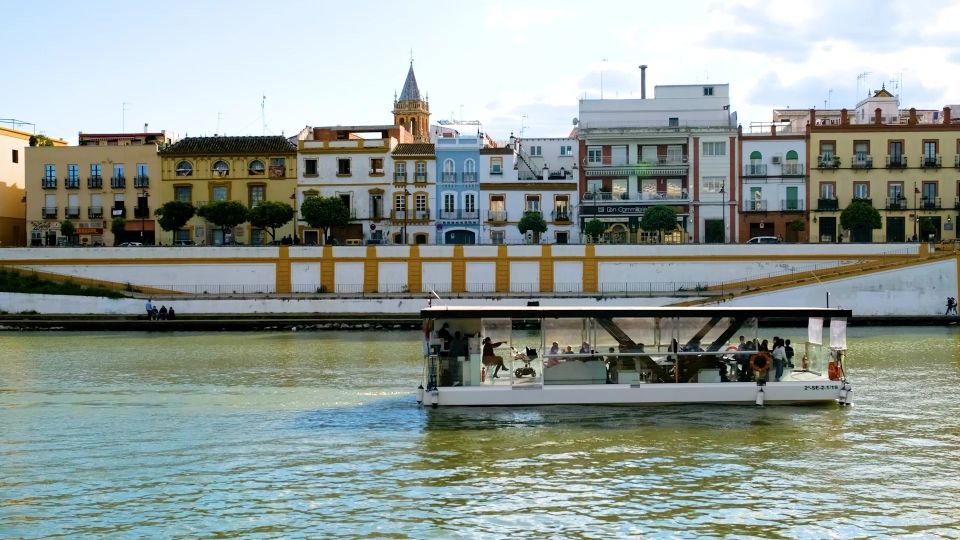
- Guadalquivir context that makes Seville’s port story make sense
- Triana sights tied to real trades and long-lasting guild life
- Flamenco explained through Triana’s culture and river connections
- A “dark chapter” stop at the Callejón de la Inquisición
- Riverfront ending near flamenco venues, so you can keep the evening going
Why the Guadalquivir Makes Seville Make Sense
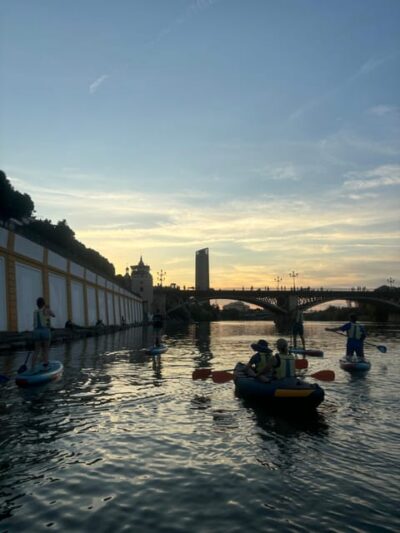
If you only look at Seville from the cathedral side, you miss half the city’s logic. The Guadalquivir is the highway that turned Seville into a trade hub. On this tour, that idea is not theory. You’re literally beside the river at the start, then again near the end, so the geography does the teaching.
You’ll pick up how Seville grew as ships moved goods and people, and how the river shaped neighborhoods. Triana is the key counterpart: it sits across the water and developed its own identity while facing Seville as a neighbor and working partner. That contrast is the point. It’s not just architecture you’re seeing. It’s why the city ended up in this exact form.
And it’s worth paying attention to scale here. The port story is big, but the tour keeps it grounded in streets, chapels, churches, and the everyday rhythm of crafts and community.
You can also read our reviews of more tours and experiences in Seville.


From Torre del Oro to Exploraterra: Ships, Discovery, and a Strong Starting Beat
You meet at the base of the Torre del Oro cruise area, right on the riverbank. That’s a smart choice: you’re orienting yourself in the same direction the whole story will travel. From there, you head to Fundación Nao Victoria and the nearby Espacio Exploraterra area. Even when you don’t go deep into museums, these stops set the tone: Seville as a maritime city tied to exploration, shipping, and the movement of the world through the port.
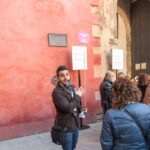
This is also where the guide’s craft matters. A good storyteller doesn’t dump dates. They give you anchors you can remember when you’re walking past the next building. In the past, guides including Marta, Miguel, and Valentín have been praised for taking time to explain the Triana area, not just point at it. That matters because you’ll be covering several thematic stops quickly.
Practical tip: this is the part where you’ll benefit most from listening closely. If you zone out here, the rest can feel like a series of pretty streets. Stay with it, and the river-to-Triana line will click.
Puente de Isabel II: The Bridge That Turns the Page
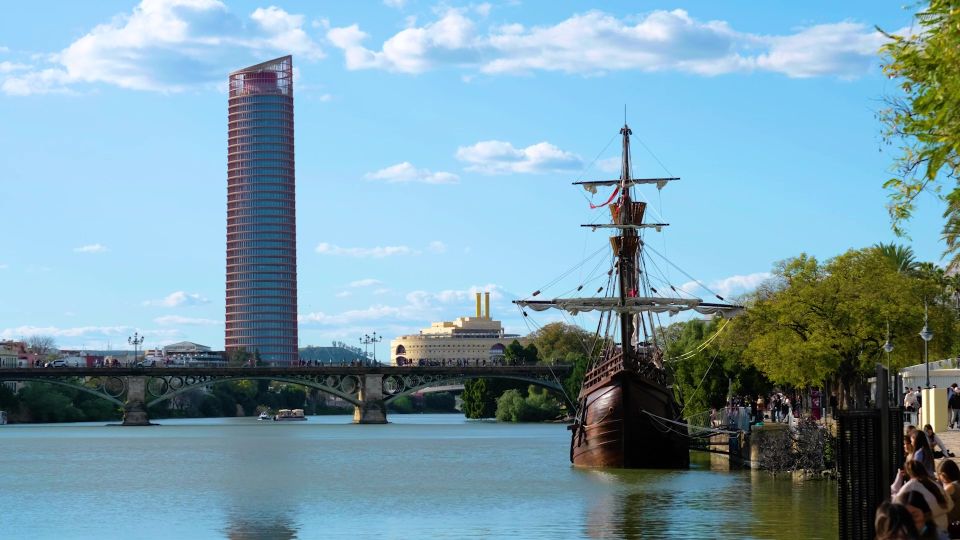
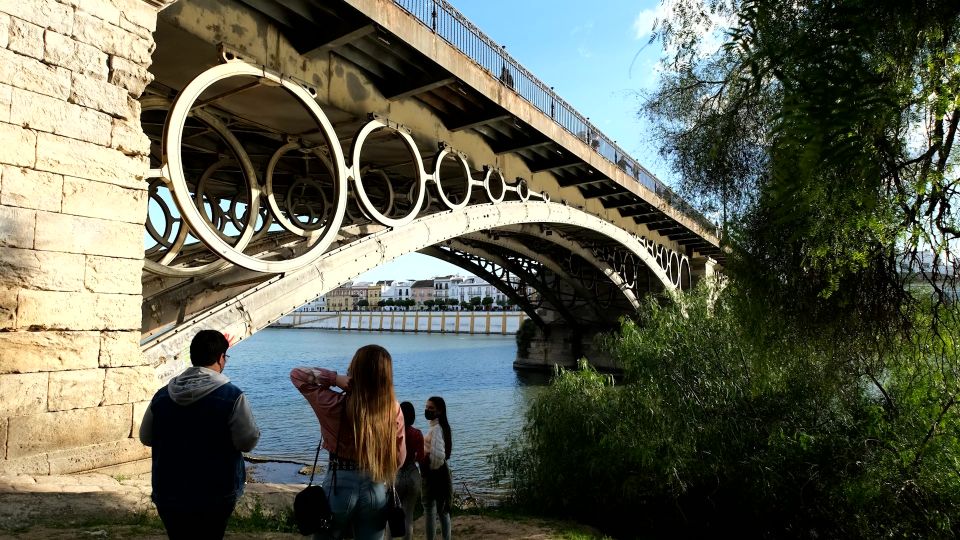
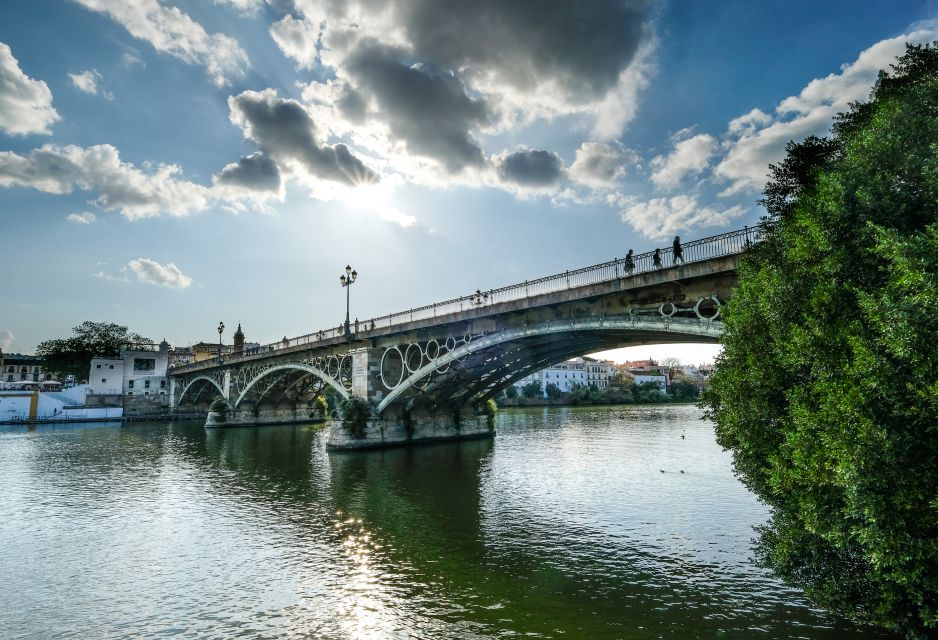
After your initial river grounding, you cross the Puente de Isabel II—the emblematic bridge that acts like a switch between two ways of understanding Seville. Once you’re over, Triana stops feeling like a suburb and starts feeling like a city with its own personality.
This crossing is one of the tour’s quiet advantages. It gives you a moving viewpoint: you see how the two sides face each other, and you begin to understand why Triana’s culture formed alongside, rather than inside, Seville’s main political and religious power.
And this is where the tour’s balance shows. You get architecture and folklore, yes, but you also get the trade logic behind what you’re seeing—why waterfront neighborhoods, work roles, and guild life mattered so much.
If you like history you can picture, not just memorize, the bridge moment is worth the price of admission on its own.
Triana Market and Ceramics: Where Craft Guild Life Still Shows
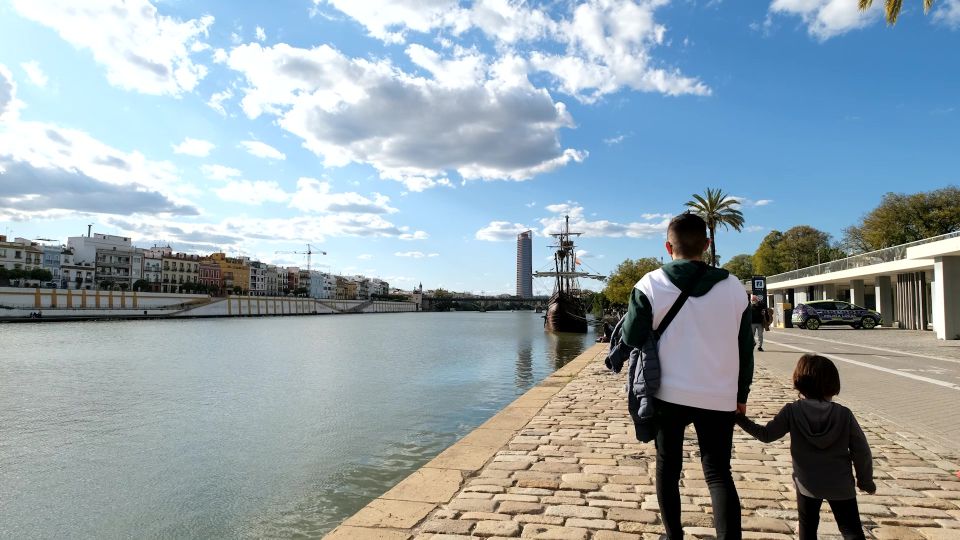
Triana is famous for trades, and the tour pulls you into that reality instead of leaving it as a slogan. You’ll stop at Triana Market, where the energy of a working neighborhood comes through fast. Markets here aren’t just for snacks. They’re part of how communities stay connected and how skills stay in circulation.
Then you head to Centro Cerámica Triana. Tiles and ceramics are one of the easiest ways to read a place with your eyes, because you can see styles, patterns, and the sense of local design identity. You also get the bigger idea behind the objects: Triana has long hosted craft guilds, and many of those traditions have survived into modern life.
This is a good spot for beginners. Even if you know nothing about Seville, you’ll understand the value quickly: crafts are living evidence of social structure. People weren’t just making things; they were building careers, community, and reputation.
If you’re a return visitor, this still works. It redirects you from the usual highlights into the working side of the city—less “postcard” and more “how the neighborhood actually lived.”
Callejón de la Inquisición: History Gets Dark, Then Gets Real
Not every street story is bright. The tour includes Callejón de la Inquisición, a key stop for understanding the heavier chapters tied to Seville’s power. Topics like the Inquisition’s darker times come up here, and the point is not shock value. It’s context.
Seville’s story includes religious authority, political control, and fear-driven systems that left marks on the city’s atmosphere. When you walk into that kind of street narrative, the city stops being only scenery. It becomes a place shaped by consequences.
A balanced tour includes both extremes: the port splendor on one side of the river, and the dark pressure of authority on the other. That contrast is exactly why this walk feels satisfying instead of one-note.
Practical note: if you prefer purely sunny, light-hearted storytelling, this part may feel intense. But if you want the full picture of Seville, it’s the kind of stop you’ll remember later.




Flamenco, Sailors, and the River Ending Near Santa Ana
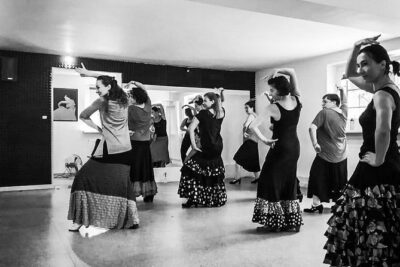
One of the tour’s best threads is how it connects flamenco to Triana. You’ll learn about flamenco’s relationship with Triana and how the neighborhood’s culture helped shape what people think of as flamenco today. That means it’s not treated like background entertainment. It’s framed as part of local identity.
The tour also brings in maritime culture through stops like the Chapel of Sailors, Sevilla. This is where the river theme returns in a very human way: sailors, movement, longing, risk, and community. Even if you’ve seen flamenco shows before, this framing helps you connect the dots between music and the kinds of lives that fed the stories.
Finally, you finish near the riverfront, around Real Parroquia de Señora Santa Ana. The ending is timed so you can head right into the evening mood. Since many flamenco venues cluster near the waterfront, you’re set up to continue without needing extra transport.
This is also a small-group win. When your guide can answer questions with patience—something noted for multiple guides on this concept—you leave with real understanding, not just a to-do list.
What the 1.5-Hour Format Feels Like (and Who Should Go)
At 1.5 hours, this is a focused walking tour, not a long sit-down lecture. You’re moving, listening, and taking quick mental snapshots of what you see. That tight format is why it’s good value: you’re paying for narrative, not for waiting around.
The group size is capped at 10, and the guide is an English-speaking licensed guide. Multiple guides associated with this experience have been praised for being engaging, enthusiastic, and genuinely interested in questions—especially when someone is traveling solo. So if you’re the type who likes to ask, this structure helps.
You should consider this tour if:
- You’re a first-timer who wants more than the headline landmarks
- You care about how a city works—trade, crafts, and neighborhoods—not only what it looks like
- You want flamenco explained in cultural context, not just as a show
It may not fit if:
- You want lots of museum time or you hate walking in rain or sun
- You’re expecting ticketed monument entry as part of the experience (tickets are not included)
A quick practical thought: because it runs rain or shine, dress like you might get wet or sunburned. Bring a light layer and plan for slippery spots near river edges. And be punctual. Latecomers can’t join after the group leaves.
Price and Value: Why $29 Can Feel Like More
The price point—$29 per person—is the kind that makes a tour feel like a smart add-on rather than a major commitment. You’re paying for an English guide plus a structured route that covers the river trade story and Triana’s culture in a short time.
Where the value really lands is in the “so what” factor. By the end, you shouldn’t just know names like Torre del Oro or Puente de Isabel II. You should know why Seville’s port power mattered, how Triana’s craft guild life formed, and why flamenco belongs in the same conversation as sailors and river commerce.
That narrative payoff is also helped by the small group size. Fewer people means less rushing past questions and more guided attention to what you’re actually curious about.
Should you book this Seville: Guadalquivir & Secrets of Triana tour?
I’d book it if you want to understand Seville in motion—how the Guadalquivir shaped everything from trade to neighborhood identity, and how Triana became a cultural engine. It’s especially strong for people who enjoy stories that connect places: river to bridge, bridge to market and ceramics, then into flamenco and the darker historical chapters.
Skip it only if you’re looking for a slow, ticket-based museum day or if walking rain-or-shine is a deal-breaker.
FAQ
Where do I meet for the tour?
You’ll meet at the base of Torre del Oro by the riverbank side, next to the tourist cruises ticket office.
How long is the tour?
The tour runs for 1.5 hours.
What language is the guide?
The guide speaks English.
Is the tour wheelchair accessible?
Yes, the tour is listed as wheelchair accessible.
Will the tour run if it rains?
Yes, it takes place rain or shine.
Are monument or church tickets included?
No. Tickets to monuments are not included.
Is hotel pickup included?
No. Hotel pickup is not included.
How big is the group?
It’s a small group limited to 10 participants.
What happens if I arrive late?
You should be punctual. Latecomers can’t join once the group leaves the meeting point.
Is there free cancellation and a pay-later option?
Yes. Free cancellation is available up to 24 hours in advance for a full refund, and you can reserve now and pay later.