REVIEW · SEVILLE
Seville Panoramic Walking Tour
Book on Viator →Operated by Not Just a Tourist · Bookable on Viator
Seville on foot beats a bus tour. I like how this small-group walk strings together major sights with history you can actually connect, instead of just ticking boxes.
I also love that you end up at the postcard places (Plaza de España, the Guadalquivir river, Triana Bridge) while still getting an insider’s tip guide you can use after the tour.
One thing to consider: many headline monuments are viewed from the outside only, and the Cathedral, Giralda, and Alcázar are not included admissions. If you want to go in, plan on buying tickets separately.
In This Review
- Key Highlights You’ll Feel During the Walk
- Starting at Ayuntamiento de Sevilla: Why This Tour Works So Well
- Ayuntamiento and Plaza San Francisco: The Seville “How It Flows” Moment
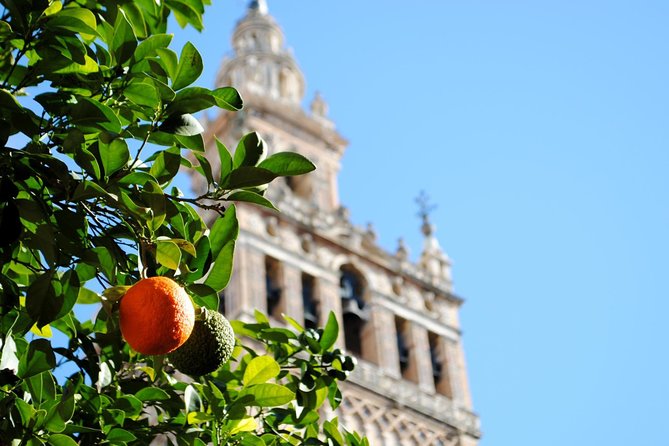
- Giralda and Catedral From the Outside: Great Views, No Ticket Pressure
- The Real Alcázar: What You Learn Even Without Entering
- Barrio Santa Cruz: The Neighborhood Stop That Actually Sticks
- Tabacos Factory and the Carmen Connection
- Parque de María Luisa and Plaza de España: The Photo Stops With Purpose
- Torre del Oro and the Guadalquivir Walk: Getting Close to the City’s Engine
- Triana Bridge and San Jorge Castle: The End-Section That Changes Perspective
- Guides That Keep It Personal: Sara and Carlos as Examples
- Price and Value: What $114.45 Gets You (and What It Doesn’t)
- Practical Tips So You Enjoy Every Stop
- Should You Book This Seville Panoramic Walking Tour?
- FAQ
- Where does the tour start?
- How long is the Seville panoramic walking tour?
- What language is the tour offered in?
- What’s included in the price?
- Are tickets to places like the Giralda, Cathedral, and Alcázar included?
- Do you provide food and drinks?
- How big is the group?
- What if weather is bad or the minimum group isn’t met?
- Can I cancel for a full refund?
Key Highlights You’ll Feel During the Walk
- Max 8 people keeps the tour conversational and easy to adjust when the group is moving at different speeds
- Outside views of Seville’s biggest icons (Giralda, Cathedral, Alcázar) without the stress of timed entry
- A smart mix of neighborhoods and symbols: Santa Cruz, the Tabacos factory, Maria Luisa Park, and the riverfront
- Insider’s tip sheet helps you keep exploring after the tour ends
- Guides match your pace in a way that feels personal (I’ve heard Sara set a perfect rhythm and Carlos tune things even for just two people)
Starting at Ayuntamiento de Sevilla: Why This Tour Works So Well
This tour is built for orientation. You don’t just wander; you’re guided from landmark to landmark in a way that helps Seville start making sense fast. The starting point is Ayuntamiento de Sevilla, at Plaza Nueva, 1 (Casco Antiguo), which is a good spot because you’re already in the old-city core.
The walk runs about 2 hours, so it’s short enough to fit on your arrival day. And it’s long enough to cover several “anchors” of the city—squares, major monuments you’ll recognize instantly, and the river area that ties the whole city together.
If you like a tour that gives you context (why things are where they are) more than a tour that rushes you through rooms, you’ll probably enjoy this.
You can also read our reviews of more walking tours in Seville


Ayuntamiento and Plaza San Francisco: The Seville “How It Flows” Moment
You begin at the Renaissance City Hall (Ayuntamiento) area, with a quick introduction to the setting. It’s a good first stop because it frames Seville as a city shaped over time, not just one era frozen in postcards.
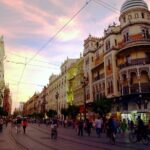
Next comes Plaza de San Francisco, described as the heart of Seville. This is the kind of square where it’s easy to feel the city’s rhythm—people moving, street life around you, and those historic backdrops that suddenly make directions clearer.
These early stops are also useful because they teach you how to read the city. After a couple of minutes, you start noticing sight lines—how streets aim you toward the next big landmark.
Giralda and Catedral From the Outside: Great Views, No Ticket Pressure
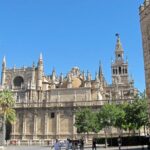
The tour includes a stop near Torre Giralda, the Cathedral’s bell tower. You’ll see it from the outside, and the guide focuses on what it represents and why it’s such a defining feature of Seville’s skyline.
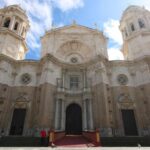
Then you move to Catedral de Sevilla, the second-largest Gothic monument in the world. Again: the plan is viewing from outside. That matters. You avoid lines and timing headaches, but you also skip the interior experience unless you add tickets later.
This is a strong setup for most first-timers. You get the wow factor right away—big stone, big scale, big “I finally understand where I am” energy—without spending your whole morning stuck inside a queue.
If you’re the type who needs to go inside every major monument, treat this as an excellent pre-visit. Use what you see here to decide what deserves your paid entry time.
The Real Alcázar: What You Learn Even Without Entering
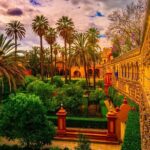
You’ll also pass by the Real Alcázar de Sevilla area and see it from outside. The focus is on the idea of the palace and gardens as the meeting point of Muslim and Christian rule in Seville’s story.
Because the Alcázar is famous and ticketed, not going in can feel like a trade-off. But for many people, it’s a smart one—especially if you’ve got limited time. The outside views give you enough to anchor the architecture in your mind before you decide whether you want to commit to the full palace visit.
Practical note: even without tickets, this kind of stop is still valuable. The guide can point out design cues and explain why the building looks the way it does, so when you later stand in front of it on your own, you’ll recognize what the guide taught you.
Barrio Santa Cruz: The Neighborhood Stop That Actually Sticks
Next up is Barrio Santa Cruz, Seville’s charming Jewish quarter. This segment is about atmosphere and meaning, not just scenery. You’ll spend more time here than in some of the other “quick pass” stops, which tells you the tour wants this to land.
This is where Seville starts feeling personal. The narrow streets, the sense of layering, and the human scale of a neighborhood make the city feel lived-in rather than museum-like.
If you’re planning your own self-guided walk later, this is one area you’ll likely want to return to—so the guide’s framing helps you navigate with purpose, not just wandering.



Tabacos Factory and the Carmen Connection
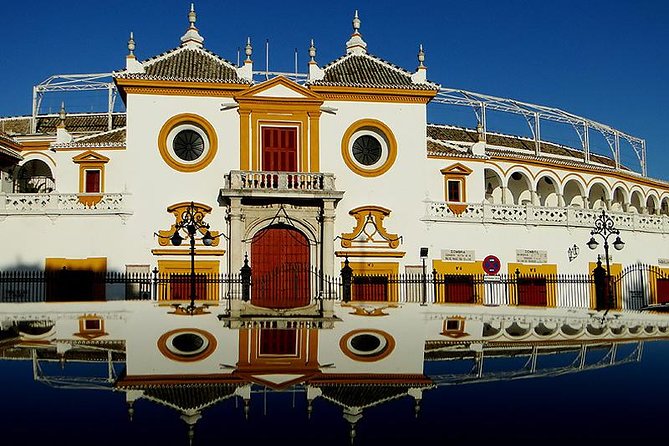
The tour then heads to Real Fabrica de Tabacos, the Tabacos factory area. The stop note calls out its connection to Carmen, which is a great example of how Seville’s culture echoes beyond the city itself.
Even if you don’t care much about the opera side, this kind of stop gives you a different angle on Seville: not just palaces and churches, but working history and cultural memory.
One possible drawback: if you were hoping for a dramatic, full interior museum moment, this is not that. It’s more of a “stop and understand the significance” kind of experience. Still, it’s exactly the sort of context that makes your later wandering more satisfying.
Parque de María Luisa and Plaza de España: The Photo Stops With Purpose
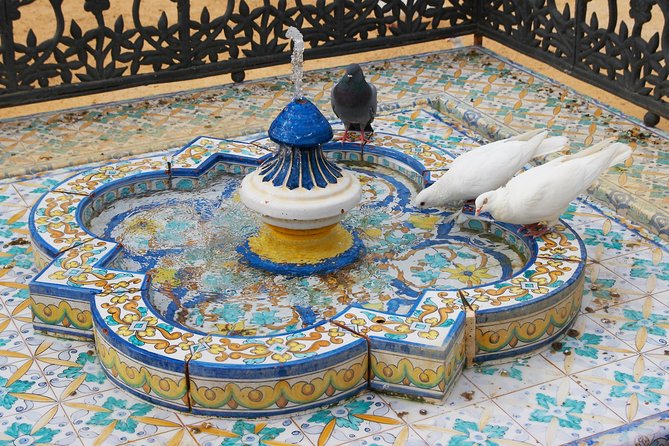
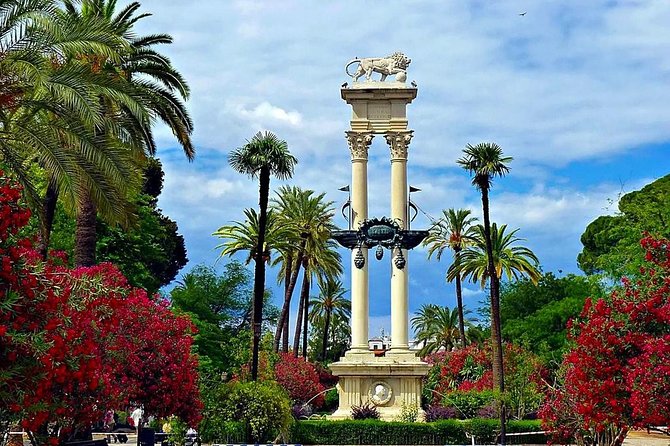
Now you hit Parque de María Luisa, Seville’s oldest park area in this route. The timing here matters—about 20 minutes—and it’s enough time to slow down. Parks are where you reset on a walking tour, and this one also gives you a breather after the denser historic blocks.
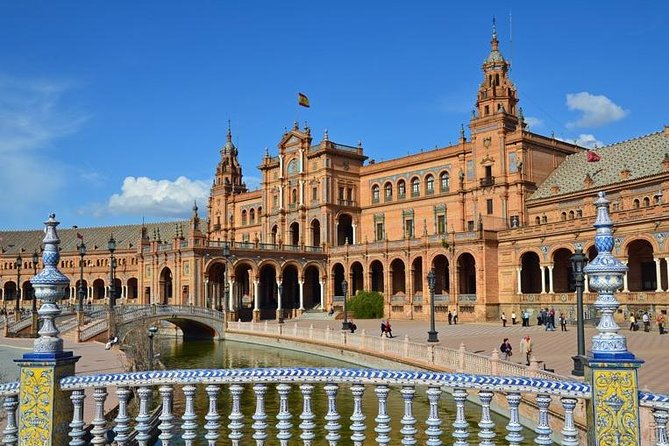
After the park comes Plaza de España, the big spectacle from the Ibero-American Exposition of 1929. This is the stop where you’ll see why Seville is famous for its cinematic geometry: long lines, bright tile details, and a monumental layout that’s hard to understand until you’re standing in it.
The key value here isn’t just photos. It’s the way the guide connects this plaza to the broader Seville story—how public spaces reflect identity and power. You can walk past it later and still “get” what you’re looking at.
If you’re short on time and need the best return on investment for scenery, this pair is a highlight of the entire experience.
Torre del Oro and the Guadalquivir Walk: Getting Close to the City’s Engine
Then you’ll shift toward the river. The route specifically includes the gold tower area (Torre del Oro) next to the water and a walk along the Guadalquivir via Guadalquivir Garden.
This part is often what makes the tour feel complete. Seville isn’t just historic buildings—it’s also the river that shaped the city’s connections and growth. Even a short walk along the banks helps you understand the map in your head.
You’ll get fresh air, more open views, and a different pace than the tight streets of the old center. For many people, this is where the tour stops feeling like a checklist and starts feeling like a real introduction.
Triana Bridge and San Jorge Castle: The End-Section That Changes Perspective
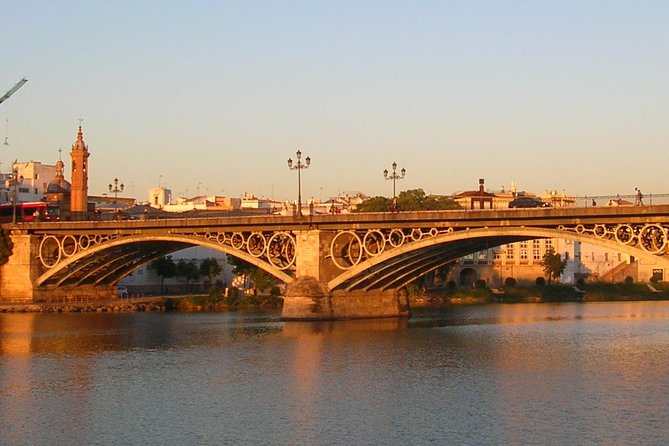
As the tour heads toward the Puente de Isabel II (Triana Bridge), you’ll also see mention of San Jorge Castle. The idea is to take you from the historic core toward the other side of the river and give you a sense of Seville’s split between neighborhoods.
A bridge stop does two things at once: it gives you a clear photo moment and it helps you understand how the city connects. When you later explore Triana on your own, you’ll already have a mental model of where the main crossing points are.
This is also a good time to keep your camera handy, but still listen. The guide tends to connect the architecture and location to the city’s bigger narrative, so it’s not just a view—it’s a way to orient yourself for the next day.
Guides That Keep It Personal: Sara and Carlos as Examples
The biggest praise in the feedback is consistency in pacing and engagement. People talk about guides who are both informed and flexible, and I can see why.
One example is Sara, noted for being very knowledgeable with a pace that felt perfect. Another is Carlos, who was described as fun and matched the group’s pace even when it was just two people. In a city like Seville, where you’ll want time to look up at details, that kind of flexibility matters.
This tour caps at 8 travelers, which is the sweet spot for a walking experience. Big enough to have energy, small enough that questions don’t get lost.
Price and Value: What $114.45 Gets You (and What It Doesn’t)
At $114.45 per person for about 2 hours, the value depends on what you want most.
You’re paying for:
- a local guide
- an information sheet of insider tips
- a focused walk that covers key areas you’ll likely want to see anyway
- outside views of major monuments without needing to manage tickets and timings during the tour
You are not paying for:
- food and drinks
- tips
- included admissions for major sites like Torre Giralda, Catedral de Sevilla, Real Alcázar, and Real Maestranza de Caballería (these are marked as not included)
So think of this as buying a guided “Seville map with meaning.” If you plan to add your own ticketed visits afterward, it’s a smart way to avoid wasting precious time. If you only want a quick glance and don’t plan to return, you might prefer a tour that includes more interior time.
Also, the pricing can be easier to stomach if you’re traveling with a group, since there are group discounts mentioned for this experience.
Practical Tips So You Enjoy Every Stop
A walking tour lives or dies by small choices you make before you meet up.
- Wear comfortable shoes. Seville is full of interesting surfaces—your feet will thank you if you’re not in stiff footwear.
- Bring water and plan for sun, especially once you’re near open plazas and river views.
- Expect outside views at several headline monuments. Bring a camera, but don’t expect inside-entry tickets to be handled for you.
- The tour asks for good weather, so if the sky looks questionable, you’ll want to stay ready for a date change or alternative plan.
On the day itself, there are also practical safety habits mentioned: guides wear masks and gloves when appropriate, and hand sanitiser is available. Service animals are allowed, and children must be with an adult.
Should You Book This Seville Panoramic Walking Tour?
Book it if you want:
- a short, structured introduction to Seville with meaningful context
- a guide who keeps the pace workable, especially in a group of up to 8
- a route that hits iconic places like Plaza de España and connects them to the city’s neighborhoods and river life
- an insider’s tip guide you can use to plan your next moves
Skip or pair it with separate visits if:
- you want to enter major monuments as part of the guided experience (here, many are outside-only)
- you’re hoping for food included or a “spend-a-lot-of-time” atmosphere inside museums
My take: this is a solid first or second-day Seville activity. It helps you see the city in layers—squares, palace power, neighborhood texture, and river perspective—without making your schedule feel like a sprint.
FAQ
Where does the tour start?
The tour starts at Ayuntamiento de Sevilla, Plaza Nueva, 1, Casco Antiguo, 41001 Sevilla, Spain.
How long is the Seville panoramic walking tour?
The tour lasts about 2 hours.
What language is the tour offered in?
The tour is offered in English.
What’s included in the price?
Included are a local guide and an information sheet of insider tips for Seville.
Are tickets to places like the Giralda, Cathedral, and Alcázar included?
No. The tour notes these as not included, so you’d need separate admissions if you want to go inside.
Do you provide food and drinks?
Food and drinks are not included.
How big is the group?
The tour has a maximum of 8 travelers.
What if weather is bad or the minimum group isn’t met?
This experience requires good weather. If it’s canceled due to poor weather, you’ll be offered a different date or a full refund. If it’s canceled because the minimum number of travelers isn’t met, you’ll also be offered a different date/experience or a full refund.
Can I cancel for a full refund?
Yes. You can cancel up to 24 hours in advance for a full refund. If you cancel less than 24 hours before the start time, the amount you paid is not refunded.