REVIEW · SEVILLE
Seville In Season- City Highlight Tour
Book on Viator →Operated by Hop On Bike Tours · Bookable on Viator
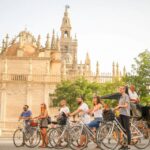
Seville’s best highlights fit into one smooth ride. This 3-hour city tour takes you across the Guadalquivir river area and lines up the places you’d usually spend a day piecing together—Triana, Torre del Oro, Real Alcázar, Maria Luisa Park, and Plaza de España. I like the quick orientation you get, and I love that the stops feel made for photos and short walks, not long trudges. One consideration: it’s a ride-and-stop format, so you’ll want to be comfortable cycling and come ready for good weather.
The pricing is also a big part of the value story. At $36.20 per person, you’re paying for a guided, timed route plus bike use, helmet, bottled water, and practical extras like a map and info points. If you prefer wandering slowly with no structure at all, a guided highlights route may feel a bit “fast”… but if you’re here for the big hits, it’s a smart shortcut.
In This Review
- Key Highlights You Should Know
- Getting Oriented Fast on a 3-Hour Bicycle Highlights Loop
- Puente de Isabel II and Triana: River Views With Real Stories
- Iglesia de Santa Ana and Torre del Oro: Mudejar Faith and Arabic Defense
- Palau de San Telmo and the Real Alcázar: Fortified Power in Layers
- Plaza del Cabildo and Real Fábrica de Tabacos: Courtyards, Crafts, and Carmen
- Parque de María Luisa to Plaza de España: Big Views, Short Breaks
- Plaza de América and the 1929 Expo Connection
- The Real Reason This Works: Guides Like Pablo, Veronica, and Antonio
- Price and Timing: Is $36.20 Worth It?
- Should You Book This Seville City Highlight Tour?
- FAQ
- How long is the Seville In Season city highlight tour?
- What does the tour cost?
- Is the tour offered in English?
- Where do I meet for the tour?
- Do I need to pay for entry at the stops?
- What’s included in the tour price?
- What’s not included?
- How big is the group?
- Is good weather required?
- Does the tour end where it starts?
Key Highlights You Should Know
- A 3-hour loop that makes Seville’s layout click on both sides of the river
- Triana’s vibe in short stops from Puente de Isabel II to Iglesia de Santa Ana
- Iconic landmarks without the all-day commitment (Torre del Oro, Real Alcázar, Plaza de España)
- Small group size (max 12) so you’re not stuck behind a crowd
- Guide-driven details that connect monuments to stories like Columbus routes and Carmen’s tobacco factory
Getting Oriented Fast on a 3-Hour Bicycle Highlights Loop
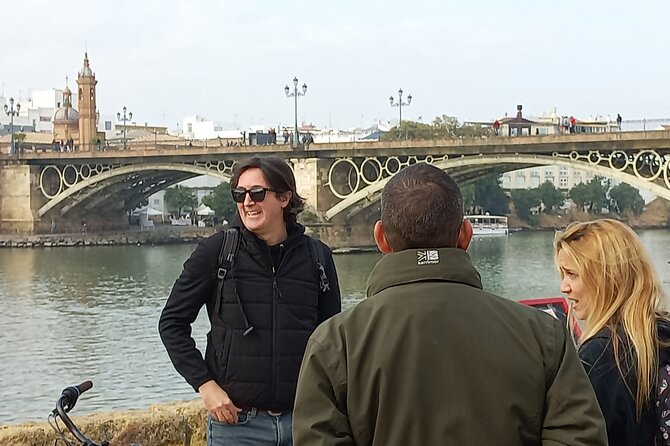
If it’s your first day in Seville, this is the kind of tour that helps you stop guessing. You meet at Segway Sevilla Tours in the Casco Antiguo, then set off for a route built around the easiest way to see a lot without burning hours in transit or getting turned around. The whole experience runs about 3 hours (give or take), and it’s offered in English.
You’ll be using the provided bicycle, and you’ll also get a homologated helmet plus bottled water. There’s even a basket and a map—small things that matter once you’re moving through real streets and stopping for quick photos. The tour ends back at the meeting point, so you’re not left stranded across town.
Value-wise, the big win is what’s included versus what you’d pay separately. Many of the stops are listed as free admission, and your “ticket” covers the ride, the guide’s route management, and the practical support. For $36.20, that’s an efficient way to sample the city’s top sights while still getting context instead of just collecting snapshots.
The one “watch out” is weather. The tour requires good weather, so if conditions are poor, you’ll be offered another date or a refund. Also, because you’re cycling, you don’t want to book this if you’re planning to avoid any physical movement at all.
You can also read our reviews of more city tours in Seville

Puente de Isabel II and Triana: River Views With Real Stories
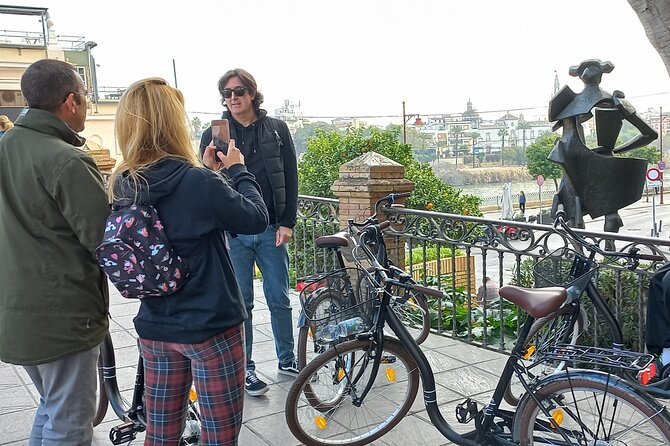
The route kicks off at Puente de Isabel II, also known as Puente de Triana. This is the kind of spot where the views do half the work for you: you’re looking right toward the Triana neighborhood across the Guadalquivir. The guide’s angle here is what turns it from pretty scenery into context.
You’ll hear why this river stretch mattered historically. It’s tied to the Port of the Indies—an important departure and return point for Christopher Columbus and other navigators shipping goods between Europe and the Americas. So when you look out at the river here, it’s not just a postcard view. It connects to the city’s trading past.
Next comes Triana itself. Triana is one of Seville’s most distinctive quarters, and the tour keeps it focused: you get the sense of what the area is known for—flamenco roots, notable bullfighters, and early Moorish ceramic production. Even in a short window, it helps you understand why people talk about Triana as a personality, not just a neighborhood.
A quick heads-up: time at each stop is short. You’ll get your bearings, a few photos, and a couple of key facts—but not a full deep dive. Think of these early stops as a fast introduction that tells you what to return to later if something really grabs you.
Iglesia de Santa Ana and Torre del Oro: Mudejar Faith and Arabic Defense
From Triana, the tour moves to Iglesia de Santa Ana, popularly called the Cathedral of Triana. That name alone tells you how important it is to locals. Here, the emphasis is on the timing and style: it’s described as the first Catholic church built in Seville after Muslim rule ended in 1248, and it’s in the Mudejar style.
That’s a detail worth paying attention to, because it reframes what you’re seeing. You’re not just stopping at a church. You’re looking at a historical pivot point in Seville’s layered identity—Christian rule following an Islamic era, expressed through architectural language that locals already understood.
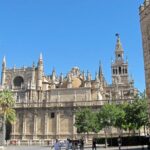
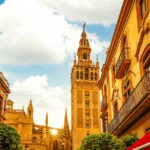
Then comes Torre del Oro, one of Seville’s most recognizable landmarks. This watchtower was built by Arabs on the left bank of the Guadalquivir, and it originally connected to another tower across the river using a defensive chain. Yes, a chain—so suddenly the tower is more than a tower. It’s part of a system designed to control ships and movement.
The tour also ties this stop to what’s nearby on the broader theme of Seville’s power and culture, mentioning major institutions like the Real Maestranza bullring and related theatre spaces. Even if you only get a short look from the street, you start to see the area as a connected map of empire, art, and spectacle.
Palau de San Telmo and the Real Alcázar: Fortified Power in Layers
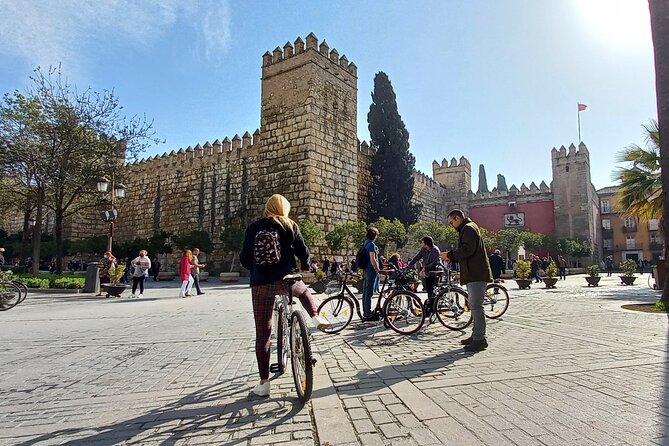
After the river and defense stops, the tour shifts into royal and maritime themes. First is Palau de San Telmo, a Baroque building now used as the seat of the Presidency of the Junta de Andalucía. What makes it interesting is that it wasn’t always a government building.
Originally, Palacio San Telmo was built in 1682 as a marine academy. The focus was training ship pilots, navigators, and high-ranking officers. It’s named for San Telmo, the patron saint of seafarers. So if you’ve been thinking Seville is only about land and churches, this stop redirects you. The city’s river power also shaped education and seafaring roles.
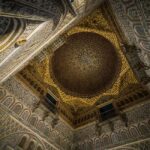
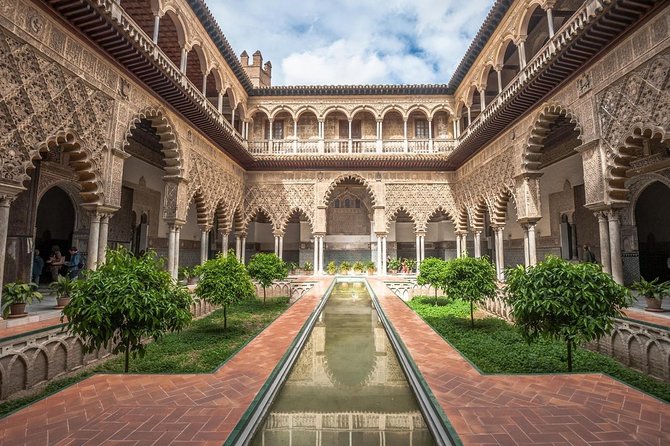
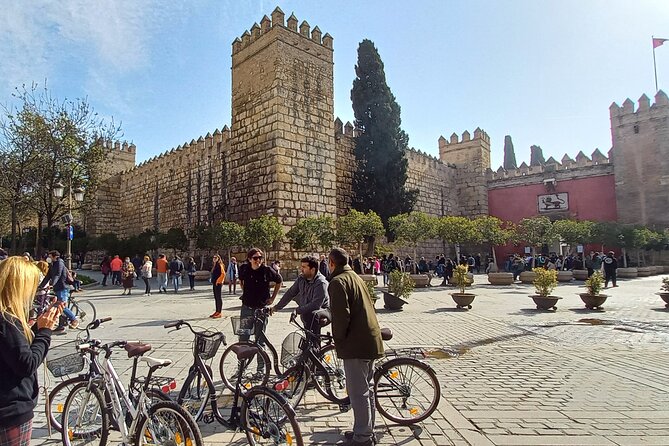
Then you’ll ride to Real Alcázar de Sevilla, where the tour really hits a major “must-see.” Alcázar simply means fortified palace, and that’s exactly what you’re looking at: a walled enclosure with royal residences from different eras. It’s described as the oldest royal palace in Europe, which is a huge claim—so even if you don’t memorize every date, you’ll feel the age and importance in the scale.
Also, this is one of those places that’s been used for filming, including Game of Thrones. Even if you don’t treat that as the main reason to go, it helps explain why the palace reads as cinematic. It’s one of those stops where the guide’s framing helps you notice details you’d otherwise walk past.
If you want the most from Real Alcázar, set expectations: the tour stop is short. You’ll likely get the main beats and a sense of what to focus on if you return later.
Plaza del Cabildo and Real Fábrica de Tabacos: Courtyards, Crafts, and Carmen
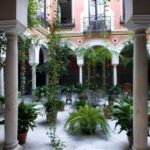
Next up is Plaza del Cabildo, described as a haven of peace and tied to the old College of San Miguel founded in the 13th century by Alfonso X the Wise. Later, it served as a residence area connected with the cathedral’s chapel master and choir boys.
The key here is atmosphere. Under painted arches and white marble columns, the tour notes the presence of antique and philately shops, along with a candy store tied to cloistered convents. In other words, this isn’t only a “history stop.” It’s a place where history is still packaged into daily life.
Then you’ll move to Real Fábrica de Tabacos. This one is a story machine. The tour points out that 75% of the cigars sold on the continent were made in this building, which explains why it became such a central economic landmark. And then it connects directly to literature and opera: the story of Carmen is set here, in Seville’s tobacco factory—featuring Carmen, a gypsy who worked at the plant.
If you’re only familiar with Carmen from the stage, this is a powerful way to put the fiction back into place. You see how the setting could plausibly carry the drama: an industrial workplace with guarded walls, big production, and a major workforce.
Again, you won’t have hours to linger on-site during a highlights tour, but you’ll leave with enough context to make a future return feel purposeful instead of random.


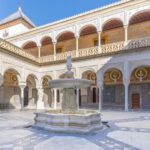
Parque de María Luisa to Plaza de España: Big Views, Short Breaks
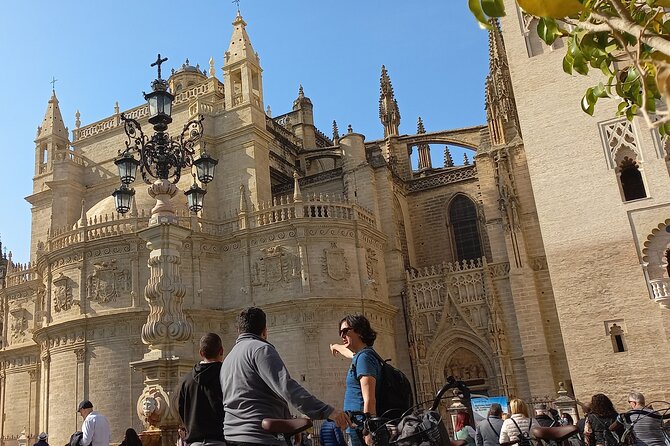
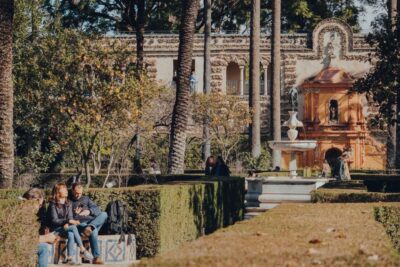
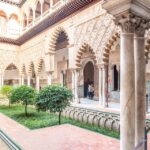
Once you head into Parque de María Luisa, the tour shifts tempo in a good way. This park is described as Seville’s most beautiful and also tied to a major event: it was the venue for the Hispano-American Exposition of 1929. It also traces back to former private gardens of the Palacio de San Telmo.
Expect a pleasant walk through the park with several explanatory stops at places like Glorieta de Bécquer and Plaza de América. This is a nice change from monuments of power. Here, you’re reading Seville through design, shade, and planned public space. It also gives you a break from cycling intensity without leaving the “highlights” track.
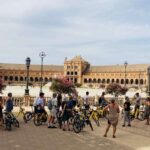
From the park you reach Plaza de España, one of the city’s iconic set pieces. The tour describes it as designed in Regionalist styles, mixing three architectural styles tied to the earlier themes you’ve seen on the route. Architect Aníbal González is credited with the design, and his statue is visible in the square.
This is a stop that rewards slowing down even if your tour time is tight. The space is wide and designed for viewing in motion: you can spot patterns across the plaza and feel the scale in a way that’s hard to understand from photos alone.
Plaza de América and the 1929 Expo Connection
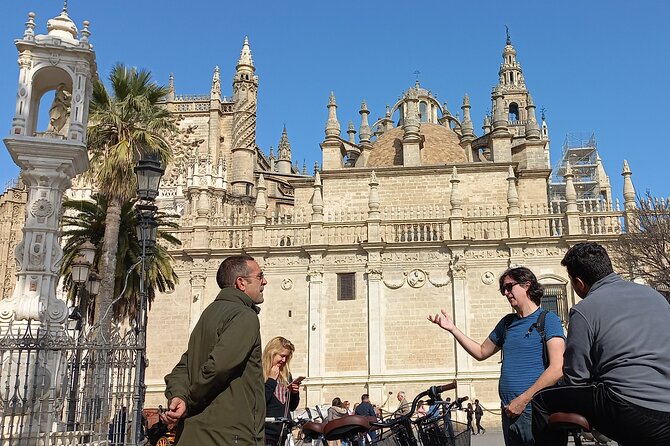
The final big area is Plaza de América, where the tour ties everything back to Aníbal González and the 1929 Ibero-American Exposition. The emphasis here is on the three buildings in the square, built between 1913 and 1916, each with a different architectural style.
This matters because it turns the plaza from a single pretty spot into a practical explanation of why Seville looks the way it does in certain zones. Instead of only seeing “one more square,” you start seeing it as a planned showcase of architecture and identity—built for an international audience and still shaping how the city feels today.
It’s a smart way to end. You finish with a sense of pattern, not just a pile of landmarks.
The Real Reason This Works: Guides Like Pablo, Veronica, and Antonio
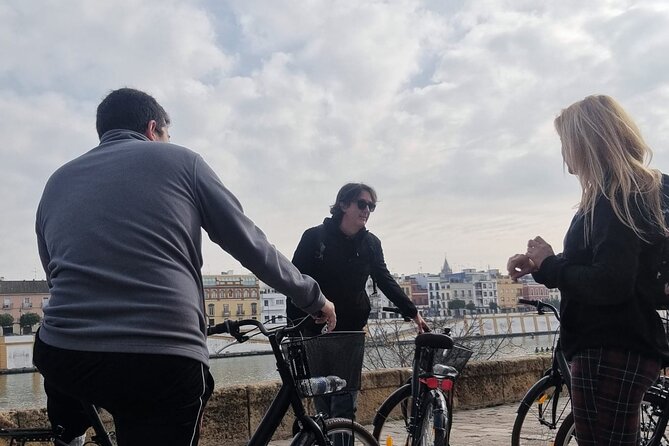
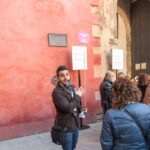
A highlights tour lives or dies by the guide, and the best part here is how friendly and accommodating the guiding style tends to be. You may meet hosts like Pablo, Veronica, or Antonio, and they’re described as passionate and strongly focused on local insights and practical tips.
Those tips matter more than the big facts. A good guide helps you know what to do with your remaining time: where to linger, what angles are best for photos, and how to understand the city’s two-sided river layout. If you’re on a short trip, that kind of “next step” guidance is gold.
There’s also a local-business vibe you can feel—supporting a company rooted in the area rather than just running a cookie-cutter program. In one instance, Marco finished the tour with a glass of local orange wine, which is the kind of small, human touch that makes the whole route feel less like a checklist and more like an evening with someone who cares.
Price and Timing: Is $36.20 Worth It?
For $36.20 per person and about 3 hours, you’re paying for more than access to monuments. You’re buying:
- a structured route through Seville’s key sights
- a guide to connect each stop to stories you can actually use
- bike + helmet + bottled water
- a map and practical information points
If you’re only in town for a day or two, this is an especially efficient use of time. You get the “big hits” plus context, so later visits feel smarter. It also beats trying to coordinate routes across the river by yourself, especially in the heat when you’d rather be rolling than wandering.
If you’re the type who hates any schedule at all, then this might not fit. Also, because the tour depends on good weather, don’t gamble if you’re arriving during stormy season.
Should You Book This Seville City Highlight Tour?
Book it if:
- you want a first-day orientation that covers the river, Triana, major landmarks, and the big squares
- you’re comfortable cycling and want to save your feet for later exploring
- you like guides who share local context and practical tips (not only dates)
Skip it if:
- you prefer long stays inside major sites rather than short, photo-friendly stops
- you’re not comfortable riding a bike on city streets
- your schedule is fragile and you can’t handle a weather-related change
If you want a smart, value-heavy way to connect Seville’s most famous areas in just a few hours, this one fits the bill.
FAQ
How long is the Seville In Season city highlight tour?
It runs for about 3 hours.
What does the tour cost?
The price is $36.20 per person.
Is the tour offered in English?
Yes, it is offered in English.
Where do I meet for the tour?
The meeting point is Segway Sevilla Tours, C. Álvarez Quintero, 44, Casco Antiguo, 41004 Sevilla, Spain.
Do I need to pay for entry at the stops?
The stops listed on the route are marked as free admission.
What’s included in the tour price?
Included items are bicycle use, bottled water, a homologated helmet, liability insurance, a basket, a map, and information points of interest (including tapas and other spots).
What’s not included?
Transfer to your hotel and tips are not included.
How big is the group?
The tour has a maximum of 12 travelers.
Is good weather required?
Yes. The tour requires good weather, and if canceled due to poor weather you’ll be offered another date or a full refund.
Does the tour end where it starts?
Yes, it ends back at the meeting point.