REVIEW · SEVILLE
Tour Seville Complete and Jewish Quarter Santa Cruz
Book on Viator →Operated by Sevilla&ME · Bookable on Viator
Seville rewards you when you know what to look at. This Seville Complete and Jewish Quarter Santa Cruz walk turns famous monuments and tight lanes into a clear, story-driven route that connects the city’s big moments to everyday streets. You get a compact sweep of classic sights plus the Santa Cruz/La Judería atmosphere, and it all lands at Torre del Oro with Triana-and-Guadalquivir views in your head.
I especially like two things. First, the guide storytelling: I’ve heard guides such as José, Alejandro, and Ricardo put real human detail behind landmarks, from legends to life-and-death streets. Second, the way the tour uses photos and viewpoints as punctuation—Triana comes into focus at the bridge area and again from the Guadalquivir viewpoint.
The one possible drawback is the pace. With about 2 hours and many stops, you’ll be on your feet a lot, and this is not a slow, sit-down museum day.
In This Review
- Key highlights you’ll feel fast
- The route that gives you bearings: Plaza de San Francisco to Torre del Oro
- Stops 1 to 3: how the tour teaches you to read Seville
- Stop 4: Palacio Arzobispal and the “look at it head-on” moment
- Stops 5 to 10: Santa Cruz and La Judería, built around stories you’ll remember
- Stop 11 to 14: Royal Alcázar zone, the Indies archive, and symbols
- Stops 15 to 18: Giraldillo and the switch from icon to river-city
- Stops 19 to 22: crafts, Guadalquivir views, Triana bridge, and the grand finish
- Price and value: why $11.86 can work (and when it might not)
- Who this tour suits best
- The guide factor: why José, Alejandro, and Ricardo show up in the memories
- Should you book this Seville Complete and Jewish Quarter tour?
- FAQ
- How long is the tour?
- What’s the meeting point and end point?
- How much does it cost?
- Do I get a mobile ticket?
- What size is the group?
- Is the tour suitable for most people?
- Are service animals allowed?
- Are admission tickets included?
- What’s the cancellation policy?
- When should I book?
Key highlights you’ll feel fast
- A “main sights plus Santa Cruz” combo that avoids having to piece two separate tours together
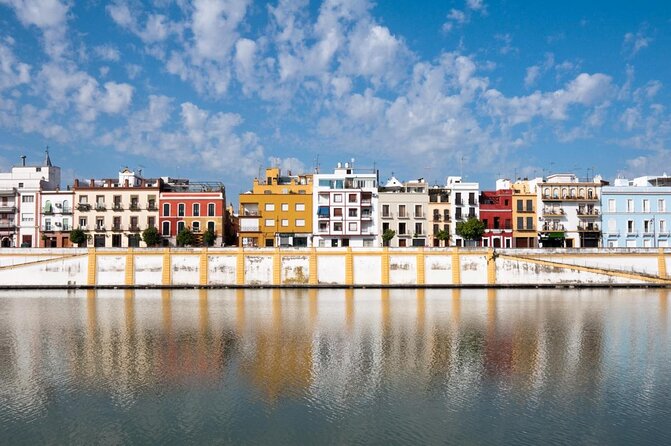
- Triana viewpoint payoff near the bridge and along the river area
- Jewish Quarter storytelling around Santa Marta, Alianza, Susona, and the Vida/Muerte street idea
- Icon stops with photo direction like Giraldillo, the Giralda area views, and Torre del Oro
- Some admissions handled, some not so you can plan ahead instead of being surprised
- Small-group feel (max 30) that keeps the walk lively without being chaotic
The route that gives you bearings: Plaza de San Francisco to Torre del Oro
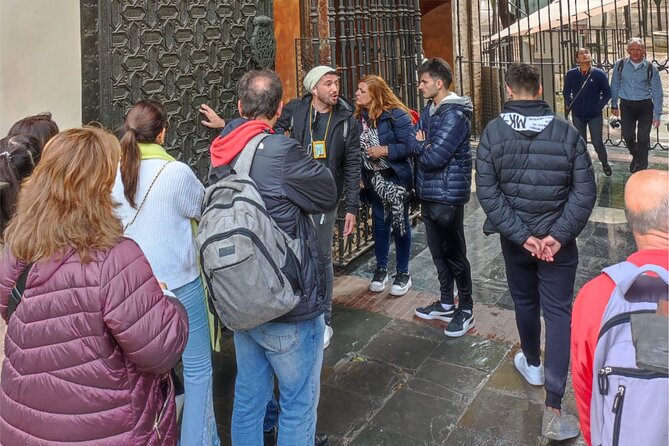
This tour is built for getting your bearings. It starts at Plaza de San Francisco (Pl. de S. Francisco, 17) in the Casco Antiguo area and ends at Torre del Oro on the river walkway. The structure is simple: you move through Seville’s key zones in a logical chain, with short stops timed for orientation and quick photos, not long “stand in line” moments.
At about 2 hours total, it’s ideal for a first or second day when you want the city’s main shapes in your head. If you’re the type who likes to understand why a place looks the way it looks, this kind of route helps. If you prefer long lingering breaks, plan a longer follow-up on your favorite area afterward—this one is about motion and meaning.
And yes, the ticket format is a mobile ticket, which makes it easier to manage your day pack. The group size is capped at 30, which is big enough for energy but small enough that you can usually hear the guide.
You can also read our reviews of more tours and experiences in Seville.

Stops 1 to 3: how the tour teaches you to read Seville
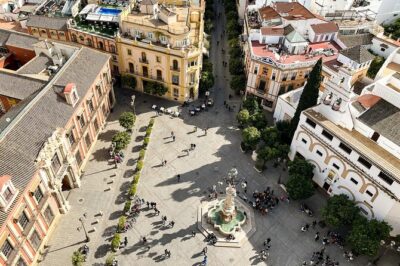
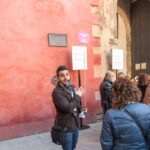
You begin at Plaza de San Francisco, a square that acts like a divider between Seville’s older commercial streets and its more monumental zones. It’s not just a pretty start point. The guide’s stories here help you understand how the city organizes itself—where commerce lived, where power later became visible, and how the streets funnel you toward major landmarks.
Next is Placentines, where the tour leans into one of Seville’s big “wait, how did that happen?” moments: the collapse of the Giralda. This is the kind of detail that makes a viewpoint feel smarter. You’re not only taking a picture—you’re learning how to interpret what’s in the frame.
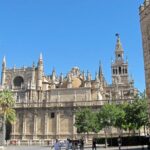
Then you land at Plaza de la Virgen de los Reyes, the Cathedral attached to the Giralda area. Even if you’ve seen the exterior before, you’ll get a different lens here: the Cathedral is treated like a living project, not just a postcard building. The stop is short, but it’s designed to help you notice the right things before you move on.
Stop 4: Palacio Arzobispal and the “look at it head-on” moment
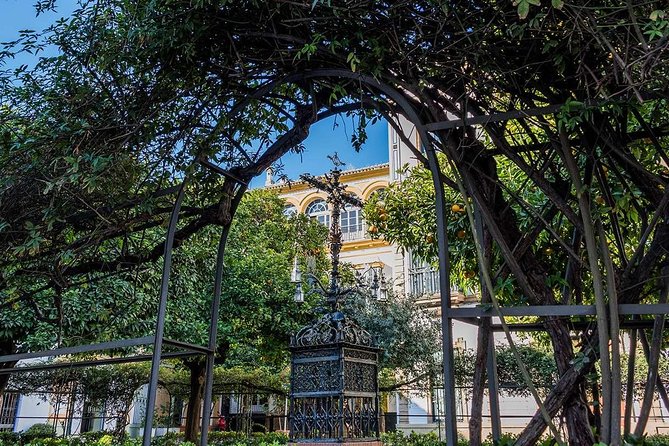
From the Cathedral zone, the tour heads to Palacio Arzobispal. This stop is all about perspective. The guide points out what happens when you face the Archbishopric directly, and then uses that front-on view to explain the concept of horror vacui—a kind of visual filling and intensity you see in many ornate spaces.
This is one of those stops where you might think, We’ll just glance and move. But if you like visual details, it can slow you down in a good way. The only consideration is that the admission ticket isn’t included for this stop. Even when you can’t enter, it can still be worth it for the external architecture lesson, but don’t count on it being an inside visit.
Stops 5 to 10: Santa Cruz and La Judería, built around stories you’ll remember
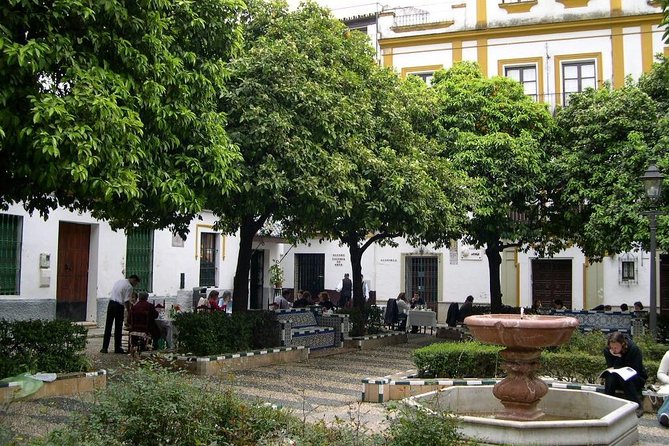
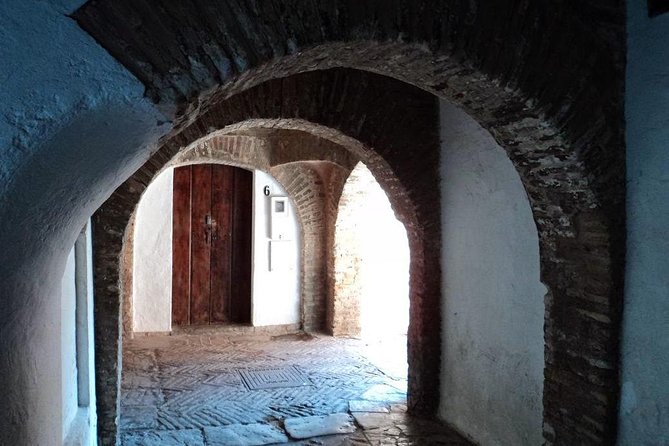
This is the emotional core of the tour. At Plaza de Santa Marta, you get the Jewish community story through a hidden-square moment—when you arrive, you can feel why this neighborhood still pulls people in. The tour frames it as one of Seville’s largest communities, and the stop is designed to connect the current street layout to what used to be lived here.
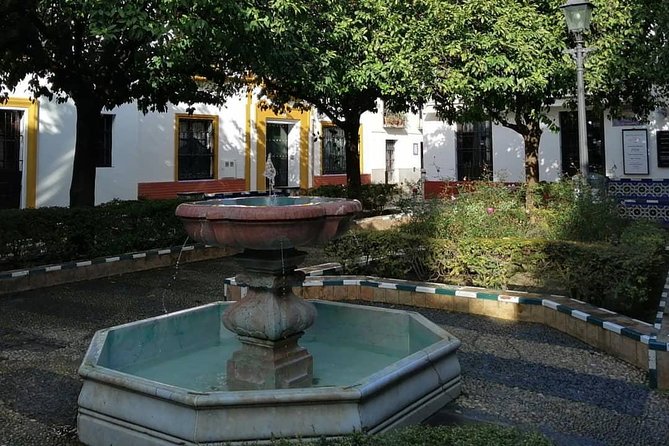
Then comes Fuente de la Plaza de la Alianza, tied to the old Jewish Quarter. It’s a small fountain stop, but it matters because the guide treats Seville as a city of layers—multiple communities passing through and leaving traces. If you like the idea that neighborhoods evolve instead of freezing in time, you’ll appreciate this.
Next is Plaza de Doña Elvira, a classic photo-friendly area inside Santa Cruz. You’re not just chasing angles. You’ll hear about minorities living here and some of the neighborhood’s curious superstitions. This is also a point where the tour’s tone shifts toward legend and daily-life imagination.
After that: Calle Susona. This lane is presented as the neighborhood’s great legend. You’re encouraged to approach it with all your senses turned on—so instead of walking past a narrow street, you treat it like a scene set for a story. It’s brief, but it has the feel of a memorable “scene” more than a checklist stop.
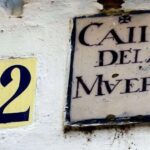
Then you have Calle Vida, with the playful concept that there’s also a Muerte street, and you get to decide which crossing you make. It’s a simple theatrical idea, but it helps you pay attention to how Seville can mix solemn and playful tones in the same block.
Finally, the tour reaches Judería as a marker that ties the whole Santa Cruz section together. If you want a quick “I get it now” moment, this is it. You’ll start connecting the dots between the streets you just walked and the broader identity of the neighborhood.
Stop 11 to 14: Royal Alcázar zone, the Indies archive, and symbols
After Santa Cruz, the tour shifts you toward monumental Seville.
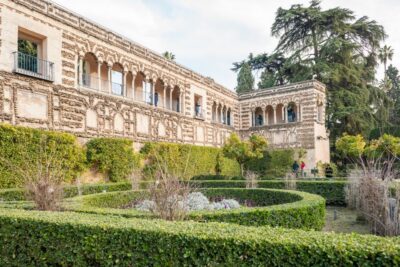
At Plaza Patio de Banderas, you’re near the Royal Alcázars area. The key here is the idea of succession—who followed whom, and what different eras left behind. The stop is short, but it plants the bigger picture so when you later visit the Alcázars more fully (if you choose), it will make more sense.
Then it’s Puerta del León. This stop focuses on symbology and defense: heraldry, customs, and the way different kings are linked to the structure’s meaning. If you like to understand how power was signaled in stone, this one clicks.
Next up is the Archivo General de Indias. The tour’s angle is fun and specific: even today, the archive has a reputation tied to pirates, and the guide explains why that association makes sense. Here again, admission isn’t included, so think of it as a guided approach and explanation moment rather than a full inside visit.
After that, you reach Monumento a la Inmaculada Concepcion. This is where the tour reminds you Seville wasn’t only art and faith—it also sits in the world of marketing and big ideas. The guide connects Seville’s crossroads identity to painters, Baroque influences, and even the notion of the first marketing campaign in history. It’s a surprising pivot, and that’s part of the appeal.


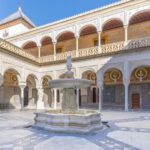
Stops 15 to 18: Giraldillo and the switch from icon to river-city
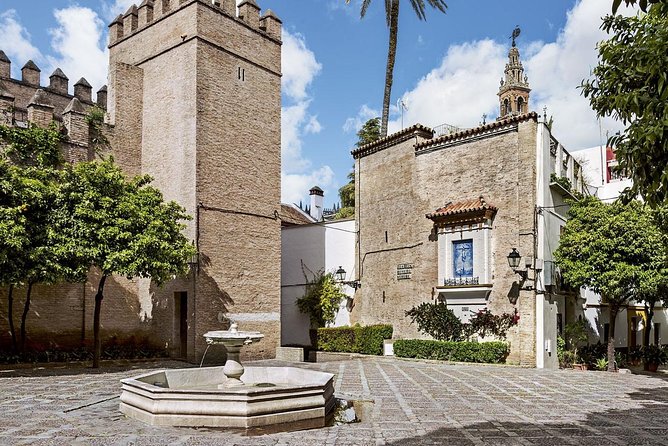
Now you move toward the Giralda icon zone again. Giralaldillo is a must-see symbol for the city, and the tour makes a practical point: the view can deceive. In other words, what looks obvious from a distance isn’t always the full story of how height and lines work. It’s exactly the kind of small insight that makes your photos look better because you’re standing with intent.
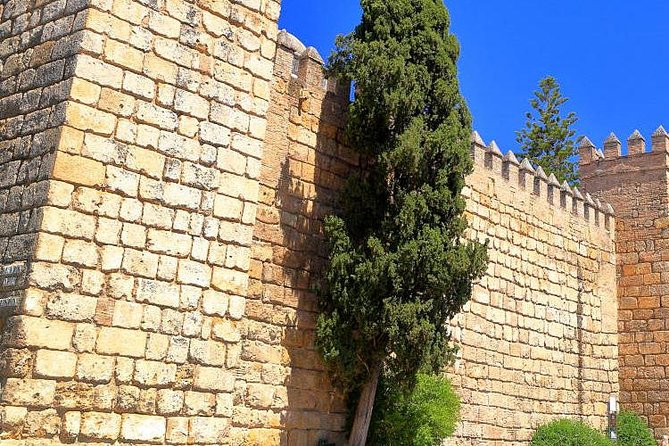
Then you go to Torre Abdel Aziz. This stop is all about learning the best photo positions. The goal is less about “look at a tower” and more about how to recognize the greatness of towers and walls as shapes, plus how palaces and houses in this zone connect visually. Admission isn’t included here, so plan on it as a guided viewpoint/spotting moment rather than a ticketed interior.
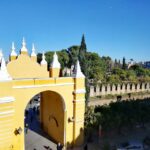
After that, you enter the Arenal-area feel with Arco del Postigo del Aceite. This is one of the stops where admission is included (per the tour info). The guide frames it as a story-rich passage: good times and bad times, all packed into the quarter’s texture. If you’re wondering where the tour gets variety beyond monumental icons, this is a good answer.
Then comes Plaza Del Cabildo. Another stop where admission is included, and where the guide focuses on the square’s passageways and what they meant for how people lived. This is a nice reminder that “cabildo” areas were not just official spaces—they were lived spaces too. The key idea the tour stresses is that you can leave thinking you saw it all, but the place keeps changing as you move through it.
Stops 19 to 22: crafts, Guadalquivir views, Triana bridge, and the grand finish
At Mercado Artesania El Postigo, you get the neighborhood-meets-crafts vibe. This is where the tour brings in the idea of villages settling here and keeping the best pieces of each. Even if you don’t plan to shop, the stop gives your walk a more everyday rhythm after all the monumental stops.
Then the tour opens out to the river. Río Guadalquivir is your viewpoint moment, and it’s specifically tied to breathtaking views of Seville and Triana. This is one of the reasons I like this tour format: the earlier stops are tight and interpretive, and then the river gives you room to breathe and orient.
Next: Puente de Isabel II (Puente de Triana). You get time for photos and “comparisons,” plus character-style pilgrim stories about people who crossed it. This is the stop that helps you understand why Triana isn’t just across the water. It’s part of Seville’s daily movement and identity.
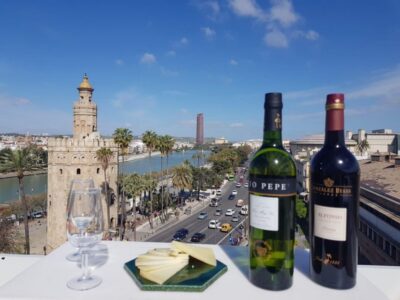
Finally, the tour ends at Torre del Oro. It’s a fitting finish because you’re closing a loop: you’ve been learning Seville’s symbols, defense, kings, archives, and streets—now you’re at one of the city’s river markers. The tour treats the understanding as almost complete by the time you reach the tower, which is exactly how a good “complete” tour should feel: like the city clicks.
Price and value: why $11.86 can work (and when it might not)
At $11.86 per person for about 2 hours, this is one of those deals that makes sense if you want context fast. The value isn’t only the big-name monuments. It’s the way the route strings them together, plus the emphasis on the Jewish Quarter storytelling and on viewpoints like Triana and the Guadalquivir.
When it might not be the best fit: if you’re the kind of traveler who wants one or two major sites with long interior time, you could get more satisfaction by picking a separate ticketed tour for cathedral or Alcázars visits. This one is structured for interpretation and orientation, not for spending hours inside buildings.
Also, pay attention to the admission notes included vs. not included:
- Included admission stops: Arco del Postigo del Aceite and Plaza Del Cabildo
- Not included: Palacio Arzobispal, Puerta del Leon, Archivo General de Indias, and Torre Abdel Aziz
Other stops are marked as free to enjoy at the stop level, meaning you can usually see and learn without additional entry costs.
Who this tour suits best
This is a smart match for:
- First-timers who want a single walk that covers Santa Cruz/La Judería and major Seville monuments
- People who enjoy story-based guiding more than strict museum-style pacing
- Travelers who love photo planning, especially for Triana and river angles
It’s less ideal if you need frequent long breaks, or if you want deep interior time at multiple major sites in one go. In that case, treat this as the primer tour, then return later on your favorite area.
The guide factor: why José, Alejandro, and Ricardo show up in the memories
The reviews I’ve read around this tour consistently highlight one pattern: the guide’s ability to keep attention through lively, human stories. Names that come up are José, Alejandro, and Ricardo, and the common thread is patience and detail—explaining not just what you’re seeing, but why it mattered.
That matters because Seville can feel “already famous.” This tour works by adding the extra layer: legends, superstition, and life stories tied to real streets. When the guide slows you down at a key stop like Calle Susona or the Santa Marta area, you walk away feeling like you saw the neighborhood’s logic, not just its scenery.
Should you book this Seville Complete and Jewish Quarter tour?
Yes, if your goal is to get Seville’s main landmarks plus the Santa Cruz/La Judería feel in a single 2-hour walk, with practical photo guidance and story-first stops. The pricing is a big plus for the amount of ground covered, and the finish at Torre del Oro is a satisfying close.
Book it especially if you’re short on time or want a guided framework you can build on later. If you’re hunting for slow, ticket-heavy interior time at multiple major attractions, you might prefer adding this tour as your orientation day and pairing it with deeper site visits on separate outings.
If you do book: wear good walking shoes. This is Seville on foot, and Seville is always a little more fun when your legs agree.
FAQ
How long is the tour?
The tour duration is about 2 hours.
What’s the meeting point and end point?
It starts at Pl. de S. Francisco, 17, Casco Antiguo, 41004 Sevilla, Spain and ends at Torre del Oro, P.º de Cristóbal Colón, s/n, Casco Antiguo, 41001 Sevilla, Spain.
How much does it cost?
The price is $11.86 per person.
Do I get a mobile ticket?
Yes. The tour uses a mobile ticket.
What size is the group?
The tour has a maximum of 30 travelers.
Is the tour suitable for most people?
The information says most travelers can participate.
Are service animals allowed?
Yes, service animals are allowed.
Are admission tickets included?
Some stops include admission (Arco del Postigo del Aceite and Plaza Del Cabildo), while other stops are marked as not included (such as Palacio Arzobispal, Puerta del Leon, Archivo General de Indias, and Torre Abdel Aziz). Many stops are marked free to visit.
What’s the cancellation policy?
You can cancel for a full refund if you cancel at least 24 hours in advance. Canceling less than 24 hours before the start time isn’t refunded.
When should I book?
On average, this tour is booked about 12 days in advance.