REVIEW · SEVILLE
Visit to Italica Roman Ruins Tour tickets included
Book on Viator →Operated by Naturanda Turismo Ambiental · Bookable on Viator
Roman ruins start outside Seville.
This guided visit to Italica Roman Ruins is a solid, cost-friendly way to get your bearings in a major slice of Roman life, with priority entrance to help you skip ticket lines. I especially like how the guide’s storytelling makes the amphitheater and surrounding ruins easier to picture, not just harder-to-read stone labels. One heads-up: if your group ends up mixed-language or the guide has a late start, the tour can feel slower than the expected 2 hours.
You’ll meet in Santiponce (just outside Seville), spend about 2 hours on site with a professional guide in English, and then return to the same meeting point. The group stays small (up to 30), which helps when you’re trying to hear instructions and move as a group.
In This Review
- Key highlights you’ll actually feel
- Italica feels like a real Roman city, not a museum stop
- Meeting in Santiponce: where the tour starts and why priority matters
- Santiponce warm-up: a quick orientation that sets the tone
- The amphitheater: where the guide turns stone into spectacle
- A small caution about what you might see
- The Roman city beyond the arena: houses, artifacts, and why context helps
- A bonus effect: it can spark more exploring
- Headsets and hearing the guide: great in theory, manage it in practice
- Language mix and pacing: what to watch for if you only speak English
- Price and value: when $19.36 makes sense
- Getting back to Seville: plan your exit before you relax
- Who should book this Italica tour with Naturanda?
- Should you book this Italica Roman Ruins tour?
- FAQ
- How long is the Italica Roman Ruins guided tour?
- Where is the meeting point?
- Is admission included?
- Is the tour offered in English?
- Are headsets provided?
- How many people are in a group?
- Is food included?
- Is there a ticket or mobile ticket?
- What is the cancellation window?
- Does weather affect the tour?
Key highlights you’ll actually feel
- Priority entrance cuts the most annoying part of ruin-visiting: waiting at the ticket line
- Headsets are part of the plan, so you can follow the guide even in busier moments
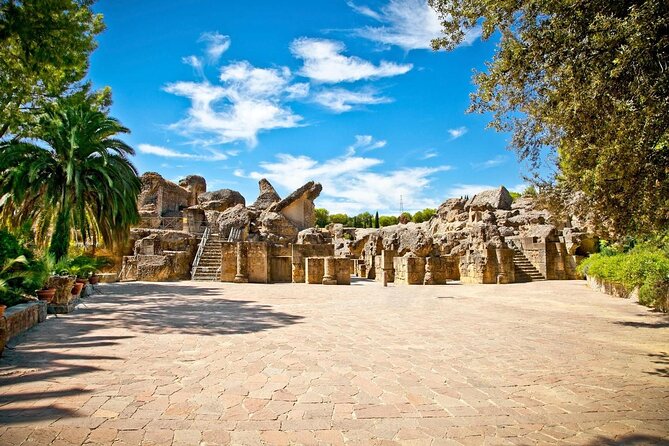
- The amphitheater is the main event and a great place to learn what these Romans did for fun
- You get context fast for temples, daily life, and how the city worked
- Tour length is tight and family-friendly, usually about 2 hours on the ruins
- Plan your return to Seville ahead of time, because getting back can take longer than you expect
Italica feels like a real Roman city, not a museum stop
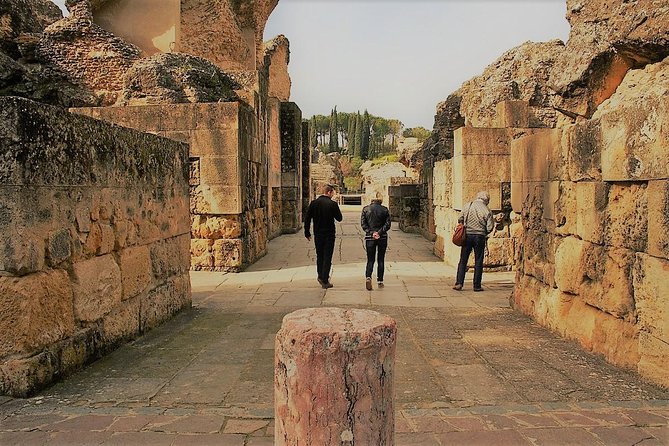
Italica is one of those places where the stone still tells the story. The ruins are extensive, and the site is well enough preserved that you don’t feel like you’re staring at random rocks. Instead, you can trace a sense of street life, public space, and how people gathered for entertainment and religion.
The amphitheater is the headline for a reason. Even if you’re not a Roman-nerd, it’s visually dramatic, and the guide can help you understand what you’re seeing: where spectators sat, why the shape mattered, and how events would have moved. And yes, if you’re a Game of Thrones fan, you’ll recognize why this place is often mentioned in the same breath as the dragon-pit look.
There’s also a practical benefit: Italica isn’t huge like some major Roman sites. That means you can get a meaningful overview in a short visit—perfect if you’re in Seville for just a few days and you want one great “wow” hour plus some real context.
You can also read our reviews of more tours and experiences in Seville



Meeting in Santiponce: where the tour starts and why priority matters
You start at Av. Extremadura, 2, 41970 Santiponce, Sevilla, Spain, and the tour ends back at that same meeting point. That matters because you won’t have to think about how to get back into the city right after you’re done—you can plan transportation on your own terms.
This tour includes priority entrance, and that’s more valuable than it sounds. Ruins often have time lost to queues, ticket checks, and regrouping. Priority entrance helps you get moving sooner, which is especially important here because you’ll spend most of your time on the amphitheater-focused part of the experience.
One more detail that helps: it’s sold with a mobile ticket. That’s convenient when you’re juggling phones, photos, and sunscreen.
Santiponce warm-up: a quick orientation that sets the tone
The first stop is in Santiponce, and it’s brief (about 10 minutes). Think of this as a warm-up: the guide helps you understand what Italica was, the kind of Roman culture you’re about to walk through, and what to notice as you move toward the main ruins.
This short intro is useful because Italica can feel overwhelming if you arrive cold and try to read everything at once. A good guide gives you a mental map: what’s important, what’s decorative, and what tells you about everyday life versus big civic moments.
It’s also where the tour can save you time. Instead of trying to interpret the site with guesses, you’re given enough context to make the amphitheater and other structures “click” as you see them.
The amphitheater: where the guide turns stone into spectacle
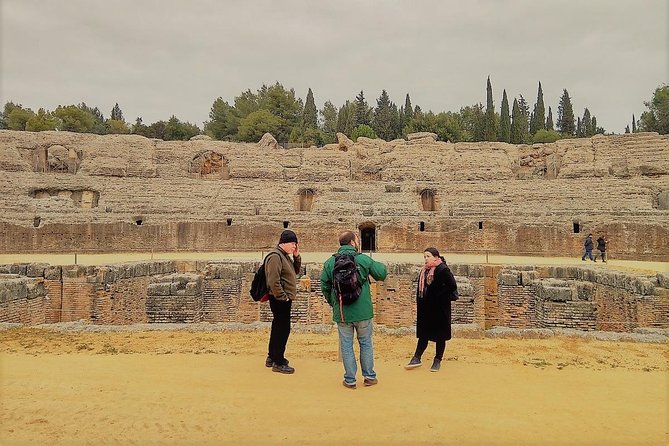
The heart of the tour is Anfiteatro de Italica, with the time concentrated around the amphitheater area (about 2 hours total on the ruins). This is the place you came for, and the guide’s job is to help you go beyond sight-seeing.
Here’s what you should expect:
- You’ll look at the amphitheater’s structure and learn what makes it significant.
- You’ll get Roman culture context—how entertainment fit into public life.
- You’ll hear how the site connects to major themes like civic pride and daily Roman routine.
One of the best parts, when the guide is on form, is the way they use stories and humor to make the scale feel real. In English tours, names like Jesús and Alberto have been praised for doing exactly that: keeping energy up while explaining what you’re seeing and answering questions without turning it into a lecture.
Also: shade can be limited depending on where you end up. This matters on sunny days because you’ll be moving and standing to see things. I’d plan water and a hat even if the morning starts cool.
A small caution about what you might see
Most people should see the amphitheater focus. Still, some groups have reported not getting to every prominent feature they expected. If you care about a particular area (like side structures beyond the main arena), ask the guide early what the route will include. It’s a small question that can prevent disappointment later.




The Roman city beyond the arena: houses, artifacts, and why context helps
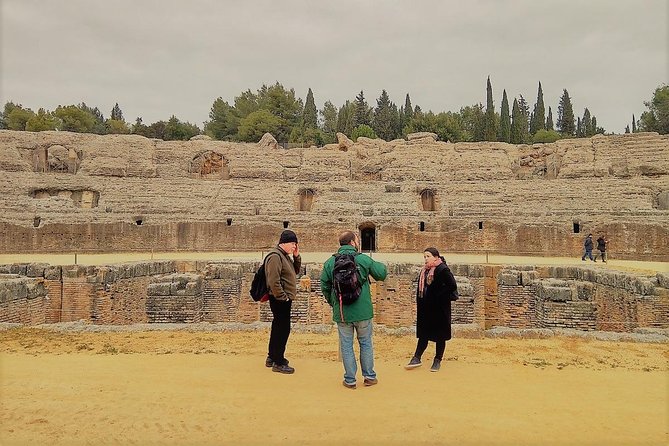
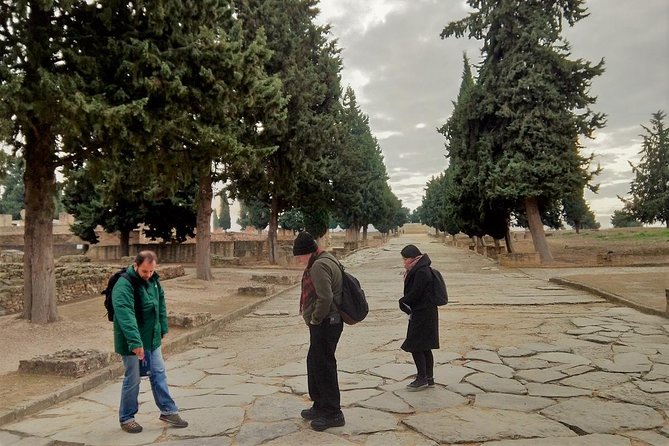
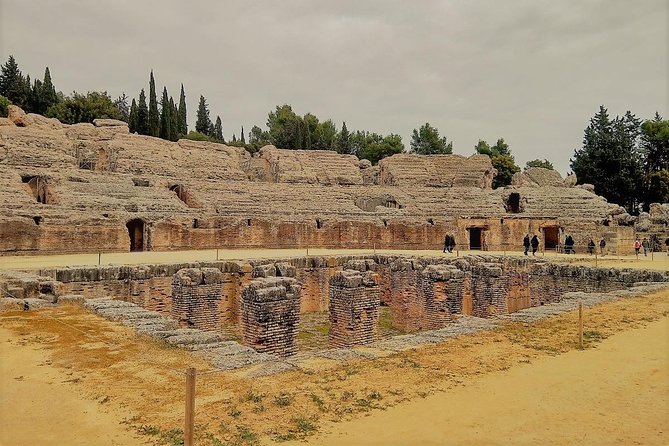
After the amphitheater overview, the tour can shift into more of the “city life” side of Italica. Some time is spent around structures that help you picture Roman domestic and public spaces. You may notice rooms and details that are easy to miss if you’re walking quickly on your own.
This part is where a guided experience can be either a win—or feel like a slower repetition of what’s already printed on site. The difference is whether the guide is explaining meaning, not just pointing at stone.
In the best versions of this tour, you leave understanding:
- what different spaces were likely used for,
- how daily life worked in a Roman settlement,
- and why certain building choices mattered.
Some visitors have also noted that the site includes informational boards and that certain areas can feel like they could be read at your own pace. That’s not wrong. If you’re a fast reader and love independence, you might feel the guide repeats what you can already see.
My advice: use the guide for interpretation. If you can ask one or two specific questions—like what you’re looking at, or what day-to-day life might have been—you’ll get more out of the houses and smaller details.
A bonus effect: it can spark more exploring
A neat side benefit from learning the story of Italica is that it can push you to explore related local history afterward. For example, one highlight in the feedback was how learning about the Countess of Lebrija made people want to tour her palace. Even if you don’t go that far, a guided visit can help you spot what’s worth Googling next.
Headsets and hearing the guide: great in theory, manage it in practice
The tour description includes headsets, which is exactly what you want at a ruin site. Sound carries differently outdoors, and groups can get spread out. Headsets help you hear a guide clearly, and that’s not a luxury—it’s how you keep the story coherent instead of piecing it together later.
That said, a few people have reported missing or inconsistent audio support. You can’t control everything, but you can protect your experience:
- Arrive a few minutes early and ask whether everyone has a headset ready.
- If you’re given one, do a quick volume check right away.
- If you’re sensitive to bad audio, consider bringing your own simple earplugs as backup.
Also pay attention to group pacing. Some guides start describing structures immediately once they begin walking. If you prefer to take everything in slowly, stay close at the start so you don’t miss key context.
Language mix and pacing: what to watch for if you only speak English
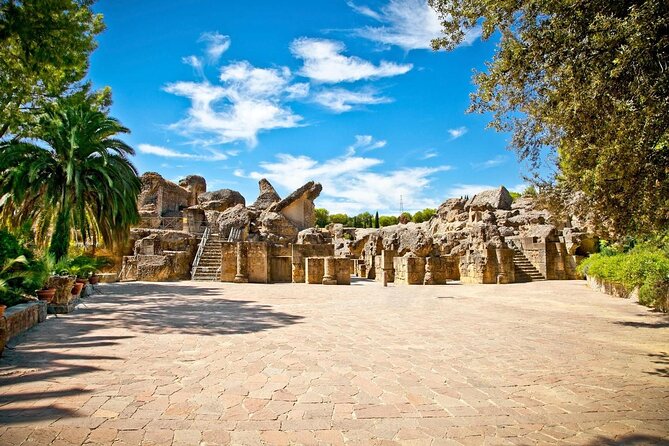
English is the advertised language. Still, there have been real-world situations where the group ended up split across languages, forcing the guide to switch between English, French, and Spanish to keep everyone included. The practical result can be a longer tour and more “dead time” waiting while language segments happen.
So here’s the realistic way to think about it: you’re booking an English guided tour, but group composition can affect how the guide communicates. If you have a strict preference for only English explanations, confirm that you’re joining a truly English-only group before you go—or be ready to adapt.
Pacing also varies by guide style. Some guides bring jokes and movement. Others take a calmer approach. When the guide is a strong fit, the 2 hours feel like the right length. When communication is hard, it can start to feel longer than it is.
Price and value: when $19.36 makes sense
At about $19.36 per person for a roughly 2-hour guided visit, this is priced to be accessible. Whether it’s a bargain depends on what you want from the experience.
Here’s the value logic that holds up:
- You’re paying for a professional guide who adds meaning to what you see.
- Priority entrance reduces waiting and helps the timing work.
- The small group size (up to 30) makes it easier to hear explanations and ask questions.
Where the value can wobble:
- If your tour ends up covering only the basics you could read on your own, you might feel the money didn’t buy much.
- If audio support is inconsistent or language switching happens, the time you paid for can feel less efficient.
- If you’re expecting a route that hits every major feature and you don’t get it, you may end up wanting more.
One more angle: entry costs can vary by residency. If you’re eligible for free admission or have access to low-cost entry, you’ll want the guide to justify the added expense. In that case, go in with a question list—things you want explained—so you don’t leave with only what the plaques already say.
Getting back to Seville: plan your exit before you relax
This is the part I’d take seriously before booking, because ruin tours can end with a transportation surprise.
The tour is near public transportation, and there’s a bus stop by the gate, but one comment highlighted that the return journey can be long—over an hour in some cases—plus payment details like cash-only on the bus. Another practical point: taxi options back to Seville may not be straightforward.
My rule: don’t assume your ride will be easy after you finish. Check local bus schedules in advance, and if you’ll rely on public transit, have a plan for payment method (cash if the bus requires it). If you have a car, this becomes much smoother.
If you’re doing this as a day trip by train or bus, build in extra buffer time so you don’t feel stressed at the end.
Who should book this Italica tour with Naturanda?
This works especially well if you:
- Want a short guided Roman experience without committing to a half-day
- Like amphitheaters and big public spaces (the arena focus is strong)
- Are traveling with kids or teens and want a controlled, manageable time window
- Appreciate hearing stories and context, not just reading stone labels
- Are a Game of Thrones fan and want the Roman-world explanation behind the visual payoff
It can also be a good choice if you’re new to Roman sites. You’ll get a guided framework to understand what you’re looking at, and that helps you enjoy future ruins more.
If you’re the type who wants pure independence, you can absolutely visit on your own. But if you do that, I’d set a goal like: spend less time wandering and more time studying one or two key structures carefully—otherwise the site can blur together.
Should you book this Italica Roman Ruins tour?
I’d book it if you want the amphitheater and city context in a tight 2-hour format, and you value priority entrance plus a guide-led storyline. At this price, a good guide turns the visit from seeing ruins into understanding them—and that’s where the money goes.
I wouldn’t skip it, but I would choose it with eyes open:
- Ask about headset availability if hearing matters to you.
- Be ready for the possibility of mixed-language communication if the group composition changes.
- Have a return plan to Seville, especially if you’re counting on buses.
If you’re flexible, ask questions, and show up ready to listen, this tour is a strong way to experience Italica instead of treating it like a quick photo stop.
FAQ
How long is the Italica Roman Ruins guided tour?
The tour is about 2 hours.
Where is the meeting point?
Meet at Av. Extremadura, 2, 41970 Santiponce, Sevilla, Spain. The tour ends back at the same meeting point.
Is admission included?
Yes. The tour includes admission for the Italica Roman ruins portion.
Is the tour offered in English?
Yes, it is offered in English.
Are headsets provided?
The tour description includes headsets to help you hear the guide clearly.
How many people are in a group?
The maximum group size is 30 travelers.
Is food included?
No. Food and drinks are not included.
Is there a ticket or mobile ticket?
You get a mobile ticket.
What is the cancellation window?
Free cancellation is allowed up to 24 hours in advance for a full refund.
Does weather affect the tour?
Yes. The experience requires good weather, and if it’s canceled due to poor weather you’ll be offered a different date or a full refund.