REVIEW · SEVILLE
Castanets for Beginners: Introduction Class (with Dance Demo)
Book on Viator →Bookable on Viator
Castanets in Seville can feel like instant flamenco magic. In this beginner castanet introduction, you start with the instrument itself, then add rhythm the same day in a real flamenco studio setting a few minutes from Plaza San Marcos.
What I like most is the combo of practical coaching and a location with character. You’ll walk off the main drag into an older artisan quarter for a hands-on session that keeps things approachable.
One thing to think about up front: the castanets are provided, but buying your own instrument is not included if you want to take them home.
In This Review
- What You’ll Do in This 1-Hour Class
- Arriving at Plaza San Marcos, Then Walking to a Real Workshop
- Inside the Studio: Castanets Basics, History, and How They’re Used
- Learning the Basic Techniques (Without Feeling Lost)
- Trying Simple Castanet Percussion With Music
- Why the 1-Hour Format Works for Beginners
- The Castanet-and-Dance Demo: What to Watch For
- Price and Value: Is $24.08 Worth It?
- Who This Is Best For (and Who Might Skip It)
- A Final Take: Should You Book This Castanet Class?
- FAQ
- Where is the meeting point for the castanet class?
- How long does the class last?
- Is the class offered in English?
- How many people are in the group?
- Are castanets provided, or do I need to bring my own?
- Is the purchase of castanets included in the price?
- Is this activity suitable for most travelers, and can service animals participate?
- What happens if the weather is bad, or if I need to cancel?
What You’ll Do in This 1-Hour Class
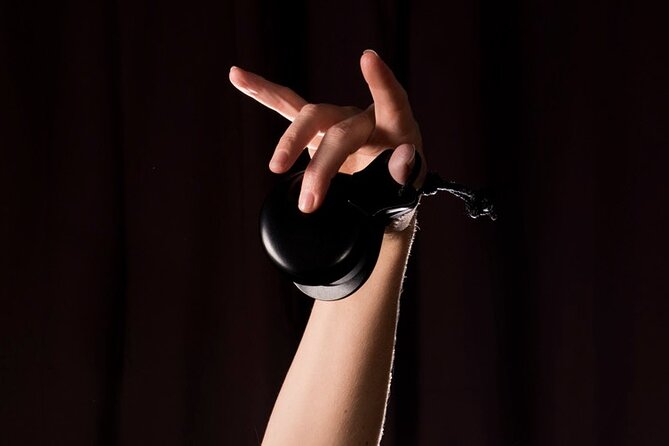
- Small group teaching (max 6 travelers): You’re not just watching. You’re practicing with guidance.
- Beginner-friendly instruction in English: The class is built for people who are new to castanets.
- Instrument practice right away: You learn basic techniques and then try simple castanet percussion with music.
- History and use, explained in plain terms: You get the context behind the sound before you start moving.
- Short castanet-and-dance demo at the end: You see how the instrument connects to flamenco movement.
- Tutor Eva brings it to life: Reviews highlight her patience and ability to make the basics feel doable.
Arriving at Plaza San Marcos, Then Walking to a Real Workshop
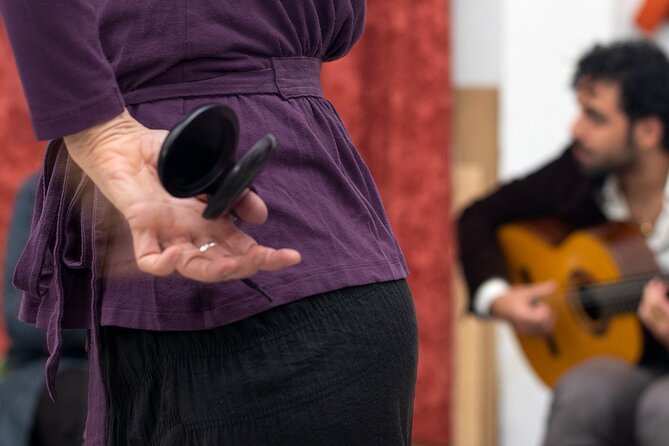
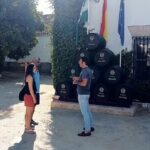
The experience starts at Plaza San Marcos in Seville’s Casco Antiguo (41003). It’s an easy anchor point to orient yourself before the activity begins, especially if you’re already spending time around the historic center.
From there, you’ll head on foot to a flamenco studio that’s only a few minutes away. The studio sits off the beaten path in an older artisan area. That small shift in setting matters. You’re not doing this as a quick “tour stop.” You’re stepping into a working creative space.
The group stays small—up to 6 travelers—so you’ll likely feel more like a class than a spectacle. And because the activity is offered in English, you don’t need musical background to follow along.
You can also read our reviews of more tours and experiences in Seville



Inside the Studio: Castanets Basics, History, and How They’re Used
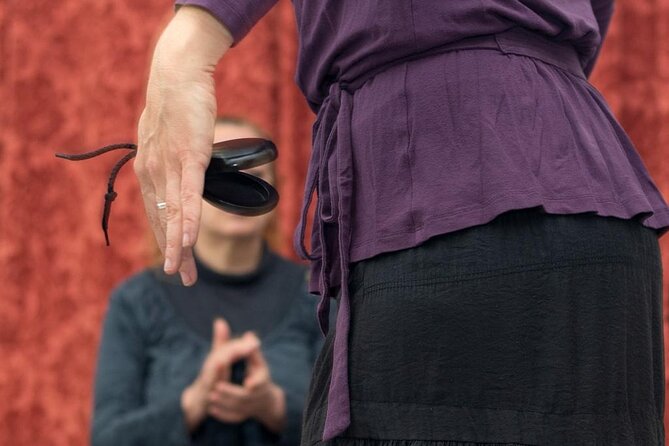
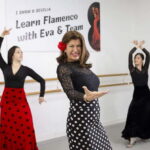
Once you’re in the studio, the class begins with an introduction to castanets tailored for beginners. You’ll learn what makes this instrument distinct—its specific characteristics—and how it’s used in practice.
You also cover the history and use part, not as a lecture, but as context for why the technique you’re learning matters. That’s a smart order: it helps the sound you’re chasing feel less random and more intentional.
This is where the “authentic studio” factor becomes more than marketing. A flamenco studio atmosphere changes your mindset. Even if you’re brand-new, you’re surrounded by the real setting where flamenco rhythms live.
Learning the Basic Techniques (Without Feeling Lost)
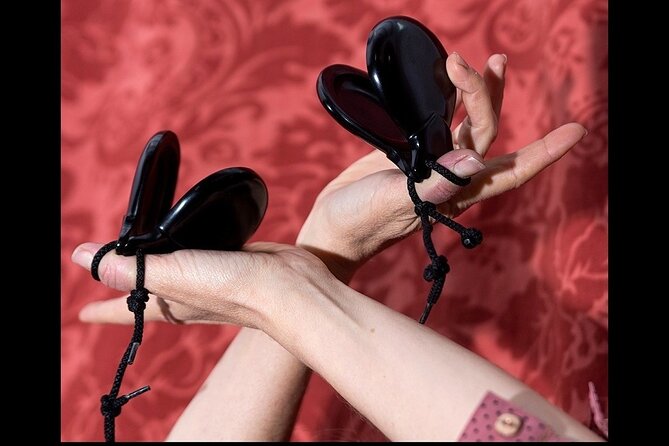
The core of the workshop is the practical part. You’ll practice basic castanet techniques step by step, with a teacher who keeps things beginner-accessible and fun.
If you’re worried about feeling clumsy, focus on the way the class is built: it’s hands-on from the start. You’re not waiting until the end to touch the instrument. You’re practicing as you learn, which makes it easier to correct small mistakes early.
A big plus is the instrument setup. The teacher provides good quality castanets for you to use during the workshop. That means you can focus on technique rather than figuring out an unfamiliar instrument on your own.
And since the class is small, you can get help when you need it—exactly the kind of attention that makes a beginner class actually work.
Trying Simple Castanet Percussion With Music
After the basic techniques, you’ll move into trying percussion with accompanying music. This is one of the most valuable parts of the session because it turns practice into performance—at least in a friendly, beginner way.
Playing along with music helps you feel timing. Without that, castanets can turn into a “do your best” exercise. With music, you start to understand how the rhythm fits into flamenco structure, even if you’re still learning the first steps.
This is also where the class stays enjoyable. Reviews specifically call out that the experience feels fun and achievable, not intimidating. The teaching style matters here, and the tutor—Eva—is repeatedly praised for being engaging and patient.
Why the 1-Hour Format Works for Beginners
This class runs for about 1 hour. That may sound short, but for beginners it’s often perfect.
Here’s why. Castanets take coordination—hands, timing, and comfort with the instrument. If you push too long, beginners tire and confidence dips. In an hour, you get the essential sequence: introduction, technique practice, rhythm attempt with music, and a final demonstration.
It also keeps your day flexible. You can fit this into a Seville morning or afternoon without feeling like you booked half a day for a class you’re not sure you’ll enjoy.
The booking pace is also a clue: it’s commonly booked around two weeks ahead. If you want a specific slot, don’t wait until the last minute.





The Castanet-and-Dance Demo: What to Watch For
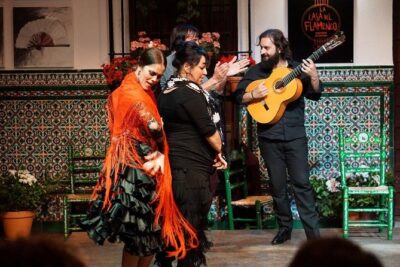
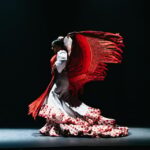
The workshop ends with a short demonstration on using castanets with dance. This is a key payoff moment, because it shows you where all your practice is headed.
As you watch, pay attention to a simple idea: castanets aren’t only about sound. They’re part of movement and timing. Seeing how the rhythm lands alongside dance helps your brain connect the dots between hands and body.
Even if you never become a performer, that demo gives you a real sense of the instrument’s role. It’s also motivating. Most people leave thinking, I get it now, and I want another shot.
Price and Value: Is $24.08 Worth It?
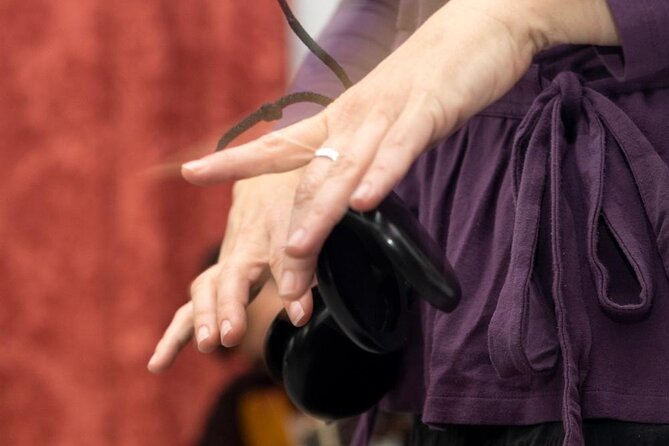
At $24.08 per person for about an hour, this class is priced like a focused workshop rather than a long cultural show. So the value comes from what you do, not just what you watch.
Here’s the value breakdown that matters for real travelers:
- Provided castanets: You don’t need to hunt down a rental or buy anything to start.
- Small group size (max 6): You get time with the teacher instead of blending into a crowd.
- Beginner-friendly structure: You learn basics, practice, and try percussion with music during the same session.
- English instruction: You’re not paying to “figure it out” on your own.
If you’re hoping for a hands-on experience that ends with actual rhythm progress, this is a fair deal. If you only want a passive flamenco viewing, you might prefer a full performance elsewhere in the city. But for learning the instrument, the price-to-practice ratio feels reasonable.
Who This Is Best For (and Who Might Skip It)
This class is ideal if you:
- want an easy entry into flamenco culture that doesn’t require prior music skills
- enjoy workshops where you get to practice immediately
- want something small-group and teacher-led in Seville
- like tactile learning—hands-on rhythm beats reading about rhythm
You might skip it if you’re looking for a long, deep-detailed performance or a multi-session course. Also, keep in mind that if you fall in love with the instrument, the purchase isn’t included. The class gives you a chance to try castanets properly, but it’s not a full instrument-buying package.
One more practical thought: the activity needs good weather. If weather turns bad, plans may shift. So if you’re visiting in a season known for sudden changes, keep some flexibility in your schedule.
A Final Take: Should You Book This Castanet Class?
I’d book this if you want a short, fun, beginner-friendly experience in Seville that teaches you real technique and ends with a flamenco-style demo you can actually understand. The setup makes sense: small group, provided instruments, English instruction, and a teacher (Eva) praised for being patient and engaging.
It’s also a good choice when you’re tired of big-ticket attractions and want something cultural that’s interactive. You’ll leave knowing how castanets work in practice—plus you’ll have the rhythm memory to take home.
If you’re on the fence, consider this: you get a complete mini “learn → practice → perform” loop in about an hour, and you can decide afterward whether you want to invest in your own castanets.
FAQ
Where is the meeting point for the castanet class?
The meeting point is Plaza San Marcos, Casco Antiguo, 41003 Sevilla, Spain.
How long does the class last?
The class lasts about 1 hour.
Is the class offered in English?
Yes, it’s offered in English.
How many people are in the group?
The class has a maximum of 6 travelers.
Are castanets provided, or do I need to bring my own?
The teacher provides good quality castanets for you to use during the workshop.
Is the purchase of castanets included in the price?
No. If you want to buy castanets after the class, that purchase is not included in the activity price.
Is this activity suitable for most travelers, and can service animals participate?
The activity lists that most travelers can participate, and service animals are allowed.
What happens if the weather is bad, or if I need to cancel?
The experience requires good weather. If it’s canceled due to poor weather, you’ll be offered a different date or a full refund. There is free cancellation up to 24 hours in advance for a full refund.