REVIEW · SEVILLE
Flamenco Dance Masterclass
Book on Viator →Operated by Flamenco A Compás · Bookable on Viator
Flamenco feels like it has its own heartbeat. In Seville, you can learn the basics in just 1 hour, starting with rhythm and building to a short choreography in a real dance studio.
I especially like two things: the way the class starts with flamenco’s origins and core movements, and how you leave with something you can actually do (not just stand and watch). One thing to keep in mind is that it’s fast-paced; even though it’s beginner-friendly, you’ll be practicing—not just observing.
In This Review
- Key takeaways before you go
- Why Seville is the right place to learn flamenco basics
- Inside the studio: mirrors, sound, and a proper wooden floor
- The full 60-minute lesson, step by step
- 1) A quick intro to flamenco origins and key elements
- 2) Palmas: learning the rhythm with hand claps
- 3) Basic footwork plus traditional arm and body movement
- 4) Everything comes together in a short, learnable choreography
- 5) Record the choreography and take end-of-class photos with accessories
- What the best instructors do differently (Diaz and Eliza/Elisa)
- Price and value: is $48.01 a fair deal?
- Location in Casco Antiguo: meeting point and getting there
- Who this masterclass fits best
- End result: you’ll feel flamenco from the inside
- Should you book it?
- FAQ
- How long is the flamenco dance masterclass?
- Where does the class meet, and does it end there too?
- Is the class offered in English?
- What do I learn during the class?
- Is this class suitable for beginners?
- How big is the group?
- Is there a mobile ticket?
- Can I record the choreography?
- What’s the cancellation option?
Key takeaways before you go
- One-hour structure: history, rhythm, and a short choreography all in the same session
- Palmas training: you work the hand claps as the foundation for everything that follows
- Real technique cues: basic footwork plus traditional arm and body movements
- Small group size (max 15): easier for a first-timer to get corrections
- Language options: instruction is available in English and Spanish
- Take-home memories: you can record your choreography and pose with flamenco accessories
Why Seville is the right place to learn flamenco basics
Seville isn’t just the setting for flamenco—it’s where the dance feels culturally at home. When a class is designed around Seville’s flamenco world, you’re not learning movements in a vacuum. You’re learning them with context: what the dance is, where it comes from, and what makes the rhythm matter.
That context changes how you practice. Instead of treating palmas and footwork like random steps, you start to understand how everything connects—hands, arms, posture, and timing. It also helps you feel more confident if you’re brand-new, because you know what you’re trying to produce.
You can also read our reviews of more tours and experiences in Seville.


Inside the studio: mirrors, sound, and a proper wooden floor
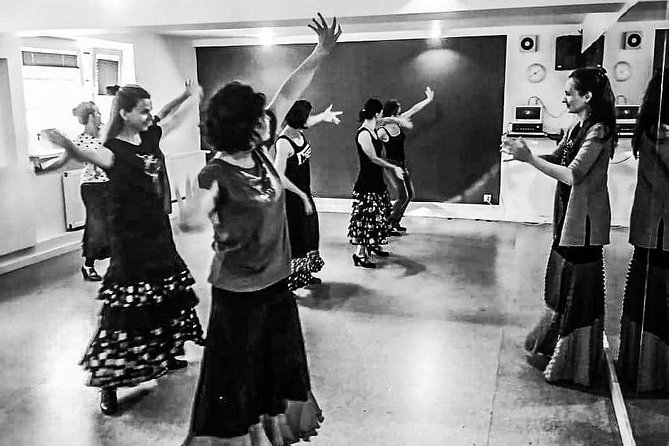
The lesson takes place in a spacious, bright dance studio with a professional wooden floor, mirrors, and a sound system. That combo matters more than it sounds. A good floor helps your feet land cleanly when you practice footwork. Mirrors give you quick feedback on posture and arm positions.
The sound system also helps you lock into rhythm. Flamenco isn’t only about looking right—it’s about timing. In a studio setup like this, you can actually hear the beat you’re aiming for, then try to match it immediately.
The full 60-minute lesson, step by step
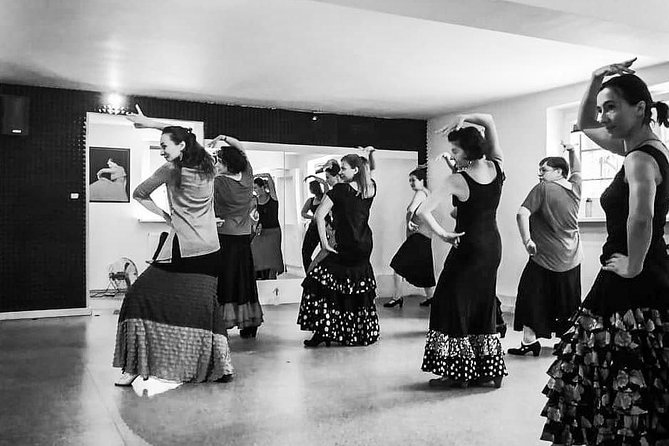
This is a compact masterclass, so every segment has a job. Here’s what the flow looks like and why it’s useful.
1) A quick intro to flamenco origins and key elements
You start with a brief introduction to the origins of flamenco and its main elements. I like this part because it gives your body a reason to move a certain way. Even if you forget details later, you’ll still remember the big idea: flamenco is rhythm, expression, and structure.
You also get a mental map of what you’ll learn next, so the rest of the hour feels purposeful instead of random.
2) Palmas: learning the rhythm with hand claps
Next comes palmas, the classic hand clapping that drives flamenco rhythm. If you’re new, this is often the hardest part—not because it’s complicated, but because it has to sit correctly with the beat.
In this class, you practice palmas early so your timing can guide everything else. Once your hands “know” the rhythm, your feet and arms become easier to coordinate.


3) Basic footwork plus traditional arm and body movement
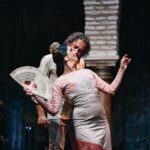
After palmas, you work on basic footwork and the traditional arm and body movements. The trick in flamenco is that your arms and torso don’t just “hang around” while your feet work. They contribute to the shape and the feeling of the dance.
This is where mirrors help. You can compare what you’re doing to what you’re trying to learn, then adjust quickly without guessing for the whole class.
4) Everything comes together in a short, learnable choreography
Finally, you stitch what you learned into a short, easy-to-follow choreography full of energy. The goal isn’t to turn you into a performer in 60 minutes. The goal is to give you a real flamenco routine you can execute with pride.
I think this “put it together” part is the best beginner payoff. You stop feeling like you’re collecting disconnected tips and start walking out with a sequence.
5) Record the choreography and take end-of-class photos with accessories
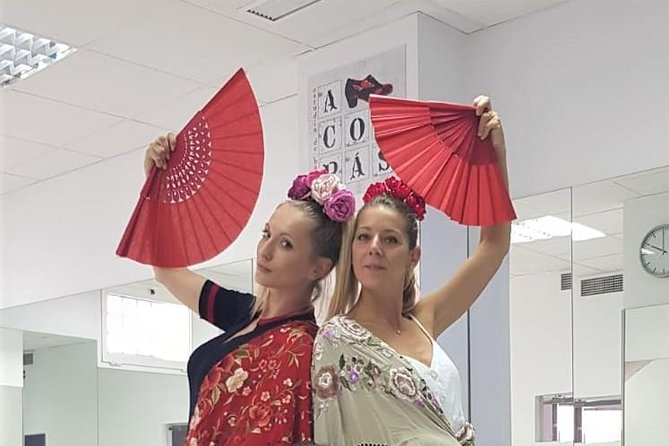
At the end, you can record the choreography as a special memory. Then you get a chance to pose for photos with flamenco accessories. It’s a fun close, but it’s also practical: it helps you remember the choreography while it’s still fresh.
The pacing stays light and energetic, and the end moment makes it feel like you completed something—not just attended a lecture.
What the best instructors do differently (Diaz and Eliza/Elisa)
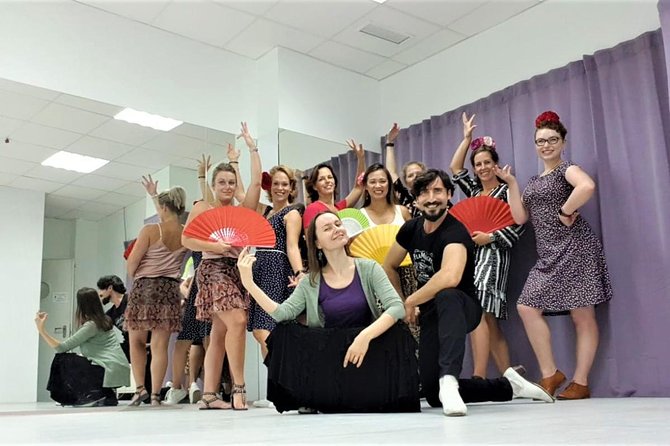
The teachers are the real reason this class works for beginners. I noticed a pattern in the feedback: instructors are not only skilled dancers; they’re also patient and clear when you don’t already know the moves.
Some instructors mentioned by name include Diaz and Eliza/Elisa. In both cases, the emphasis is on teaching technique in a way that actually sticks. For first-timers, that often means breaking down steps, coaching posture and arm shape, and adjusting your rhythm rather than just telling you to try harder.
One standout detail: an instructor with professional experience can connect the lesson to flamenco in a way that feels grounded, not just theatrical. That’s why people describe it as an easy-to-follow path from basics to choreography.
Price and value: is $48.01 a fair deal?
At $48.01 per person for about an hour, you’re paying for more than entertainment. You’re paying for structured coaching from a flamenco dancer/teacher in a purpose-built studio, in a small group.
A few value points matter here:
- Short class time means you can fit it into your day without losing a whole afternoon
- Max 15 travelers helps keep it personal enough for corrections
- Instruction includes rhythm practice (palmas), footwork, and arm/body movement, then wraps into a choreography you can perform
- The session includes opportunities for recording and end-of-class photos with accessories
Is it the cheapest thing to do in Seville? No. But it’s also not just a generic cultural talk. For a beginner, paying for live technique coaching in a city that treats flamenco seriously is one of the better value moves you can make.
If you’re booking ahead (it’s commonly reserved around 16 days in advance), it’s worth planning early so you can lock into a convenient time.
Location in Casco Antiguo: meeting point and getting there
The meeting point is C. Castellar, 52a, local 26, Casco Antiguo, 41003 Sevilla, Spain. The activity ends back at the meeting point, so you’re not scrambling to get somewhere else right after your class.
This part of Seville is walkable and central, and the location is described as near public transportation. That’s a big deal for flamenco classes because you’ll likely want your day to stay flexible—especially if you’re pairing this with dinner or a show later.
If you like starting your evenings with culture, you can pair the class with other flamenco programming, using what you learn to notice more detail in performances afterward.
Who this masterclass fits best
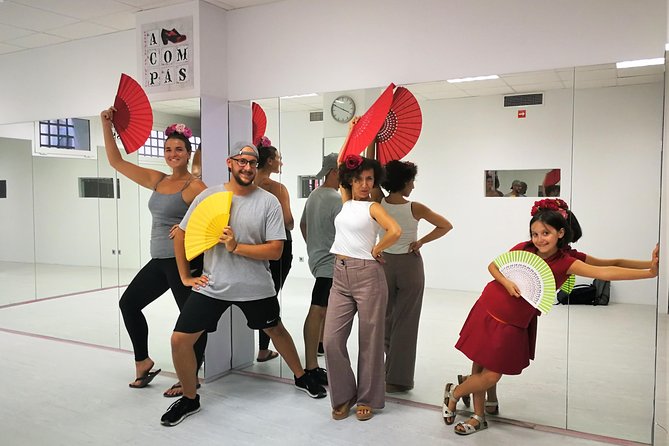
This class is ideal if:
- You’re a true beginner and want a structured first experience
- You want a hands-on activity in Seville rather than another museum stop
- You prefer learning in English (English is available), or Spanish if you’d rather
- You’re traveling with friends or family and want an activity that feels shared
It also says most travelers can participate, which suggests it’s not designed only for experienced dancers. That said, it is still dance practice. If you have mobility limits, you’ll want to use your own judgment and consider whether you’ll be comfortable practicing footwork and rhythm in a group setting.
End result: you’ll feel flamenco from the inside
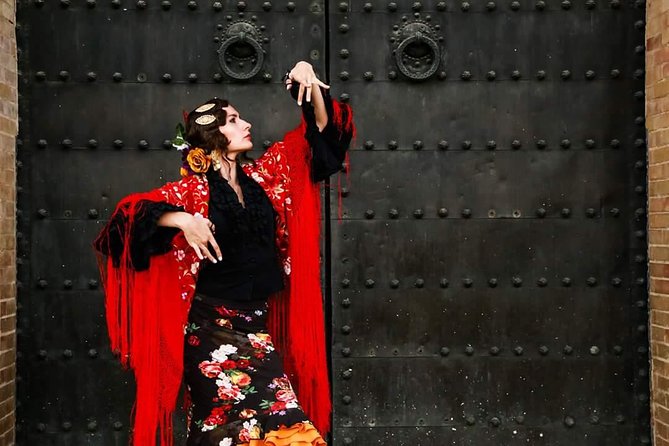
The promise of this class is not to copy a famous stage routine. It’s to give you the feeling of flamenco—the rhythm, the coordination, and the expression—so you understand what makes the dance work.
When you finish a short choreography and can record it, you’re leaving with proof you learned something real. And after a day in Seville, that kind of accomplishment is gold.
Should you book it?
Book this flamenco dance masterclass if you want a high-impact beginner experience that’s short, structured, and genuinely hands-on. It’s a strong choice when you’re curious about flamenco but don’t want to gamble on finding the right class once you arrive.
Skip it (or consider another option) if you hate practice, want a purely observational activity, or you’d rather spend your money on a long evening show. This is the kind of activity where the best part is doing it.
FAQ
How long is the flamenco dance masterclass?
The class runs for about 1 hour.
Where does the class meet, and does it end there too?
The meeting point is C. Castellar, 52a, local 26, Casco Antiguo, 41003 Sevilla, Spain, and the activity ends back at the same meeting point.
Is the class offered in English?
Yes. Instruction is available in English (and also Spanish).
What do I learn during the class?
You learn the basics of flamenco including palmas (hand clapping), basic footwork, traditional arm and body movements, and a short choreography.
Is this class suitable for beginners?
Yes. It’s described as ideal for beginners, with a short easy-to-follow choreography.
How big is the group?
The class has a maximum of 15 travelers.
Is there a mobile ticket?
Yes. The experience features a mobile ticket.
Can I record the choreography?
Yes. You can record the choreography as a special memory at the end.
What’s the cancellation option?
Free cancellation is available. You can cancel up to 24 hours in advance for a full refund.