REVIEW · SEVILLE
From Seville: Full-Day Aracena & Rio Tinto Mines Tour
Book on GetYourGuide →Operated by Naturanda Turismo Ambiental · Bookable on GetYourGuide
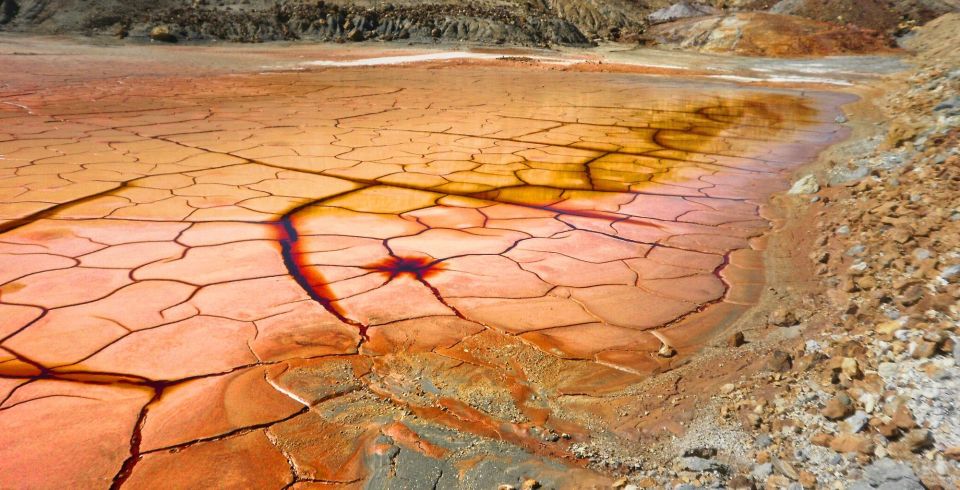
Rio Tinto looks like it fell from Mars. This full-day trip links Aracena with the Rio Tinto mines and the Gruta de las Maravillas cave—plus a biosphere reserve where cork oaks and Iberian pigs are part of daily life.
I especially like two things: the mix of scenery and science, from red, mineral-stained river water to limestone cave formations, and the guides. People talk about guides like Driss and Carmen for making the geology and cave visit click fast, with plenty of stops for photos and questions.
One thing to consider is the cave itself. The Gruta de las Maravillas includes tight spots and narrow staircases, so if you feel claustrophobic easily, pack extra patience—or skip this part.
In This Review
- Key reasons this day trip works so well
- Why Rio Tinto and Aracena make a great pairing
- Dehesas de Sierra Morena: cork trees, Iberian pigs, and NASA-level weirdness
- Rio Tinto Mines: how centuries of mining turned water red
- Sierra de Aracena: guided viewpoints, cork-tree walking, and small-town rhythm
- Gruta de las Maravillas cave: what makes the cave walk special
- How the day runs: timing, pace, and what to watch for
- Price and value: what $112 actually covers
- Guide quality is the real make-or-break factor
- Who should book this tour (and who might want a different day)
- Should you book the Aracena & Rio Tinto full-day tour?
- FAQ
- How long is the Aracena and Rio Tinto mines tour from Seville?
- What’s included in the price, and are meals included?
- Where do I get picked up and dropped off?
- What languages are available for the live guide?
- Is this tour shared or private?
- What should I bring?
- Can I cancel my booking?
Key reasons this day trip works so well
- Mars-like red terrain at Rio Tinto and an acidic river system shaped by mining
- Dehesas de Sierra Morena reserve with cork trees, oaks, and the chance to see bulls and Iberian pigs
- Aracena time on your feet plus a guided stretch and free time for lunch
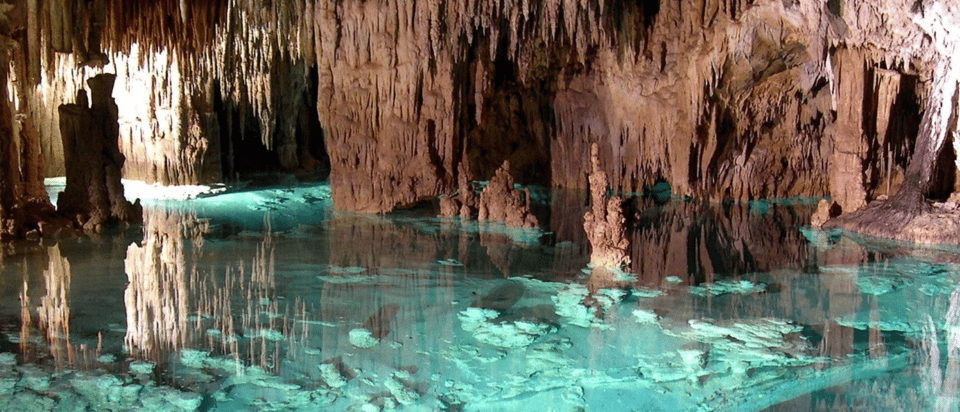
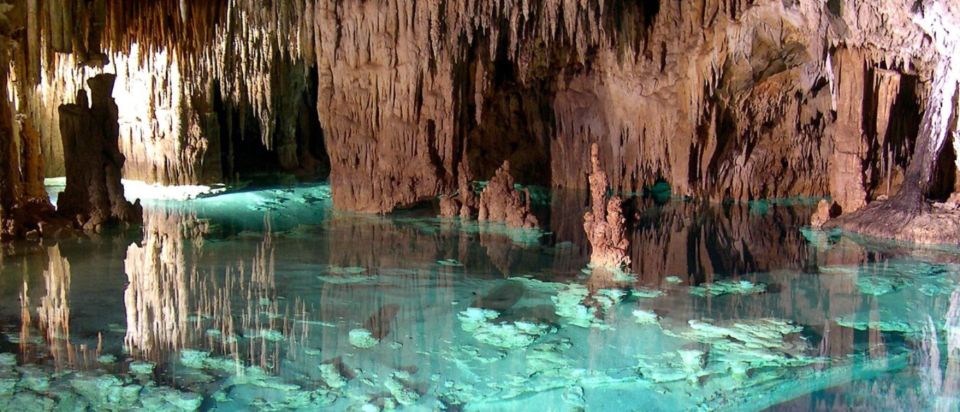
- Gruta de las Maravillas cave with a guided walk through stalactites, stalagmites, and deep-blue water
- Castillo de Aracena viewpoint for a quick payoff over town and countryside
- Private or small-group options so you’re not stuck in a huge crowd
Why Rio Tinto and Aracena make a great pairing
Most day trips from Seville take you to one place and try to squeeze in a few photos. This one is different. You’re leaving Andalusia’s flat highways and heading into Sierra Morena, where the terrain changes from rolling countryside to something that looks chemically altered—like a movie set.
Rio Tinto is the headline, but Aracena is the perfect counterweight. Aracena slows the day down with walking trails under cork trees and oaks, a town that feels human-scaled, and the kind of cave visit that turns geology into a story you can picture. If you like your travel with both wow-factor and a reason behind the wow-factor, this has that balance.
You can also read our reviews of more tours and experiences in Seville

Dehesas de Sierra Morena: cork trees, Iberian pigs, and NASA-level weirdness
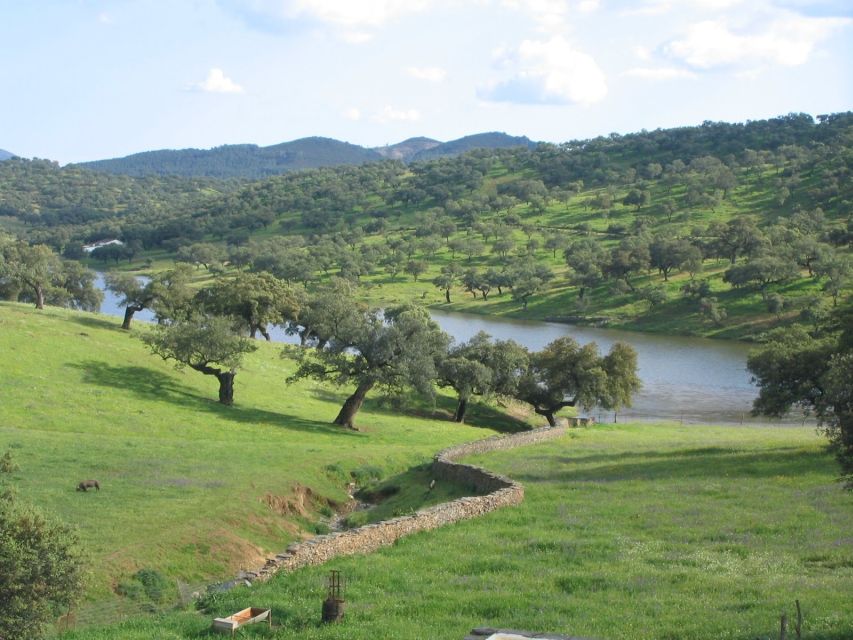
You start with transport in an air-conditioned coach. Then you get moving through the biosphere reserve area called Dehesas de Sierra Morena, part of Sierra Morena’s famous “dehesa” ecosystem.
What I like here is that you’re not just driving past countryside. You’re in a working landscape—shaded by cork oaks and oaks, home to Iberian pigs and bulls. Even if you don’t spot animals every time, the reserve helps you understand why this region matters for conservation and agriculture at the same time.
Then comes a detail that makes the whole day feel more serious: the area is so unique that NASA has a base to study it. That’s a big clue about what you’ll see later at Rio Tinto—terrain and chemistry that look like they belong somewhere else.
Practical tip: this part of the day is easiest when you wear comfortable shoes and expect a bit of walking at natural speeds. Think “trail pace,” not city sidewalk pace.
Rio Tinto Mines: how centuries of mining turned water red
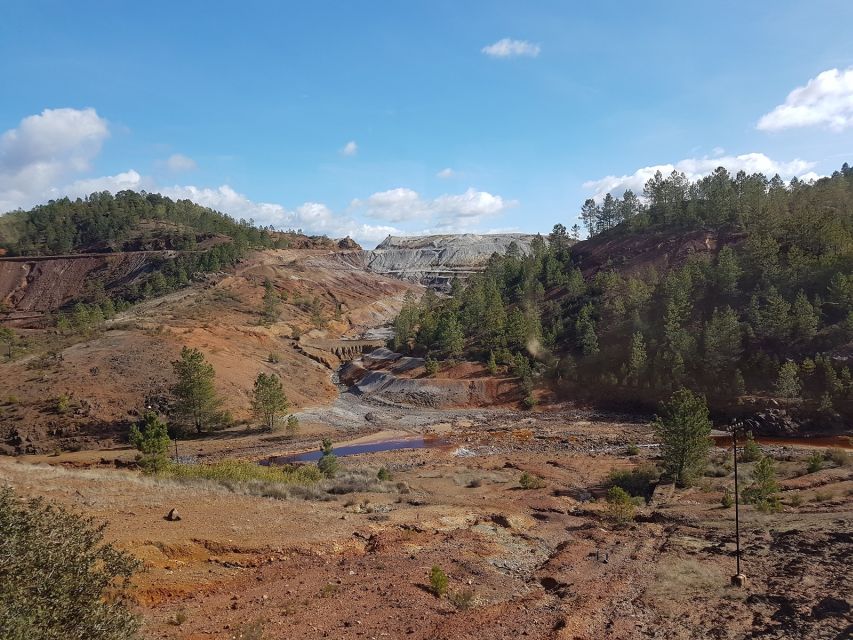
Rio Tinto isn’t just old mining ruins. The area has been exploited for copper, silver, and gold for over 2,000 years, and that long timeline left an imprint.
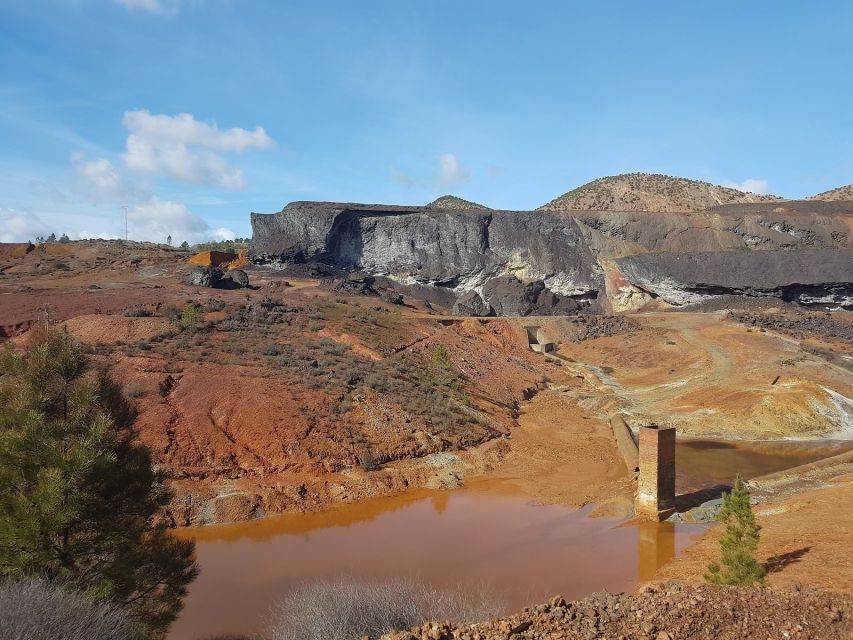
Your visit includes a photo stop and time to explore the Rio Tinto area, with more chances to see the mines and the surroundings. The key story is the river. The main river runs through old mining fields. When metallic minerals mix with the river’s mildly acidic water, the water takes on a reddish tone—and the chemistry makes life in the river nearly impossible.
That’s the science behind the sci-fi look. When you stand there, you’re seeing a system changed by mining, not a naturally “pretty” red lake. A few guides also point out where the best photo angles are, which matters here because the colors look different depending on the time of day and weather.
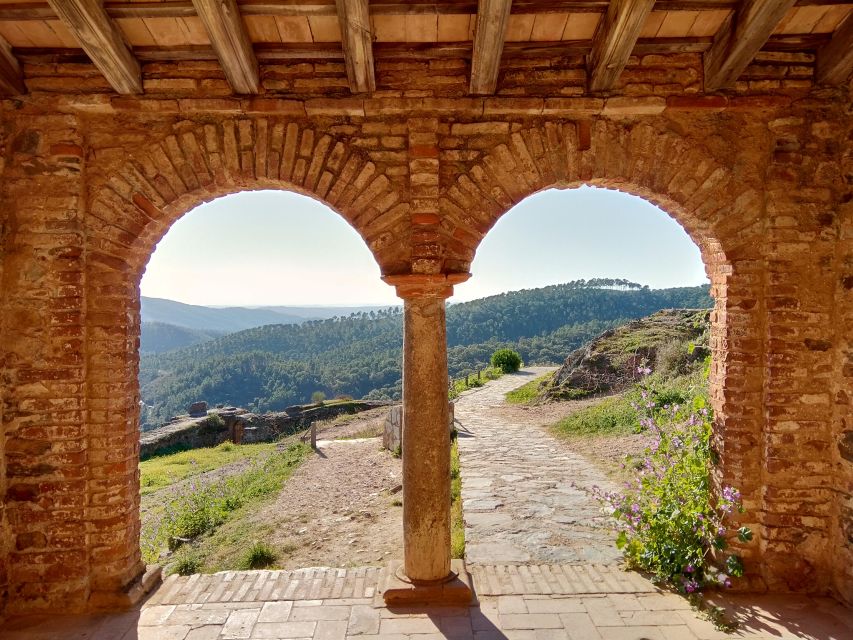
Also, watch for small added moments. Some guides build in stops that make the route feel more alive, like a peaceful viewpoint connected to Almonaster la Real’s rural mosque. Even if the exact timing feels like a quick pause, those side stops are often what break up the drive.
Reality check: the mines can feel less “romantic” than the cave. If you only want scenic perfection, you may wish you had slightly more time outdoors. If you like history plus geology, it’s a strong match.
Sierra de Aracena: guided viewpoints, cork-tree walking, and small-town rhythm
Next you shift gears to the Sierra de Aracena region, where the day starts to feel more like a traditional Spanish outing.
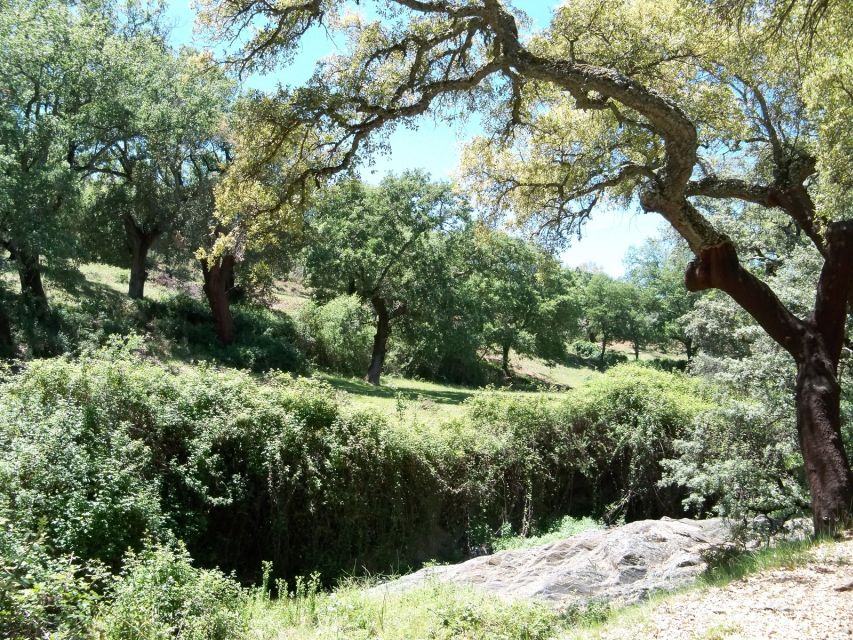
There’s a guided stretch in the Sierra de Aracena area with a photo stop included. From there, you head into Aracena, the capital of the Natural Park Sierra de Aracena y Picos de Aroche. Aracena is where you get the walking-trail atmosphere: shade from cork trees and oaks, plus the possibility of seeing free-roaming Iberian pigs again, depending on where you’re walking.
Then you hit the part of the schedule that travelers usually appreciate: a proper lunch window and free time. Lunch and drinks aren’t included, so you’ll want to choose a place that fits your budget. The upside is flexibility—you’re in a town with enough options that you can eat without rushing.
After lunch, you get Castillo de Aracena sightseeing time. That 30-minute viewpoint stop is short, but it’s a good “reset” after the cave—fresh air, a wider view, and that moment where you realize you’re surrounded by real countryside, not just sightseeing stops stacked back-to-back.
Gruta de las Maravillas cave: what makes the cave walk special
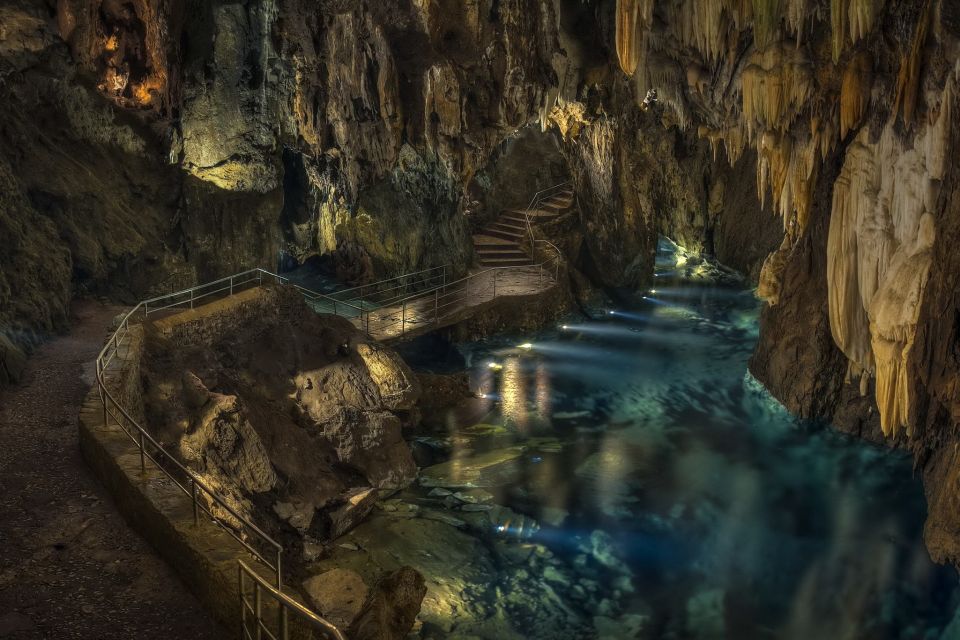
If you come for one highlight, come for the cave. Gruta de las Maravillas is the kind of place where stalactites and stalagmites stop being abstract words and turn into shapes you can recognize instantly.
The cave visit is guided and takes about an hour. It’s described as nearly 2,000 meters long, formed by water running through limestone. During your walk, you’ll see the classic calcite formations—plus deep-blue water that looks almost unreal in the lighting.
Here’s what matters for your expectations:
- You’re going to walk through a curated route inside the cave.
- The stairs and narrow parts can feel tight, so comfort matters.
- The experience is visual, not hands-on. You’ll rely on the guide’s storytelling and the cave’s audio support (which may vary depending on language support).
From what I’ve seen people say, guides can make a huge difference inside the cave. Names that came up include Driss and Catherine, with praise for speaking clearly, sharing context, and helping the group connect the formations to the bigger geology story. If you’re the type who likes asking questions, a good guide is your best friend here.
One more practical note: take your time with photos, but don’t freeze. If you pause too long in the wrong spot, the flow inside caves can feel crowded fast.






How the day runs: timing, pace, and what to watch for
This trip is designed as a full-day loop, and the schedule is built around movement plus a few meaningful stops—not nonstop sightseeing marathons.
You start with pickup from established locations around Seville, then ride for about an hour to the Rio Tinto area. After that, the day alternates between short visits and coach time, then locks into the Aracena and cave blocks later in the afternoon.
Some parts feel shorter than you’d want:
- Rio Tinto includes a visit and photo stops, but it’s not a deep, multi-hour dive into one mine.
- Aracena gets a strong lunch and free-time window, but it’s still part of a timed itinerary.
If you’re prone to feeling restless on bus rides, plan to use the breaks for photos, snacks, and stretching your legs. The schedule includes several coach segments (about half an hour to an hour in stretches, depending on the segment), and the day adds up to 10 hours total.
Weather matters too. One person noted rain changes the experience. Caves stay caves, but outdoor stops and walking routes can feel different. Bring a layer and be ready for “Spain in spring or winter” shifts—even if the itinerary looks perfectly sunny on paper.
Price and value: what $112 actually covers
At $112 per person for a 10-hour day, the value comes from what’s included and what isn’t.
Included:
- A local guide
- Walking tour time
- Entrance fees
- Established pick-up and drop-off points
Not included:
- Meals and drinks
That balance makes sense. You’re paying for long-distance transport from Seville plus entry into a major cave and guided segments. If you tried to do this yourself by train/bus connections and separate car rentals, the cost and time risk would likely rise quickly.
My advice: budget for lunch when you plan your day. Since lunch is free time in Aracena, you can choose a sit-down meal, a lighter bite, or something local if you’re hunting for local flavor. If you’re traveling as a group, splitting costs can also help since the tour price is per person.
If you qualify for a student category, you’ll need to bring a valid student card to purchase that option.
Guide quality is the real make-or-break factor
This tour lives or dies on guide style, because you’re combining geology, ecology, and cave walking into one day.
Several guides received strong mentions:
- Driss for cave expertise and engaging cave delivery
- Carmen for an excellent private-tour feeling
- Miguel for big knowledge and great pacing even with rain
- Catherine for fun, informative explanation
- Jesus for accommodating, funny energy
You’ll also notice a common theme: good guides manage time without rushing, hit photo spots, and explain the “why” behind what you’re seeing. One person even noted their guide helped with cave information in a way the cave audio didn’t fully deliver.
So when you book, pick the option that matches your comfort with group dynamics. Small groups and private formats tend to make it easier to ask questions and get your bearings fast.
Who should book this tour (and who might want a different day)
This one is ideal if:
- you want a single-day taste of multiple worlds: dehesa nature, mining history, and a major cave
- you enjoy science stories told in plain language (red river chemistry, limestone formation)
- you don’t want to drive from Seville and prefer organized stops
It may feel less ideal if:
- you hate caves with tight staircases
- you only want perfectly scenic, picture-postcard destinations (Rio Tinto can be industrial and strange in a harsh way)
- you prefer deeper time at one site rather than switching between several
Also, if you’re a solo traveler, this is a smart way to avoid the “where do I park?” problem. The tour is built around pickup and drop-off, with guide-led stops.
Should you book the Aracena & Rio Tinto full-day tour?
Yes, I’d book it if you’re excited by the mix: cork-tree countryside, Mars-like Rio Tinto, and a real cave that feels like another world underground. The price is fair for a full day that includes transport, a local guide, entrance fees, and guided walking time.
If you’re claustrophobic, have limited mobility, or want more relaxed time at fewer stops, you may want to rethink—or at least be cautious about the cave portion. But for most people who like hands-on storytelling and unusual scenery, this day trip earns its spot on a Seville itinerary.
FAQ
How long is the Aracena and Rio Tinto mines tour from Seville?
It runs for 10 hours total.
What’s included in the price, and are meals included?
The tour includes a local guide, walking tour time, entrance fees, and established pickup/drop-off points. Meals and drinks are not included.
Where do I get picked up and dropped off?
Pickup and meeting point can vary depending on the option booked. Drop-off includes established points back in Seville, such as C. Rastro, 12 and Hotel Don Paco, among others listed for the tour.
What languages are available for the live guide?
A live tour guide is offered in English, French, Italian, and Spanish.
Is this tour shared or private?
It offers options for a shared tour as well as private or small groups.
What should I bring?
Wear comfortable shoes.
Can I cancel my booking?
Free cancellation is available up to 24 hours in advance for a full refund.