REVIEW · SEVILLE
Private Monumental Walking Tour in Seville
Book on Viator →Operated by Carmen González García · Bookable on Viator
Seville can feel like a puzzle box. This private monumental walking tour turns the big-name sights into a clear, walkable story of the city. You start in the oldest core and end at Seville’s most famous postcard view, with a guide who keeps the pace friendly and the explanations practical.
I love two things most: first, the tour keeps you on the streets where Seville is actually lived in, so you see how the monuments connect instead of treating them like separate stops. Second, the experience is led by Carmen González García, and her English is described as excellent, with clear answers and lots of small details you would normally miss.
The main thing to consider is what you are not getting: this is exterior-focused, and tickets for monument interiors are not included, so if your top priority is going inside the Cathedral or Royal Alcázar, you’ll need to plan those visits separately.
In This Review
- Key highlights worth your attention
- Why a private Seville walking tour works better than squeezing everything in
- Plaza de San Francisco and Seville City Hall: starting in the city’s real traffic
- Seville Cathedral and the Giralda: Gothic size, Muslim origins, street-level perspective
- Plaza del Triunfo: the UNESCO “monuments in a cluster” moment
- Royal Alcázar exteriors: Europe’s oldest active royal palace, with layered roots
- Puerta de Jerez and the city’s nerve centers: entrances, power, and flow
- The 18th-century tobacco factory now University: why Carmen is more than a song
- Plaza de España: the iconic 1929 exhibition square and why it looks so good
- What you pay for: value at about $150.85 per person
- How to get the most from this walk (and not waste your energy)
- Who this tour suits best
- Should you book this private Seville walking tour?
- FAQ
- How long is the Private Monumental Walking Tour in Seville?
- Where does the tour start and where does it end?
- Is this tour private?
- Are monument tickets included?
- What languages are offered?
- Is there free cancellation?
Key highlights worth your attention
- Private group, only your party keeps the pace comfortable and the questions flowing
- Exteriors with context helps you understand Seville’s layers from Muslim to Christian rule
- Stops built around UNESCO anchors: Cathedral/Alcázar/General Archive cluster plus Plaza del Triunfo
- Mobile ticket + English service makes day-of organization simpler
- A guide who shares next-step tips—where to eat, what to see if you have extra time
- Flexible pacing can mean extra sights if your group is comfortable walking faster
Why a private Seville walking tour works better than squeezing everything in
Seville has a way of overwhelming first-time visitors. Everything is important, and your feet end up doing the deciding. A two-hour private format fixes that problem: you get a guided route that ties major landmarks together, without spending your whole trip in lines or waiting around.
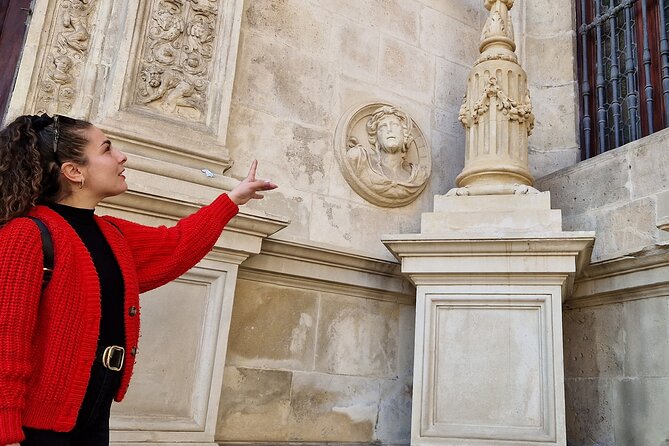
You’re also not stuck with a rigid crowd rhythm. With just your group, the guide can slow down for details when something catches your eye—or speed up if you’re walking strong. That matters in Seville, where the best moments are often tiny: a façade texture, an arc of a doorway, or a view angle that only appears after you turn a corner.
And because this tour focuses on key exteriors, it’s an efficient way to pre-load your understanding. Once you know why the Giralda exists where it does, or why the Royal Alcázar carries mixed influences, you’ll enjoy any later interior visits even more.
You can also read our reviews of more walking tours in Seville

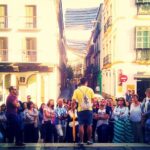

Plaza de San Francisco and Seville City Hall: starting in the city’s real traffic
The tour kicks off at Plaza de San Francisco, a busy, longtime crossroads in the Casco Antiguo. It’s a strong starting point because it doesn’t feel staged. You’re not waiting in a museum mood—you’re in the middle of the city’s daily movement.
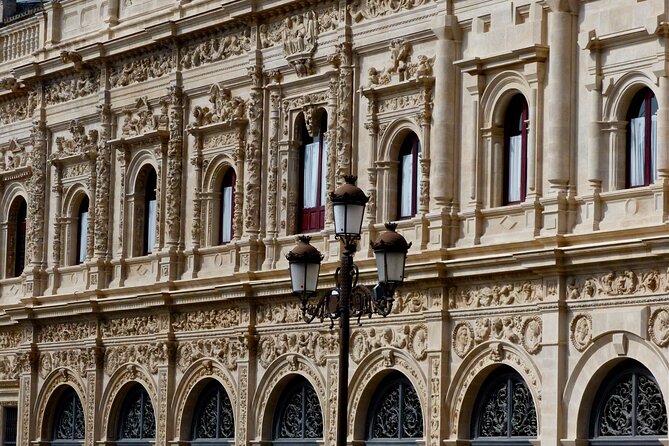
From here, the guide points out the City Hall area, including the Renaissance building from the early 16th century. Even if you’ve never studied architecture, you’ll start noticing how Seville blends civic power and religious grandeur in the same visual space. That’s the theme of the whole walk: monuments are not isolated objects; they’re pieces of a larger urban puzzle.
Why this start is practical: you get oriented immediately. You learn where you are and how the center is structured before you move toward the Cathedral cluster. If you arrive in Seville feeling a little lost, this is a smart first-sighting tour.
Seville Cathedral and the Giralda: Gothic size, Muslim origins, street-level perspective
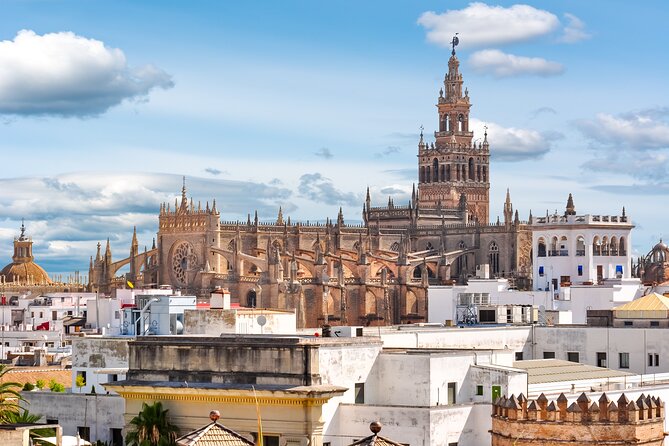
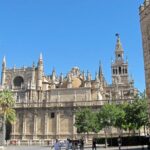
Next up is the big one: Catedral de Sevilla, described as the largest Gothic temple in the world. You’ll see why just from the outside. The scale hits you fast, and the façade and surrounding streets help you grasp how enormous the Cathedral complex really is.
The guide also ties the Cathedral’s story to its layered past—specifically that it reflects earlier uses such as the Main Mosque during the Muslim era. That context changes how you see the building. It stops being only a Gothic monument and becomes a record of centuries of Seville history in one place.
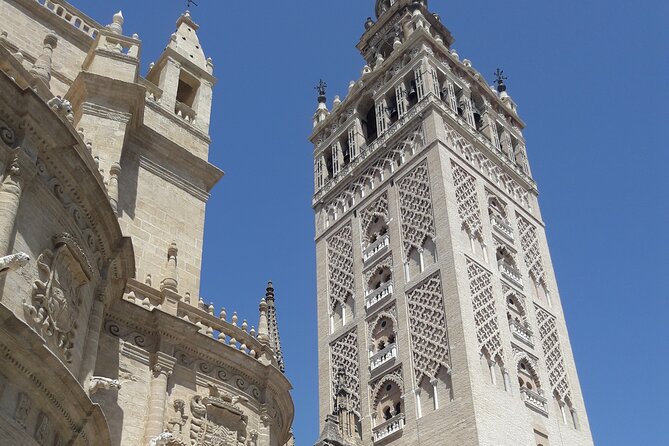
Then you head to Torre Giralda, a minaret tower originally built in the 12th century as a call to prayer, later functioning as the bell tower for the Cathedral. Even if you don’t go inside for viewpoints, you’ll walk away understanding what you’re looking at: the Giralda isn’t just decoration. It’s a working symbol that shifted roles across eras.
A small consideration: the Cathedral and Giralda area can be visually intense. If you’re the type who likes to read slowly and stare, keep that pace without rushing the route. A two-hour window is short, but your guide can usually help you decide what to spend time on.
Plaza del Triunfo: the UNESCO “monuments in a cluster” moment
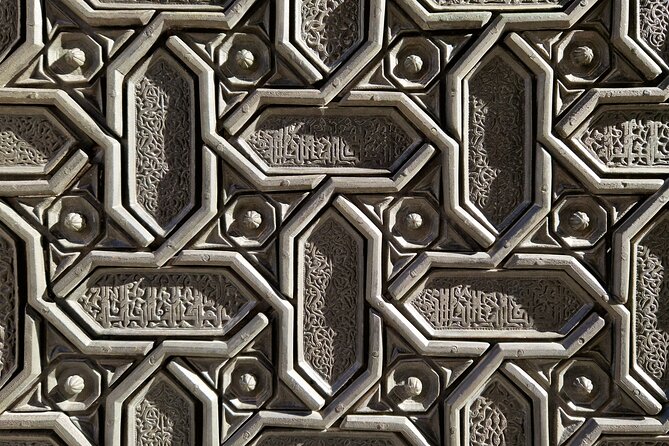
At Plaza del Triunfo, the tour shifts from individual buildings to the idea of a monumental zone. This square is surrounded by major UNESCO-classified landmarks: the Seville Cathedral, the Royal Alcázar, and the General Archive of the Indies.
This stop is a breather and a connector. The guide’s job here is to help you understand what makes the area feel like a monumental district instead of three separate attractions. From street level, you’ll start seeing lines of sight and how different entrances and façades relate.
It’s also a useful place to reset your expectations. If later you decide to add interior visits, this square helps you orient quickly—where you’ll want to enter, and which structures are closest to which other structures.
Royal Alcázar exteriors: Europe’s oldest active royal palace, with layered roots
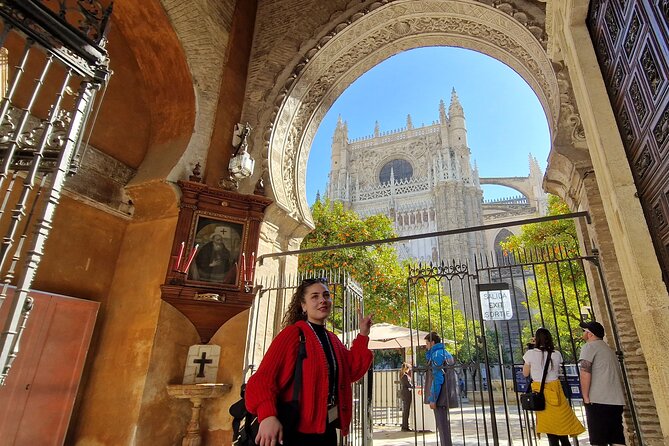
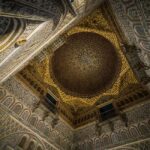
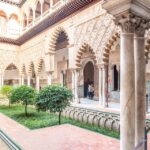
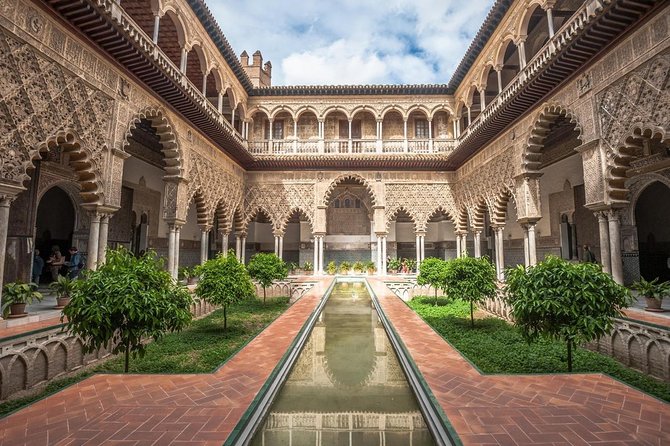
Then you’re at the Real Alcázar de Sevilla, noted as the oldest active royal palace in Europe. Here’s the key concept the guide helps you catch: the palace was built during the Muslim era and later reused by Christian monarchs after the conquest of Seville.
That “built-over, reused, adapted” theme is exactly why a guided exterior walk is valuable. Inside is amazing, but exteriors help you understand the continuity. You’ll be able to look at the building and remember that you’re not just seeing one style—you’re seeing a long conversation between eras.
This stop also pairs well with future planning. Even without going inside on this tour, you’ll walk away with enough context to decide whether you want to reserve time for the interior.
You can also read our reviews of more private tours in Seville






Puerta de Jerez and the city’s nerve centers: entrances, power, and flow
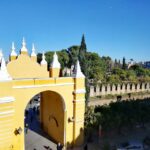
Next the walk turns toward Puerta de Jerez, described as one of Seville’s nerve centers and an entrance point to ancient Seville. This is where the tour gets more “city history” and less “big spectacle.”
You’ll notice the difference right away. Instead of the Cathedral’s gravity, this is about movement and access. Ancient entrances matter because they explain how the city operated: where people came in, where commerce and daily life funneled, and how neighborhoods connected.
It’s also a good moment to think about Seville like a living system. Monuments aren’t just there to be photographed. They’re part of how people have navigated the city for centuries.
The 18th-century tobacco factory now University: why Carmen is more than a song
Between the older entrance areas and the final monumental flourish at Plaza de España, you’ll pass an 18th-century building tied to the city’s tobacco industry. It’s described as the former tobacco factory, now the University of Seville.
Here’s the special bonus angle: this is the workplace of cigarette makers who inspired the popular opera Carmen. Even if you don’t know the opera in detail, it’s a great way to connect Seville’s cultural output to real labor and real streets.
This stop also helps you slow down for a different kind of history. It’s not only about palaces and cathedrals. It’s about industry and identity—Seville as a place where life happened every day.
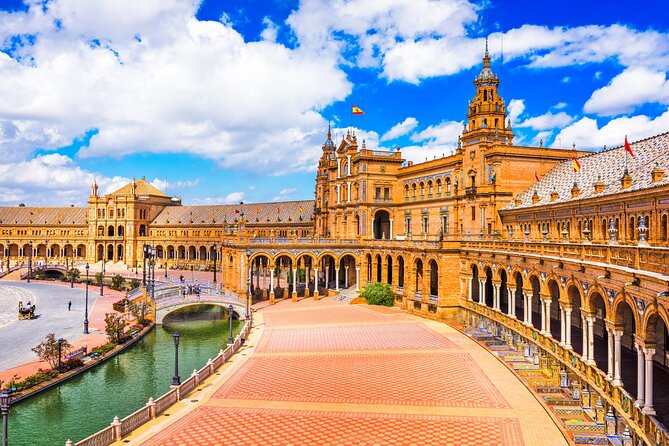
Plaza de España: the iconic 1929 exhibition square and why it looks so good
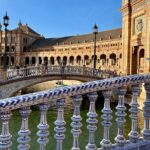
The tour finishes at Plaza de España, one of Seville’s most iconic places and a top photography stop. The main construction is tied to the Ibero-American Exhibition held in 1929, and the square is described as something that transformed the city and delivers those instantly recognizable, postcard-worthy views.
This is the kind of final stop that works even if you’re tired. You’re outside, you get a lot of open space to absorb it, and the architecture is visually generous. You can walk around and not feel trapped by a set route.
Practical tip: if you want a great photo, don’t just aim straight at the main features. Use the edges and small angles. Seville’s best images often come from turning your body and letting the plaza geometry do the work.
What you pay for: value at about $150.85 per person
At $150.85 per person for an approximately 2-hour private walking tour, you’re paying for two things: time with a guide and a well-structured route that hits major anchors efficiently.
This is good value if your goal is a guided orientation—especially for your first time in the city. You’re not paying for monument entry on this tour, which keeps the experience focused and flexible. Since interior tickets are not included and the tour does not include walking inside monuments, the price is more about the narration and logistics of moving through the city without chaos.
Is it pricey? It can be, depending on what you’re used to. But if you consider that you’re getting a private guide for the whole window and you’re skipping the guesswork of what to prioritize, it tends to feel fair—especially when compared with doing multiple attraction planning tasks on your own.
How to get the most from this walk (and not waste your energy)
This type of tour rewards people who show up ready to walk and ask questions.
Here are a few ways I’d plan around it based on what the guide experience seems to emphasize:
- Wear comfortable shoes. You’ll be on city surfaces for the full route, including squares and monument approaches.
- Bring a light layer if weather shifts. Seville can get hot, but it can also surprise you with rain. One of the tour experiences noted that timing can be adjusted if rain hits.
- Use the tour to set up the rest of your day. The guide has a habit of sharing suggestions after the walk, including places to eat.
- Ask for the nearby extras if you have energy. One account noted that if the group walked faster than the normal pace, the guide added additional sights, including the Jewish area. That’s a great use of private time.
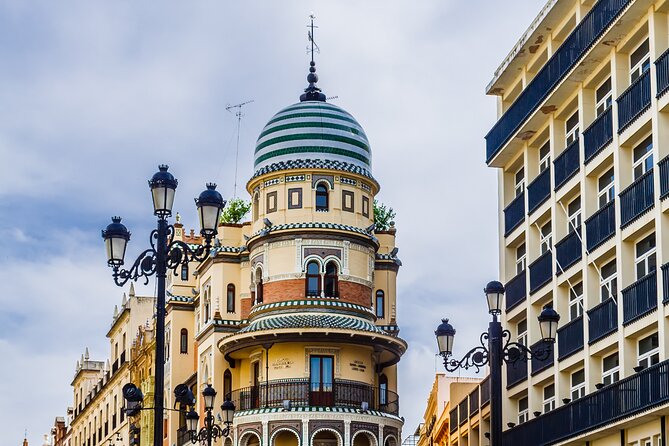
- Consider lunch stops strategically. One guidance highlight mentioned a coffee or lunch suggestion at Hotel Alfonso XIII, a famous address where Spanish royalty stays when visiting Seville.
If you like being efficient but also want the city to feel human, this tour is designed for that balance.
Who this tour suits best
This is a strong match if you want:
- A first-time orientation that connects Seville’s major monuments into one story
- A guide you can talk to—so you’re not just taking photos and moving on
- A route that focuses on UNESCO exteriors without forcing you into interior ticket planning
- A private pace that works for couples, friends, or families who want questions answered
It’s less ideal if you’re coming specifically to spend long periods inside the Cathedral or the Royal Alcázar. Since tickets for monument entry are not included, you’ll need separate plans to see interiors.
Should you book this private Seville walking tour?
I think this one is an easy yes if you want to understand what you’re looking at while still keeping your day flexible. The route makes sense, the time is tight but not rushed, and the guide approach—clear explanations, good communication, and practical tips—fits how most people actually enjoy Seville.
Book it if you:
- Want an efficient 2-hour overview of the Cathedral/Giralda/Alcázar zone plus Plaza de España
- Prefer exterior viewing with context over ticket-heavy touring
- Like a private guide who can tailor pacing and recommend what’s next
Skip it if you:
- Only care about going inside monuments and don’t want to add anything separate
- Need a fully interior-focused itinerary within the ticket price
If you’re unsure, this tour is a smart way to get your bearings fast—then you can decide later what deserves your paid time inside.
FAQ
How long is the Private Monumental Walking Tour in Seville?
It’s listed at about 2 hours.
Where does the tour start and where does it end?
The tour starts at Plaza de San Francisco (Pl. de S. Francisco, Casco Antiguo, Sevilla, Spain) and ends at Plaza de España (41013 Sevilla, Spain).
Is this tour private?
Yes. It’s a private tour/activity, meaning only your group participates.
Are monument tickets included?
No. Tickets are not included, and the tour does not include going inside monuments.
What languages are offered?
The tour is offered in English and Spanish.
Is there free cancellation?
Yes, free cancellation is available. You can cancel up to 24 hours in advance for a full refund.