REVIEW · SEVILLE
Seville : Jewish Quarter & Santa Cruz Walking Tour
Book on GetYourGuide →Operated by Guydeez Tours · Bookable on GetYourGuide
A good walking tour in Seville helps you see what matters. This one traces Jewish heritage through the streets and plazas of Santa Cruz, then links it to Seville landmarks you’ll otherwise miss or misunderstand. You get a clear route, stops that actually connect to the story, and a guide who can answer the practical questions fast.
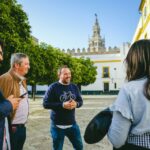
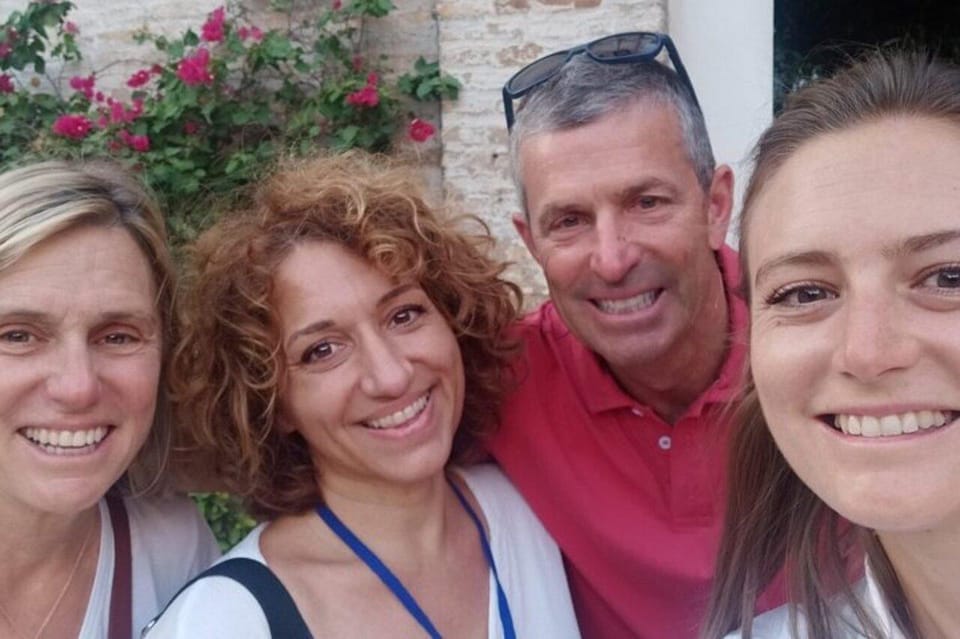
I especially like the way you cover the right mix of well-known sights and quieter corners, all in 2 hours. And I really appreciate the human element: guides like Virginia, Sarah, Francesco, Rossella, and Pedro showed up in past groups with stories, anecdotes, and extra help—like meeting people right where they were staying and adapting the pace to what the group wanted to see.
One thing to consider: you are on foot for the whole experience, with narrow medieval streets and some uneven ground. If you’re sensitive to walking time or mobility limits, plan your shoes carefully and let the guide know early what pace feels realistic.
In This Review
- Key points to know before you go
- Why this Seville Jewish Quarter tour feels like the right length
- Plaza de Santa Cruz: starting with coexistence (and orientation)
- Plaza de los Refinadores: walls, gates, and Sephardic geography
- Iglesia de Santa María la Blanca: a former synagogue you can actually feel
- Plaza Alfaro and Calle Susona: courtyards and the feel of the lanes
- Plaza de Doña Elvira and Plaza del Triunfo: charm plus a viewpoint payoff
- Puerta de Jerez: Torre del Oro and Seville’s big-era change
- Universidad de Sevilla in the Royal Tobacco Factory: literature on the route
- Parque de María Luisa: Forestier design and expo-era legacy
- Price and logistics: does $22 really make sense?
- Timing, pacing, and what to wear in the old quarter
- Should you book the Seville Jewish Quarter & Santa Cruz walking tour?
- FAQ
- FAQ
- How long is the Seville Jewish Quarter & Santa Cruz walking tour?
- Where does the tour start and where do I meet the guide?
- How much does the tour cost?
- What languages are available for the live guide?
- What are the main places the tour visits?
- Is public transportation included?
- Does the tour include help with tickets?
- Is there free cancellation?
- Is the tour wheelchair accessible?
Key points to know before you go
- 2-hour route that hits Santa Cruz highlights without turning into a full-day marathon
- Former synagogue stop at Iglesia de Santa María la Blanca, with artworks by Murillo inside
- Viewpoints and city structure at Plaza del Triunfo and Puerta de Jerez (Torre del Oro and expo-era change)
- Literature connection at the Universidad de Sevilla, housed in the old Royal Tobacco Factory
- End in Parque de María Luisa, designed by Forestier, tied to the Ibero-American Exhibition
Why this Seville Jewish Quarter tour feels like the right length
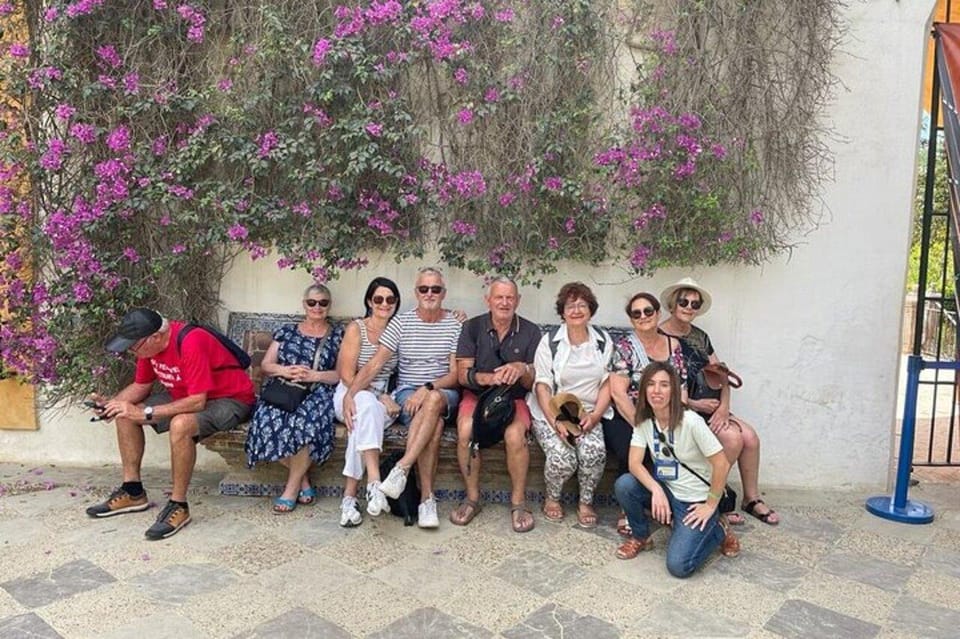
Seville is one of those cities where it’s easy to walk a lot and still feel like you missed the point. This tour solves that with a tight time frame—about 2 hours—and a route that connects neighborhoods, monuments, and cultural moments instead of bouncing randomly between photo stops.
It’s built for you if you have limited time, or if you already saw the biggest attractions and want context. You’ll be walking through Santa Cruz and the Jewish Quarter area, starting at Plaza de Santa Cruz, then moving outward step-by-step through plazas, church/synagogue architecture, and viewpoint spots before finishing in Parque de María Luisa.
It’s also a good choice if you like your history told in plain language. The itinerary keeps the story moving: coexistence in the square, Sephardic quarter walls and gates, synagogue architecture, then later transitions to Seville’s wider cultural and expo-era transformations.
And because it’s offered with private group options, you’re not stuck listening to a crowd that moves at a different speed than your interests. Even when you want to ask a lot of questions, you’re less likely to get brushed off.
You can also read our reviews of more walking tours in Seville

Plaza de Santa Cruz: starting with coexistence (and orientation)
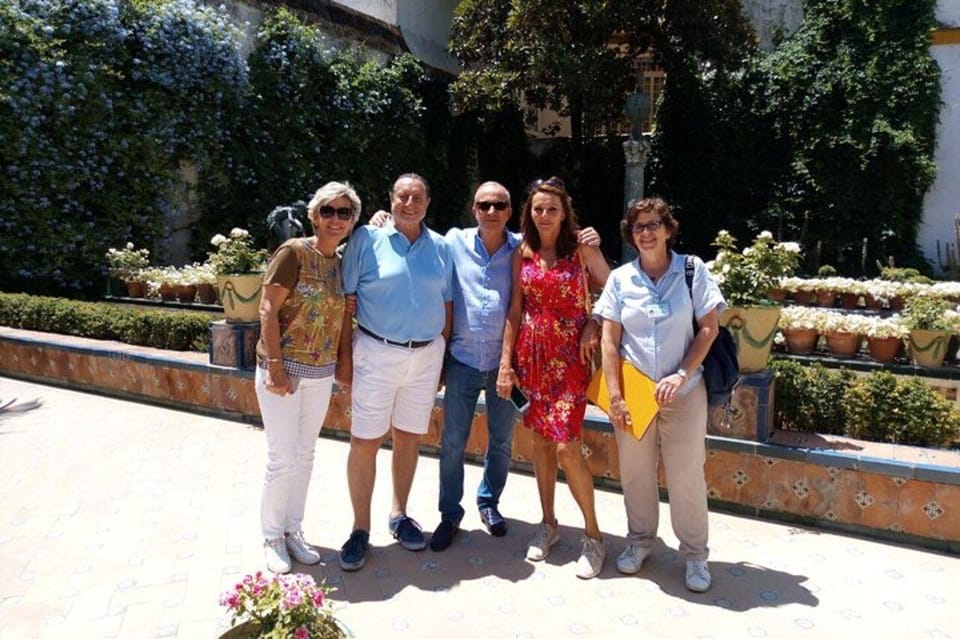
You begin at Plaza de Santa Cruz, which is a smart first stop because the plaza helps you orient. Before you start threading through narrow lanes, you get the big picture of how different communities lived alongside each other in Seville’s past—and how that shows up in place names and street patterns.
Here’s what I like about opening this way: it stops you from treating the Jewish Quarter as a museum-like zone you pass through. Instead, you learn to read the area as a living patchwork of eras and identities. That matters later when you reach gates, walls, and religious buildings, because you’ll understand why those structures are placed where they are.
A practical tip: plazas are where you can reset your expectations. If you’re the type who likes to know the route before you commit to steps, this start gives you that early mental map—so the walking feels easier.
Plaza de los Refinadores: walls, gates, and Sephardic geography
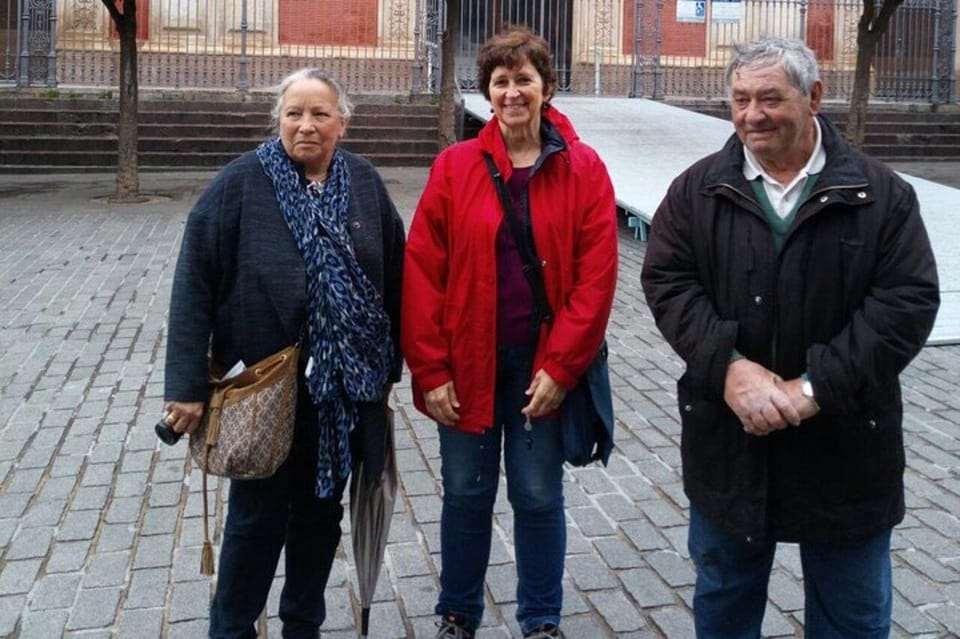
From there, you head to Plaza de los Refinadores and focus on the walls and gates of the Sephardic quarter. This is one of those stops that sounds straightforward until a guide points out the details that make it memorable.
At this point in the walk, you’re basically learning the neighborhood’s outline. That changes how you view everything around you: streets start to feel like routes, not just shortcuts to the next landmark. Even if you’ve seen photos of Seville’s old streets, you’ll notice how the urban layout supports the story—where movement would have been, where boundaries might have felt stronger, and how the quarter’s identity could be traced through physical space.
Drawback to keep in mind: this part can be “information-heavy.” If you prefer action over explanation, ask your guide to keep it visual—pointing out where you’re standing relative to the historical lines they’re describing.
Iglesia de Santa María la Blanca: a former synagogue you can actually feel
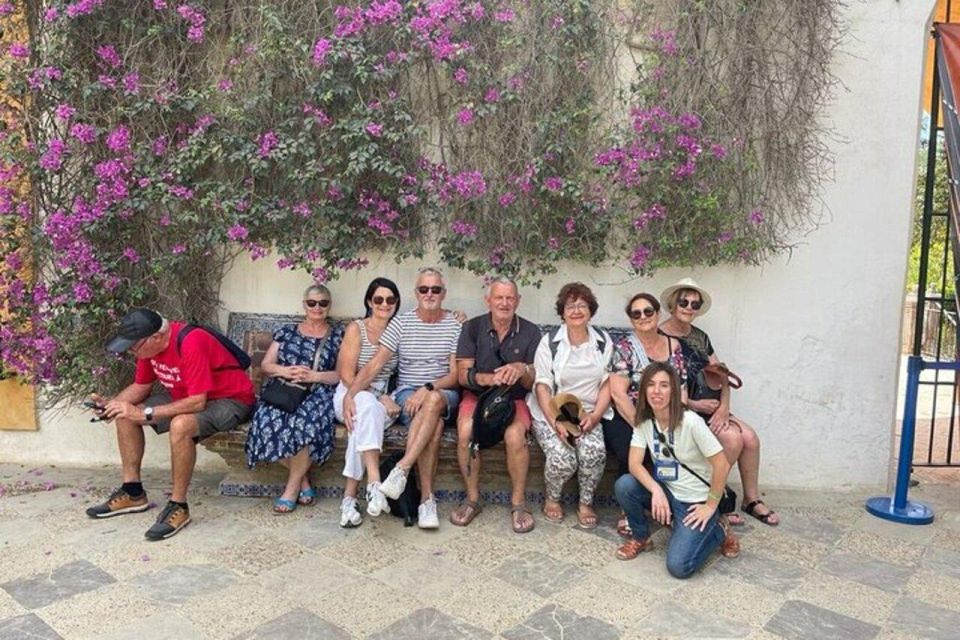
Next comes Iglesia de Santa María la Blanca, described as a former synagogue. This is a key moment because it shifts from streets-and-boundaries into architecture—and architecture is where you can often spot layers of time.
Inside, you’ll be able to admire works by Murillo. That’s a practical win for you: even if you didn’t come specifically for art, the interior connection makes the stop feel more complete than a quick exterior photo.
Why this matters on a walking tour: buildings like this teach you how to slow down. You’ll be looking at the same kind of surfaces your eyes would normally skim past. A guide helps you notice what to look for and how to interpret what you’re seeing without turning the visit into a textbook.
One consideration: you’ll want to be respectful of the church setting and follow any rules about quiet and movement. If you’re the kind of traveler who likes to talk during visits, save the conversation for outside.
Plaza Alfaro and Calle Susona: courtyards and the feel of the lanes
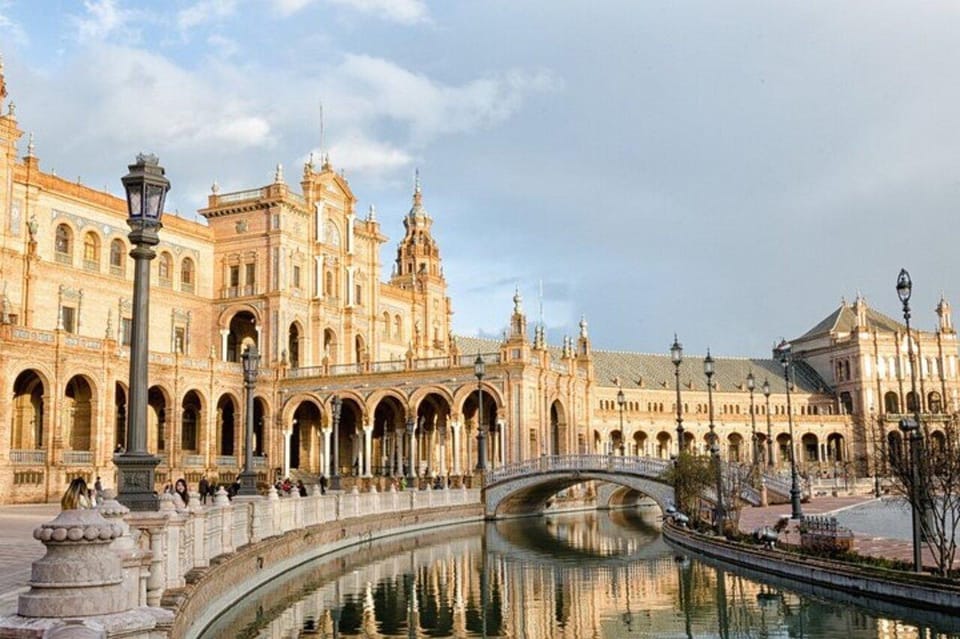
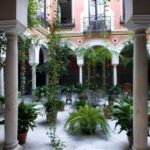
Then the tour moves into Plaza Alfaro for courtyards and continues to Calle Susona, where you’ll walk through narrow streets shaped by the area’s past. This is the part where you feel Seville’s old-city style in your legs and your senses.
I love this segment because it changes the pace. You go from broad plazas to enclosed courtyards and tight lanes—exactly the kind of environment where history becomes more than dates. You start to understand why people describe Seville’s old quarters the way they do: not as scenery, but as a place built for human scale.
What to watch for:
- The streets can be narrow, so keep your shoulders close and your photos quick.
- Courtyard spaces can offer a break from crowds and sun, but they can also feel dim—your camera might need a slightly steadier hand.
If you’re traveling with someone who gets impatient with explanations, this is the stretch where the scenery does some of the work. You’re learning, but you’re also moving through atmosphere.


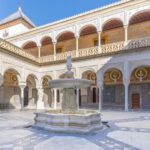
Plaza de Doña Elvira and Plaza del Triunfo: charm plus a viewpoint payoff
Next you reach Plaza de Doña Elvira, then continue to Plaza del Triunfo for panoramic views. These stops are where the tour gives you a little emotional reward for all the street-walking.
Plaza de Doña Elvira brings charm and a breather moment. Then Plaza del Triunfo lets you look outward, and that’s where your earlier orientation pays off. When you can see the city’s layout from above, you start connecting the dots between the older lanes you walked through and the bigger urban picture you’ll be exploring later on your own.
If you’re the type who likes to take a few photos and then move on, this is the moment. The view makes it easier to plan your next walks because you’ll recognize what direction you’re headed.
Puerta de Jerez: Torre del Oro and Seville’s big-era change
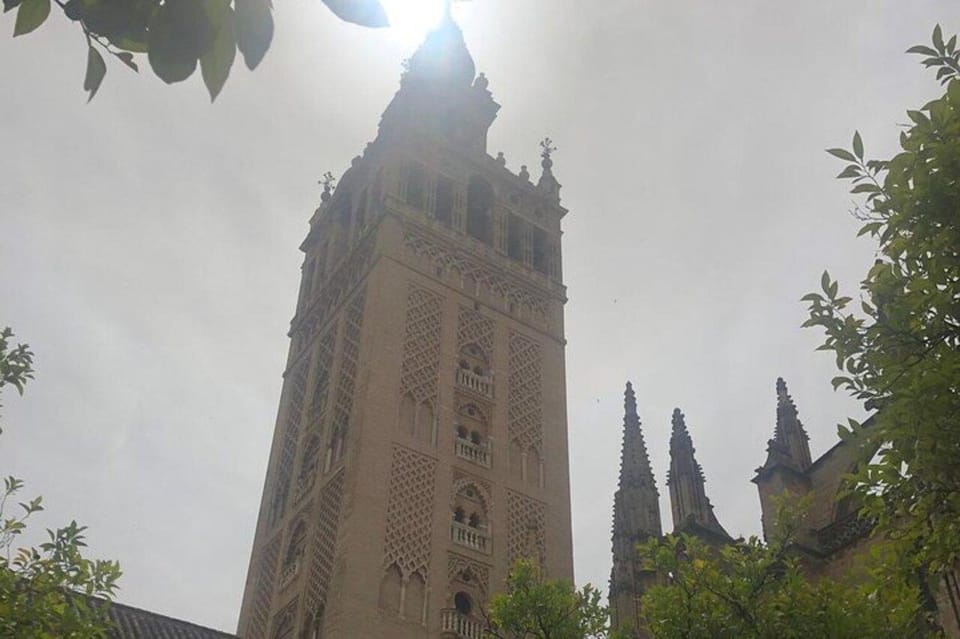
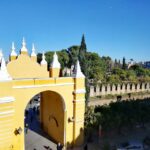
After the viewpoints, the tour shifts to Puerta de Jerez, tied to Seville’s transformation during the Ibero-American Exposition. You’ll hear about the period of change and you’ll also connect it to Torre del Oro.
This section helps you avoid a common mistake: treating old Seville as only old. Yes, you’re in the Jewish Quarter route, but you’re also seeing how the city reinvented itself later and how those choices left visible traces.
For you, that means better context for the rest of your trip. You’ll understand why certain areas feel different from the tight old streets you started with. You’ll have a reason in your head—history, expo-era planning, modernization—for why Seville looks the way it does as you keep moving around.
Practical consideration: this is a city-gateway area, so expect it to feel more open than the old lanes. That can be a welcome reset if you’ve been in narrow streets for a while.
Universidad de Sevilla in the Royal Tobacco Factory: literature on the route
Then the tour reaches the Universidad de Sevilla, which is located in the old Royal Tobacco Factory. This stop is especially useful if you like learning how buildings change function over time.
You’ll also get the literary connections tied to this area. Even if you don’t know much about Spanish literature beforehand, a guide can help you connect the building to the kinds of stories and cultural references people associate with it.
Why it works in a walking tour: the route doesn’t stop at a traditional “heritage only” mindset. You’re shown that Seville keeps repurposing old structures. That gives you a more realistic picture of the city today, not just the one from centuries ago.
If you’re tempted to rush through indoor parts because of time, don’t. This is the stop where you’ll benefit most from a guide’s explanation.
Parque de María Luisa: Forestier design and expo-era legacy
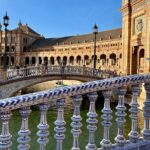
You finish at Parque de María Luisa, designed by French architect Forestier, with discussion of the park’s history connected to the Ibero-American Exhibition. Ending here is a smart design choice: you close the story in a calmer setting where it’s easier to digest what you learned.
The payoff for you is twofold. First, you get a clearer sense of how expo-era planning shaped public spaces. Second, you end with a place you can continue exploring on your own after the tour. If you still have energy, you’re not “thrown out” back into traffic and crowds. You’re dropped into a park area that makes it easy to transition from guided learning to independent strolling.
It’s also a good finishing spot for photos, shade breaks, and a last moment of city context before you go grab dinner.
Price and logistics: does $22 really make sense?
At $22 per person for a 2-hour guided walking tour, the value comes down to what’s included and how efficiently the route is paced.
What you get that matters:
- Live guide in multiple languages (English, Spanish, French, Italian)
- A walking tour plus public transport as part of the experience, unless you choose an option that changes that
- Help booking tickets for the visits you want to include
- The option for private group arrangements and customization of the tour
The big value here is not just the route. It’s the guidance: when you’re paying to walk a historic district, you want someone to tell you what to look at and where to spend your time. Past tour experiences with guides like Virginia, Sarah, Francesco, Rossella, and Pedro show that the guides can add more than facts—often adapting on the fly, answering questions, and bringing a human sense of the city.
One logistics note to keep in mind: the meeting point is in front of Hotel Fernando III (with C. San José, 37 as the starting area). Try to arrive a bit early so you don’t start the walk tense.
Also, the tour is marked wheelchair accessible, which is an important factor to ask about early if you need extra support or if your mobility is limited on uneven historic streets.
Timing, pacing, and what to wear in the old quarter
This tour is short, so it tends to be efficient. You’ll cover multiple stops without spending ages stuck in one place.
For you, that means:
- Wear comfortable shoes with grip.
- Bring a small amount of water if you’re touring in warm weather.
- Expect some changes in street width and surface texture as you move from plazas into tight lanes.
If you’re hoping to take long museum-style breaks, this probably isn’t that kind of tour. It’s better seen as an “unlock the neighborhood” walk—then you go deeper on your own afterward.
Should you book the Seville Jewish Quarter & Santa Cruz walking tour?
Book it if you want a fast, organized way to understand the Seville Jewish Quarter and Santa Cruz area with real context. It’s ideal for first-timers who already feel overwhelmed by the scale of Seville’s old streets, and it’s also great for repeat visitors who want explanation beyond the obvious monuments.
I’d skip it or choose a different format if you strongly dislike walking or you want a very slow, sit-and-stare pace. At 2 hours, this is a “see and learn” experience, not a relaxed wander.
If you’re traveling with limited time and want your Seville day to feel coherent—history tied to architecture tied to city planning—this $22 tour is an easy recommendation.
FAQ
FAQ
How long is the Seville Jewish Quarter & Santa Cruz walking tour?
The tour lasts about 2 hours.
Where does the tour start and where do I meet the guide?
You meet your guide in front of Hotel Fernando III, and the starting area is listed as C. San José, 37.
How much does the tour cost?
The price is $22 per person.
What languages are available for the live guide?
The live guide is available in English, Spanish, French, and Italian.
What are the main places the tour visits?
The tour includes Plaza de Santa Cruz, Plaza de los Refinadores, Iglesia de Santa María la Blanca, Plaza Alfaro, Calle Susona, Plaza de Doña Elvira, Plaza del Triunfo, Puerta de Jerez, Universidad de Sevilla (old Royal Tobacco Factory), and Parque de María Luisa.
Is public transportation included?
Walking is part of the tour, and public transport is included unless you select an option that changes this.
Does the tour include help with tickets?
Yes, the team provides help to book tickets for the desired visits.
Is there free cancellation?
Yes, free cancellation is available up to 24 hours in advance for a full refund.
Is the tour wheelchair accessible?
The tour is listed as wheelchair accessible.