REVIEW · SEVILLE
Enchanted Seville Walking Tour
Book on GetYourGuide →Operated by Naturanda Turismo Ambiental · Bookable on GetYourGuide
Seville gets spookier after dark. The Enchanted Seville Walking Tour strings together three time layers you rarely see in one night: a story tied to the 1755 Lisbon earthquake, and then the street-corner legends of the Judería (old Jewish quarter). I especially like how the guide keeps it moving stop to stop, so you get history through streets, squares, and names—not just facts on a plaque.
I also like the mix of textures: Christian-era landmarks, then Roman leftovers, then the Muslim-period feel of Alfalfa’s underground passages and small shops. One possible drawback: this is a walking route with no wheelchair suitability, and one booking reported the walk being shortened and not finishing the full plan—so if your evening is tight, ask your operator about exact timing.
In This Review
- Key things that make this walk worth your time
- A night walk that gives Seville layers, fast
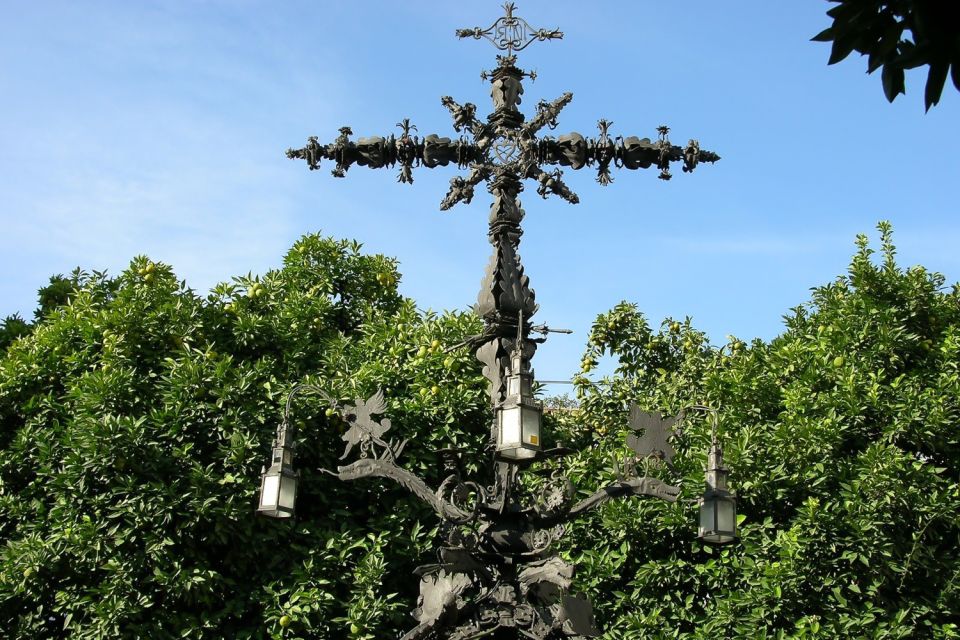
- Starting at Plaza del Triunfo and the Lisbon earthquake clue
- Patio de Banderas to the small squares that set the mood
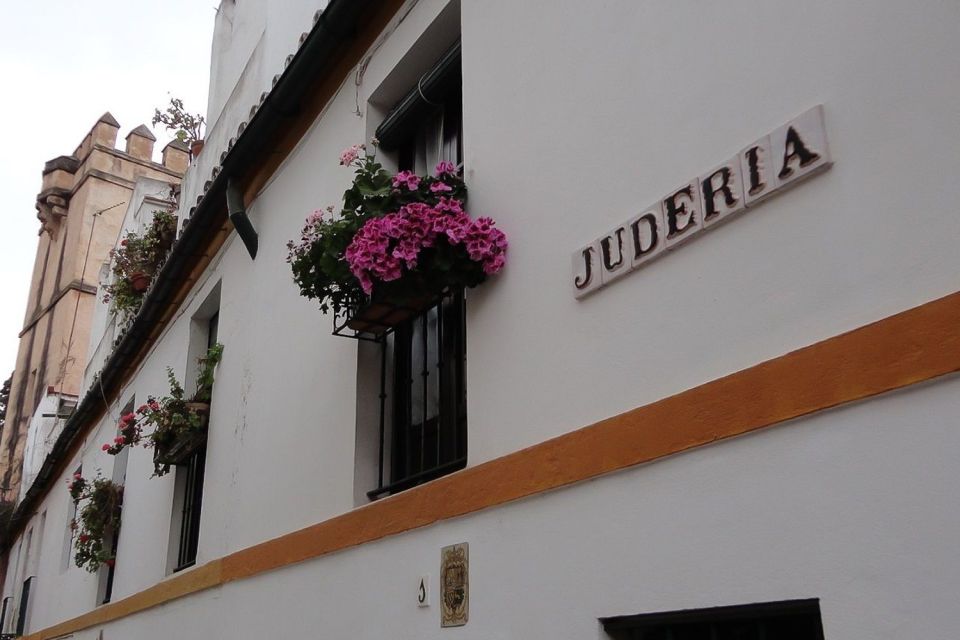
- Entering Judería: stories from 1248 until now
- Calle Mármoles and the Roman columns you can’t miss
- Cabeza del Rey Don Pedro: a street with a story behind it
- Alfalfa’s underground passages and Muslim-era shop life
- Ending at las Setas in Plaza de la Encarnación
- Guides and group energy: what the praise tells you
- Price and time: is $17 good value?
- Who should book this Enchanted Seville walk?
- Should you book the Enchanted Seville Walking Tour?
- FAQ
- How long is the Enchanted Seville Walking Tour?
- Where does the tour start?
- Where does the tour finish?
- What languages are available?
- What’s the price per person?
- Is food or drinks included?
- Do I need to bring anything?
- Is tipping included in the price?
- Is it suitable for wheelchair users?
- What is the cancellation policy?
Key things that make this walk worth your time
- Plaza del Triunfo, anchored by the Lisbon earthquake story and the plaza’s naming clues
- Judería in the evening: narrow streets, small squares, and haunted-house-style tales
- Calle Mármoles and Roman columns: old stone showing up where you’d least expect
- Alfalfa’s underground passages linked to the Muslim period, plus small neighborhood shops
- las Setas at Plaza de la Encarnación: modern Seville as a payoff at the end
A night walk that gives Seville layers, fast
This tour is built for the part of the day when Seville feels more like a story than a museum. You start in the historic core and end in the area of the modern landmark las Setas, so the route naturally compares eras without you having to think too hard.
The format is simple: a professional local guide takes you from stop to stop for about two hours. You’ll cover a handful of streets and squares, with short guided moments at each one. That matters because Seville is a city where “seeing a lot” can turn into “rushing past everything.” Here, the pacing is aimed at connecting each place to a specific legend or historical detail.
You’ll also feel the “night tour” angle. In practice, that usually means: the streets feel more intimate, you can hear explanations more clearly, and the mood fits the ghost stories and dramatic history. If you’re the type who likes your travel with a little atmosphere—this is a good match.
You can also read our reviews of more walking tours in Seville


Starting at Plaza del Triunfo and the Lisbon earthquake clue
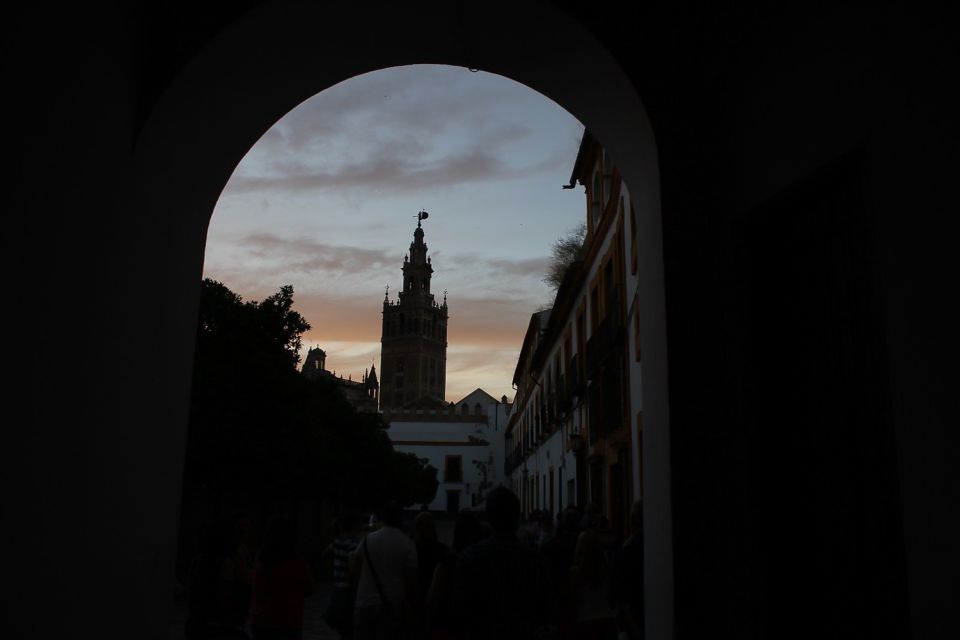
The meeting point is Plaza del Triunfo, by the Immaculate statue. It’s a smart place to start because the plaza is already a stage: open space, historic energy, and enough visibility to orient you before you head into narrower streets.
Your guide begins with a 1755 Lisbon earthquake that was felt in Seville. The real value here isn’t only the quake itself—it’s how the guide uses it to explain why the plaza is known by its name and what you’re looking at around you. You’re also told about the history of the three different buildings found there, which gives you landmarks you can recognize later.
Two things to watch for while you’re listening:
First, keep your eyes up as well as at street level. Plazas like this often hide meaning in details on facades and the way buildings frame the space. Second, don’t worry about memorizing dates. The point is to understand how one event can shape civic identity—and how Seville turns that kind of history into something you can walk through.
Patio de Banderas to the small squares that set the mood
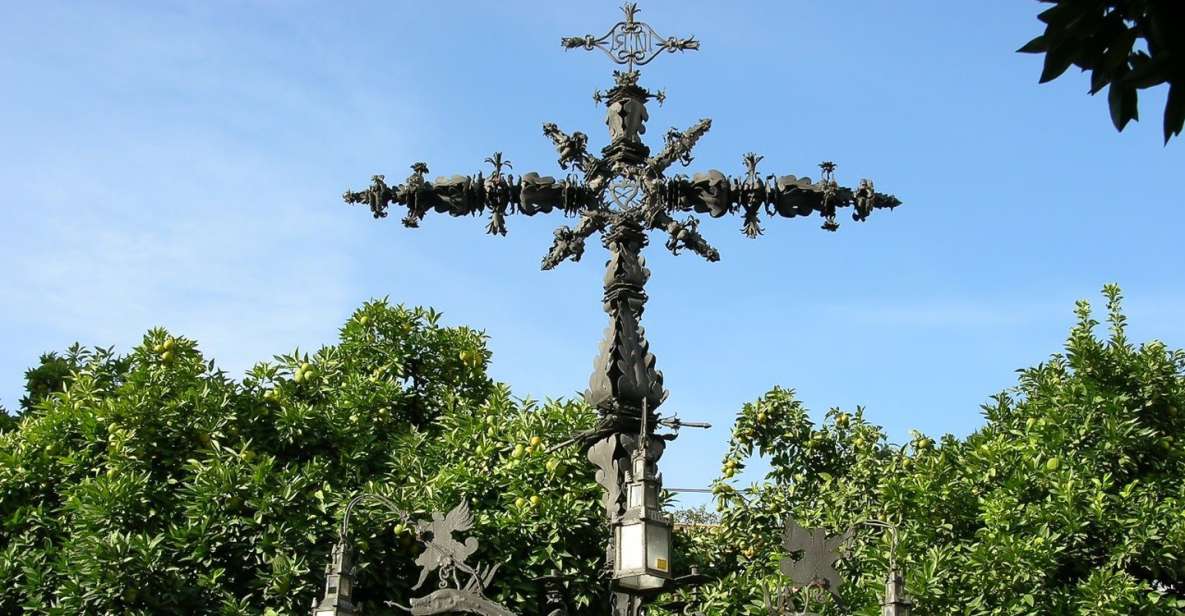
From the start area, you move toward Patio de Banderas, then into the smaller squares and street pockets where Seville’s stories tend to live. One of the tour’s strengths is how it uses short segments—about ten minutes at several stops—to keep you engaged without wearing you out.
You’ll visit Plaza Doña Elvira, and you’ll hear guided context tied to the city’s layered cultures and eras. Then the walk continues through Calle Susona and Plaza de Alfaro. These are the kinds of places where you can easily get lost on your own, which is exactly why a guide helps. You’re not just walking—you’re learning how to read the neighborhood.
What I like about this part of the tour is the way it builds suspense before the Judería stories. By the time you reach the old quarter, you already understand the “rules” of the area: narrow streets, small visual pauses, and names that matter.
Entering Judería: stories from 1248 until now
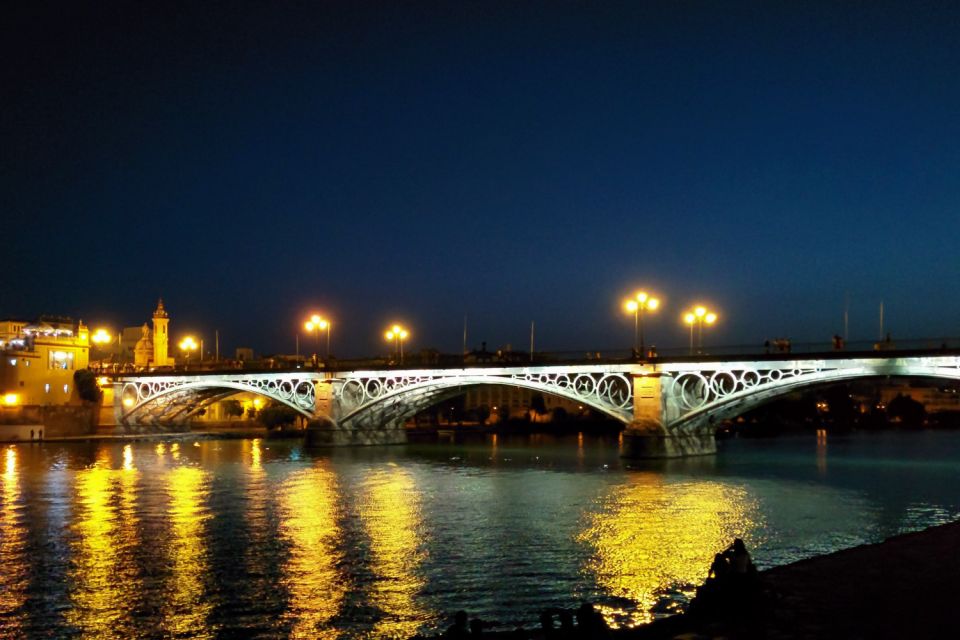
The heart of the experience is the Old Town area known as Judería, the historic Jewish quarter. Here, the guide connects what happened over time—from 1248 until now—to street corners and public spaces you can actually stand in.
You’ll walk narrow lanes where the atmosphere can feel surprisingly theatrical at night. You’ll also stop at special squares, including Plaza de Doña Elvira, Plaza de Susona, and Plaza de Alfaro. The tour doesn’t treat these as random scenery. It uses them as punctuation marks for the stories you hear: why people gathered here, what the area became, and how legends grew around places.
A distinctive feature is the “haunted houses” style of storytelling. That doesn’t mean you’re getting jump-scare fantasy. It means the guide leans into the way local folklore attaches itself to older architecture and long-remembered neighborhood details. If you like your history with narrative shape, this part is the payoff.
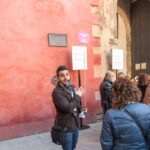
Practical note: keep your camera ready, but don’t let it steal your focus. These are listening stops as much as photo stops. If you’re the type who asks questions, this tour is set up for that. In recent feedback, guides such as Emilio were praised for being friendly, engaging, and good about answering questions as they came up.
Calle Mármoles and the Roman columns you can’t miss
After Judería, you head to calle Mármoles, known for Roman columns. This is one of the clearest “see it now” moments of the route. You get to shift from legend-heavy storytelling to visible, physical evidence—columns that stand out because they’re out of place in everyday street life.
This stop works well for two reasons:
1) It breaks the spell. After all the narrow streets and night-time legends, Roman stone gives your brain a new anchor.
2) It shows how Seville reuses space over centuries. Even when you’re just walking, you’re reminded that cities don’t erase their layers. They stack them.
Listen for how your guide frames the columns in the wider story of Seville’s changing culture. You don’t need a dissertation. You just need the connection between what you’re seeing and why it survived.





Cabeza del Rey Don Pedro: a street with a story behind it
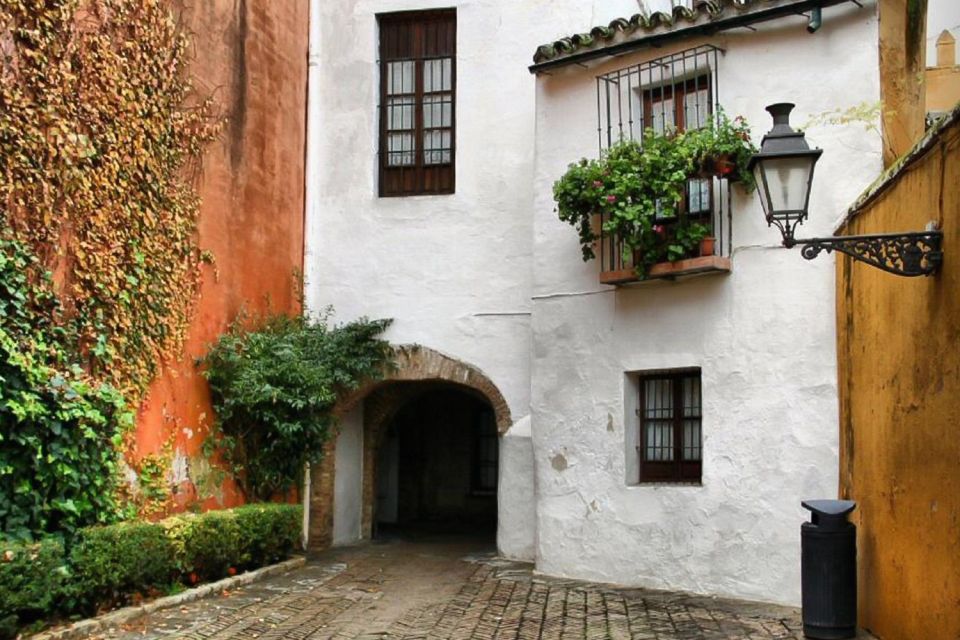
Next comes Calle Cabeza del Rey Don Pedro. This stop is short on time—around ten minutes—but it’s designed to make the street name feel like something you can understand.
The key here is that Seville often uses street names as memory. A street might feel like a corridor until someone ties it to an event or a character, and then it starts to feel personal. That’s what the guide is aiming for: to turn walking into remembering.
If you’re traveling with a friend who loves history trivia, this is a strong segment to share with them. You’ll find yourself repeating the story later because it’s attached to a real place you passed through.
Alfalfa’s underground passages and Muslim-era shop life
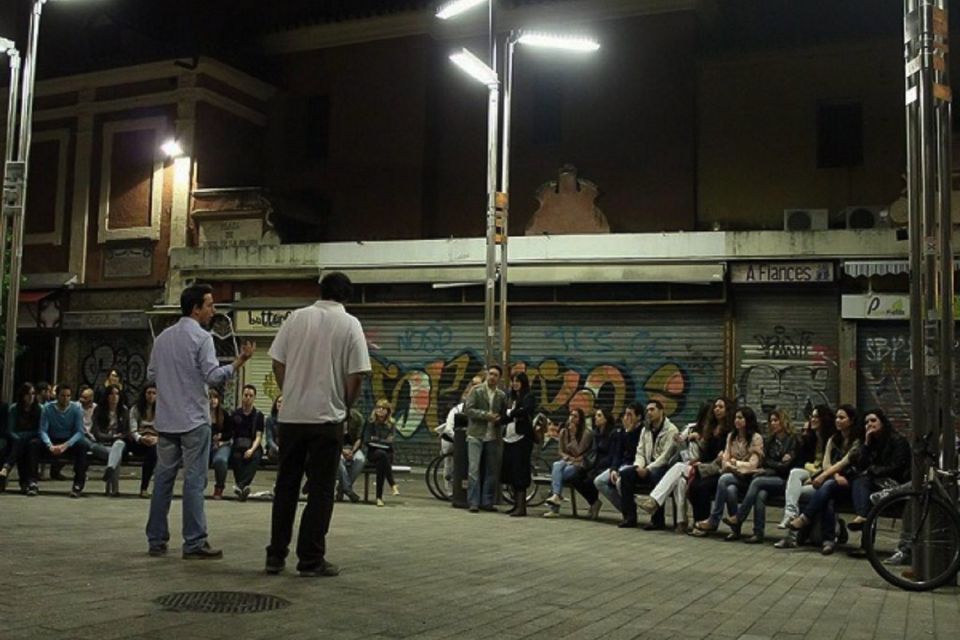
You then move toward Alfalfa, where the vibe becomes more neighborhood-real. Your guide tells you about underground passages and small shops created during the Muslim period. Even without going deep into technical detail, this part helps you feel the city as a living system, not just a collection of famous monuments.
This is also where you’ll likely notice the walking changes. Alfalfa can feel less like a postcard and more like everyday Seville, which makes the history feel believable. When you hear that shop life and passageways have roots in earlier periods, it explains why the area feels layered even now.
If you like practical atmosphere—streets that feel used by real people—this is the moment to slow down a bit and take it in. Keep an eye out for small details your guide points out, because that’s where the “underground and hidden” theme becomes tangible.
Ending at las Setas in Plaza de la Encarnación
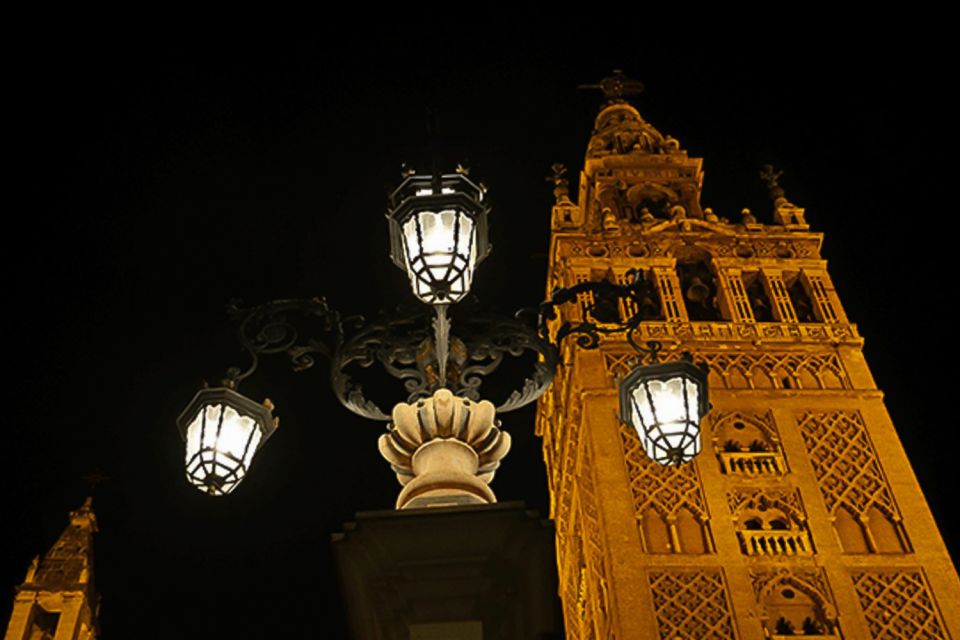
The tour finishes at Plaza de la Encarnación, at las Setas—the modern structure in the middle of the square. It’s a clever ending. You spend the night moving through older layers and then you close at a contemporary landmark that signals Seville’s present-day style.
The benefit isn’t only visual. Ending here helps you reset your brain. You go from narrow lanes and legend-heavy stops to an open, more modern space where you can breathe, take photos, and decide where to go next. The tour’s final address is Calle Laraña, 5, 41003 Sevilla, so you’re not left with an abstract “nearby” ending.
One last tip for your post-tour plan: if you want to keep the evening going, start thinking now while you’re on the walk. This route is about stories, but it’s also a springboard. You’ll be in a high-activity area at the end.
Guides and group energy: what the praise tells you
This experience is run by Naturanda Turismo Ambiental and offered in Spanish or English. Across recent feedback, the strongest praise centers on the guide’s energy and responsiveness.
For example, Emilio is repeatedly mentioned as friendly and fun, with a style that keeps the walk engaging. In at least one case, he was described as accommodating and quick to answer questions. Another named guide, Valentine, was described as informative and careful with research-based answers.
That matters because walking tours fail when the guide reads a script and never responds. Here, the pattern in reviews suggests the guide is actively talking with the group, not performing at it.
There’s also one caution from feedback: a booking reported the walk was shortened to about one and a half hours instead of the expected two, and that the full plan wasn’t completed. That doesn’t automatically mean it will happen to you, but it does point to something smart: confirm your timing with the operator if you have another reservation right after. Evening schedules in older cities can shift.
Price and time: is $17 good value?
At $17 per person for around two hours, the price is reasonable for a guided evening walk that covers multiple historical themes. You’re paying for two things: guided storytelling and the “no-stress” navigation through places that can be tricky to piece together on your own.
If you were to DIY this route, you’d spend time figuring out where to start, what to see at each stop, and how to connect everything into a story. Even with an audio guide, you’d lose the human part—question answering, tone, and the way legends get tied to exact spots.
The value improves if you enjoy narrative travel. If you want only major monuments, you might feel the route is too story-focused. But if you like the idea of understanding Seville through legends, names, and neighborhood culture, $17 is a fair trade.
Also factor in what’s not included: no food and drinks. Plan to eat before or after, and bring nothing heavy. The tour is short, but comfortable shoes matter more than snacks.
Who should book this Enchanted Seville walk?
This tour makes the most sense if you:
- Like history told through stories tied to specific streets and squares
- Want a night activity that feels atmospheric without being hours long
- Enjoy the contrast of older neighborhoods plus a modern finish at las Setas
- Travel with curiosity and you’re willing to ask questions
It may not be your best choice if you:
- Need wheelchair-friendly routes (it’s not suitable for wheelchair users)
- Want only big, standalone monuments with minimal walking
- Have a super tight schedule and can’t absorb a possible shortened experience
It’s also described as suitable for participants of all ages, which usually means it’s not overly technical or unsafe. Still, it’s a walking tour, so you’ll feel the cobblestones and uneven surfaces.
Should you book the Enchanted Seville Walking Tour?
I think you should book it if you want Seville to feel like a living story, not a checklist. The combination is strong: Plaza del Triunfo with the quake-and-building context, a Judería segment built around memorable legends, then Roman columns and Alfalfa’s underground passage talk, ending with a modern scene at las Setas.
If you hate walking tours that rely on vague narration, this one is more anchored in named places and concrete stops. If you’re traveling with someone who loves atmosphere and asks questions, this is the kind of tour where that pays off.
If your schedule is fragile, do a quick sanity check with the operator the day-of so you’re not counting on every minute. Otherwise, for $17 and about two hours, it’s a good way to taste the city’s layers in one evening.
FAQ
How long is the Enchanted Seville Walking Tour?
It lasts about 2 hours.
Where does the tour start?
The meeting point is Plaza del Triunfo, by the Immaculate statue.
Where does the tour finish?
It finishes at Calle Laraña, 5, 41003 Sevilla, Spain.
What languages are available?
The tour is offered in Spanish and English.
What’s the price per person?
The price is $17 per person.
Is food or drinks included?
No. Food and drinks are not included.
Do I need to bring anything?
Wear comfortable shoes.
Is tipping included in the price?
Tips are not included.
Is it suitable for wheelchair users?
No, it is not suitable for wheelchair users.
What is the cancellation policy?
You can cancel up to 24 hours in advance for a full refund.