REVIEW · SEVILLE
Seville: Museum of Fine Arts Guided Tour
Book on GetYourGuide →Operated by Guides and Tours · Bookable on GetYourGuide
One of Seville’s best art shortcuts is a guided walk. You get the Museum of Fine Arts in a compact 2 hours, plus the quiet drama of its former convent setting. I especially like the way the guide ties art to time and place, and how you move through major areas without feeling lost. One consideration: with small groups capped at 8, the experience can feel a bit structured, so you’ll want a follow-up museum hour if you like lingering.
A big plus is the historic building itself. La Merced’s Renaissance and Baroque architecture turns the museum into a stroll through history, not just wall-to-wall paintings. The main drawback is also simple: you’ll be inside for most of your visit, so plan your Seville sightseeing for after your tour.
In This Review
- Key takeaways before you go
- Start at Plaza del Museo, then step into La Merced
- Museum of Fine Arts: Spain’s second-largest gallery, made manageable
- La Merced’s architecture: why the building is part of the show
- Claustro de los Bojes and Claustro Mayor: a break that improves your looking
- From Sevillian Gothic to Renaissance masterpieces like Saint Jerome Penitent
- Murillo’s room: the Seville story gets personal
- A small-group tour with licensed guides: how it feels in real life
- Price at $23 for 2 hours: what you’re really paying for
- Time in the museum center: logistics that keep your day smooth
- Who should book this tour (and who might skip it)
- Should you book the Seville Museum of Fine Arts guided tour?
- FAQ
- How long is the Seville Museum of Fine Arts guided tour?
- Where does the tour start and where do I meet the guide?
- What’s included in the ticket price?
- Are the tours offered in English or Spanish?
- What’s the group size?
- Is the museum tour wheelchair accessible?
- Can I bring a pet?
- Can I cancel for a refund?
Key takeaways before you go
- Small group (max 8): easier questions, less rushing, more back-and-forth with the guide
- Licensed local guide in English or Spanish: context for symbols, style, and why these works matter
- La Merced cloisters: Claustro de los Bojes and Claustro Mayor add breathing room to the art
- A focused sweep of eras: Sevillian Gothic → Renaissance → Baroque → Costumbrismo
- Skip-the-line express security: more time looking, less time waiting
- Art you can actually connect: Murillo, Torrigiano, and other Seville names explained in plain language
Start at Plaza del Museo, then step into La Merced
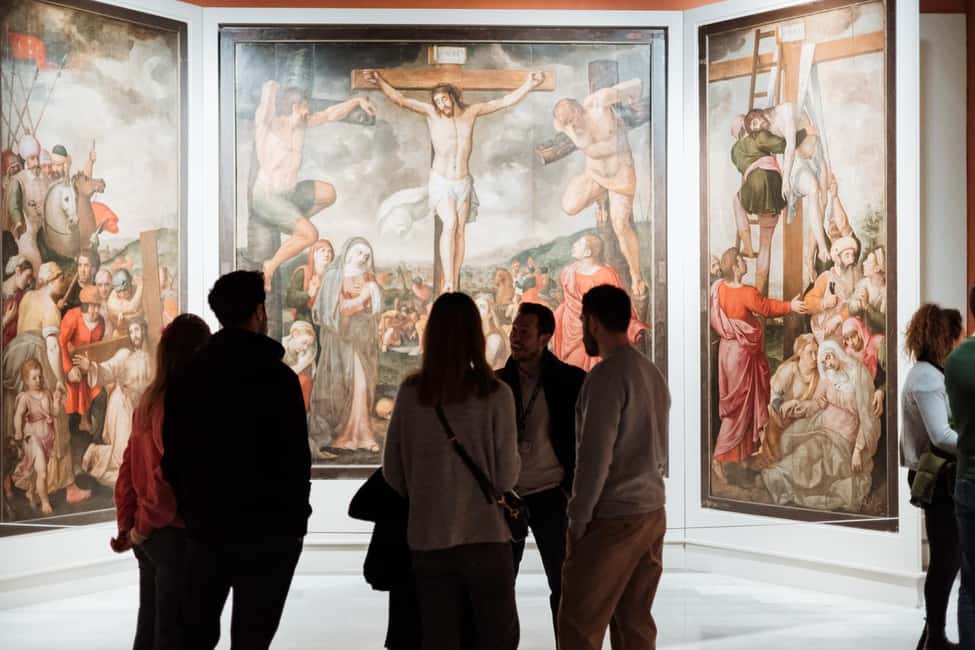
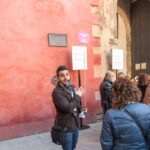
You’ll meet near the heart of the action at Plaza del Museo, by the Murillo statue, with a blue umbrella or a name tag reading Sevilla Guías & Tours. The tour itself runs from the starting point at Asociación Amigos del Museo de Bellas Artes and loops through the museum, returning back there when the 2 hours are up.
Why start here? Because you’re already in the museum zone, so you’re not wasting time crossing Seville half awake. Also, being close to the Murillo area matters because the guide’s route naturally sets you up for what’s ahead, especially once you see the dedicated Murillo room later on.
One practical note: entrance and security can be a bit of a bottleneck in popular museums. This tour includes an express security check, which is the difference between arriving and starting to look right away versus burning your good mood standing in line. And yes, you’re walking indoors for most of the tour, but the overall route is built for flow, not marathon fatigue.
If you’re pairing this with other Seville plans that same day, this format is smart. Two hours is long enough to get the big picture, yet short enough to still enjoy the city afterward.
You can also read our reviews of more guided tours in Seville

Museum of Fine Arts: Spain’s second-largest gallery, made manageable
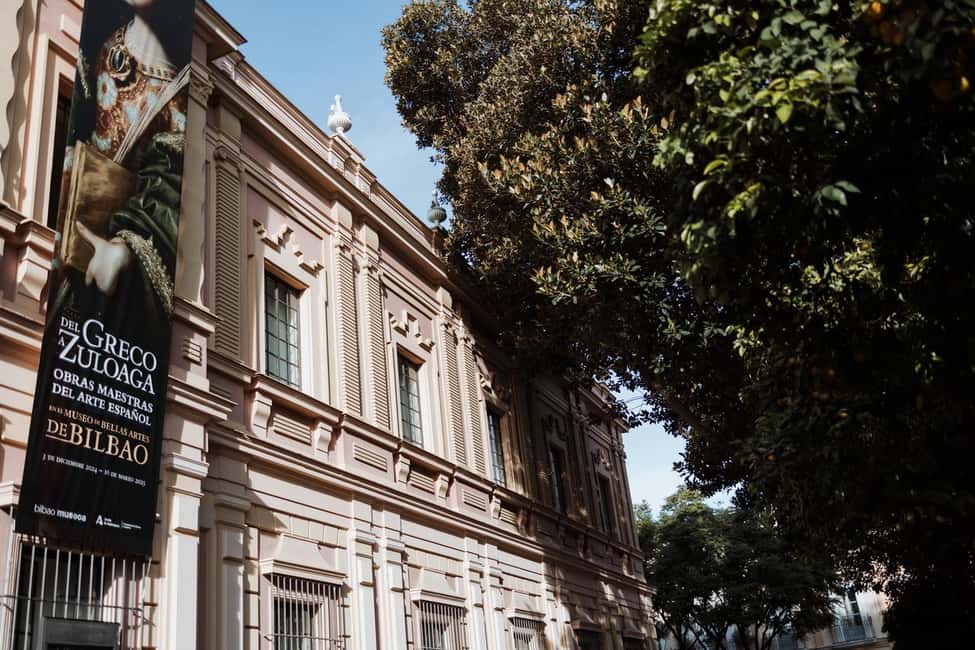
The Museum of Fine Arts of Seville is Spain’s second-largest art gallery, and that scale can be intimidating if you’re on your own. The guided approach is the whole point: you get a curated path that covers the museum’s most important ideas without trying to see everything.
You’ll move through halls where the collection spans multiple eras, including Renaissance, Baroque, and Sevillian Costumbrismo. That mix is part of what makes this museum feel like Seville rather than just a European “greatest hits” stop. The guide helps you understand how the city’s artists absorbed wider European movements, then made those influences distinctly Sevillian.
I also like that you’re not stuck staring at a single style for the full visit. Instead, you get an arc: Gothic pieces and symbols first, then Renaissance refinement, then the heavier emotional weight of Baroque, and finally Seville’s own storytelling spirit. If you’re not an art nerd, that’s still enjoyable because the guide frames what you’re seeing in human terms: religious themes, social roles, and visual symbolism you’d normally miss.
If you are an art nerd, you’ll probably appreciate how the guide can explain what looks like “just a painting” until you realize it’s carrying a message. That kind of interpretation turns your attention from decoration to meaning.
La Merced’s architecture: why the building is part of the show
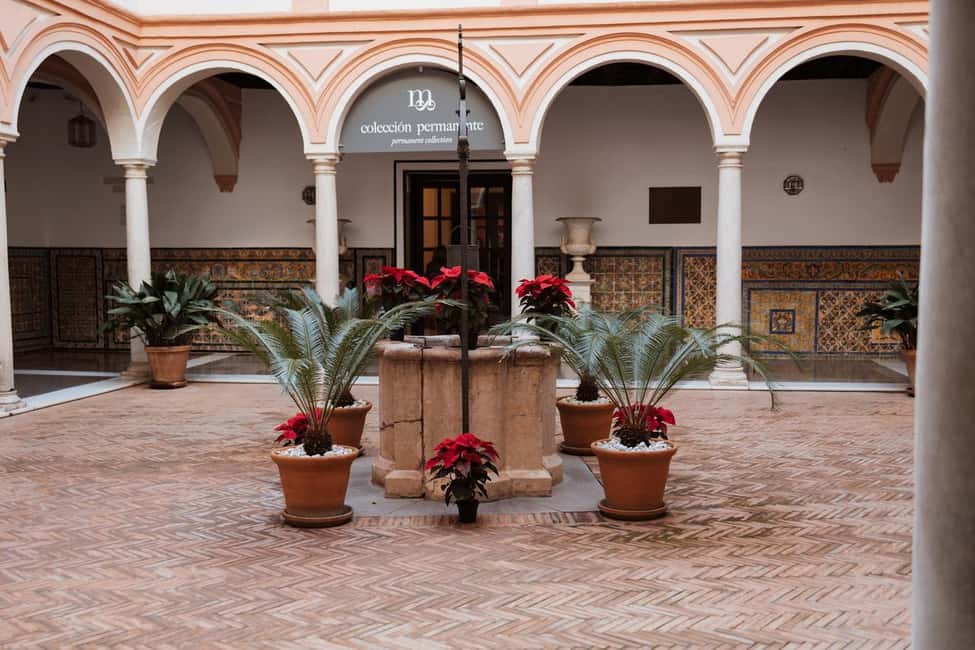
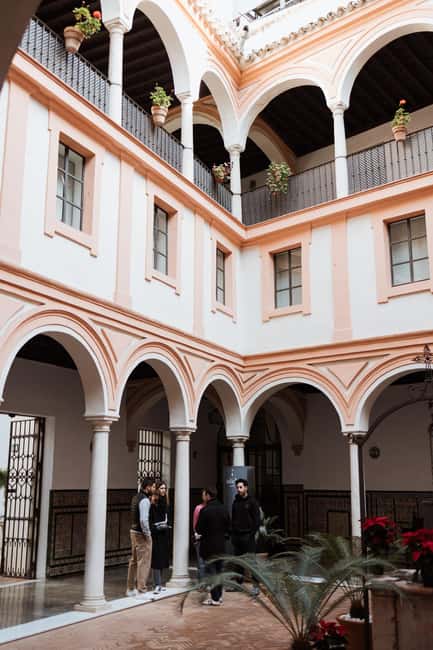
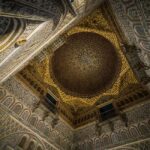
Before you even get fully into paintings, you’re in La Merced, a historic convent that makes the museum feel like it has a pulse. You’ll admire Renaissance and Baroque architecture, then step into the cloisters—especially the Claustro de los Bojes and the Claustro Mayor.
These cloisters matter because they control the pace of your visit. Museums can blur together fast. Cloister time gives your eyes a reset and your brain a quiet moment. You catch the museum’s structure as a whole: rooms, courtyards, transitions—how the site functioned long before it became an art collection.
And there’s another subtle benefit. When you see how the convent spaces were designed for calm and daily ritual, the religious art you’ll encounter later hits differently. You’re not just looking at saints and scenes; you’re seeing the sort of environment where those images would have lived.
The tour is also designed to keep you moving without feeling chased. The group is small, and the guide can adjust on the fly if you pause for a question or need a minute to orient yourself.
Claustro de los Bojes and Claustro Mayor: a break that improves your looking
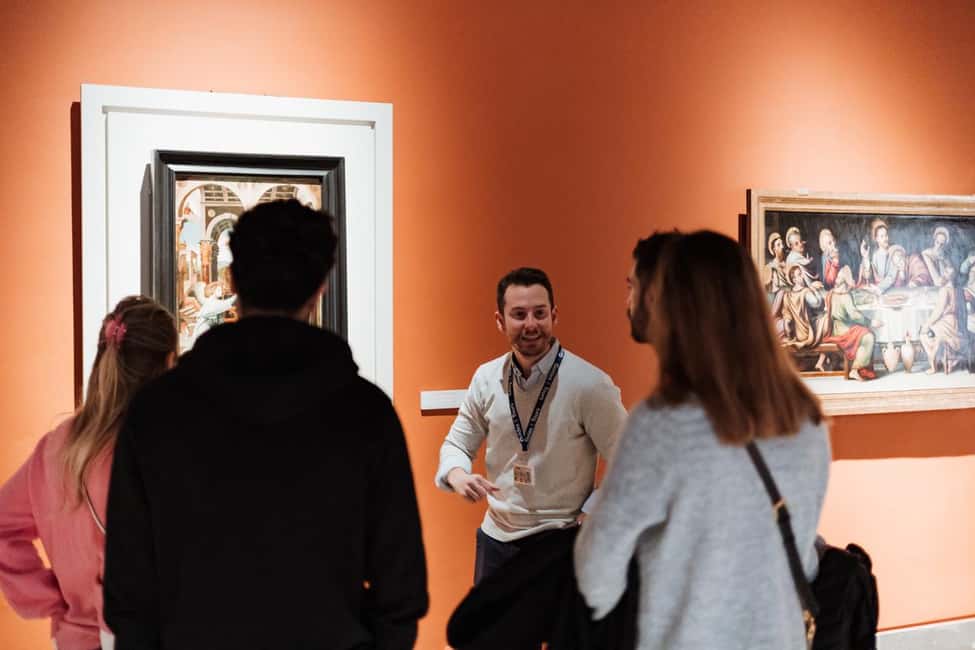
The cloisters aren’t filler. They’re an art-training tool disguised as a scenic stop.
In the Claustro de los Bojes, you’ll get a calmer setting where details like arches and stonework are visible without the distraction of crowds or constant signage. Then, in the Claustro Mayor, the mood shifts slightly—bigger scale, stronger “center of gravity” feeling—so your sense of the museum gains depth.
Here’s the practical win: you’ll come back from the cloisters with clearer focus. That means when the tour turns into Gothic and Renaissance highlights, you’re not just “moving through rooms,” you’re actively reading the museum’s evolution.
If your preference is to see a room quickly and move on, the cloisters may feel like a deliberate pause. But if you like a bit of breathing room, this stop is exactly why a guided format works here. It keeps the visit from becoming a blur of frames.
From Sevillian Gothic to Renaissance masterpieces like Saint Jerome Penitent
One of the most satisfying parts of this tour is the way it shows artistic evolution instead of presenting eras like separate boxes. You’ll start with Gothic masterpieces from Seville and across Andalusia, then travel forward into Renaissance work.
A standout named in the tour highlights is Saint Jerome Penitent by Torrigiano. Even if you’ve never heard of Torrigiano, the guide’s job is to make the style readable: why the figure looks the way it does, how the composition works, and what makes this kind of religious art feel urgent for its time.
The bigger lesson is what the guide keeps repeating without sounding like a lecture. The art is never isolated. It’s linked to patronage, faith, and the visual language of Europe—then reshaped by Seville’s own artists and preferences.
That’s where the guide really shines. The museum gives you objects. The guide gives you the connective tissue. And for a visitor, connective tissue is everything.
You’ll also see how the museum’s collection helps you understand what changed over centuries—tone, symbolism, realism, dramatic lighting, and how human emotion is expressed in paint or sculpture.
You can also read our reviews of more museum experiences in Seville






Murillo’s room: the Seville story gets personal
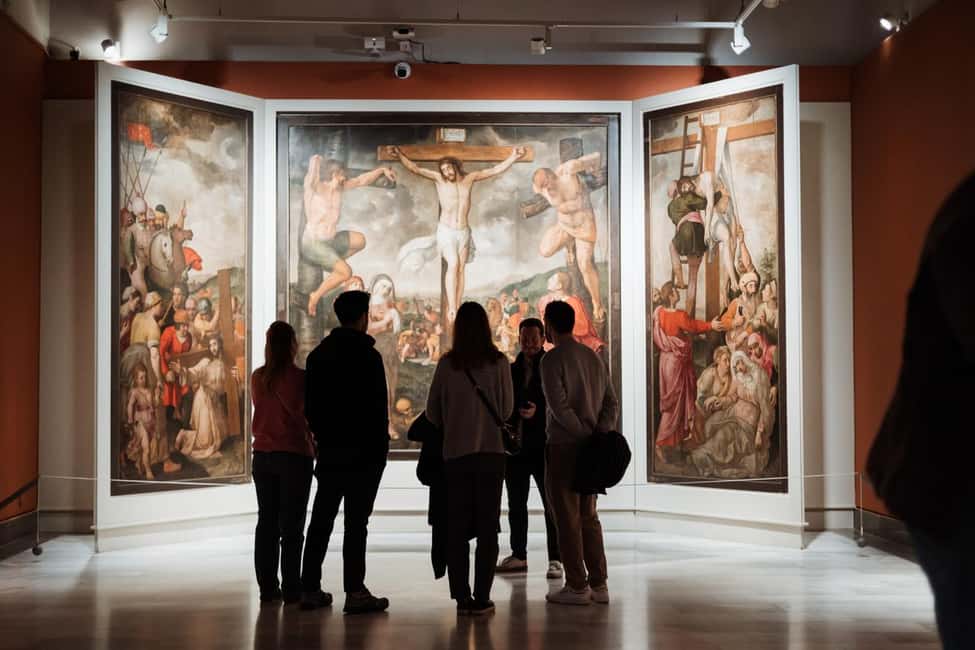
At some point, you’ll step into the spectacular room dedicated to Bartolomé Esteban Murillo. This is a key moment, not because Murillo is famous (he is), but because the tour uses his works to show Seville’s artistic identity.
In that room, you’ll also encounter selected works by other renowned Sevillian artists. The guide helps connect them in a way that feels natural, like you’re watching an ecosystem rather than a random lineup.
Murillo is often tied to religious subjects, but what you’ll notice during the tour is how the storytelling works. The guide’s explanation of symbolism and context makes it easier to see why these images landed with local audiences—why certain themes repeated, and how visual choices communicated meaning.
This is also where you can decide what to do next. If Murillo clicks for you, you’ll likely want to return later on your own and slow down. If you’re more interested in architecture or technique, the Murillo focus still gives you a satisfying anchor point for the rest of the museum.
A small-group tour with licensed guides: how it feels in real life
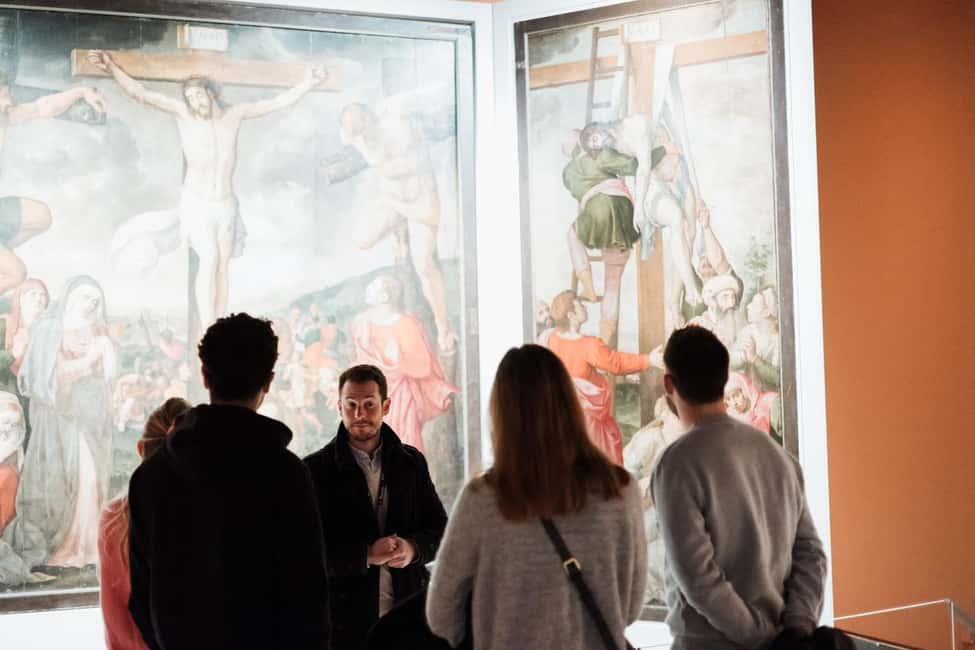
The tour is built for a small group limited to 8 participants, which is why the best feedback keeps coming back to the guide’s explanations. The guides are licensed, and the tour runs in English or Spanish.
The name that shows up often is Julio (including Julio Dean Del Junco). Multiple visitors praised how he connects artwork to the historical period it comes from, and how he can explain symbolism in a way that doesn’t require prior training. You can also expect a guide who answers questions and adjusts to the group’s level.
There’s also a practical detail that can matter more than you think: one review specifically mentioned an earpiece that makes hearing the guide much easier than shouting across a room. That’s the kind of small comfort that keeps your attention on art instead of logistics.
It’s also worth noting that the guide isn’t just facts. The strongest moments are when the guide turns objects into stories—what the artist might have been responding to, how the subject connects to society, and why the style feels like it does.
If you’re someone who’s fine with museums but hates the guesswork, this is a strong match. If you’re the type who loves reading labels only, you might find the guided route a bit structured. But the majority of value here is interpretation, not speed.
Price at $23 for 2 hours: what you’re really paying for
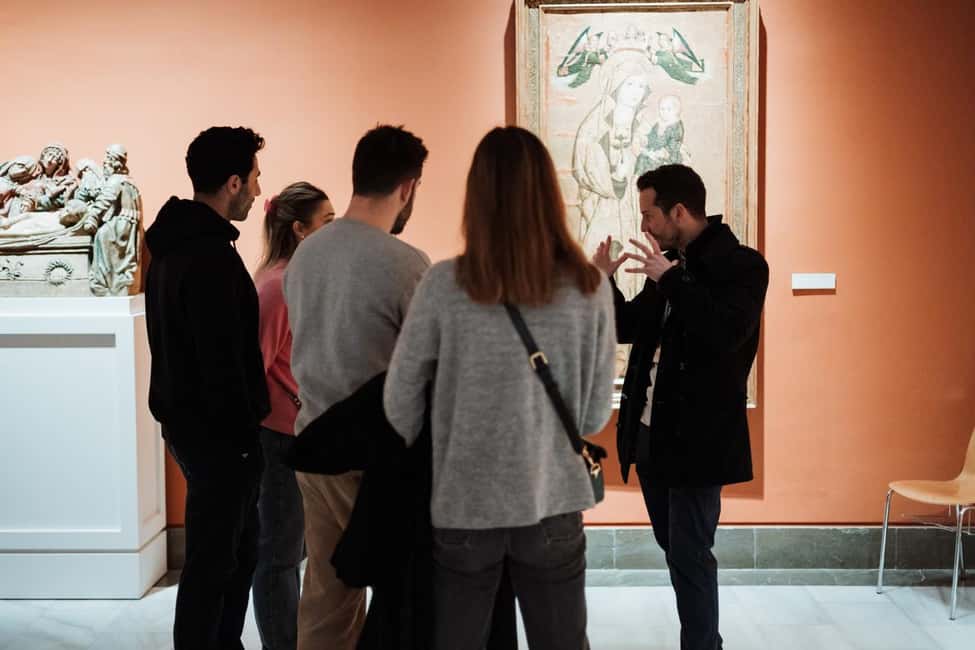
At $23 per person for a 2-hour guided tour, you’re paying for three things that add up fast: guided access (entrance included), a licensed local guide, and a small-group format.
Let’s be honest. You could spend that same time in the museum alone with a map and a phone app. But the difference is the guide’s ability to explain what you’re looking at—especially for complex religious imagery, symbolic details, and the shift between Gothic, Renaissance, and Baroque.
Two hours is also a sweet spot. It’s not so short that you only catch a few highlights, and it’s not so long that you feel like you’re trapped inside. For most people, that’s how you get value: you leave with a clearer mental picture, and you can choose what to revisit later.
Not included is transportation and food/drinks, so you’re on your own for meals. That’s normal. Just don’t assume you’ll get a snack break built into the plan. If you time this right, you’ll be fueled for the rest of your day.
Time in the museum center: logistics that keep your day smooth
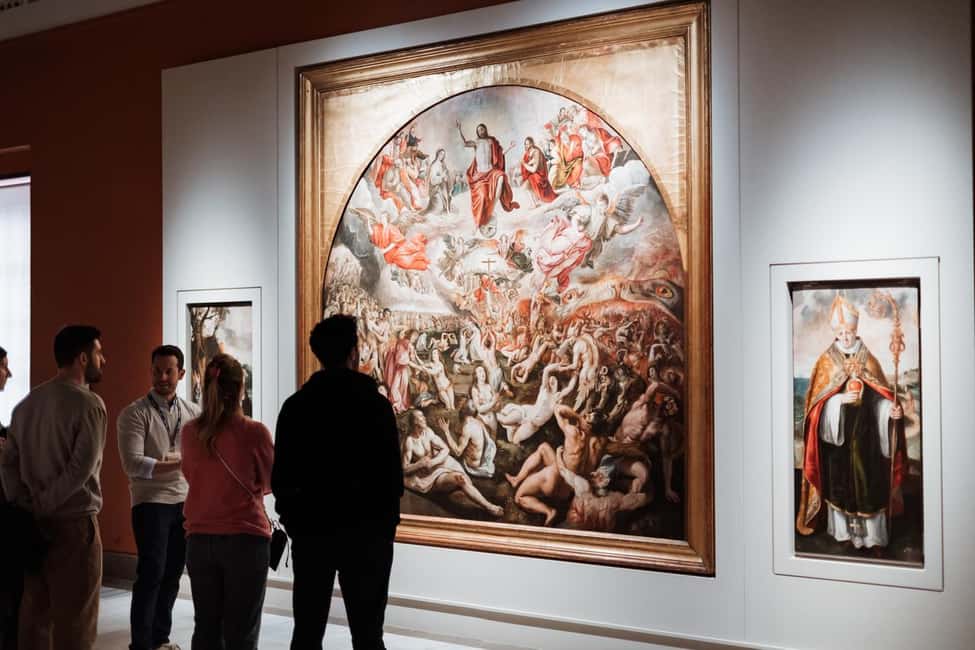
This is the kind of tour that works best when you’re already in central Seville or can easily get to Plaza del Museo. The meeting point is clear—near the Murillo statue with the blue umbrella or Sevilla Guías & Tours sign—so you’re not wandering around guessing.
The “skip-the-line” element is a real perk here, because security lines can be unpredictable. With express security included, you lose less time before you start seeing art.
The tour is also wheelchair accessible, which is helpful if you’re navigating in-store surfaces and corridors. Pets aren’t allowed, so plan accordingly if you’re traveling with animals.
The tour lasts 2 hours, and it’s a small group, so the pacing is steady. You’ll likely want to bring comfortable walking shoes, but you won’t be doing long outdoor stretches. Most movement is indoors and between key rooms and cloisters.
If you’re pairing this tour with another Seville activity later the same day, two hours is a manageable block. It gives you a strong foundation so you can read other parts of the city with more understanding, especially churches and monuments.
Who should book this tour (and who might skip it)
Book this tour if:
- you want a guided explanation of Seville’s art rather than a self-guided label-reading session
- you like hearing context—how periods and styles connect, and what symbolism means
- you want a small group, with time for questions
- you plan to see other Seville sights after, and you’d like a clearer “big picture” first
You might consider skipping if:
- you love wandering completely on your own and hate structured routes
- you’re determined to see every room in full detail (a 2-hour guided tour is not that)
- you’re looking for lots of outdoor scenery, because this is primarily an indoor museum experience
Should you book the Seville Museum of Fine Arts guided tour?
I think it’s a smart buy if your goal is understanding, not just sightseeing. For the money, you get entrance, a licensed guide, and a focused sweep through major styles—Gothic to Renaissance to Baroque—with a particularly strong moment around Murillo.
If you’re nervous about museum visits, this tour reduces the friction. You’ll know what you’re looking at, why it matters, and what to pay attention to next. And if you’re already an art fan, the guide’s ability to connect the pieces to their historical setting can make the museum feel much more alive than a solo pass.
One final tip: if you fall hard for Murillo or a specific artist you see during the tour, plan a second, slower look after. The guided route gets you started. Your follow-up time makes it stick.
FAQ
How long is the Seville Museum of Fine Arts guided tour?
The tour lasts 2 hours.
Where does the tour start and where do I meet the guide?
You meet at Plaza del Museo (next to the statue of Murillo), where the guide is waiting with a blue umbrella or a name tag that says Sevilla Guías & Tours.
What’s included in the ticket price?
The tour includes entrance to the Museum of Fine Arts of Seville and a licensed expert guide. It’s also a small group tour for a more personalized experience.
Are the tours offered in English or Spanish?
Yes. The live guide is available in English or Spanish.
What’s the group size?
It’s a small group limited to 8 participants.
Is the museum tour wheelchair accessible?
Yes, the tour is wheelchair accessible.
Can I bring a pet?
No, pets are not allowed.
Can I cancel for a refund?
Yes, you can cancel up to 24 hours in advance for a full refund.