REVIEW · SEVILLE
Walking tour through the monumental and historical area of Seville
Book on Viator →Operated by Sevilla Moving · Bookable on Viator
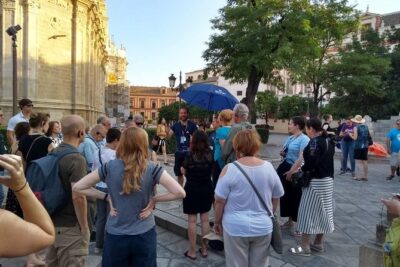
Seville history hits hardest on foot. This walking tour threads together the city’s big monuments and the smaller story-points in between, so you leave with a clear sense of where everything sits. I like the small-group attention (I’ve seen guides like Francisco keep things friendly and paced), and I especially like how the route connects Islam-era origins to Christian Seville in one walk.
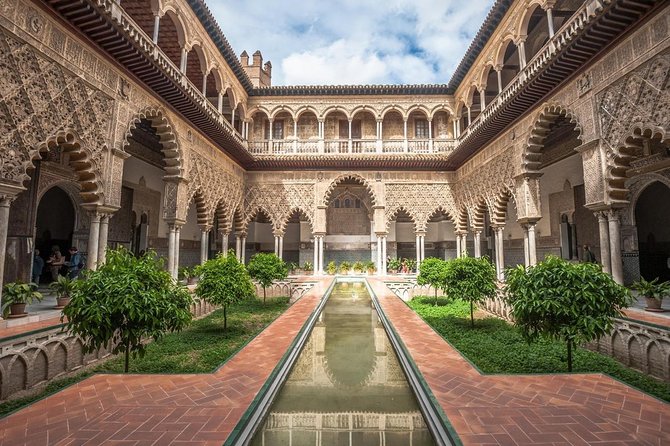
What I also liked a lot: you get guided context at major stops, including the courtyard details linked to the city’s older mosque past, plus skyline moments around La Giralda. The one thing to plan around is the walking: expect uneven pavement and cobblestones, with some optional stairs, so sturdy shoes really matter.
In This Review
- Quick Hits Before You Go
- Price and Logistics: What $49.37 Buys You
- Meeting Point and Timing: Start Smart, Then Walk
- Stop-by-Stop: How the Route Builds Seville’s Story
- Stop 1: Eglise du Divin Sauveur and the Old Mosque Courtyard
- Stop 2: Plaza de San Francisco and Plateresque Flair
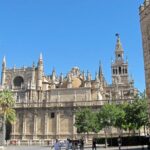
- Stop 3: Catedral de Sevilla, La Giralda, and the Orange-Tree Patio
- Stop 4: Real Alcázar Facade and Patio de Banderas
- Stop 5: Archivo de Indias (General Archive of the Indies)
- Stop 6: Barrio Santa Cruz and the Jewish Quarter Walk
- Stop 7: Jardines de Murillo (Old Alcázar Orchards Turned Public Gardens)
- Stop 8: Real Fábrica de Tabacos and the Route Toward Plaza de España
- Stop 9: Plaza de España and the 1929 Ibero-American Exposition
- Stop 10: Parque de María Luisa (Seville’s Urban Green Lung)
- Stop 11: Torre del Oro (Albarana Tower on the Guadalquivir)
- What Makes the Guides Matter Here
- Footwear, Pace, and Comfort: The Only Real Trade-Off
- Who This Tour Fits Best
- Should You Book This Seville Walking Tour?
- FAQ
- FAQ
- What is the duration of the Seville walking tour?
- How much does the tour cost?
- What language is the tour offered in?
- Is it a private tour?
- Where is the meeting point in Seville?
- What time does the tour start?
- Do I need a mobile ticket?
- Are service animals allowed?
- What happens if the weather is poor?
- How does cancellation for a refund work?
Quick Hits Before You Go
- Monuments + context in one route: you’re not just looking, you’re learning how Seville’s layers fit together.
- Cathedral highlights without the overwhelm: forgiveness door, patio of orange trees, and La Giralda’s exterior focus.
- Alcázar and Santa Cruz in a smart sequence: you move from palace spaces to the Jewish quarter atmosphere.
- María Luisa Park and Plaza de España payoff: you end with classic Seville views and wide-open photo space.
- Your guide helps you orient fast: maps at the start and on-the-fly recommendations can save you time later.
Price and Logistics: What $49.37 Buys You
At $49.37 per person for about 2 hours (one review experienced it closer to 3 hours at a brisk walking pace), you’re paying for more than sightseeing. You’re buying a guide who explains what you’re actually seeing—then connects the dots across Seville’s key eras and neighborhoods.
That value is strongest for first-time visitors. If you’ve never walked Seville before, this tour helps you build a mental map quickly: where the cathedral sits in relation to the Alcázar, how Santa Cruz feels when you approach it on foot, and why Plaza de España became such a big symbol in the 1920s/1929 world-expo era.
There’s also a practical plus: each stop is listed with free admission in the tour format you’ll receive, so you’re not juggling ticket costs as you move through the route.
You can also read our reviews of more walking tours in Seville


Meeting Point and Timing: Start Smart, Then Walk
The tour meets at Sevilla Moving in central Seville (C. Luis Montoto, 19, Local Bajo, 41003 Sevilla). It starts at 10:00 am, and it returns back to the same meeting point.
I like tours that end where they began. It makes the rest of your day easier—no transit math, no “now what” scramble. Since it’s a private tour/activity (only your group participates), you’re also less likely to feel swallowed by a large crowd.
Bring a small amount of patience. Even with a good pace, you’re moving between landmark clusters, so you’ll be outside for the full stretch. If you’re sensitive to heat or sun, plan for water and a hat. And if the weather turns, you’ll need to be flexible—this experience depends on good weather.
Stop-by-Stop: How the Route Builds Seville’s Story
Stop 1: Eglise du Divin Sauveur and the Old Mosque Courtyard
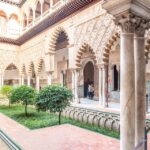
You begin with the Eglise du Divin Sauveur, then the guide sets the stage for Seville’s origins. The highlight here is the visit to a courtyard tied to the city’s older mosque past.
What I like about starting this way: it reframes what you’re about to see. When later stops show you Christian monuments, you’ll already understand the “why” behind the reuse of space, architecture, and layout. It makes the rest of the walk feel less like a checklist and more like one continuous timeline.
This is also a good “warm-up” stop. You’re not walking straight into the biggest crowd magnet yet. You get context first.
Stop 2: Plaza de San Francisco and Plateresque Flair
Next comes Plaza de San Francisco. Even in ten minutes, the guide focuses on the city’s Spanish plateresque artistic style—Seville’s love of ornate detail, carved stone, and decorative surfaces that look almost jewelry-like from close up.
Plateresque can be easy to miss if you’re moving fast. With a guide, you know what to look for: where the ornamenting shows up, why this style matters, and how it signals the period when Seville’s wealth and power were shaping art.
You can also read our reviews of more historical tours in Seville
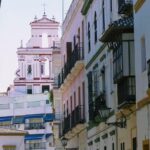

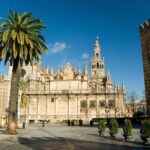
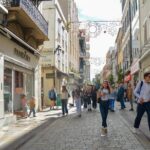

Stop 3: Catedral de Sevilla, La Giralda, and the Orange-Tree Patio
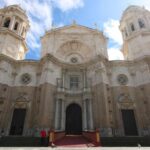
This is your heavyweight stop. The cathedral segment covers several signature exterior elements:
- the door of Forgiveness (described as the oldest door of the cathedral)
- the patio of the orange trees, tied to ancient elements of the earlier mosque
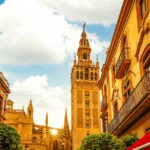
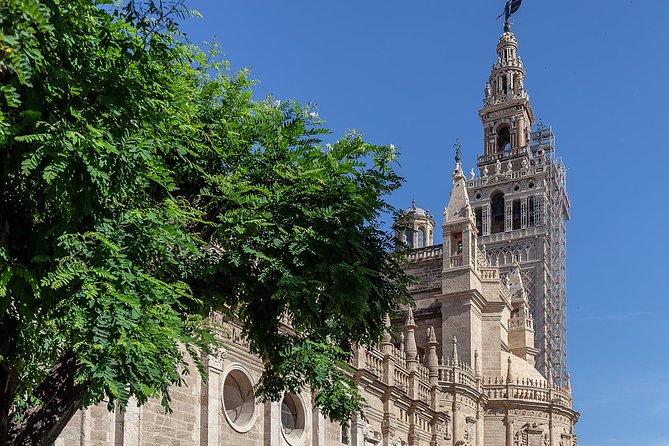
- La Giralda, the cathedral’s tower and the most famous monument in Seville
- the exterior Royal Chapel and the cathedral facade
Even though you’re focusing on exteriors and specific points, you’ll still get the core “Seville wow” moment: the Giralda silhouette and the sense that this place was meant to dominate the city.
Practical note: you’ll spend more time absorbing detail than doing long interior walks. If you’re not keen on rushing through cathedral rooms, this kind of structured exterior approach can feel more relaxed while still giving you the key reference points you’ll want later when you return on your own.
Stop 4: Real Alcázar Facade and Patio de Banderas
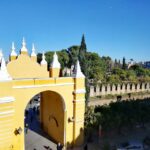
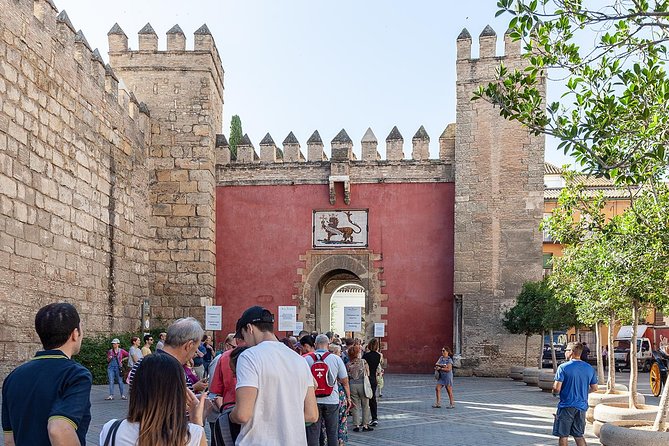
Then you head to the Real Alcázar with a look at the facade and the Patio de Banderas.
The Alcázar is one of those sites that rewards “seeing the whole idea,” not just a single angle. The tour’s timing works because you’re approaching it after the cathedral—so you can compare architectural vibes. You’ll notice how power shows up differently in palace space versus religious space, and how water, courtyard design, and ornament make the heat feel more manageable even from the street-level viewpoint.
Stop 5: Archivo de Indias (General Archive of the Indies)
A shorter stop, but an important one: the Archivo General de Indias, described as the most important archive in Spanish history preserving documents linked to Spain’s relationship with American colonies.
This is the “history nerd but still practical” moment on the route. You don’t need a long lecture to understand the weight of what this building represents. It gives you a bigger lens for why Seville mattered so much—this wasn’t a quiet backwater. It was a key hub connected to global trade and empire.
Stop 6: Barrio Santa Cruz and the Jewish Quarter Walk
Next you enter Barrio Santa Cruz. The guide explains that Santa Cruz was the Jewish district of the city, and you walk through the neighborhood as you head toward the gardens.
I like this segment because it slows the pace a touch. Instead of jumping from monument to monument, you’re getting the street-level geography. Santa Cruz is best understood by movement—small turns, narrow lanes, and the way plazas open up unexpectedly.
You’ll also start feeling why people always mention romance here. It’s not just architecture. It’s the way the streets funnel you toward views.
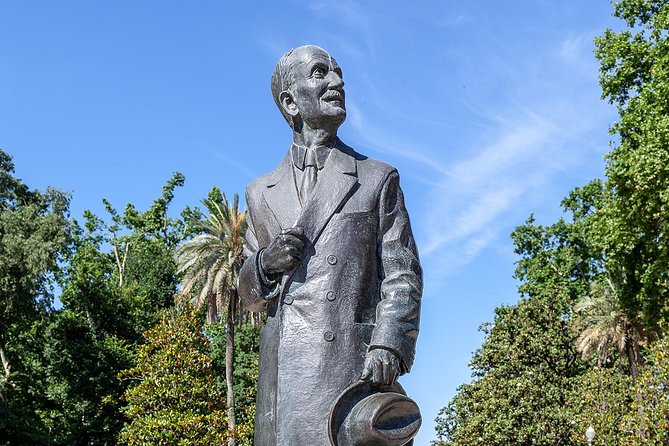
Stop 7: Jardines de Murillo (Old Alcázar Orchards Turned Public Gardens)
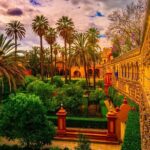
Then you reach Jardines de Murillo, the old orchards of the Alcázar converted into public gardens. This stop includes plant life such as magnolias, orange trees, ficus—and features like gazebos, fountains, ceramics, and monuments.
If you’re thinking, So this is just a garden, you’ll be pleasantly surprised. The guide’s framing connects it to the Alcázar identity. These aren’t random city greens; they’re a continuation of the palace landscape turned shared space.
It’s also a nice break from heavy stone. If you’ve been sweating through sun and stone since the cathedral area, this is where the walk feels like it gives you a breather.
Stop 8: Real Fábrica de Tabacos and the Route Toward Plaza de España
Next comes the Real Fábrica de Tabacos, now connected to the University of Seville. The stop highlights its past as Europe’s most important tobacco factory and describes it as a major industrial and cultural heritage site.
Then you pass through huge corridors and patios to reach the Plaza de España.
This segment matters because it connects “monument Seville” to real-life working history—industry, labor, and the scale of production. Even if you don’t tour deep inside (this walking format focuses on passing through), you still get a sense of how big and important the building once was.
Stop 9: Plaza de España and the 1929 Ibero-American Exposition
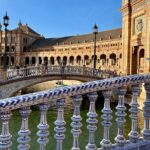
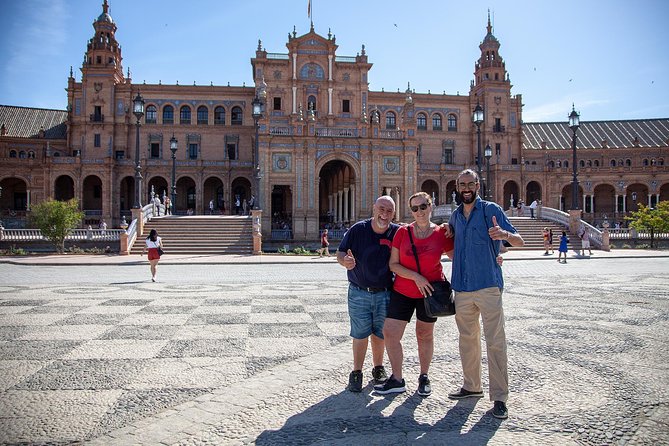
At Plaza de España, you get the classic set-piece: the main monument of the 1929 Ibero-American Exposition that brought together American countries with their pavilions and official buildings.
This is where your photos will come easily. But more importantly, you’ll understand why it looks the way it does. The guide places it in the context of the exposition era—Seville broadcasting itself to the world.
And because you only have limited time, having a guide helps you avoid spending the whole hour wandering aimlessly. You’ll know which lines to follow and where to pause for the best wide shots.
Stop 10: Parque de María Luisa (Seville’s Urban Green Lung)
After the plaza, you walk into Parque de María Luisa. The tour describes it as Seville’s first urban park in Andalusia and a green lung for the city. It was declared a Historical Garden cultural interest and inaugurated in 1914.
This stop gives you breathing room and a transition from the grand geometry of Plaza de España to a softer, shaded experience. It also sets up a nice contrast for the final port-and-watchtower viewpoint.
Stop 11: Torre del Oro (Albarana Tower on the Guadalquivir)
You finish at Torre del Oro, a tower on the left bank of the Guadalquivir River. It served as a surveillance site for the old port and was declared a historical-artistic monument in 1931.
This ending is smart. The earlier archive stop reminds you Seville was tied to big global movements. The river tower brings that home physically—Seville’s economy and movement ran through the water.
And since the tour ends back at the meeting point, you’re not left half-stranded in an area with limited options.
What Makes the Guides Matter Here
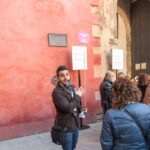
In the reviews you’ll see a pattern: guides who talk in a friendly way, adjust pacing, and answer questions without making you feel rushed. Guides named Francisco, Miguel, Luis, and Marcio appear, and their common trait in the accounts is clear enthusiasm for Seville.
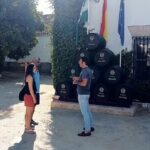
One practical touch I really appreciate from the way the experience is described: guides help you with orientation on a map at the start, and they can point you toward places to eat and drink after the walk. In at least one case, the guide even helped with restroom awareness, which is real-world useful in Seville where public restrooms can take effort to find.
There’s also mention of snacks and a stop at an upscale candy store in one experience. That’s not something I’d assume every run includes, but it fits the broader vibe: guides try to make the walk feel generous, not just instructional.
Footwear, Pace, and Comfort: The Only Real Trade-Off
The main downside is straightforward: you’re walking a lot, and surfaces can be uneven—pavement, dirt, and cobblestones. Stairs exist too, but they’re described as optional in some segments.
So here’s my advice:
- wear sturdy shoes you trust
- plan to move at a good walking clip
- wear sunscreen and bring water
- if you need to avoid stairs, mention that early so the guide can adjust
If you’re expecting a slow, sit-every-few-minutes tour, this isn’t it. If you want momentum plus clear explanations, this works well.
Who This Tour Fits Best
This Seville historical walking tour is ideal if:
- it’s your first time in Seville and you want your bearings fast
- you like architecture and want it explained in plain language
- you want Seville’s story in sequence—mosque-era traces, cathedral/crown power, palace gardens, then expo-era showpieces
- you prefer a smaller group or private feel over a mass tour
It’s less ideal if:
- you have limited mobility or find long uneven walking hard
- you need lots of interior time at each monument (this format is more exterior, street-level, and structured around specific features)
Should You Book This Seville Walking Tour?
Yes—if your goal is a high-value orientation walk that links Seville’s major landmarks to the story behind them. The price is reasonable for a guided route that covers cathedral, Alcázar area context, Santa Cruz streets, Plaza de España, and María Luisa, with a finish at Torre del Oro.
I’d especially recommend it if you want a guide-driven “see it, then understand it” experience during your first day or two. Just go in with comfortable shoes and realistic expectations: you’re buying walking time plus interpretation, not a museum day with long seated breaks.
FAQ
FAQ
What is the duration of the Seville walking tour?
The tour lasts about 2 hours.
How much does the tour cost?
It costs $49.37 per person.
What language is the tour offered in?
The tour is offered in English.
Is it a private tour?
Yes. It’s a private tour/activity, so only your group participates.
Where is the meeting point in Seville?
The meeting point is Sevilla Moving at C. Luis Montoto, 19, Local Bajo, 41003 Sevilla, Spain.
What time does the tour start?
The start time is 10:00 am.
Do I need a mobile ticket?
Yes. A mobile ticket is included.
Are service animals allowed?
Yes, service animals are allowed.
What happens if the weather is poor?
This experience requires good weather. If it’s canceled due to poor weather, you’ll be offered a different date or a full refund.
How does cancellation for a refund work?
You can cancel up to 24 hours in advance for a full refund. If you cancel less than 24 hours before the experience’s start time, the amount paid is not refunded.